Robert Leo Bergmann untersucht den Umgang mit Verträgen, bei denen eine schwere anfängliche Äquivalenzstörung besteht. Dabei geht er von der Annahme aus, dass die aktuell im deutschen Recht geltenden Rechtsfolgen keine interessengerechte Lösung des Problems darstellen. Eine rechtsvergleichende Analyse zeigt, dass das deutsche Recht und seine zwingende Totalnichtigkeit in Europa isoliert sind. Auf dieser Grundlage sucht der Autor nach einer neuen Lösung, die sowohl den beiderseitigen Parteiinteressen als auch den Interessen der Allgemeinheit gerecht wird. Schließlich prüft er, ob und wie sich die gefundene Lösung in das bestehende deutsche Rechtssystem einfügen lässt. Dabei werden auch bereits existierende Korrekturvorschläge für die in §138BGB angeordnete absolute Nichtigkeit aus Rechtsprechung und Literatur betrachtet und einer kritischen Würdigung unterzogen.
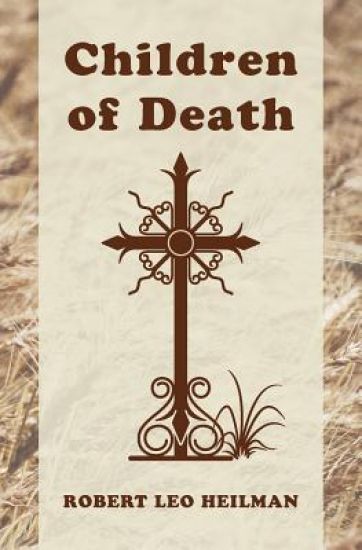
In his third book, Children of Death, critically-acclaimed award-winning author Robert Leo Heilman pursues three unanswered questions from his childhood. Growing up in a family in which his German-speaking grandparents had migrated to the United States from Russia during the first decade of the Twentieth Century he found himself wondering: Where had the Heilmans lived before they migrated to Russia? Why did they leave their home to settle there? And, most poignantly, what happened to the relatives who stayed behind in Russia?Here, in this book-length meditation, he takes us along on his journeys retracing the migrations of his family from Alsace, France to Russia in 1810 and on to Kazakhstan and the American Midwest. Along the way he brings us a history of the times and of the fates of a farming family in search of land, freedom and security through troubled times ranging from the Reign of Terror in eighteenth century France, the Russian Revolution, Stalin's purges and World War II. The effects of his German-Russian ethnic group's migrations still linger today sparking controversy in modern day Germany.
This work has been selected by scholars as being culturally important and is part of the knowledge base of civilization as we know it.This work is in the public domain in the United States of America, and possibly other nations. Within the United States, you may freely copy and distribute this work, as no entity (individual or corporate) has a copyright on the body of the work.Scholars believe, and we concur, that this work is important enough to be preserved, reproduced, and made generally available to the public. To ensure a quality reading experience, this work has been proofread and republished using a format that seamlessly blends the original graphical elements with text in an easy-to-read typeface.We appreciate your support of the preservation process, and thank you for being an important part of keeping this knowledge alive and relevant.
Geology And Earth Sciences Sourcebook For Elementary And Secondary Schools is a comprehensive guidebook written by Robert Leo Heller that covers a wide range of topics related to geology and earth sciences. The book is designed to be used as a resource for both elementary and secondary school teachers, providing them with a wealth of information and activities that can be used to teach students about the earth, its composition, and the processes that shape it.The book is divided into several sections, each of which covers a different aspect of geology and earth sciences. The first section provides an overview of the earth's structure and composition, including information on rocks, minerals, and the different layers of the earth. The second section focuses on plate tectonics, volcanoes, and earthquakes, while the third section covers weathering and erosion.Other sections of the book cover topics such as fossils, geologic time, and the history of the earth. The book also includes activities and experiments that teachers can use to help students understand these concepts, as well as a glossary of key terms and a list of additional resources for further study.Overall, Geology And Earth Sciences Sourcebook For Elementary And Secondary Schools is an excellent resource for teachers who want to teach their students about the earth and its processes. The book is easy to read and understand, and provides a wealth of information that is sure to engage and educate students at all levels.This scarce antiquarian book is a facsimile reprint of the old original and may contain some imperfections such as library marks and notations. Because we believe this work is culturally important, we have made it available as part of our commitment for protecting, preserving, and promoting the world's literature in affordable, high quality, modern editions, that are true to their original work.
""Getting Down To Cases: A Problems Approach To Educational Philosophizing"" is a book written by Robert Leo Brackenbury, which offers a unique perspective on the field of educational philosophy. The book is designed to help readers engage with the subject matter in a more practical and hands-on manner, by presenting a series of real-life case studies that illustrate key concepts and ideas.The book is divided into two main sections. The first section provides an overview of the field of educational philosophy, including key themes, theories, and approaches. This section also introduces the ""problems approach"" to philosophizing, which emphasizes the importance of engaging with real-world issues and challenges in order to develop a deeper understanding of philosophical concepts.The second section of the book presents a series of case studies that apply the problems approach to a range of different educational issues and challenges. These case studies cover a wide variety of topics, including curriculum development, teacher training, educational policy, and more. Each case study is designed to help readers think critically about the issues at hand, and to develop their own philosophical perspectives on the subject matter.Overall, ""Getting Down To Cases"" is a valuable resource for anyone interested in educational philosophy, whether they are students, educators, or researchers. By combining theoretical concepts with practical case studies, the book offers a unique and engaging approach to the subject matter that is sure to inspire and challenge readers.This scarce antiquarian book is a facsimile reprint of the old original and may contain some imperfections such as library marks and notations. Because we believe this work is culturally important, we have made it available as part of our commitment for protecting, preserving, and promoting the world's literature in affordable, high quality, modern editions, that are true to their original work.
&> Elements of Ecology, Ninth Edition continues to explain ecological processes clearly and concisely, with a greater emphasis on the relevance of ecology to everyday life and the human impact on ecosystems. This dramatically revised edition discusses issues of human ecology throughout the text and provides a greater variety of opportunities for students to learn, practice, and develop quantitative and analytical skills. Current research examples and other content updates are supported by more than 200 redesigned, full-color illustrations, graphs, and tables. Also available with MasteringBiology® This title is also available with MasteringBiology, an online homework, tutorial, and assessment program that improves results by helping students quickly master concepts both in and outside the classroom. The book and MasteringBiology work together to create a classroom experience that enables students to succeed in biology and ecology courses. Note: You are purchasing a standalone product; MasteringBiology does not come packaged with this content. If you would like to purchase both the physical text and MasteringBiology search for ISBN-10: 0321934172/ISBN-13: 9780321934178. That package includes ISBN-10: 0321934180/ISBN-13: 9780321934185 and ISBN-10: 0321976010/ISBN-13: 9780321976017. MasteringBiology should only be purchased when required by an instructor.
This work has been selected by scholars as being culturally important, and is part of the knowledge base of civilization as we know it. This work was reproduced from the original artifact, and remains as true to the original work as possible. Therefore, you will see the original copyright references, library stamps (as most of these works have been housed in our most important libraries around the world), and other notations in the work.This work is in the public domain in the United States of America, and possibly other nations. Within the United States, you may freely copy and distribute this work, as no entity (individual or corporate) has a copyright on the body of the work.As a reproduction of a historical artifact, this work may contain missing or blurred pages, poor pictures, errant marks, etc. Scholars believe, and we concur, that this work is important enough to be preserved, reproduced, and made generally available to the public. We appreciate your support of the preservation process, and thank you for being an important part of keeping this knowledge alive and relevant.
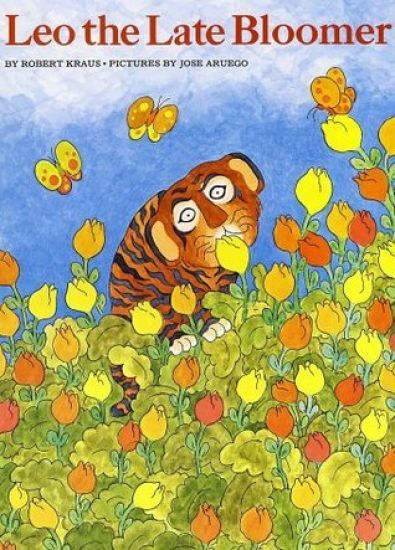
This heartwarming story of how a little tiger named Leo bloomed is told by best-selling author Robert Kraus, and is accompanied by the wonderfully bold illustrations of Jose Aruego. These two have also, with Ariane Dewey, collaborated on "Little Louie the Baby Bloomer," the sequel to this well-loved story.