Kirjojen hintavertailu. Mukana 11 244 527 kirjaa ja 12 kauppaa.

Kirjahaku

Etsi kirjoja tekijän nimen, kirjan nimen tai ISBN:n perusteella.

1000 tulosta hakusanalla Robert Leroux

History and Sociology in France

History and Sociology in France

Robert Leroux

Routledge
2019
nidottu
In the late 19th century and early part of the 20th, with the coming of age of sociology in France, the idea that there could be a “science” of history was the subject of much and varied debate. The methodological problems surrounding historical knowledge that were debated throughout this period concerned not only scientific history, but the social sciences as well, and sociology more specifically.Although sociology was from its origins in competition with the discipline of history, from the outset, it too was interested in history as a form of objective knowledge. Many of sociology's founders believed that by retracing historical processes, they could make a clean break with abstraction and metaphysics. For their part, historians generally remained hostile to any kind of systematization. And yet, at the end of the 19th century, the science of history would draw some valuable lessons from the emerging methodology of sociology. It was in large part under the impetus of the issues and problems raised by the philosopher Henri Berr and by the Durkheimian School, with the economist François Simiand as its lead protagonist, that the community of historians, increasingly aware of the limits of narrative history, turned so enthusiastically to social and economic history – just as Durkheim and his disciples consulted history in order to avoid the twin pitfalls of the philosophy of history and of introspective psychology. History and Sociology in France focuses on this dialogue of the two neighboring sciences.
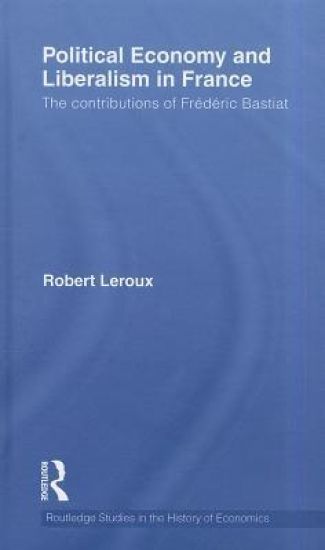
Political Economy and Liberalism in France
The purpose of this book is to provide a comprehensive analysis of the work of Frédéric Bastiat (1801-1850), one of the towering intellectual figures of nineteenth century France. More than anyone else of his time, Bastiat personified the struggle of liberalism and science against socialism and utopia. Between 1844 in 1850, his campaign for the idea of liberty and his commitment to the discipline of political economy made him one of the most vigorous champions of economic liberalism in France. Bastiat put forth one of the most ambitious interpretations of the liberalism of his time, one that entailed both a critique of primitive socialism and a concern to provide political economy with a theoretical foundation. His thinking is far more sophisticated than would appear at first glance. Nor can it be confined, as so many commentators would have us believe, to its strictly economic dimension. The themes that Bastiat addressed – free trade, competition, labour, among others – certainly helped to reduce it to this dimension. Yet he did not limit himself to these issues, even if he dealt with them at length. He also paid close attention to the political, moral, social and religious dimensions. Coming, as Bastiat’s writing did, at a decisive moment in the history of French liberalism, the very existence of his work explodes the long-standing received idea to the effect that liberalism, and in particular economic liberalism, is the exclusive domain of Anglo-Saxon countries. Bastiat’s work thus offers a solid rebuttal to Hayek, who proclaimed "the total absence of a liberal tradition in France." This book should be of interest to students and researchers of many strands of economics, as well as those looking at French liberalism and the history of social science more generally.
History and Sociology in France

History and Sociology in France

Robert Leroux

Routledge
2017
sidottu
In the late 19th century and early part of the 20th, with the coming of age of sociology in France, the idea that there could be a “science” of history was the subject of much and varied debate. The methodological problems surrounding historical knowledge that were debated throughout this period concerned not only scientific history, but the social sciences as well, and sociology more specifically.Although sociology was from its origins in competition with the discipline of history, from the outset, it too was interested in history as a form of objective knowledge. Many of sociology's founders believed that by retracing historical processes, they could make a clean break with abstraction and metaphysics. For their part, historians generally remained hostile to any kind of systematization. And yet, at the end of the 19th century, the science of history would draw some valuable lessons from the emerging methodology of sociology. It was in large part under the impetus of the issues and problems raised by the philosopher Henri Berr and by the Durkheimian School, with the economist François Simiand as its lead protagonist, that the community of historians, increasingly aware of the limits of narrative history, turned so enthusiastically to social and economic history – just as Durkheim and his disciples consulted history in order to avoid the twin pitfalls of the philosophy of history and of introspective psychology. History and Sociology in France focuses on this dialogue of the two neighboring sciences.
Political Economy and Liberalism in France
The purpose of this book is to provide a comprehensive analysis of the work of Frédéric Bastiat (1801-1850), one of the towering intellectual figures of nineteenth century France. More than anyone else of his time, Bastiat personified the struggle of liberalism and science against socialism and utopia. Between 1844 in 1850, his campaign for the idea of liberty and his commitment to the discipline of political economy made him one of the most vigorous champions of economic liberalism in France. Bastiat put forth one of the most ambitious interpretations of the liberalism of his time, one that entailed both a critique of primitive socialism and a concern to provide political economy with a theoretical foundation. His thinking is far more sophisticated than would appear at first glance. Nor can it be confined, as so many commentators would have us believe, to its strictly economic dimension. The themes that Bastiat addressed – free trade, competition, labour, among others – certainly helped to reduce it to this dimension. Yet he did not limit himself to these issues, even if he dealt with them at length. He also paid close attention to the political, moral, social and religious dimensions. Coming, as Bastiat’s writing did, at a decisive moment in the history of French liberalism, the very existence of his work explodes the long-standing received idea to the effect that liberalism, and in particular economic liberalism, is the exclusive domain of Anglo-Saxon countries. Bastiat’s work thus offers a solid rebuttal to Hayek, who proclaimed "the total absence of a liberal tradition in France." This book should be of interest to students and researchers of many strands of economics, as well as those looking at French liberalism and the history of social science more generally.
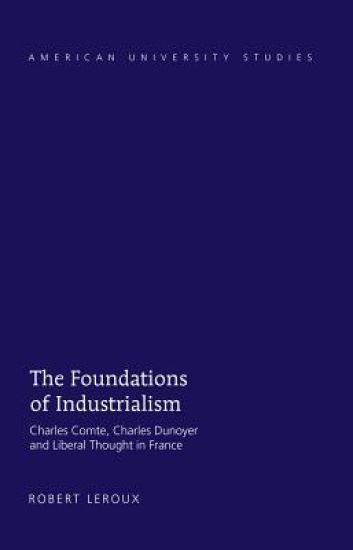
The Foundations of Industrialism

The Foundations of Industrialism

Robert Leroux

Peter Lang Publishing Inc
2016
sidottu
From its beginnings, the doctrine of industrialism has inspired writers of varying persuasions. Saint-Simon is often closely associated with it, however, he represents only the socialist variant of the doctrine. By contrast, the variant that relates to liberalism has been virtually overlooked. Jean-Baptiste Say, Benjamin Constant and Joseph Droz, for example, provided crucial elements that would eventually lead two friends, Charles Comte (1782–1837) and Charles Dunoyer (1786–1862), to define industrialism in a more complete manner that was in fact radically opposed in many aspects to the notions of Saint-Simon. This shows that the term «industrialism» has many meanings. Mechanization, the production of wealth, the age of trades and specialization, the notion that progress is unstoppable, the question of liberty and individualism – these are the main themes that we find in the writings of the liberal proponents of industrialism. For Charles Comte and Charles Dunoyer, industrialism was a kind of philosophy of history, the purpose of which was to identify the tortuous stages through which the idea of liberty had developed. In doing this, as Robert Leroux explains, they shared a conviction, or perhaps a concern, based on clear historical evidence, that liberty is a fragile thing, and that its victory will never be final.
Antoine-Augustin Cournot as a Sociologist

Antoine-Augustin Cournot as a Sociologist

Robert Leroux

Springer Nature Switzerland AG
2019
sidottu
The thinking of Antoine-Augustin Cournot has inspired a growing literature in economy and epistemology, but as of yet, his sociological thought has not been explicitly discussed and contextualized within the discipline. From the 1850s to the end of the 1870s, Cournot contributed significantly to the history of French sociology, particularly in the development of one essential idea: that forms of knowledge are intimately linked to the progress of reason. Philosophy, therefore, becomes interested in the development of the sciences, evolving as they do from the process of rationalizing human societies. Cournot’s comparative-historical sociology, “rediscovered” especially by Gabriel Tarde in the 20th century, seeks to understand how a macro-sociological trend can depend on the aggregation of a host individual decisions and actions, or to discern a certain order out of apparent chaos.
The Monstrous Classics Collection (Boxed Set)

The Monstrous Classics Collection (Boxed Set)

Robert Louis Stevenson; Bram Stoker; Mary Shelley; Washington Irving; Gaston Leroux; Edgar Allan Poe

SIMON SCHUSTER
2025
pokkari
The timeless, genre-defying classics Dr. Jekyll and Mr. Hyde & Other Stories, Dracula, Frankenstein, The Legend of Sleepy Hollow & Other Stories, The Phantom of the Opera, and The Raven & Other Writings are now available together in this bone-chilling paperback boxed set.In Dr. Jekyll and Mr. Hyde & Other Stories, the relationship between a well-respected doctor and a violent criminal is more shocking than anyone could guess in this unholy tale of a repressed man giving himself over wholly to the worst of his vices and shame. Also, two medical students turn to grave robbing in “The Body Snatcher” and a man wishes on a cursed bottle in “The Bottle Imp.” In Dracula, young English lawyer Jonathan Harker’s trip to Romania to meet with Count Dracula sets off a chain of events that threaten the lives of his friends, including his fiancée, Mina. With the help of vampire expert Professor Van Helsing, can Jonathan, Mina, and their friends defeat their sinister foe? In Frankenstein, Victor Frankenstein is an aspiring scientist whose obsession with the idea of creating life leads him to animate a humanoid figure he crafted from corpses. Confronted with the horror of what he’s created, Frankenstein abandons his monster—who in turn vows revenge. In The Legend of Sleepy Hollow & Other Stories, schoolteacher Ichabod Crane flees from the Headless Horseman, Ichabod Crane sleeps for twenty years to wake to a changed world, and more. The titular Phantom of the Opera hides from the world while terrorizing the Paris Opera House and its star, beautiful soprano Christine Daaé, in The Phantom of the Opera. In The Raven & Other Writings, murder and grief dominate the eerie stories and poems of Edgar Allan Poe. This deliciously eerie paperback boxed set includes: Dr. Jekyll and Mr. Hyde & Other Stories Dracula Frankenstein The Legend of Sleepy Hollow & Other Stories The Phantom of the Opera The Raven & Other Writings
The Monstrous Classics Collection (Boxed Set)

The Monstrous Classics Collection (Boxed Set)

Robert Louis Stevenson; Bram Stoker; Mary Shelley; Washington Irving; Gaston Leroux; Edgar Allan Poe

SIMON SCHUSTER
2025
sidottu
The timeless, genre-defying classics Dr. Jekyll and Mr. Hyde & Other Stories, Dracula, Frankenstein, The Legend of Sleepy Hollow & Other Stories, The Phantom of the Opera, and The Raven & Other Writings are now available together in this bone-chilling hardcover boxed set.In Dr. Jekyll and Mr. Hyde & Other Stories, the relationship between a well-respected doctor and a violent criminal is more shocking than anyone could guess in this unholy tale of a repressed man giving himself over wholly to the worst of his vices and shame. Also, two medical students turn to grave robbing in “The Body Snatcher” and a man wishes on a cursed bottle in “The Bottle Imp.” In Dracula, young English lawyer Jonathan Harker’s trip to Romania to meet with Count Dracula sets off a chain of events that threaten the lives of his friends, including his fiancée, Mina. With the help of vampire expert Professor Van Helsing, can Jonathan, Mina, and their friends defeat their sinister foe? In Frankenstein, Victor Frankenstein is an aspiring scientist whose obsession with the idea of creating life leads him to animate a humanoid figure he crafted from corpses. Confronted with the horror of what he’s created, Frankenstein abandons his monster—who in turn vows revenge. In The Legend of Sleepy Hollow & Other Stories, schoolteacher Ichabod Crane flees from the Headless Horseman, Ichabod Crane sleeps for twenty years to wake to a changed world, and more. The titular Phantom of the Opera hides from the world while terrorizing the Paris Opera House and its star, beautiful soprano Christine Daaé, in The Phantom of the Opera. In The Raven & Other Writings, murder and grief dominate the eerie stories and poems of Edgar Allan Poe. This deliciously eerie hardcover boxed set includes: Dr. Jekyll and Mr. Hyde & Other Stories Dracula Frankenstein The Legend of Sleepy Hollow & Other Stories The Phantom of the Opera The Raven & Other Writings
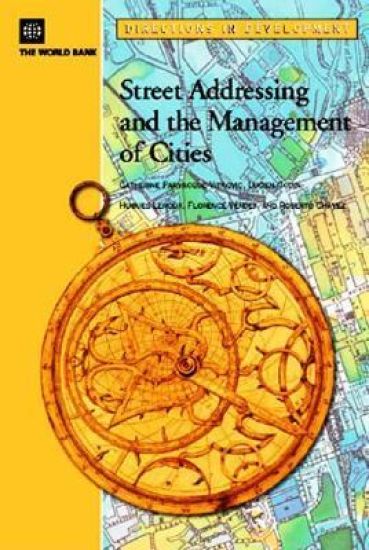
Street Addressing and the Management of Cities

Street Addressing and the Management of Cities

Hugues Leroux; Lucien Godin; Roberto Chavez; Catherine Farvacque-Vitkovic

World Bank Publications
2005
nidottu
The most spectacular change in Sub-Saharan Africa over the last few decades has been the dramatic demographic shift from rural areas to cities. As a result, more than 50 percent of the city streets in the region have no names or addresses, and the problem is particularly acute in the poorest neighborhoods.
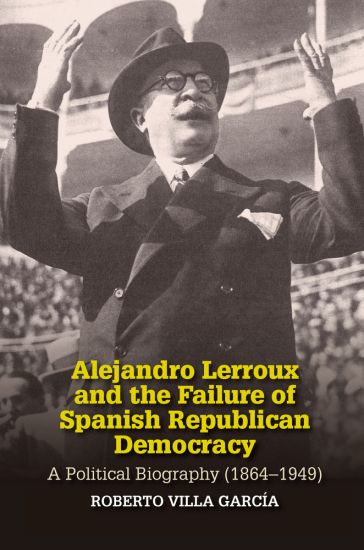
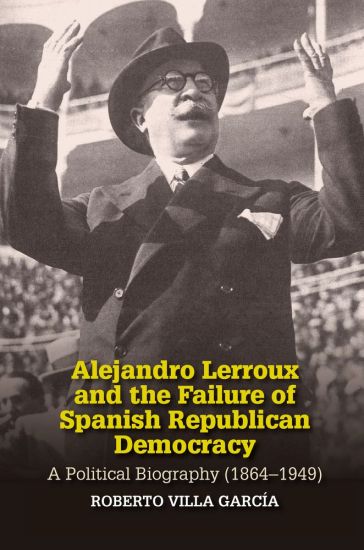
Alejandro Lerroux and the Failure of Spanish Republican Democracy
Alejandro Lerroux (18641949) was one of the most polemical figures of early twentieth century Spanish politics. As leader of the Radical Republican Party and six-time prime minister between 1933 and 1935, his admirers saw him as a patriot determined to create a Republic for all citizens, while his critics denounced him as an opportunistic demagogue willing to sacrifice the Republic to its enemies. Like his French republican contemporary Georges Clemenceau, Lerrouxs long political journey took him from the fiery radical leftism of his youth to centrist consensual politics. Thus while Lerroux was the most significant advocate of a revolutionary break with Spains monarchical and authoritarian past before 1931, after the proclamation of the Second Republic he wished to build an inclusive and tolerant democracy. This book is the first scholarly biography in any language of this titan of modern Spanish politics. Nigel Townsons The Crisis of Democracy in Spain (2000) is the only book in English to discuss Lerrouxs career in any detail, but his study is restricted to the Second Republic. Utilising neglected primary material, Villa Garcia argues that Lerroux embodies the transition from the elitist liberal politics of the nineteenth century to the modern mass politics of the twentieth. Like the Second Republic itself, Lerrouxs political career ended in failure. The work is a timely reminder to students of modern Spain that the demise of Republican democracy was not inevitable. Nevertheless, after the abrupt end to Lerrouxs effort to sustain a broadly based moderate and democratic government, Spain would never again achieve stable and constitutional rule until 1977. The political defeat of Lerroux was a major turning point in the countrys history, a fateful step in the failure of democracy and the coming of civil war.
Alejandro Lerroux and the Failure of Spanish Republican Democracy
Alejandro Lerroux (18641949) was one of the most polemical figures of early twentieth century Spanish politics. As leader of the Radical Republican Party and six-time prime minister between 1933 and 1935, his admirers saw him as a patriot determined to create a Republic for all citizens, while his critics denounced him as an opportunistic demagogue willing to sacrifice the Republic to its enemies. Like his French republican contemporary Georges Clemenceau, Lerrouxs long political journey took him from the fiery radical leftism of his youth to centrist consensual politics. Thus while Lerroux was the most significant advocate of a revolutionary break with Spains monarchical and authoritarian past before 1931, after the proclamation of the Second Republic he wished to build an inclusive and tolerant democracy. This book is the first scholarly biography in any language of this titan of modern Spanish politics. Nigel Townsons The Crisis of Democracy in Spain (2000) is the only book in English to discuss Lerrouxs career in any detail, but his study is restricted to the Second Republic. Utilising neglected primary material, Villa Garcia argues that Lerroux embodies the transition from the elitist liberal politics of the nineteenth century to the modern mass politics of the twentieth. Like the Second Republic itself, Lerrouxs political career ended in failure. The work is a timely reminder to students of modern Spain that the demise of Republican democracy was not inevitable. Nevertheless, after the abrupt end to Lerrouxs effort to sustain a broadly based moderate and democratic government, Spain would never again achieve stable and constitutional rule until 1977. The political defeat of Lerroux was a major turning point in the countrys history, a fateful step in the failure of democracy and the coming of civil war.
Robert

Robert

Kenneth Fuchs

AuthorHouse
2005
pokkari
In the novel's Preface, the Author states: "In a few short words, the content of the book is this: A boy dedicates himself to the clerical profession with the fire of childlike enthusiasm, the youth goes astray in his profession, and the man, 'because not all flowering dreams ripened, ' has the notion of giving it up and 'fleeing to the desert.' Yet Heaven has decided otherwise. With resignation he comes back to himself and begins again to believe in his calling. Besides this, everything which is presented in the book belongs partly to the characteristics of the hero appearing in it, partly to the characteristics of our time chiefly with regard to religious, ecclesiastical, and especially clerical matters."
Robert

Robert

Michael W Elliott

Authorhouse
2020
pokkari
Julie, a single mother, and her daughter Karen, are trying to move on after the loss of Julie's soulmate Kmyviks. Kmyviks was an alien who was a criminal on his home planet. He was exiled to Earth for one year until his sentence could be executed. While on Earth he fell in love with Julie and they had an incredible romance. After Kmyviks was taken back to his home planet, Julie discovered she was pregnant with his child. 'Robert' is the story of how Julie and Karen struggled to raise a child who was half alien. Robert quickly discovers he is not like the other children and struggles in a world where he is clearly superior. After awhile, Robert senses a connection with his father whom he has never met. Could Kmyviks still be alive?