Kirjojen hintavertailu. Mukana 11 244 527 kirjaa ja 12 kauppaa.

Kirjahaku

Etsi kirjoja tekijän nimen, kirjan nimen tai ISBN:n perusteella.

1000 tulosta hakusanalla Robert Martin

Robert Martin rekomenduet. Kod, kotoryj umeschaetsja v golove: evristiki dlja razrabotchikov
Nezamenimye prakticheskie sovety po napisaniju koda v ustojchivom tempe i po upravleniju slozhnostju, iz-za kotoroj proekty chasto vykhodjat iz-pod kontrolja. V knige opisyvajutsja metody i protsessy, pozvoljajuschie reshat kljuchevye voprosy: ot sozdanija chek-listov do organizatsii komandnoj raboty, ot inkapsuljatsii do dekompozitsii, ot proektirovanija API do modulnogo testirovanija. Avtor illjustriruet svoi vyvody fragmentami koda, vzjatymi iz gotovogo proekta. Napisannye na jazyke C#, oni budut ponjatny vsem, kto ispolzuet ljuboj obektno-orientirovannyj jazyk, vkljuchaja Java, C++ i TypeScript. Dlja bolee glubokogo izuchenija materiala vy mozhete zagruzit ves kod i podrobnye kommentarii k kommitam.
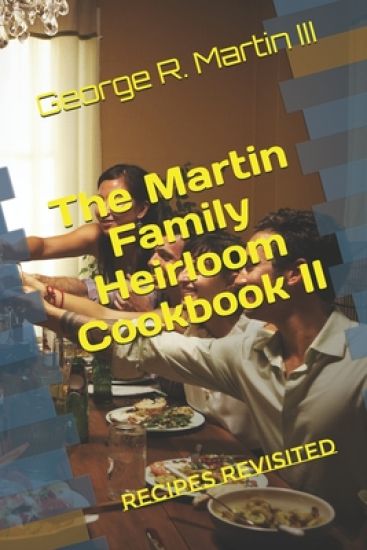
The Martin Family Heirloom Cookbook II

The Martin Family Heirloom Cookbook II

George Robert Martin

Independently Published
2015
pokkari
The Martin Family Heirloom Cookbook II: Recipes Revisited 2nd Edition Offers Many More Succulent Recipes Dear Reader: Thank You Kindly & Graciously for your purchase of the Martin Family Heirloom Cookbook It holds many recipes from our Family to yours. Some were closely guarded secrets unknown to the world & hidden until now. They are sure to become favored classics at your next Formal Dinner Party or Family Engagement. We surviving children cherished these recipes growing up and I was lucky enough to become the keeper of these the Holy Grail of Recipes, so to speak; after my Father Lawrence Wesley Martin passed away. Our Mother Katharina Martin passed away a handful of years later, so I decided with my other family members it was time to sit down & finally put our best recipes together into one volume. May you come to Love and enjoy them as you do your own recipes Enjoy them all thoroughly and a heartfelt and hearty Bon Appetite
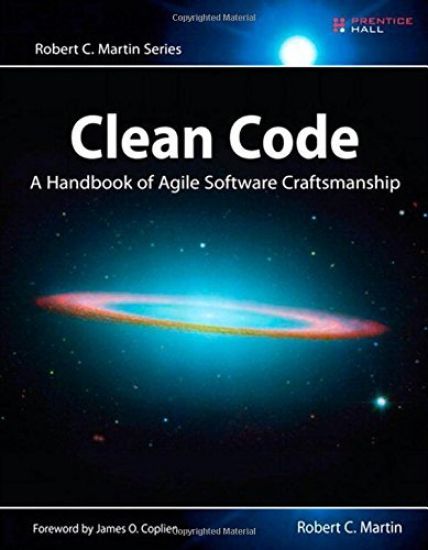
Clean Code

Clean Code

Robert Martin

Pearson
2008
nidottu
Even bad code can function. But if code isn’t clean, it can bring a development organization to its knees. Every year, countless hours and significant resources are lost because of poorly written code. But it doesn’t have to be that way. Noted software expert Robert C. Martin presents a revolutionary paradigm with Clean Code: A Handbook of Agile Software Craftsmanship. Martin has teamed up with his colleagues from Object Mentor to distill their best agile practice of cleaning code “on the fly” into a book that will instill within you the values of a software craftsman and make you a better programmer—but only if you work at it. What kind of work will you be doing? You’ll be reading code—lots of code. And you will be challenged to think about what’s right about that code, and what’s wrong with it. More importantly, you will be challenged to reassess your professional values and your commitment to your craft. Clean Code is divided into three parts. The first describes the principles, patterns, and practices of writing clean code. The second part consists of several case studies of increasing complexity. Each case study is an exercise in cleaning up code—of transforming a code base that has some problems into one that is sound and efficient. The third part is the payoff: a single chapter containing a list of heuristics and “smells” gathered while creating the case studies. The result is a knowledge base that describes the way we think when we write, read, and clean code. Readers will come away from this book understanding How to tell the difference between good and bad codeHow to write good code and how to transform bad code into good codeHow to create good names, good functions, good objects, and good classesHow to format code for maximum readabilityHow to implement complete error handling without obscuring code logicHow to unit test and practice test-driven developmentThis book is a must for any developer, software engineer, project manager, team lead, or systems analyst with an interest in producing better code.
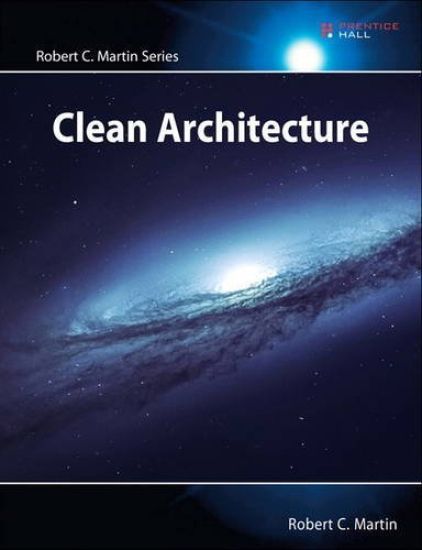
Clean Architecture

Clean Architecture

Robert Martin

Pearson
2017
nidottu
Building upon the success of best-sellers The Clean Coder and Clean Code, legendary software craftsman Robert C. "Uncle Bob" Martin shows how to bring greater professionalism and discipline to application architecture and design. As with his other books, Martin's Clean Architecture doesn't merely present multiple choices and options, and say "use your best judgment": it tells you what choices to make, and why those choices are critical to your success. Martin offers direct, no-nonsense answers to key architecture and design questions like: What are the best high level structures for different kinds of applications, including web, database, thick-client, console, and embedded apps? What are the core principles of software architecture? What is the role of the architect, and what is he/she really trying to achieve? What are the core principles of software design? How do designs and architectures go wrong, and what can you do about it? What are the disciplines and practices of professional architects and designers? Clean Architecture is essential reading for every software architect, systems analyst, system designer, and software manager -- and for any programmer who aspires to these roles or is impacted by their work.
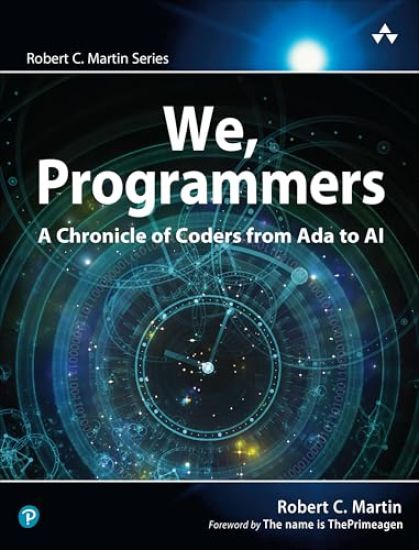
We, Programmers

We, Programmers

Robert Martin

PEARSON EDUCATION (US)
2025
nidottu
The Journey of Programming and Its Pioneers: From the Birth of Code to the Rise of AI In We, Programmers, software legend Robert C. Martin--"Uncle Bob"--dives deep into the world of programming, exploring the lives of the groundbreaking pioneers who built the foundation of modern computing. From Charles Babbage and Ada Lovelace to Alan Turing, Grace Hopper, and Dennis Ritchie, Martin shines a light on the figures whose brilliance and perseverance changed the world. This memoir-infused narrative provides a rich human history filled with technical insights for developers, examining the coding breakthroughs that shaped computing at the bit and byte level. By connecting these technical achievements with the human stories behind them, Martin gives readers a rare glimpse into the struggles and triumphs of the people who made modern technology possible. Depression, failure, and ridicule--these pioneers faced it all, and their stories intertwine with the evolution of computing itself as the field evolved from its humble beginnings to the cloud-based AIs of today. With the rise of AI, Martin also explores how this technology is transforming the future of programming and the ethical challenges that come with it. Notable topics include Understanding programming's roots and how they shaped today's tech landscapeThe human side of coding pioneers--what drove them, and what they overcameKey programming breakthroughs, from the early days of assembly to the rise of object-oriented languagesThe pivotal role World War II played in advancing computer scienceInsights and predictions regarding the ethical considerations surrounding AI and the future of programming For programmers, coders, and anyone fascinated by the intersection of people and machines, this guide to the history, humanity, and technology behind the code that powers our world today is a fascinating and essential read. Register your book for convenient access to downloads, updates, and/or corrections as they become available. See inside book for details.
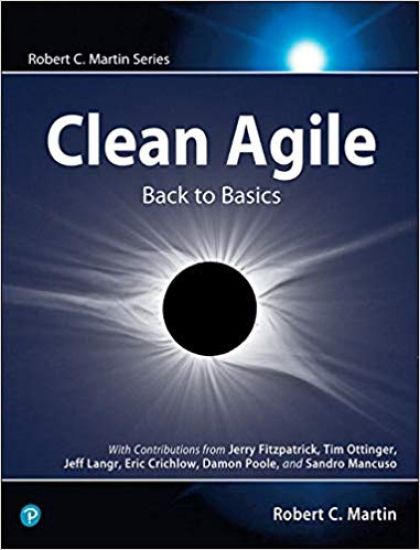
Clean Agile

Clean Agile

Robert Martin

Pearson
2019
nidottu
Agile Values and Principles for a New Generation "In the journey to all things Agile, Uncle Bob has been there, done that, and has the both the t-shirt and the scars to show for it. This delightful book is part history, part personal stories, and all wisdom. If you want to understand what Agile is and how it came to be, this is the book for you."Grady Booch "Bob's frustration colors every sentence of Clean Agile, but it's a justified frustration. What is in the world of Agile development is nothing compared to what could be. This book is Bob's perspective on what to focus on to get to that what could be. And he's been there, so it's worth listening."Kent Beck It's good to read Uncle Bob's take on Agile. Whether just beginning, or a seasoned Agilista, you would do well to read this book. I agree with almost all of it. It's just some of the parts make me realize my own shortcomings, darn it. It made me double-check our code coverage (85.09%)." Jon Kern Nearly twenty years after the Agile Manifesto was first presented, the legendary Robert C. Martin ("Uncle Bob") reintroduces Agile values and principles for a new generation-programmers and nonprogrammers alike. Martin, author of Clean Code and other highly influential software development guides, was there at Agile's founding. Now, in Clean Agile: Back to Basics, he strips away misunderstandings and distractions that over the years have made it harder to use Agile than was originally intended. Martin describes what Agile is in no uncertain terms: a small discipline that helps small teams manage small projects . . . with huge implications because every big project is comprised of many small projects. Drawing on his fifty years' experience with projects of every conceivable type, he shows how Agile can help you bring true professionalism to software development. Get back to the basics – what Agile is, was, and should always beUnderstand the origins, and proper practice, of SCRUMMaster essential business-facing Agile practices, from small releases and acceptance tests to whole-team communicationExplore Agile team members' relationships with each other, and with their productRediscover indispensable Agile technical practices: TDD, refactoring, simple design, and pair programmingUnderstand the central roles values and craftsmanship play in your Agile team’s success If you want Agile's true benefits, there are no shortcuts: You need to do Agile right. Clean Agile: Back to Basics will show you how, whether you're a developer, tester, manager, project manager, or customer. Register your book for convenient access to downloads, updates, and/or corrections as they become available. See inside book for details.

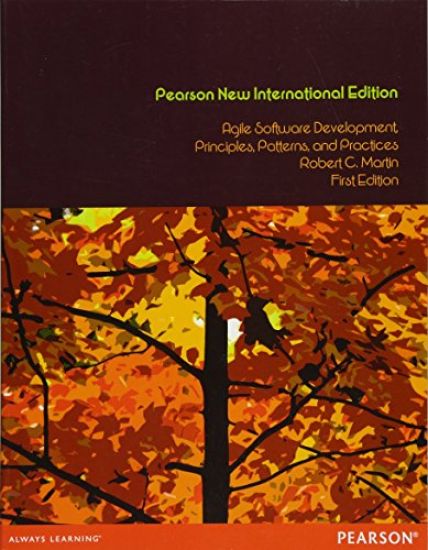
Agile Software Development, Principles, Patterns, and Practices
Written by a software developer for software developers, this book is a unique collection of the latest software development methods. The author includes OOD, UML, Design Patterns, Agile and XP methods with a detailed description of a complete software design for reusable programs in C++ and Java. Using a practical, problem-solving approach, it shows how to develop an object-oriented application—from the early stages of analysis, through the low-level design and into the implementation. Walks readers through the designer's thoughts — showing the errors, blind alleys, and creative insights that occur throughout the software design process. The book covers: Statics and Dynamics; Principles of Class Design; Complexity Management; Principles of Package Design; Analysis and Design; Patterns and Paradigm Crossings. Explains the principles of OOD, one by one, and then demonstrates them with numerous examples, completely worked-through designs, and case studies. Covers traps, pitfalls, and work arounds in the application of C++ and OOD and then shows how Agile methods can be used. Discusses the methods for designing and developing big software in detail. Features a three-chapter, in-depth, single case study of a building security system. For Software Engineers, Programmers, and Analysts who want to understand how to design object oriented software with state of the art methods.
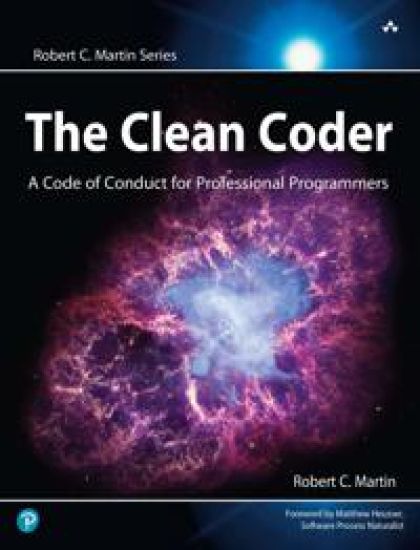
Clean Coder, The

Clean Coder, The

Robert Martin

Pearson
2011
nidottu
Programmers who endure and succeed amidst swirling uncertainty and nonstop pressure share a common attribute: They care deeply about the practice of creating software. They treat it as a craft. They are professionals. In The Clean Coder: A Code of Conduct for Professional Programmers, legendary software expert Robert C. Martin introduces the disciplines, techniques, tools, and practices of true software craftsmanship. This book is packed with practical advice–about everything from estimating and coding to refactoring and testing. It covers much more than technique: It is about attitude. Martin shows how to approach software development with honor, self-respect, and pride; work well and work clean; communicate and estimate faithfully; face difficult decisions with clarity and honesty; and understand that deep knowledge comes with a responsibility to act. Readers will learn What it means to behave as a true software craftsmanHow to deal with conflict, tight schedules, and unreasonable managersHow to get into the flow of coding, and get past writer’s blockHow to handle unrelenting pressure and avoid burnoutHow to combine enduring attitudes with new development paradigmsHow to manage your time, and avoid blind alleys, marshes, bogs, and swampsHow to foster environments where programmers and teams can thriveWhen to say “No”–and how to say itWhen to say “Yes”–and what yes really means Great software is something to marvel at: powerful, elegant, functional, a pleasure to work with as both a developer and as a user. Great software isn’t written by machines. It is written by professionals with an unshakable commitment to craftsmanship. The Clean Coder will help you become one of them–and earn the pride and fulfillment that they alone possess.
Functional Design

Functional Design

Robert Martin

PEARSON EDUCATION (US)
2023
nidottu
A Practical Guide to Better, Cleaner Code with Functional Programming In Functional Design, renowned software engineer Robert C. Martin ("Uncle Bob") explains how and why to use functional programming to build better systems for real customers. Martin compares conventional object-oriented coding structures in Java to those enabled by functional languages, identifies the best roles for each, and shows how to build better systems by judiciously using them in context. Martin's approach is pragmatic, minimizing theory in favor of "in the-trenches" problem-solving. Through accessible examples, working developers will discover how the easy-to-learn, semantically rich Clojure language can help them improve code cleanliness, design, discipline, and outcomes. Martin examines well-known SOLID principles and Gang of Four Design Patterns from a functional perspective, revealing why patterns remain extremely valuable to functional programmers, and how to use them to achieve superior results. Understand functional basics: immutability, persistent data, recursion, iteration, laziness, and statefulnessContrast functional and object approaches through expertly crafted case studiesExplore functional design techniques for data flowUse classic SOLID principles to write better Clojure codeMaster pragmatic approaches to functional testing, GUIs, and concurrencyMake the most of design patterns in functional environmentsWalk through building an enterprise-class Clojure application "Functional Design exudes 'classic-on-arrival'. Bob pulls back the curtain to reveal how functional programming elements make software design simple yet pragmatic. He does so without alienating experienced object-oriented programmers coming from languages like C#, C++, or Java."--Janet A. Carr, Independent Clojure Consultant Register your book for convenient access to downloads, updates, and/or corrections as they become available. See inside book for details.

Carnegie Denied

Carnegie Denied

Robert Martin

Praeger Publishers Inc
1993
sidottu
Andrew Carnegie was the foremost supporter of public library construction to the point that Carnegie Library became a cliche, synonymous with the public library, especially in small towns. Yet some communities that asked for Carnegie's funds to build a library later took public action to decline the funds. Because he was viewed as a robber baron, it has been assumed that these refusals were motivated by a desire not to take tainted money. This work documents that this was rarely the case. Indeed, there were many reasons for opposition to the Carnegie library grants. In some cases, local authorities remained unconvinced of the need for a public library. Some communities were under legal or financial restrictions that prevented them from taxing themselves in support of the library. In some, there was simply opposition to increasing the tax burden; in others the opposition focused on the perception that Carnegie was building memorials to himself. Experienced historians were commissioned to conduct thorough studies of regional clusters. The authors made the broadest possible use of primary sources, including public archives, manuscript collections, local newspaper accounts, and the records of the Carnegie Corporation in the Library of Congress. Of particular relevance were the files of the Carnegie Library Correspondence, documenting most of the history of first, Andrew Carnegie's--and later, the Carnegie Corporation's--program to fund library construction programs.
How We Do It

How We Do It

Robert Martin

Basic Books
2013
sidottu
Despite the widespread belief that natural is better when it comes to sex, pregnancy, and parenting, most of us have no idea what natural" really means the origins of our reproductive lives remain a mystery. Why are a quarter of a billion sperm cells needed to fertilize one egg? Are women really fertile for only a few days each month? How long should babies be breast-fed?In How We Do It , primatologist Robert Martin draws on forty years of research to locate the roots of everything from our sex cells to the way we care for newborns. He examines the procreative history of humans as well as that of our primate kin to reveal what's really natural when it comes to making and raising babies, and distinguish which behaviours we ought to continue,and which we should not. Although it's not realistic to raise our children like our ancestors did, Martin's investigation reveals surprising consequences of,and suggests ways to improve upon,the way we do things now. For instance, he explains why choosing a midwife rather than an obstetrician may have a greater impact than we think on our birthing experience, examines the advantages of breast-feeding for both mothers and babies, and suggests why babies may be ready for toilet training far earlier than is commonly practiced. How We Do It offers much-needed context for our reproductive and child-rearing practices, and shows that once we understand our evolutionary past, we can consider what worked, what didn't, and what it all means for the future of our species.
Making History

Making History

Robert Martin

University of New Mexico Press
2020
nidottu
Making History: The IAIA Museum of Contemporary Native Arts is a unique contribution to the fields of visual culture, arts education, and American Indian studies. Written by scholars actively producing Native art resources, this book guides readers--students, educators, collectors, and the public--in how to learn about Indigenous cultures as visualized in our creative endeavors. By highlighting the rich resources and history of the Institute of American Indian Arts, the only tribal college in the nation devoted to the arts whose collections reflect the full tribal diversity of Turtle Island, these essays present a best-practices approach to understanding Indigenous art from a Native-centric point of view. Topics include biography, pedagogy, philosophy, poetry, coding, arts critique, curation, and writing about Indigenous art.Featuring two original poems, ten essays authored by senior scholars in the field of Indigenous art, nearly two hundred works of art, and twenty-four archival photographs from the IAIA's nearly sixty-year history, Making History offers an opportunity to engage the contemporary Native Arts movement.
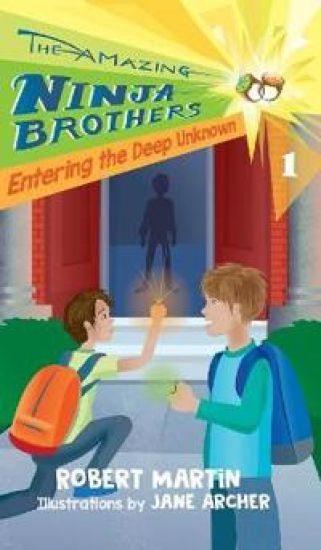
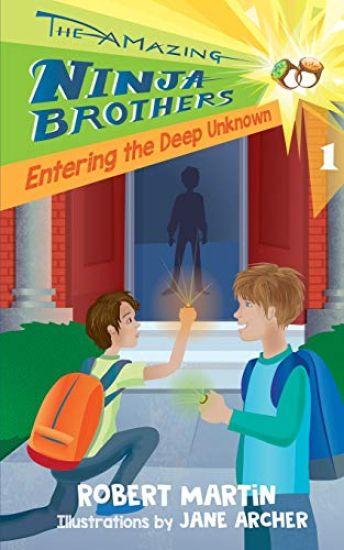
Entering the Deep Unknown

Entering the Deep Unknown

Robert Martin

Dreamchaser Publishing
2018
pokkari
"Entering the Deep Unknown," is a fast-paced story that connects with kid's fascination with super heroes while generating thought and discussion about ADHD. It successfully balances action, humor and fantasy to provide readers with a "page-turner" story.The book focuses on Tommy, a child with Attention Deficit Hyperactivity Disorder (ADHD), a chronic condition that leads to hyperactivity, impulsiveness and difficulty paying attention. Tommy's friends, Aiden and Jacob, are more than just brothers, they are a new wave of ninjas. Unlike other ninjas who use their skills to fight, these amazing ninja brothers use their skills to heal and build understanding in their classroom. Their power comes from the magic of two ancient ninja rings that their great-great-grandfather, an explorer, had discovered in his travels and is now passing down to them. The ninja rings give them the ability to understand how a friend with a psychiatric disorder thinks and how to help a mind that works differently adapt to challenges in the classroom, on the playground and at home. Aiden and Jacob apply the magic of the ninja rings to help Aiden's best friend, Tommy overcome the challenges of ADHD. Jacob uses his ring to figure out why Tommy is prone to be disruptive or inattentive. Then Aiden applies the magic of his ring, empathy, to feel the same emotions that Tommy feels. Together they learn that Tommy's different way of thinking has strengths, too.
Love You but You Are in the Way

Love You but You Are in the Way

Robert Martin

Lulu.com
2024
pokkari
I Love You But You Are In The Way, an emotional conflict of having an inheritance came with a price for naive Thomas of Texas, having everything he wanted but risked it all heart and soul. Inevitably like a moth to the flame, he got too close to the unpredictable alluring hot fire of Serena, in which she gave him every opportunity to resist it, nevertheless for the first time his eyes opened to something, that life favors no one not even when love's grand.
Aromatic Hydroxyketones: Preparation and Physical Properties

Aromatic Hydroxyketones: Preparation and Physical Properties

Robert Martin

Springer-Verlag New York Inc.
2011
sidottu
"Aromatic Hyroxyketones: Preparation and Physical Properties" is a revised, new edition 4-volume handbook set which provides detailed information on physical properties and syntheses on a wide range of hydroxyketones. Each entry includes characterization data such as the Chemical Abstracts Service Registry Number (CAS RN), molecule name, molecular formula, and molecular weight. The handbooks are presented in dictionary style, with a logical classification of the ketones, making the information easily available for consultation. This handbook set provides 6000 hydroxyketone entries and includes approximately 6000 references. Volume 1: Hydroxybenzophenones Hydroxybenzophenones are most useful synthetic intermediates in the chemical industry, for example in pharmaceuticals, dyes, fragrances, agrochemicals, explosives and plastics. The first volume of this set is particularly intended for engineers in chemical synthesis and academics as well as industrial researchers from various branches of chemistry. Volume 2 and 3: Hydroxyacetophenones Hydroxyacetophenones constitute the starting material for a wide variety of syntheses in organic chemistry. They are versatile building blocks serving many different applications, such as especially polymers, pharmaceuticals and fine chemicals. These two volumes constitute a useful tool for chemists and pharmacists in general. Volume 4: Hydroxypropiophenones, Hydroxyisobutyrophenones, Hydroxypivalophenones and Derivatives Hydroxypropiophenones, Hydroxyisobutyrophenones, Hydroxypivalophenones and Derivatives constitute the starting material for a wide variety of syntheses in organic chemistry. They are versatile building blocks serving many different applications: pharmaceuticals, fine chemicals and polymers. This volume is a great book of reference on hydroxypropiophenones, hydroxyisobutyrophenones, hydroxypivalophenones and their methyl ethers which also mentions some uses of these ketones. It is a powerful synthesis tool for researchers or industrial producers and provides a wide choice of hydroxyketones.