Kirjojen hintavertailu. Mukana 11 342 296 kirjaa ja 12 kauppaa.

Kirjahaku

Etsi kirjoja tekijän nimen, kirjan nimen tai ISBN:n perusteella.

1000 tulosta hakusanalla Robert Muir-Wood

This Volcanic Isle

This Volcanic Isle

Robert Muir-Wood

Oxford University Press
2024
sidottu
From the natural geometry of the Giant's Causeway to the sarsen slabs used to build Stonehenge, we are surrounded by evidence for the extraordinary geological forces that shaped the British Isles. Running coast to coast through Devon is 'Sticklepath', Britain's 'San Andreas', a geological fault with the two sides displaced horizontally by several kilometres, all within the recent geological past. The Sticklepath Fault is just one manifestation of the rich tectonic history of the British region since the asteroid collision that ended the reign of the dinosaurs, 66 million years ago. Raised out of the Chalk Sea, the original Albion was a thickly forested island a thousand kilometres long, surrounded by chalk cliffs, punctuated with great volcanoes, and the site of two trial 'spreading ridge' plate-boundaries. As the volcanoes shifted west, and Greenland separated from Europe, the wind-blown volcanic ash laid the strata on which London was founded. The vertical Needles, known to every Isle of Wight sailor, are part of the northern foothills of the Pyrenees. When the collision subsided, rifting created a garland of Celtic lakes from Brittany to the Outer Hebrides. In This Volcanic Isle Robert Muir-Wood explores the rich geological history of the British Isles, and its resulting legacy. Along the way he introduces the personalities who shared a fascination for Britain's tectonic history, including Charles Darwin the geologist, Tennyson the science-poet, and Benoit Mandelbrot, the pure mathematician who labelled the west coast of Britain a fractal icon. Here is the previously untold story of how earthquakes and eruptions, plumes and plate boundaries, built the British Isles.
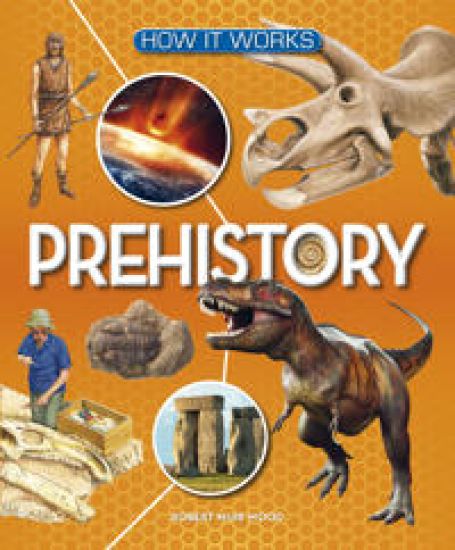
Prehistory

Prehistory

Robert Muir Wood

Cavendish Square Publishing
2024
nidottu
The study of fossils, the discovery of ancient artifacts, and the use of radiocarbon dating have helped us learn a lot about prehistoric times. How did the dinosaurs live? What did Earth look like long ago? What were the first human beings like? Scientists are now fairly confident in their answers to these questions, and readers see why as they explore all the ways people have used science to solve what were once the mysteries of prehistory. Captivating illustrations, helpful diagrams, and photographs enhance the informative main text and sidebars, giving readers a detailed look at the past.
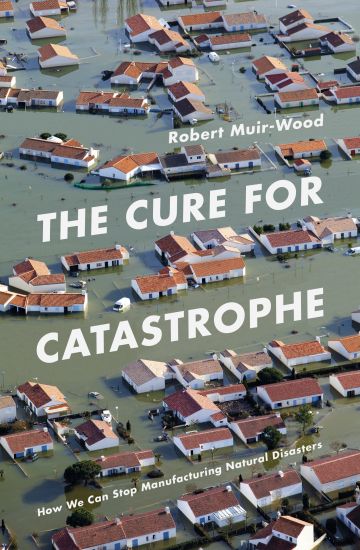
The Cure for Catastrophe

The Cure for Catastrophe

Robert Muir-Wood

Oneworld Publications
2016
sidottu
Hurricanes, tsunamis, earthquakes, typhoons – we watch in horror before springing into action with aid and support, shocked again and again by the destructive power of the earth. Except these disasters aren’t only the earth’s doing, they are ours too. Why did no one consider that a tsunami could disable the nuclear power plants in Fukushima? Why did so many die when Katrina flooded New Orleans? Not so long ago we could only focus on rescuing and sheltering survivors – now we can anticipate many natural disasters and plan for them. In dozens of cities around the world, we’re able to identify the specific buildings that will be shaken apart, blown down or reduced to rubble. Yet every year, thanks to politics and inertia, we fail to act. Traversing continents and history, Robert Muir-Wood blends gripping storytelling with scientific insights to detail our efforts to tame the most extreme forces of nature. At the frontlines, the predictive powers of new technologies mean we can foresee a future where there is an end to the pain and destruction wrought by these devastating cataclysms. As The Cure for Catastrophe makes clear, we have an extraordinary opportunity before us – to make the decisions about what we build, where we live and how warnings are communicated that could save millions of lives.
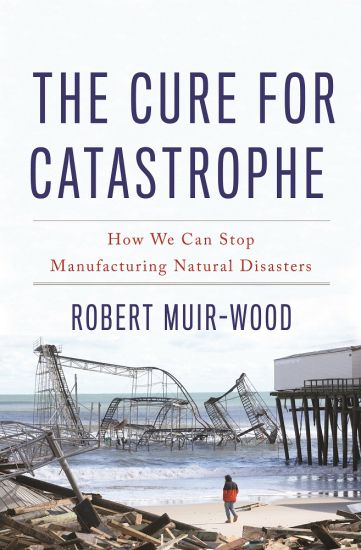
The Cure for Catastrophe: How We Can Stop Manufacturing Natural Disasters
We can't stop natural disasters but we can stop them being disastrous. One of the world's foremost risk experts tells us how. Year after year, floods wreck people's homes and livelihoods, earthquakes tear communities apart, and tornadoes uproot whole towns. Natural disasters cause destruction and despair. But does it have to be this way? In The Cure for Catastrophe, global risk expert Robert Muir-Wood argues that our natural disasters are in fact human ones: We build in the wrong places and in the wrong way, putting brick buildings in earthquake country, timber ones in fire zones, and coastal cities in the paths of hurricanes. We then blindly trust our flood walls and disaster preparations, and when they fail, catastrophes become even more deadly. No society is immune to the twin dangers of complacency and heedless development. Recognizing how disasters are manufactured gives us the power to act. From the Great Lisbon Earthquake of 1755 to Hurricane Katrina, The Cure for Catastrophe recounts the ingenious ways in which people have fought back against disaster. Muir-Wood shows the power and promise of new predictive technologies, and envisions a future where information and action come together to end the pain and destruction wrought by natural catastrophes. The decisions we make now can save millions of lives in the future. Buzzing with political plots, newfound technologies, and stories of surprising resilience, The Cure for Catastrophe will revolutionize the way we conceive of catastrophes: though natural disasters are inevitable, the death and destruction are optional. As we brace ourselves for deadlier cataclysms, the cure for catastrophe is in our hands.
Economic Risks of Climate Change

Economic Risks of Climate Change

Trevor Houser; Solomon Hsiang; Robert Kopp; Kate Larsen; Michael Bloomberg; Thomas Steyer; Henry Paulson; Michael Delgado; Amir Jina; Michael Mastrandrea; Shashank Mohan; Robert Muir-Wood; D. J. Rasmussen; James Rising; Paul Wilson

Columbia University Press
2015
sidottu
Climate change threatens the economy of the United States in myriad ways, including increased flooding and storm damage, altered crop yields, lost labor productivity, higher crime, reshaped public-health patterns, and strained energy systems, among many other effects. Combining the latest climate models, state-of-the-art econometric research on human responses to climate, and cutting-edge private-sector risk-assessment tools, Economic Risks of Climate Change: An American Prospectus crafts a game-changing profile of the economic risks of climate change in the United States. This prospectus is based on a critically acclaimed independent assessment of the economic risks posed by climate change commissioned by the Risky Business Project. With new contributions from Karen Fisher-Vanden, Michael Greenstone, Geoffrey Heal, Michael Oppenheimer, and Nicholas Stern and Bob Ward, as well as a foreword from Risky Business cochairs Michael Bloomberg, Henry Paulson, and Thomas Steyer, the book speaks to scientists, researchers, scholars, activists, and policy makers. It depicts the distribution of escalating climate-change risk across the country and assesses its effects on aspects of the economy as varied as hurricane damages and violent crime. Beautifully illustrated and accessibly written, this book is an essential tool for helping businesses and governments prepare for the future.
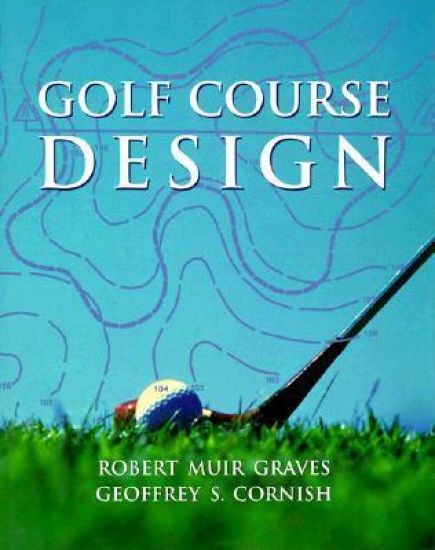
Golf Course Design

Golf Course Design

Robert Muir Graves; Geoffrey S. Cornish

John Wiley Sons Inc
1998
sidottu
When it comes to golf course design, Robert Muir Graves and Geoffrey S. Cornish are true masters. Over the past few decades, they have produced every type of course imaginable: long and short, entry level and upscale, courses built on ocean bluffs and swamps, courses located in the United States and around the world. Now, drawing on this vast experience and their popular golf course design seminars held at the Harvard Graduate School of Design and nationwide for the Golf Course Superintendents Association of America, Graves and Cornish share a wealth of expertise on all aspects of design and construction in this outstanding book. Golf Course Design covers all of the major historic, aesthetic, business, and technical issues of the subject-- from course layout, hole design, drainage, irrigation, and turf-grass selection to planning, financing, construction, and environmental considerations.
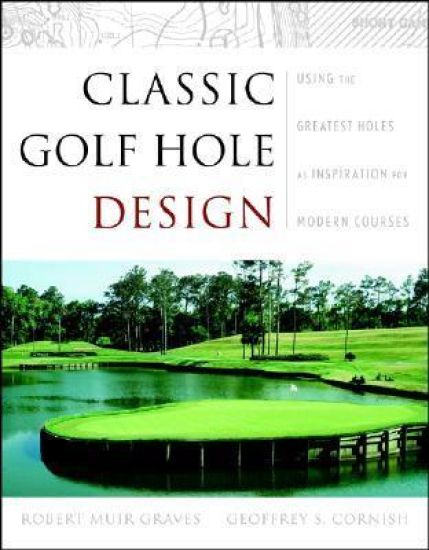
Classic Golf Hole Design

Classic Golf Hole Design

Robert Muir Graves; Geoffrey S. Cornish

John Wiley Sons Inc
2002
sidottu
Golf course construction continues to burgeon in the United States, Asia, and around the world. This book meets the needs of practicing landscape architects and other practicing professionals involved in the design or re-design of golf courses. Each classic hole is described in terms relevant to the designer including its basic design, its maintenance, and its impact on the golfer's game. Three samples accompany each classic hole illustrating varying replications and how those replications were appropriated for the new course. Graves and Cornish are two of the most famous and respected golf course architects in the United States, who have designed or remodeled a combined 1,000+ courses, taught more than 60 seminars on golf course design, and are both past presidents of the American Society of Golf Course Architects.
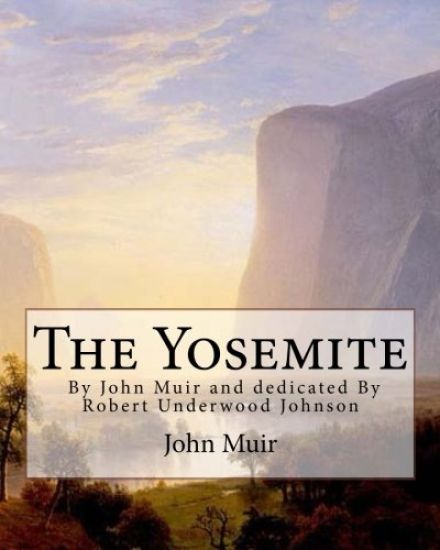
The Yosemite, By John Muir and dedicated By Robert Underwood Johnson: Robert Underwood Johnson (January 12, 1853 - October 14, 1937) was a U.S. writer
In celebration of the centennial of the founding of Yosemite National Park.. John Muir ( April 21, 1838 - December 24, 1914) also known as "John of the Mountains", was a Scottish-American naturalist, author, environmental philosopher and early advocate of preservation of wilderness in the United States. His letters, essays, and books telling of his adventures in nature, especially in the Sierra Nevada of California, have been read by millions. His activism helped to preserve the Yosemite Valley, Sequoia National Park and other wilderness areas. The Sierra Club, which he founded, is a prominent American conservation organization. The 211-mile (340 km) John Muir Trail, a hiking trail in the Sierra Nevada, was named in his honor.Other such places include Muir Woods National Monument, Muir Beach, John Muir College, Mount Muir, Camp Muir and Muir Glacier. In Scotland, the John Muir Way, a 130-mile-long route, was named in honor of him. In his later life, Muir devoted most of his time to the preservation of the Western forests. He petitioned the U.S. Congress for the National Park bill that was passed in 1890, establishing Yosemite National Park. The spiritual quality and enthusiasm toward nature expressed in his writings inspired readers, including presidents and congressmen, to take action to help preserve large nature areas.He is today referred to as the "Father of the National Parks"and the National Park Service has produced a short documentary about his life. Muir has been considered "an inspiration to both Scots and Americans".Muir's biographer, Steven J. Holmes, believes that Muir has become "one of the patron saints of twentieth-century American environmental activity," both political and recreational. As a result, his writings are commonly discussed in books and journals, and he is often quoted by nature photographers such as Ansel Adams."Muir has profoundly shaped the very categories through which Americans understand and envision their relationships with the natural world," writes Holmes.Muir was noted for being an ecological thinker, political spokesman, and religious prophet, whose writings became a personal guide into nature for countless individuals, making his name "almost ubiquitous" in the modern environmental consciousness. According to author William Anderson, Muir exemplified "the archetype of our oneness with the earth", 9] while biographer Donald Worster says he believed his mission was "...saving the American soul from total surrender to materialism." 10]:403 On April 21, 2013, the first ever John Muir Day was celebrated in Scotland, which marked the 175th anniversary of his birth, paying homage to the conservationist........... Robert Underwood Johnson (January 12, 1853 - October 14, 1937) was a U.S. writer and diplomat. His wife was Katharine Johnson
John Muir To Yosemite And Beyond

John Muir To Yosemite And Beyond

Robert Engberg

University of Utah Press,U.S.
1999
nidottu
When John Muir died in 1914, the pre-eminent American naturalist, explorer, and conservationist had not yet written the second volume of his autobiography, in which he planned to cover his Yosemite years. Editors Robert Engberg and Donald Wesling have here provided a remedy.Their account begins in 1863, the year Muir left the University of Wisconsin for what he termed the "University of the Wilderness." Following an accident in 1867 that nearly left him blind, he vowed to turn from machines and continue to study nature. That led, in 1868, to his first visit to Yosemite Valley, where he began his glacier studies. Muir spent much time exploring the Yosemite region, Tuolumne, and both the southern and northern Sierras, publishing articles, and keeping extensive journals through 1875, when he began to write for the San Francisco Bulletin and expanded his travels to areas throughout the west.Mining a rich vein of sources—Muir’s letters, journals, articles, and unpublished manuscripts, as well as selections drawn from biographical pieces written about Muir by people who met him in Yosemite in the early 1870s—Engberg and Wesling have assembled what they term a "composite autobiography," providing brief interpretive and transitional passages throughout the book. This work is especially valuable because it documents Muir’s formative years, when he is maturing away from "conventional cultural paradigms of work and materialism toward new ways of thinking about nature and its impact on human development."
The Queen's Doctor: Being the Strange Story of the Rise and Fall of Struensee, Dictator, Lover and Doctor of Medicine
The Queen's Doctor is a historical non-fiction book that tells the strange story of Johann Friedrich Struensee, a German physician who rose to power as the personal physician of Queen Caroline Matilda of Denmark in the late 18th century. Struensee quickly became the queen's confidant and lover, and eventually seized control of the Danish government, becoming a de facto dictator.The book explores Struensee's rise to power and his controversial reforms, which included abolishing torture and serfdom, and promoting religious tolerance and free speech. However, his radical policies and personal relationships ultimately led to his downfall, as he was eventually arrested, tried, and executed for treason.Author Robert Neumann provides a detailed account of Struensee's life, drawing on historical documents and personal correspondence to paint a vivid picture of the man and his times. The Queen's Doctor is a fascinating look at a little-known chapter in European history, and a compelling portrait of a man who dared to challenge the status quo.This is a new release of the original 1936 edition.This scarce antiquarian book is a facsimile reprint of the old original and may contain some imperfections such as library marks and notations. Because we believe this work is culturally important, we have made it available as part of our commitment for protecting, preserving, and promoting the world's literature in affordable, high quality, modern editions, that are true to their original work.
Improving What is Learned at University

Improving What is Learned at University

John Brennan; Robert Edmunds; Muir Houston; David Jary; Yann Lebeau; Michael Osborne; John T.E. Richardson

Routledge
2010
sidottu
Received the ‘highly commended’ award by the Society for Educational Studies for books published in 2010.What is learned in universities today? Is it what students expect to learn? Is it what universities say they learn? How far do the answers to questions such as these differ according to what, where and how one studies?As higher education has expanded, it has diversified both in terms of its institutional forms and the characteristics of its students. However, what we do not know is the extent to which it has also diversified in terms of ‘what is learned’. In this book, the authors explore this question through the voices of higher education students, using empirical data from students taking 15 different courses at different universities across three subject areas – bioscience, business studies and sociology. The study concentrates on the students’ experiences, lives, hopes and aspirations while at university through data from interviews and questionnaires, and this is collated and assessed alongside the perspectives of their teachers and official data from the universities they attend.Through this study the authors provide insights into ‘what is really learned at university’ and how much it differs between individual students and the universities they attend. Notions of ‘best’ or ‘top’ universities are challenged throughout, and both diversities and commonalities of being a student are demonstrated. Posing important questions for higher education institutions about the experiences of their students and the consequences for graduates and society, this book is compelling reading for all those involved in higher education, providing conclusions which do not always follow conventional lines of thought about diversity and difference in UK higher education.
Improving What is Learned at University

Improving What is Learned at University

John Brennan; Robert Edmunds; Muir Houston; David Jary; Yann Lebeau; Michael Osborne; John T.E. Richardson

Routledge
2009
nidottu
Received the ‘highly commended’ award by the Society for Educational Studies for books published in 2010.What is learned in universities today? Is it what students expect to learn? Is it what universities say they learn? How far do the answers to questions such as these differ according to what, where and how one studies?As higher education has expanded, it has diversified both in terms of its institutional forms and the characteristics of its students. However, what we do not know is the extent to which it has also diversified in terms of ‘what is learned’. In this book, the authors explore this question through the voices of higher education students, using empirical data from students taking 15 different courses at different universities across three subject areas – bioscience, business studies and sociology. The study concentrates on the students’ experiences, lives, hopes and aspirations while at university through data from interviews and questionnaires, and this is collated and assessed alongside the perspectives of their teachers and official data from the universities they attend.Through this study the authors provide insights into ‘what is really learned at university’ and how much it differs between individual students and the universities they attend. Notions of ‘best’ or ‘top’ universities are challenged throughout, and both diversities and commonalities of being a student are demonstrated. Posing important questions for higher education institutions about the experiences of their students and the consequences for graduates and society, this book is compelling reading for all those involved in higher education, providing conclusions which do not always follow conventional lines of thought about diversity and difference in UK higher education.