NATIONAL BESTSELLER“The Way Forward will help every reader master their own challenges—this is a must-read book!” —Admiral Bill McRaven, U.S. Navy (Retired) and author of the #1 New York Times bestseller Make Your BedAmerican Sniper meets Make Your Bed in these life lessons from decorated United States service members and New York Times bestselling authors Robert O’Neill and Dakota Meyer—an in-depth, fearless, and ultimately redemptive account of what it takes to survive and thrive on battlefields from Afghanistan and Iraq to our daily lives, and how the perils of war help us hold onto our humanity.Rob O’Neill and Dakota Meyer are two of the most decorated and recognized US service members: O’Neill killed the world’s most wanted man, Osama bin Laden, and Meyer was the first living Marine to receive the Medal of Honor since the Vietnam War. But beyond their actions and courage in combat, O’Neill and Meyer also have much in common in civilian life: they are both sought-after public speakers, advocates for veterans, and share a non-PC sense of humor. Combining the best of military memoirs and straight-talking self-help, The Way Forward alternates between O’Neill’s and Meyer’s perspectives, looking back with humor at even the darkest war stories, and sharing lessons they learned along the way.The Way Forward presents O’Neill and Meyer’s philosophy in combat and life. This isn’t a book about the glory of war and combat, but one about facing your enemies, some who are flesh and blood and some that are not: Your thoughts. Your doubts. Your boredom and your regrets. From Rob’s dogged repetition at the free throw line of his childhood basketball court to Dakota’s pursuit of EMT and firefighter credentials to aid accident victims, these two American heroes turn their experiences into valuable lessons for every reader.Gritty and down-to-earth, O’Neill and Meyer tell their stories with candor and vulnerability to help readers handle stress, tackle their biggest obstacles, and exceed their expectations of themselves, while keeping life’s battles in perspective with a sense of humor.
The Way Forward will help every reader master their own challenges--this is a must-read book --Admiral Bill McRaven, U.S. Navy (Retired) and author of the #1 New York Times bestseller Make Your BedAmerican Sniper meets Make Your Bed in these life lessons from decorated United States service members and New York Times bestselling authors Robert O'Neill and Dakota Meyer--an in-depth, fearless, and ultimately redemptive account of what it takes to survive and thrive on battlefields from Afghanistan and Iraq to our daily lives, and how the perils of war help us hold onto our humanity.Rob O'Neill and Dakota Meyer are two of the most decorated and recognized US service members: O'Neill killed the world's most wanted man, Osama bin Laden, and Meyer was the first living Marine to receive the Medal of Honor since the Vietnam War. But beyond their actions and courage in combat, O'Neill and Meyer also have much in common in civilian life: they are both sought-after public speakers, advocates for veterans, and share a non-PC sense of humor. Combining the best of military memoirs and straight-talking self-help, The Way Forward alternates between O'Neill's and Meyer's perspectives, looking back with humor at even the darkest war stories, and sharing lessons they learned along the way.The Way Forward presents O'Neill and Meyer's philosophy in combat and life. This isn't a book about the glory of war and combat, but one about facing your enemies, some who are flesh and blood and some that are not: Your thoughts. Your doubts. Your boredom and your regrets. From Rob's dogged repetition at the free throw line of his childhood basketball court to Dakota's pursuit of EMT and firefighter credentials to aid accident victims, these two American heroes turn their experiences into valuable lessons for every reader.Gritty and down-to-earth, O'Neill and Meyer tell their stories with candor and vulnerability to help readers handle stress, tackle their biggest obstacles, and exceed their expectations of themselves, while keeping life's battles in perspective with a sense of humor.
A stirringly evocative, thought-provoking, and often jaw-dropping account of SEAL Team Operator Robert Oâ??Neillâ??s awe-inspiring four-hundred-mission career.
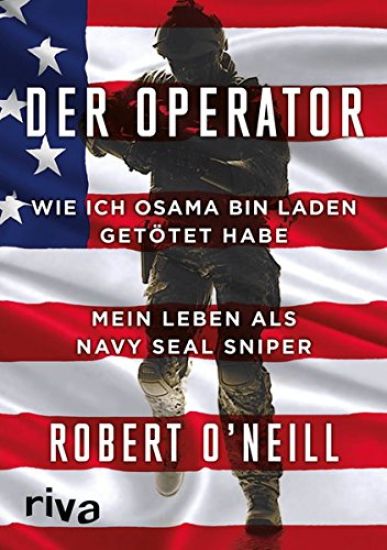
This instant New York Times bestseller--"a jaw-dropping, fast-paced account" (New York Post) recounts SEAL Team Operator Robert O'Neill's incredible four-hundred-mission career, including the attempts to rescue "Lone Survivor" Marcus Luttrell and abducted-by-Somali-pirates Captain Richard Phillips, and which culminated in the death of the world's most wanted terrorist--Osama bin Laden. In The Operator, Robert O'Neill describes his idyllic childhood in Butte, Montana; his impulsive decision to join the SEALs; the arduous evaluation and training process; and the even tougher gauntlet he had to run to join the SEALs' most elite unit. After officially becoming a SEAL, O'Neill would spend more than a decade in the most intense counterterror effort in US history. For extended periods, not a night passed without him and his small team recording multiple enemy kills--and though he was lucky enough to survive, several of the SEALs he'd trained with and fought beside never made it home. "Impossible to put down...The Operator is unique, surprising, a kind of counternarrative, and certainly the other half of the story of one of the world's most famous military operations...In the larger sense, this book is about...how to be human while in the very same moment dealing with death, destruction, combat" (Doug Stanton, New York Times bestselling author). O'Neill describes the nonstop action of his deployments in Iraq and Afghanistan, evokes the black humor of years-long combat, brings to vivid life the lethal efficiency of the military's most selective units, and reveals details of the most celebrated terrorist takedown in history. This is "a riveting, unvarnished, and wholly unforgettable portrait of America's most storied commandos at war" (Joby Warrick).
On 24 May 1966, eight hundred men of the 5th Battalion, The Royal Australian Regiment, landed at Nui Dat, in Viet Cong territory. For the next 12 months they were faced with the task of restoring peace, civil law and regular commerce to the Vietnamese of Phuoc Tuy province. This book is a detailed record of those months in the monsoon jungles-of the problems that were faced and the solutions that were found.Captain O'Neill's position as battalion intelligence officer enabled him to view the war from the standpoint of the battalion as a whole. However, he does not omit description of personal feelings-towards the Viet Cong, the jungle environment and the Vietnamese people, as well as the other Allied forces involved in the war.Most of the book was written on the spot in Vietnam. On operations or at Battalion Headquarters, Captain O'Neill jotted down details of the war against the Viet Cong, putting the events of each day in order, often in the small hours of the following morning. Thus not only is this a factual account of the 5th Battalion's activities over the year; it is also a vivid and compelling picture of the war in Vietnam from the soldier's point of view.
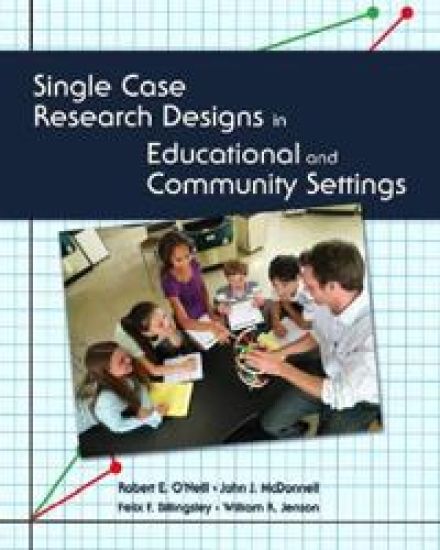
This practical nuts-and-bolts how-to guide to carrying out single case research is keenly focused on practicing this type of research in educational and community settings.Conceptualizing the background underlying this research approach, the book walks you through a step-by-step approach to the components involved in doing such research in this environment. You will learn a brief history on the development of these design approaches, with some of the basic logistical barriers to and solutions for carrying out research in applied settings. Additionally, you will become versed in the nuts-and-bolts procedures of carrying out such research with regard to designing and implementing measurements systems, choosing appropriate designs, and graphing and analyzing data. You will further learn the basics of disseminating research via various professional outlets such as conference presentations and journals for researchers and practitioners. The tables and graphics included list step-by-step procedures for carrying out various data collection and research design strategies, offering concise summaries of some key features of the main procedural elements of single case research, and a guideline to crucial features and concepts. Written for a broad range of educational and other human services professionals, including teachers in both general and special education, the book is also a suitable guide if you are a school psychologist or counselors, or even a social worker, communication disorders specialist, or recreation, occupational, or physical therapist. Unique and new to the market, this “how-to” guide fills a gap for a single case, single subject research design book focused on doing this type of research in educational and community settings, with a strong emphasis on practice versus theory.
This is a book of essays in honour of J.D.B.Miller and looks at the relationship between the West and the Third World. It looks especially at the liberal/democratic West in opposition to the communist East and that version of modernity which is represented by the developed capitalist world.
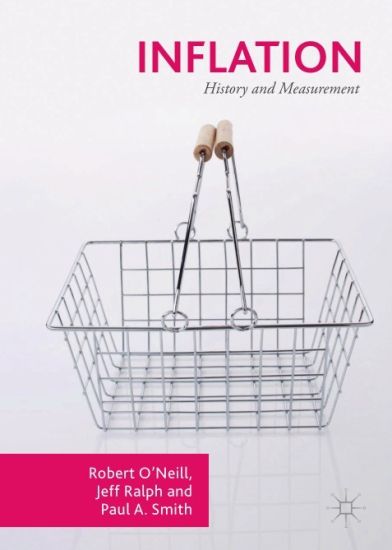
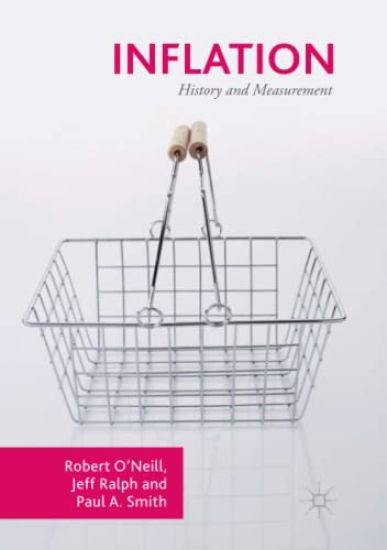
This book is an introduction to the history of – and current measurement practice of – inflation for the United Kingdom. The authors describe the historical development of inflation measures in a global context, and do so without using formal mathematical language and related jargon that relates only to a few specialist scholars. Although inflation is a widely used and quoted statistic, and despite the important role inflation plays in real people’s lives – through pension uprating, train tickets, interest rates and the work of economists – few people understand how it is created. O’Neill, Ralph and Smith mix historical data with a description of practices inside the UK statistical system and abroad, which will aid understanding of how this important economic statistic is produced, and the important and controversial choices that statisticians have made over time.
This Palgrave Pivot reviews the history of the UK's Retail Prices Index (RPI) from its origins just after the Second World War to its controversial position today. Both the developments in the methodology of the index and the political and social context in which its development took place are closely examined. The authors explain how the RPI went from being the dominant measure of inflation for decades to its current position as an officially discredited index. Despite this status, it is still widely used and attracts much support from a range of stakeholders, including several areas of government. Important reading for anyone interested in both sides of the argument for and against RPI and the likely way forward for the measurement of inflation.
Providing a substantive approach to the issue, Management of Library and Archival Security: From the Outside Looking In gives librarians and collection directors practical and helpful suggestions for developing policies and procedures to minimize theft. In addition, this text prepares you to deal with the aftermath of a robbery or natural disaster that destroys priceless materials. Through expert opinions and advice, Management of Library and Archival Security will teach you how to protect and secure invaluable collections and the finances invested in them.In addition, Management of Library and Archival Security offers numerous suggestions for preserving collections from environmental hazards and natural disasters. Contributors discuss several possible scenarios leading to the loss or destruction of library or archive materials and offer numerous measures of protection, including:implementing timely inventory standards, using approved marketing practices, keeping good user records, and having knowledge of insurance coverage making a recovery plan that deals with the impact of a theft and how it may affect staff and the actual workings of a department or archive knowing who to contact after a theft, such as local enforcement agencies, federal officials, and listing the theft on the Library Security Officer Listserv (LSO) to alert local and national libraries and collectors to the crime incorporating internal audits in a university setting to prevent crime and ensure accounting and administration controls are effective and efficient instituting a preservation program for collections, which includes temperature control of the indoor environment, studying the building design for weaknesses or potential dangers, reformatting deteriorating materials, and limiting the handling of materials making plans for the aftermath of a disaster, such as creating methods for risk assessment, developing collection priorities, and making rehabilitation policies for materialsThe chapters in Management of Library and Archival Security offer unique insight from a former F.B.I. agent with extensive experience in library thefts, a preservation specialist, and an archivist with extensive conservation experience in order to provide you with all of the information you need to safeguard library and archive collections against theft, environmental conditions, natural disasters, and resultant financial loss.
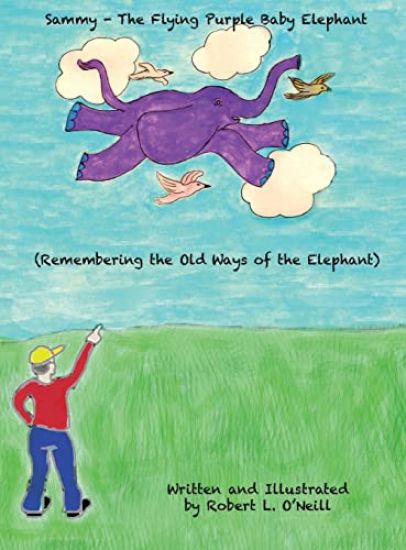
Sammy the flying purple baby elephant is sad that his Mommy and Daddy are on their smartphones all day long. He knows smartphones have lots and lots of good things about them, but why do they have to be on them all day long? Sammy is determined to find a way to get his parents off their smartphones and back to remembering the old ways of the elephant. Will he succeed?Written for adults and children alike, read this delightful children's book and find out. 10% of all online sales will be donated to Save Elephant Foundation (saveelephant.org) an organization dedicated to protecting the Asian elephant.
A major new biography of Eugene O'Neill, the Nobel Prize–winning dramatist who revolutionized American theater“Restores balance to the slightly skewed twenty-first century reputation of America’s greatest playwright. . . . [An] important story, perceptively recounted.”—Wendy Smith, Washington PostFinalist for the Los Angeles Times Book Prize This extraordinary new biography fully captures the intimacies of Eugene O’Neill’s tumultuous life and the profound impact of his work on American drama. Robert M. Dowling innovatively recounts O’Neill’s life in four acts, thus highlighting how the stories he told for the stage interweave with his actual life stories. Each episode also uncovers how O’Neill’s work was utterly intertwined with, and galvanized by, the culture and history of his time. Much is new in this extensively researched book: connections between O’Neill’s plays and his political and philosophical worldview; insights into his Irish upbringing and lifelong torment over losing faith in God; his vital role in African American cultural history; unpublished photographs, including a unique offstage picture of him with his lover Louise Bryant; new evidence of O’Neill’s desire to become a novelist and what this reveals about his unique dramatic voice; and a startling revelation about the release of Long Day’s Journey Into Night in defiance of his explicit instructions. This biography is also the first to discuss O’Neill’s lost play Exorcism (a single copy of which was only recently recovered), a dramatization of his own suicide attempt. Written with lively informality yet a scholar’s strict accuracy, Eugene O’Neill: A Life in Four Acts is a biography that America’s foremost playwright richly deserves.