

Kirjahaku
Etsi kirjoja tekijän nimen, kirjan nimen tai ISBN:n perusteella.
1000 tulosta hakusanalla Robert P Marsh


This fifth edition of Film, Form, and Culture offers a lively introduction to both the formal and cultural aspects of film.With extensive analysis of films past and present, this textbook explores how films are constructed from part to whole: from the smallest unit of the shot to the way shots are edited together to create narrative. Robert P. Kolker and Marsha Gordon demystify the technical aspects of filmmaking and demonstrate how fiction and nonfiction films engage with culture. Over 265 images provide a visual index to the films and issues being discussed. This new edition includes: an expanded examination of digital filmmaking and distribution in the age of streaming; attention to superhero films throughout; a significantly longer chapter on global cinema with new or enlarged sections on a variety of national cinemas (including cinema from Nigeria, Senegal, Burkina Faso, South Korea, Japan, India, Belgium, and Iran); new or expanded discussions of directors, including Alice Guy-Blaché, Lois Weber, Oscar Micheaux, Agnès Varda, Spike Lee, Julie Dash, Jafar Panahi, Ava DuVernay, Jane Campion, Jean-Pierre and Luc Dardenne and Penny Lane; and new, in-depth explorations of films, including Within Our Gates (1919), Black Girl (1966), Creed (2015), Moonlight (2016), Wonder Woman (2017), Get Out (2017), Black Panther (2018), Parasite (2019), Da 5 Bloods (2020), The French Dispatch (2021), The Power of the Dog (2021), RRR (2022), and Tár (2022).This textbook is an invaluable and exciting resource for students beginning film studies at undergraduate level.Additional resources for students and teachers can be found on the eResource, which includes case studies, discussion questions, and links to useful websites.

This fifth edition of Film, Form, and Culture offers a lively introduction to both the formal and cultural aspects of film.With extensive analysis of films past and present, this textbook explores how films are constructed from part to whole: from the smallest unit of the shot to the way shots are edited together to create narrative. Robert P. Kolker and Marsha Gordon demystify the technical aspects of filmmaking and demonstrate how fiction and nonfiction films engage with culture. Over 265 images provide a visual index to the films and issues being discussed. This new edition includes: an expanded examination of digital filmmaking and distribution in the age of streaming; attention to superhero films throughout; a significantly longer chapter on global cinema with new or enlarged sections on a variety of national cinemas (including cinema from Nigeria, Senegal, Burkina Faso, South Korea, Japan, India, Belgium, and Iran); new or expanded discussions of directors, including Alice Guy-Blaché, Lois Weber, Oscar Micheaux, Agnès Varda, Spike Lee, Julie Dash, Jafar Panahi, Ava DuVernay, Jane Campion, Jean-Pierre and Luc Dardenne and Penny Lane; and new, in-depth explorations of films, including Within Our Gates (1919), Black Girl (1966), Creed (2015), Moonlight (2016), Wonder Woman (2017), Get Out (2017), Black Panther (2018), Parasite (2019), Da 5 Bloods (2020), The French Dispatch (2021), The Power of the Dog (2021), RRR (2022), and Tár (2022).This textbook is an invaluable and exciting resource for students beginning film studies at undergraduate level.Additional resources for students and teachers can be found on the eResource, which includes case studies, discussion questions, and links to useful websites.
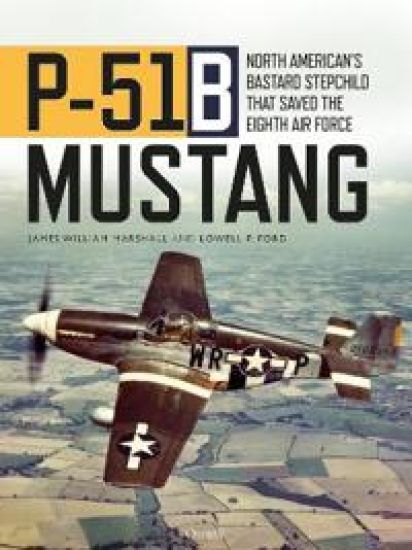
P-51B Mustang
James William "Bill" Marshall; Lowell F. Ford; Col (Ret.) Robert W. Gruenhagen
Osprey Publishing
2020
sidottu
The story of the P-51B Mustang aircraft from its development prior to the American entry into the war through to D-Day in June 1944.During World War II, the United States Army Air Corps was led by a cadre of officers who believed implicitly that military aviation, particularly fast heavy bombers at high altitude, would be able to destroy strategic enemy targets during daylight with minimal losses. However, by 1942 the Flying Fortress was proving vulnerable to Luftwaffe fighters. This title charts the United States Army Air Force's struggle to develop a Long-Range Escort which would enable them to achieve the Combined Bomber Objectives and gain mastery of the skies over the Third Reich. The commitment of the USAAF to the Mediterranean and European theatres saw an increasingly desperate need to find a fighter escort, which reached crisis point in 1943 as losses suffered in the Tidal Wave offensive and Schweinfurt-Regensburg-Munster raids emphasised the mounting strength of the Luftwaffe.The USAAF leaders increasingly accepted the probability of bomber losses, and the deployment of the P-51B Mustang solved the problem of Germany’s layered defence strategy, as Luftwaffe fighters had been avoiding the P-47 Thunderbolt and P-38 Lightening escort fighters by concentrating their attacks beyond the range of the Thunderbolt and Lightning.The P-51B duly emerged as the ‘The Bastard Stepchild’ that the USAAF Material Division did not want, becoming the key Long-Range Escort fighter, alongside the P-38 and P-47, that defeated the Luftwaffe prior to D-Day. As well as the P-51B's history, this title explores the technical improvements made to each of these fighters, as well as the operational leadership and technical development of the Luftwaffe they fought against.

The Home Garden, V3, No. 3, March, 1944
Frederick Frye Rockwell; Robert S. Lemmon; P. J. McKenna
Literary Licensing, LLC
2013
nidottu

Robert P. Higgins Papers: Field Data, USSR, Antarctic, 1957, 1963-1964, 1972, 1986
Robert P. Higgins; National Museum of Natural History (U
Hassell Street Press
2021
nidottu
This work has been selected by scholars as being culturally important and is part of the knowledge base of civilization as we know it.This work is in the public domain in the United States of America, and possibly other nations. Within the United States, you may freely copy and distribute this work, as no entity (individual or corporate) has a copyright on the body of the work.Scholars believe, and we concur, that this work is important enough to be preserved, reproduced, and made generally available to the public. To ensure a quality reading experience, this work has been proofread and republished using a format that seamlessly blends the original graphical elements with text in an easy-to-read typeface.We appreciate your support of the preservation process, and thank you for being an important part of keeping this knowledge alive and relevant.


The World War I Memoirs of Robert P. Patterson
Gary Clifford
University of Tennessee Press
2012
sidottu
A journalist once called Under Secretary of War Robert P. Patterson “the toughest man in Washington” for his fervid efforts in managing U.S. mobilisation in World War II. The World War I Memoirs of Robert P. Patterson: A Captain in the Great War recounts Patterson’s own formative military experiences in the First World War. Written in the years following the conflict, this is a remarkable rendering of what it was like to be an infantry line officer during the so-called Great War. Patterson started his military career as a twenty-seven-year-old, barely-trained captain in the American Expeditionary Forces (A.E.F.). He was part of the 306th Infantry Regiment of New York’s famous 77th “Statue of Liberty” Division from July to November 1918. In this detailed account, Patterson describes in understated yet vivid prose just how raw and unprepared American soldiers were for the titanic battles on the Western Front. Patterson downplays his near-death experience in a fierce firefight that earned him and several of his men from Company F the Distinguished Service Cross. His depiction of the brutal Meuse-Argonne battle is haunting—the drenching cold rains, the omnipresent barbed wire, deep fog-filled ravines, the sweet stench of mustard gas, chattering German machine-guns, crashing artillery shells, and even a rare hot meal to be savored. Dealing with more than just combat, Patterson writes of the friendships and camaraderie among the officers and soldiers of different ethnic and class backgrounds who made up the “melting pot division” of the 77th. He betrays little of the post war disillusionment that afflicted some members of the “Lost Generation.” Editor J. Garry Clifford’s introduction places Patterson and his actions in historical context and illuminates how Patterson applied lessons learned from the Great War to his later service as assistant secretary, under secretary, and secretary of war from 1940 to 1947. |""This memoir illuminates key aspects of the war experience: the enthusiasm for fighting, tensions with officers, tedium with regard to noncombatant work, the variety of trench experiences, the sharp learning curve that the army underwent on the ground, and the confusing nature of combat for ground troops. As the centennial of the war approaches this well-annotated memoir that connects Patterson's individual experiences to the larger U.S. experience of the war will appeal to general readers and specialists alike."" - Jennifer D. Keene, author of World War I: The American Soldier Experience A journalist once called Under Secretary of War Robert P. Patterson ""the toughest man in Washington"" for his fervid efforts in managing U.S. mobilization in World War II. The World War I Memoirs of Robert P. Patterson: A Captain in the Great War recounts Patterson's own formative military experiences in the First World War. Written in the years following the conflict, this is a remarkable rendering of what it was like to be an infantry line officer during the so-called Great War. Patterson started his military career as a twenty-seven-year-old, barely-trained captain in the American Expeditionary Forces (A.E.F.). He was part of the 306th Infantry Regiment of New York's famous 77th ""Statue of Liberty"" Division from July to November 1918. In this detailed account, Patterson describes in understated yet vivid prose just how raw and unprepared American soldiers were for the titanic battles on the Western Front. Patterson downplays his near-death experience in a fierce firefight that earned him and several of his men from Company F the Distinguished Service Cross. His depiction of the brutal Meuse-Argonne battle is haunting- the drenching cold rains, the omnipresent barbed wire, deep fog-filled ravines, the sweet stench of mustard gas, chattering German machine-guns, crashing artillery shells, and even a rare hot meal to be savored. Dealing with more than just combat, Patterson writes of the friendships and camaraderie among the officers and soldiers of different ethnic and class backgrounds who made up the “melting pot division” of the 77th. He betrays little of the postwar disillusionment that afflicted some members of the “Lost Generation.”Editor J. Garry Clifford’s introduction places Patterson and his actions in historical context and illuminates how Patterson applied lessons learned from the GreatWar to his later service as assistant secretary, under secretary, and secretary of war from 1940 to 1947. J. Garry Clifford, a professor of political science at the University of Connecticut, is the coauthor of America Ascendant: American Foreign Relations since 1939 and The First Peacetime Draft, as well as the coeditor of Presidents, Diplomats, and Other Mortals.

The World War I Memoirs of Robert P. Patterson
Gary J. Clifford
University of Tennessee Press
2019
nidottu
A journalist once called Under Secretary of War Robert P. Patterson “the toughest man in Washington” for his fervid efforts in managing U.S. mobilization in World War II. The World War I Memoirs of Robert P. Patterson: A Captain in the Great War recounts Patterson’s own formative military experiences in the First World War.Written in the years following the conflict, this is a remarkable rendering of what it was like to be an infantry line officer during the so-called Great War. Patterson started his military career as a twenty-seven-year-old, barely-trained captain in the American Expeditionary Forces (A.E.F.). He was part of the 306th Infantry Regiment of New York’s famous 77th “Statue of Liberty” Division from July to November 1918. In this detailed account, Patterson describes in understated yet vivid prose just how raw and unprepared American soldiers were for the titanic battles on the Western Front. Patterson downplays his near-death experience in a fierce firefight that earned him and several of his men from Company F the Distinguished Service Cross. His depiction of the brutal Meuse-Argonne battle is haunting—the drenching cold rains, the omnipresent barbed wire, deep fog-filled ravines, the sweet stench of mustard gas, chattering German machine-guns, crashing artillery shells, and even a rare hot meal to be savored.Dealing with more than just combat, Patterson writes of the friendships and camaraderie among the officers and soldiers of different ethnic and class backgrounds who made up the “melting pot division” of the 77th. He betrays little of the postwar disillusionment that afflicted some members of the “Lost Generation.”Editor J. Garry Clifford’s introduction places Patterson and his actions in historical context and illuminates how Patterson applied lessons learned from the GreatWar to his later service as assistant secretary, under secretary, and secretary of war from 1940 to 1947.
Clayton P. Kehoe Towing Company, Inc., Et Al., Petitioners, V. United States Et Al. U.S. Supreme Court Transcript of Record with Supporting Pleadings
Robert P Whelan; Robert H Bork
Gale, U.S. Supreme Court Records
2011
pokkari

Taking the 12 Steps Up-and Down-Kilimanjaro is more than a travelogue or adventure memoir; it is a testament to the power of twelve-step programs to enable addicts to enjoy rich and fulfilling lives as they recover from their addictions. Robert P.'s journey toward recovery began more than forty years ago when he first joined Overeaters Anonymous. As he learned he had to face multiple addictions, Twelve-Step Fellowships helped him to rebuild his life and to heal himself, his finances, and his heart. For his fifty-fifth birthday, he went skydiving, so for his sixtieth, Robert took on an inspiring challenging to raise the stakes and put his resolve-and his recovery-to the ultimate test. He decided to climb Kilimanjaro in the letter and spirit of the twelve steps and twelve traditions. Through painful experience, Robert learned dozens of recovery-and life-lessons as he scaled the famous summit. He couldn't reach the peak alone, and he pays sincere tribute to the team that got him safely up and down the mountain. Robert shares both his inward journey toward lasting recovery and his breathtaking experience on the "Mother Mountain" herself in Taking the 12 Steps Up-and Down-Kilimanjaro.

Nouvelle Organisation Du Travail. Entretien d'Un Ouvrier Avec Son Patron Sur Un Mieux Possible
Robert-P
Hachette Livre - BNF
2017
pokkari

La Poétique de Racine. Etude Sur Le Système Dramatique de Racine
Robert-P
Hachette Livre - BNF
2018
pokkari
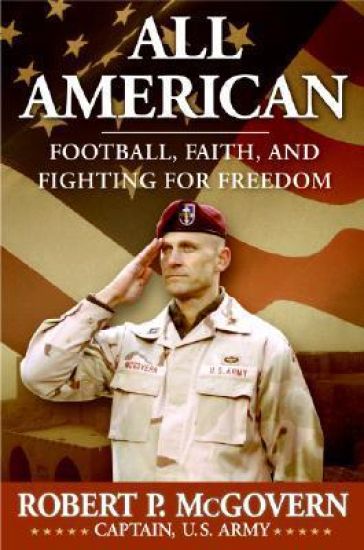
Captain Robert McGovern epitomizes all that is right and good in America. One of nine children growing up in a New Jersey family, he made local headlines as a high school football phenom before becoming a star linebacker for the Kansas City Chiefs, the Pittsburgh Steelers, and the New England Patriots. When his illustrious NFL career was over, he earned a law degree from Fordham University and went to work for the New York City district attorney's office. From that vantage point he witnessed close-up the fall of the Twin Towers on that world-altering morning in September 2001--an event that inspired him to leave public life and join the U.S. Army to better serve the country he loves.As a military prosecuting attorney, Captain McGovern has advised battlefield commanders on legal rules of engagement in Afghanistan and has prosecuted suspected terrorists in Iraq. A dedicated soldier and a man of faith who has been on the front lines of the War on Terror--both at home and in the Middle East--Captain Robert McGovern is an extraordinary American with a remarkable and important story to tell--one that every American needs to hear.
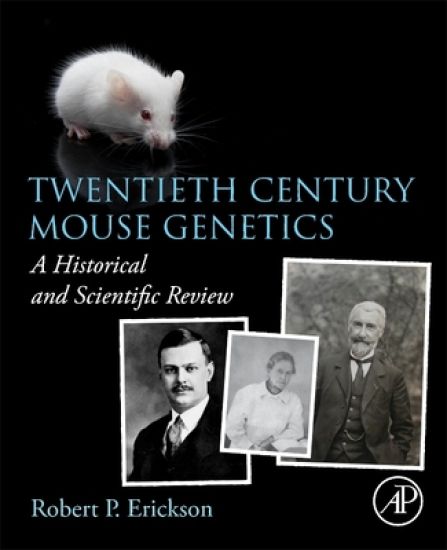
Twentieth Century Mouse Genetics: A Historical and Scientific Review provides a comprehensive examination of key advances in mouse genetics throughout the 20th century. Here Dr. Robert P. Erickson, a leader in the field, identifies the contributions of historic mouse genetics studies, and how those approaches and early discoveries are still shaping human genetics research and medical genetics today. In addition to historical overviews, the author provides researcher biographies and updates connecting historic research to ongoing advances. Past studies discussed use the T/t complex as an example and include the origins of mouse genetics, the synthesis of genetics and evolution, cytogenetics and gene mapping, population genetics and mutation research, immunogenetics, reproductive genetics, molecular cloning, X-inactivation and epigenetics, sex determination, and pharmacogenetics. Here researchers, students, and clinicians will find fresh inspiration to engage in human genetics research employing mouse models and to translate those findings to clinical practice.
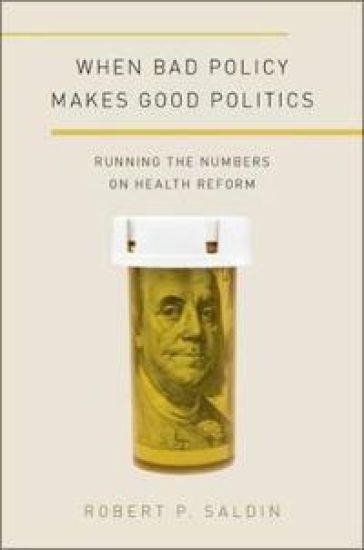
From all outward appearances, the American policymaking process has been revolutionized in the last half century. Beginning in the 1970s, new safeguards were put in place to prevent the kind of free-wheeling and sometimes reckless policymaking environment of earlier periods. These changes--including the creation of the non-partisan Congressional Budget Office--were widely hailed as ushering in a new era of accountability in Washington and putting an end to the days when cagey political operatives could rush major legislation through Congress without any real consideration of the economic costs. But what if the supposedly new and improved policymaking process that resulted from these 'good government' reforms is every bit as prone to manipulation as the one it replaced? As Robert Saldin shows in When Bad Policy Makes Good Politics, that has unfortunately been the case. As in the past, the new politics of the policymaking process encourage savvy political actors to game the system. The very rules that were designed to thwart financially irresponsible legislation now incentivize the development of fundamentally flawed and unworkable policies. To uncover the pathologies of the American policymaking process, Saldin traces the sad tale of the Community Living Assistance Services and Supports (CLASS) Act. While few outside the beltway are aware of it, it was a major piece of legislation that played a central role in the passage of the Affordable Care Act (ACA), the most important social policy law since the 1960s. The CLASS Act targeted an intractable problem: the ever-increasing demand for costly long-term care services. For decades, both Republicans and Democrats have recognized the problem as a major one, so the question has not been whether we should tackle it. Rather, the debate centered on how we should do it-that is, how we should pay for it. The problem was always that the costs were staggering, and there was little political will to fund such a program (Medicare did not fund it). Long term care advocates realized this, and therefore focused on passing a law that effectively ignored the economic costs. They finally shuttled it into the larger Affordable Care Act, which was passed into law in 2010. Saldin traces the process, showing how an array of perverse incentives allowed such a flawed law to come into being. In fact, Kathleen Sibelius, the Secretary of Health and Human Services, announced in late 2011 that the administration would no longer try to put the law into effect because of its basic unworkability. Saldin's book is ostensibly about this one piece of legislation, but it's about much more than this: the near-impossibility of passing 'clean' laws that are not doctored by special interests adept at gaming the system. Essential reading for anyone interested in the policymaking process, the book establishes that our current policymaking environment produces outcomes that are just as perverse as the ones enacted by the old system.

From all outward appearances, the American policymaking process has been revolutionized in the last half century. Beginning in the 1970s, new safeguards were put in place to prevent the kind of free-wheeling and sometimes reckless policymaking environment of earlier periods. These changes--including the creation of the non-partisan Congressional Budget Office--were widely hailed as ushering in a new era of accountability in Washington and putting an end to the days when cagey political operatives could rush major legislation through Congress without any real consideration of the economic costs. But what if the supposedly new and improved policymaking process that resulted from these 'good government' reforms is every bit as prone to manipulation as the one it replaced? As Robert Saldin shows in When Bad Policy Makes Good Politics, that has unfortunately been the case. As in the past, the new politics of the policymaking process encourage savvy political actors to game the system. The very rules that were designed to thwart financially irresponsible legislation now incentivize the development of fundamentally flawed and unworkable policies. To uncover the pathologies of the American policymaking process, Saldin traces the sad tale of the Community Living Assistance Services and Supports (CLASS) Act. While few outside the beltway are aware of it, it was a major piece of legislation that played a central role in the passage of the Affordable Care Act (ACA), the most important social policy law since the 1960s. The CLASS Act targeted an intractable problem: the ever-increasing demand for costly long-term care services. For decades, both Republicans and Democrats have recognized the problem as a major one, so the question has not been whether we should tackle it. Rather, the debate centered on how we should do it-that is, how we should pay for it. The problem was always that the costs were staggering, and there was little political will to fund such a program (Medicare did not fund it). Long term care advocates realized this, and therefore focused on passing a law that effectively ignored the economic costs. They finally shuttled it into the larger Affordable Care Act, which was passed into law in 2010. Saldin traces the process, showing how an array of perverse incentives allowed such a flawed law to come into being. In fact, Kathleen Sibelius, the Secretary of Health and Human Services, announced in late 2011 that the administration would no longer try to put the law into effect because of its basic unworkability. Saldin's book is ostensibly about this one piece of legislation, but it's about much more than this: the near-impossibility of passing 'clean' laws that are not doctored by special interests adept at gaming the system. Essential reading for anyone interested in the policymaking process, the book establishes that our current policymaking environment produces outcomes that are just as perverse as the ones enacted by the old system.

Twenty years since its release, Stanley Kubrick's Eyes Wide Shut remains a complex, visually arresting film about domesticity, sexual disturbance, and dreams. It was on the director's mind for some 50 years before he finally put it into production. Using the Stanley Kubrick Archive at the University of the Arts, London, and interviews with participants in the production, the authors create an archeology of the film that traces the progress of the film from its origins to its completion, reception, and afterlife. The book is also an appreciation of this enigmatic work and its equally enigmatic creator.