
Kirjahaku
Etsi kirjoja tekijän nimen, kirjan nimen tai ISBN:n perusteella.
1000 tulosta hakusanalla Robert Shedinger



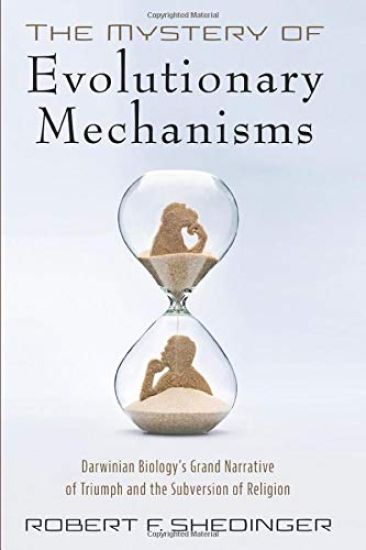
Is Darwinian evolution really the most successful scientific theory ever proposed--or even the best idea anyone has ever had, as Daniel Dennett once put it? The Mystery of Evolutionary Mechanisms provides a comprehensive critical reading of the literature of evolutionary biology from Darwin to Dobzhansky to Dawkins, revealing this popular account of evolution to be a grand narrative of Darwinian triumph that greatly overstates the empirical validity of modern evolutionary theory. The mechanisms driving the evolutionary process truly remain a mystery more than one hundred fifty years after Origin of Species, a fact that can free religion scholars to think in more creative ways about the positive contributions religious reflection might make to our understanding of life's origin and diversity. The Mystery of Evolutionary Mechanisms calls for an embrace of mystery, understood not as an abdication of the scientific quest for truth but as a courageous and humble acknowledgment of the limits of human reason and an openness to a fundamentally religious orientation toward life. ""Maybe, just maybe, Darwinian evolution has been a bit oversold. Luther College religion professor Robert Shedinger dives into contemporary documents as well as the historical record to show that the theory's impressive public facade is belied by frank private admissions that even top scientists are unsure of what is the mechanism of evolution. The implications for religion scholars are immense."" --Michael J. Behe, Author of Darwin's Black Box ""As a neuroscientist who had, for all my adult life, taken the Darwinian theory of natural selection as the absolute basis of evolution, I found that reading The Mystery of Evolutionary Mechanisms was like reading a thrilling detective story . . . This is a very compelling read and an eye-opening history regarding the making of a scientific theory, particularly by how theory-making can be influenced as much by the belief structures of a current scientific culture as by the evidence of their research."" --Marjorie Woollacott, Prof. Emerita of Neuroscience, University of Oregon Robert F. Shedinger is Professor of Religion at Luther College in Decorah, Iowa. He is the author of Jesus and Jihad (Cascade Books, 2015) and several other books in religious studies. This is his first book on the topic of religion and science.
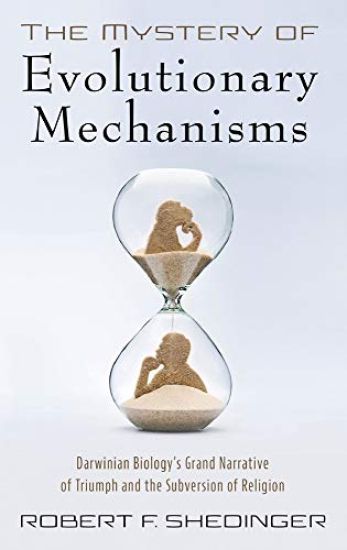
Is Darwinian evolution really the most successful scientific theory ever proposed--or even the best idea anyone has ever had, as Daniel Dennett once put it? The Mystery of Evolutionary Mechanisms provides a comprehensive critical reading of the literature of evolutionary biology from Darwin to Dobzhansky to Dawkins, revealing this popular account of evolution to be a grand narrative of Darwinian triumph that greatly overstates the empirical validity of modern evolutionary theory. The mechanisms driving the evolutionary process truly remain a mystery more than one hundred fifty years after Origin of Species, a fact that can free religion scholars to think in more creative ways about the positive contributions religious reflection might make to our understanding of life's origin and diversity. The Mystery of Evolutionary Mechanisms calls for an embrace of mystery, understood not as an abdication of the scientific quest for truth but as a courageous and humble acknowledgment of the limits of human reason and an openness to a fundamentally religious orientation toward life.


An intriguing question - Do Muslims understand Jesus in some ways more historically appropriate than Christians do? - leads Robert F. Shedinger into a series of provocative challenges to the disciplines of religious studies and comparative religions. Questioning the convenient distinction between "politics" and "religion" and the isolation of "religion" from wider social and cultural questions, Shedinger offers a proposal for a more accurate and respectful understanding of faith that he argues will improve possibilities for mutual understanding among Christians, Muslims - and others.
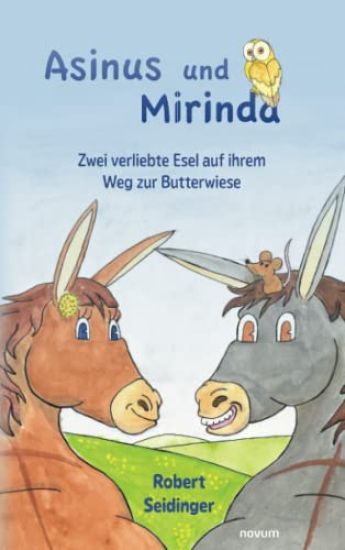
Asinus ist ein einsamer Esel. Leider interessiert das den gemeinen Bauern Hasenbutz wenig, denn dieser hat nur im Sinn, wie viel er mit dem kleinen Esel verdienen kann. Kein Wunder also, dass Asinus bei der n chsten Gelegenheit ausb xt.

Twenty-First Century Feminisms in Children's and Adolescent Literature
Roberta Seelinger Trites
University Press of Mississippi
2018
sidottu
Over twenty years after the publication of her groundbreaking work, Waking Sleeping Beauty: Feminist Voices in Children’s Novels, Roberta Seelinger Trites returns to analyze how literature for the young still provides one outlet in which feminists can offer girls an alternative to sexism. Supplementing her previous work in the linguistic turn, Trites employs methodologies from the material turn to demonstrate how feminist thinking has influenced literature for the young in the last two decades. She interrogates how material feminism can expand our understanding of maturation and gender – especially girlhood – as represented in narratives for preadolescents and adolescents. Twenty-First-Century Feminisms in Children’s and Adolescent Literature applies principles behind material feminisms, such as ecofeminism, intersectionality, and the ethics of care, to analyze important feminist thinking that permeates twenty-first-century publishing for youth. The structure moves from examinations of the individual to examinations of the individual in social, environmental, and interpersonal contexts. The book deploys ecofeminism and the posthuman to investigate how embodied individuals interact with the environment and via the extension of feministic ethics how people interact with each other romantically and sexually.Throughout the book, Trites explores issues of identity, gender, race, class, age, and sexuality in a wide range of literature for young readers, such as Kate DiCamillo’s Flora and Ulysses, Jacqueline Woodson’s Brown Girl Dreaming, and Rainbow Rowell’s Eleanor & Park. She demonstrates how shifting cultural perceptions of feminism affect what is happening both in publishing for the young and in the academic study of literature for children and adolescents.

Twenty-First-Century Feminisms in Children's and Adolescent Literature
Roberta Seelinger Trites
University Press of Mississippi
2019
nidottu
Over twenty years after the publication of her groundbreaking work, Waking Sleeping Beauty: Feminist Voices in Children's Novels, Roberta Seelinger Trites returns to analyze how literature for the young still provides one outlet in which feminists can offer girls an alternative to sexism. Supplementing her previous work in the linguistic turn, Trites employs methodologies from the material turn to demonstrate how feminist thinking has influenced literature for the young in the last two decades. She interrogates how material feminism can expand our understanding of maturation and gender—especially girlhood—as represented in narratives for preadolescents and adolescents.Twenty-First-Century Feminisms in Children's and Adolescent Literature applies principles behind material feminisms, such as ecofeminism, intersectionality, and the ethics of care, to analyze important feminist thinking that permeates twenty-first-century publishing for youth. The structure moves from examinations of the individual to examinations of the individual in social, environmental, and interpersonal contexts. The book deploys ecofeminism and the posthuman to investigate how embodied individuals interact with the environment and via the extension of feministic ethics how people interact with each other romantically and sexually.Throughout the book, Trites explores issues of identity, gender, race, class, age, and sexuality in a wide range of literature for young readers, such as Kate DiCamillo's Flora and Ulysses, Jacqueline Woodson's Brown Girl Dreaming, and Rainbow Rowell's Eleanor & Park. She demonstrates how shifting cultural perceptions of feminism affect what is happening both in publishing for the young and in the academic study of literature for children and adolescents.
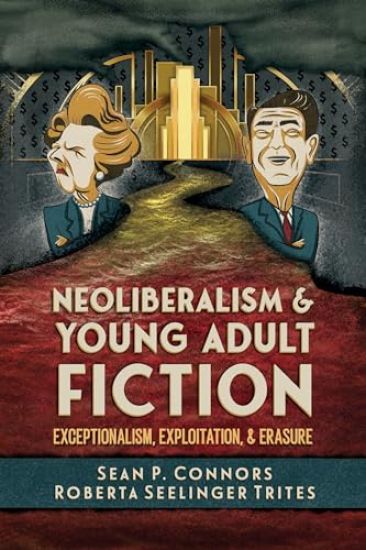
Neoliberalism and Young Adult Fiction
Sean P. Connors; Roberta Seelinger Trites
UNIVERSITY PRESS OF MISSISSIPPI
2025
sidottu
In the twenty-first century, the influence of neoliberalism, the belief that society benefits when both individuals and corporations are free to maximize their talents in the service of responding to social needs and problems, resonates through all domains of human life. And yet, little critical study has been given to the reproduction of a neoliberal social order in YA literature. Neoliberalism and Young Adult Fiction: Exceptionalism, Exploitation, and Erasure examines how some YA literature naturalizes neoliberalism in positioning teenagers as self-enclosed, competitive individuals. At the same time, however, the authors also examine other YA novels as potential sites of resistance that acknowledge teenagers’ agency to reject neoliberalism’s destructive impulses and to work for social justice and equality through collective action.With that in mind, the authors of Neoliberalism and Young Adult Fiction analyze such concepts as how the exceptionality of specific characters who embody neoliberal ideals leads to self-enclosed individualism and how environmental exploitation and consumerism lead to destructive effects. The book progresses to an in-depth examination of how racism undergirds US neoliberalism and environmental exploitation. From scrutinizing racism—and the rejection of neoliberalism inherent in the antiracism movement—the study turns to an examination of gender, specifically focusing on the relationship between sexism, exploitation, and embodied rejections of patriarchal thinking. Indeed, erasure is implicated in racism, sexism, and all forms of discrimination that are borne of exploitation. Finally, youth activism—with its rejection of neoliberal ideologies—leads to a culminating chapter about how global youth link YA literature to their protest movements.
Neoliberalism and Young Adult Fiction
Sean P. Connors; Roberta Seelinger Trites
UNIVERSITY PRESS OF MISSISSIPPI
2025
pokkari
In the twenty-first century, the influence of neoliberalism, the belief that society benefits when both individuals and corporations are free to maximize their talents in the service of responding to social needs and problems, resonates through all domains of human life. And yet, little critical study has been given to the reproduction of a neoliberal social order in YA literature. Neoliberalism and Young Adult Fiction: Exceptionalism, Exploitation, and Erasure examines how some YA literature naturalizes neoliberalism in positioning teenagers as self-enclosed, competitive individuals. At the same time, however, the authors also examine other YA novels as potential sites of resistance that acknowledge teenagers’ agency to reject neoliberalism’s destructive impulses and to work for social justice and equality through collective action.With that in mind, the authors of Neoliberalism and Young Adult Fiction analyze such concepts as how the exceptionality of specific characters who embody neoliberal ideals leads to self-enclosed individualism and how environmental exploitation and consumerism lead to destructive effects. The book progresses to an in-depth examination of how racism undergirds US neoliberalism and environmental exploitation. From scrutinizing racism—and the rejection of neoliberalism inherent in the antiracism movement—the study turns to an examination of gender, specifically focusing on the relationship between sexism, exploitation, and embodied rejections of patriarchal thinking. Indeed, erasure is implicated in racism, sexism, and all forms of discrimination that are borne of exploitation. Finally, youth activism—with its rejection of neoliberal ideologies—leads to a culminating chapter about how global youth link YA literature to their protest movements.

In the novel's Preface, the Author states: "In a few short words, the content of the book is this: A boy dedicates himself to the clerical profession with the fire of childlike enthusiasm, the youth goes astray in his profession, and the man, 'because not all flowering dreams ripened, ' has the notion of giving it up and 'fleeing to the desert.' Yet Heaven has decided otherwise. With resignation he comes back to himself and begins again to believe in his calling. Besides this, everything which is presented in the book belongs partly to the characteristics of the hero appearing in it, partly to the characteristics of our time chiefly with regard to religious, ecclesiastical, and especially clerical matters."


Robert
Createspace Independent Publishing Platform
2014
nidottu


Julie, a single mother, and her daughter Karen, are trying to move on after the loss of Julie's soulmate Kmyviks. Kmyviks was an alien who was a criminal on his home planet. He was exiled to Earth for one year until his sentence could be executed. While on Earth he fell in love with Julie and they had an incredible romance. After Kmyviks was taken back to his home planet, Julie discovered she was pregnant with his child. 'Robert' is the story of how Julie and Karen struggled to raise a child who was half alien. Robert quickly discovers he is not like the other children and struggles in a world where he is clearly superior. After awhile, Robert senses a connection with his father whom he has never met. Could Kmyviks still be alive?

Archer's Dynasty1. Delmar2. Peter3. Robert4. William5. Sherman6. DarrelElizabeth Monroe moved from Chicago to a small town in Ohio to live with her grandda, Bingo. He owned the construction company updating Peter's house. Elizabeth was helping out until she could take her medical boards to transfer her license to Ohio.Robert Archer was bored with being an attorney and wanted to try his hand at construction. He had an eye for detail and wanted to help his brother, Peter, out. Robert was focusing so hard on the tile job that when Elizabeth suddenly spoke out of seemingly nowhere, he was startled and fell, hitting his head hard on the tub.Elizabeth went immediately into doctor mode to save Robert. With his head bandaged and his eyes covered, Robert only knew her by the sound of her voice and her surly attitude. Surly or not, Robert was intrigued and falling quickly for the new doctor.