Kirjojen hintavertailu. Mukana 11 244 527 kirjaa ja 12 kauppaa.

Kirjahaku

Etsi kirjoja tekijän nimen, kirjan nimen tai ISBN:n perusteella.

1000 tulosta hakusanalla Robert Thornton

The Prose Alexander of Robert Thornton

The Prose Alexander of Robert Thornton

Robert Thornton

Peter Lang Publishing Inc
1992
sidottu
Medieval scribes often treated the works that they copied as -living works- which could not be ascribed to a single author and were, therefore, static. These scribal editors appropriated and, in rewriting, dismembered the original textual body. They reshaped these texts in their own image. In an attempt to avoid the perpetuation of such 'Frankentexts, ' Dr. Chappell's edition of Robert Thornton's prose "Alexander" regenerates the scribal artifact with little emendation, modernization, or other imposition on the manuscript text. At the same time, this edition offers an interpretation in the form of a Modern English translation so that Robert Thornton's text might be accessible to a more diverse audience."
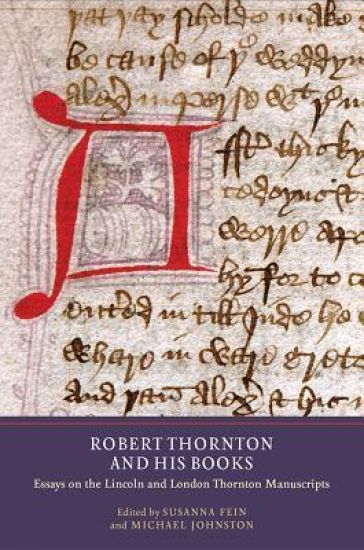
Robert Thornton and his Books
Essays examining the compiler and contents of two of the most important and significant extant late medieval manuscript collections. The Yorkshire landowner Robert Thornton (c.1397- c.1465) copied the contents of two important manuscripts, Lincoln Cathedral, MS 91 (the "Lincoln manuscript"), and London, British Library, MS Additional 31042 (the "London manuscript") in the middle decades of the fifteenth century. Viewed in combination, his books comprise a rare repository of varied English and Latin literary, religious and medical texts that survived the dissolution of the monasteries, when so many other medieval books were destroyed. Residing in the texts he copied and used are many indicators of what this gentleman scribe of the North Riding read, how he practised his religion, and what worldly values he held for himself and his family. Because of the extraordinary nature of his collected texts - Middle English romances, alliterative verse (the alliterative Morte Arthure only exists here), lyrics and treatises of religion ormedicine - editors and scholars have long been deeply interested in uncovering Thornton's habits as a private, amateur scribe. The essays collected here provide, for the first time, a sustained, focussed light on Thornton and hisbooks. They examine such matters as what Thornton as a scribe made, how he did it, and why he did it, placing him in a wider context and looking at the contents of the manuscripts. Susanna Fein is Professor of Englishat Kent State University; Michael Johnston is an Assistant Professor of English at Purdue University. Contributors: Julie Nelson Couch, Susanna Fein, Rosalind Field, Joel Fredell, Ralph Hanna, Michael Johnston, George R. Keiser, Julie Orlemanski, Mary Michele Poellinger, Dav Smith, Thorlac Turville-Petre.
Unimagined Community

Unimagined Community

Robert Thornton

University of California Press
2008
pokkari
This groundbreaking work, with its unique anthropological approach, sheds new light on a central conundrum surrounding AIDS in Africa and in so doing, reframes current debates about the disease. Robert J. Thornton explores why HIV prevalence fell during the 1990s in Uganda despite that country's having one of Africa's highest fertility rates, while, during the same period, HIV prevalence rose in South Africa, a country with Africa's lowest fertility rate. Using anthropological, epidemiological, and mathematical methods, Thornton finds that culturally and socially determined differences in the structure of sexual networks - rather than changes in individual behavior - were responsible for these radical differences in HIV prevalence. His study exposes these invisible networks, or unimagined communities, unseen both by those who participate in them and by the social sciences, and opens a new area of investigation - the sexual network as social structure. Incorporating such factors as property, mobility, social status, and political authority into our understanding of AIDS transmission, Thornton offers a fresh vision of the disease, one that suggests new avenues for fighting it worldwide.
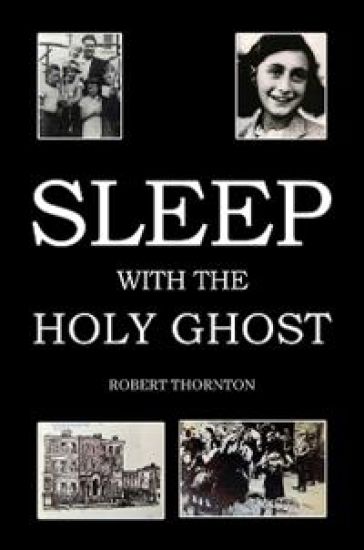
Sleep with the Holy Ghost

Sleep with the Holy Ghost

Robert Thornton

Austin Macauley Publishers
2024
nidottu
"Do you think, Sir, that Ireland should have joined the war against Germany?" "I mean, Sir, that the married women in Ireland, like me Ma, and lots of other fellas' mothers have loads of babies and are always having to go into hospital to have them or have to feed them and wash them. The mothers have stacks of work to do all the time and they're always carrying babies around in their bellies or in their arms." Patsy Fagan, growing up in Dublin in the 1950s, asks awkward questions of his schoolteacher, Mr Bambrick. A reflective memoir that touches on the impact of history, war, death of a young sister, religion, and schooling on the lives of the characters. Patsy, falling in love as a teenager, facing the uncertainty of having to leave Dublin to live in England. This tender, amusing, sharp and gloriously sparkling work will appeal to a wide audience who enjoy engaging with the full range of human emotions. Striking, thoughtful, funny; guaranteed to keep you reading - a book to relish.
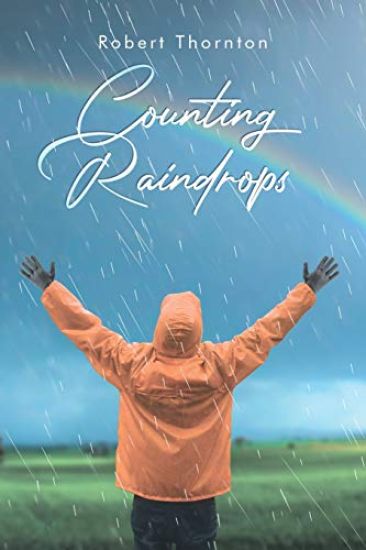
Counting Raindrops

Counting Raindrops

Robert Thornton

Christian Faith Publishing, Inc
2020
pokkari
There shall be showers of blessings. (Ezekiel 34:26)The goodness, kindness, and blessings of God did not "start" when we repented of our sins and came to Christ--because it was the goodness and mercy of God that "led us" to repentance.Romans 2:4 says that we did not know that it was the goodness and forbearance of God that leads us to repentance. This is due to the fact that before our conversion, our "spiritual birth," or our born-again experience, we were blind to spiritual things-even the benevolent intervention of God in our lives.Remember, Jesus said in St. John 3:3, Except a man be born again, he cannot see the kingdom of God.Before we received Christ and became born again, we were spiritually blind. Saint John 1:12-13 says, But as many as received him, to them gave the power to become the sons of God, even to them that believe on his name: Which were born, not of blood, nor of the will of the flesh, nor of the will of man, but of God.Therefore, after we are born again and are alive unto God, we are able to see and recognize all the goodness and mercy of God in our lives. When we look back over our lives with our new "spiritual perception," we see the goodness and forbearance of God that tenderly guided us to our salvation.Often the Holy Spirit will take us on a retrospective journey into our past and illuminate various times and situations that as born-again children, we are now able to see and identify as the gracious hand of our Heavenly Father at work in our lives. He was working in our lives long before we ever came to truly know Him or appreciate the goodness and mercy that was granted to us.However, when we do take the time and look back through the years with the eyes of our understanding being opened by our new birth in Christ, we begin to realize the blessings are more than we are able to count.It's like trying to count raindrops during a springtime shower. Of course, we know that it would be impossible to count each one. But whenever we recognize any of the providential blessings of God, and testify of his goodness and his mighty acts, we are giving praise to his name. Since there are so many of them and they never cease, then our praises of God would be continuous. This is why the palmist said, I will bless the Lord at all times: his praise shall continually be in my mouth. (Psalm 34:1)Also, I will shew forth all thy marvelous works. (Psalm 9:1)AndO magnify the Lord with me, and let us exalt his name together. (Psalm 34:3)The greatest form of praise is to describe what our God is able to do, has done, and is still doing--even in our times. He is able to do "exceeding, abundantly above all that we ask of think, according to the power that worketh in us" (Ephesians 3:20).It is my prayer that every believer will be more inspired to look through the clear prism of spiritual discernment and review their lives--before and after coming to Christ--and show forth all his marvelous works.
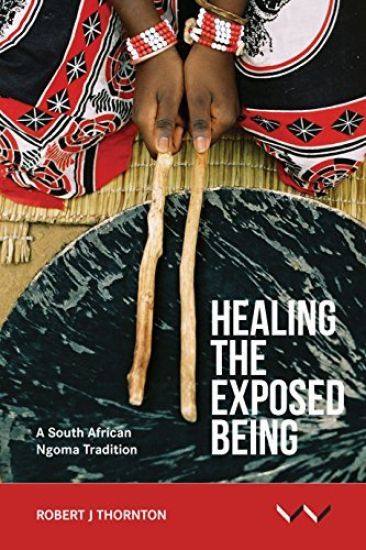
Healing the Exposed Being

Healing the Exposed Being

Robert Thornton

Wits University Press
2017
nidottu
This ethnography explores the Ngoma healing tradition as practised in eastern Mpumalanga, South Africa. `Bungoma’ is an active philosophical system and healing practice consisting of multiple strands that is basedon the notion that humans are intrinsically exposed to each other; while this is the cause of illness, it is also the condition for the possibility of healing. This healing seeks to protect the `exposed being’ from harm through augmenting the self. Unlike Western medicine, it does not seek to cure physical ailments but aims to prevent suffering by allowing patients to transform their personal narratives of self. Like Western medicine, it is empirical and is presented as `local knowledge’ that amounts to a practical anthropology of human conflict and the environment. The book examines this anthropology through political, economic, interpretive and environmental lenses and seeks to bring its therapeutic applications into relation with global academic anthropology.