Kirjojen hintavertailu. Mukana 11 244 527 kirjaa ja 12 kauppaa.

Kirjahaku

Etsi kirjoja tekijän nimen, kirjan nimen tai ISBN:n perusteella.

1000 tulosta hakusanalla Robert Tofte

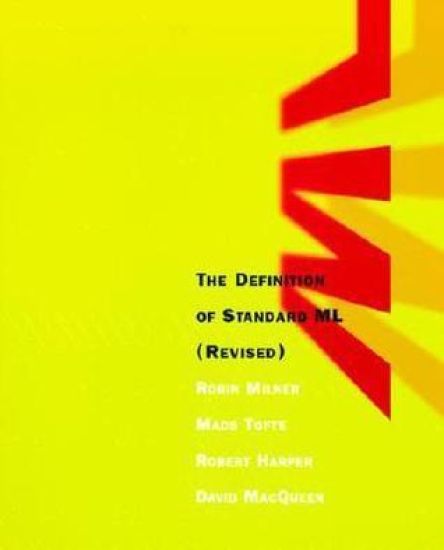
The Definition of Standard ML

The Definition of Standard ML

Robin Milner; Robert Harper; David MacQueen; Mads Tofte

MIT Press
1997
pokkari
Standard ML is a general-purpose programming language designed for large projects. This book provides a formal definition of Standard ML for the benefit of all concerned with the language, including users and implementers. Because computer programs are increasingly required to withstand rigorous analysis, it is all the more important that the language in which they are written be defined with full rigor. One purpose of a language definition is to establish a theory of meanings upon which the understanding of particular programs may rest. To properly define a programming language, it is necessary to use some form of notation other than a programming language. Given a concern for rigor, mathematical notation is an obvious choice. The authors have defined their semantic objects in mathematical notation that is completely independent of Standard ML. In defining a language one must also define the rules of evaluation precisely-that is, define what meaning results from evaluating any phrase of the language. The definition thus constitutes a formal specification for an implementation. The authors have developed enough of their theory to give sense to their rules of evaluation. The Definition of Standard ML is the essential point of reference for Standard ML. Since its publication in 1990, the implementation technology of the language has advanced enormously and the number of users has grown. The revised edition includes a number of new features, omits little-used features, and corrects mistakes of definition.
Boken om IT-arkitektur

Boken om IT-arkitektur

Daniel Akenine; Eva Kammerfors; Jonas Toftefors; Sven-Håkan Olsson; Robert Folkesson; Christer Berg

Kunskapshuset Förlag
2014
nidottu
Den här boken är för dig som vill ha en djupare förståelse av IT-arkitektur. Den adresserar alla typer av IT-arkitektfrågor i en organisation - alltifrån strategi och verksamhetsförståelse till teknik och mjukvara. Oberoende om du är IT-arkitekt, utvecklare, projektledare, student, chef eller bara arbetar professionellt med IT är detta boken för dig som vill förstå hur IT kan fungera i ett modernt företag. Boken om IT-arkitektur är ett unikt samarbete, skriven av ett dedikerat redaktörsteam tillsammans med ett 30-tal experter, IT-arkitekter och organisationer i Sverige. Den kommer ge dig en översikt och förståelse för moderna metoder inom IT-arkitektur och de olika delar, specialiseringar och verktyg som ingår. Daniel Akenine Huvudredaktör Boken täcker olika områden som: Enterprisearkitektur EA-funktionen Strategier Organisation Verksamhetsarkitektur Att förstå affären Modellera verksamheten Praktiska råd Lösningsarkitektur Integration Infrastruktur Molnet och IT-arkitektur Mjukvaruarkitektur Kvalitetsattribut Agile Ramverk Kompetens Vad ska en IT-arkitekt kunna? Hårda och mjuka krav Internationella perspektiv ... samt mycket, mycket mer ...
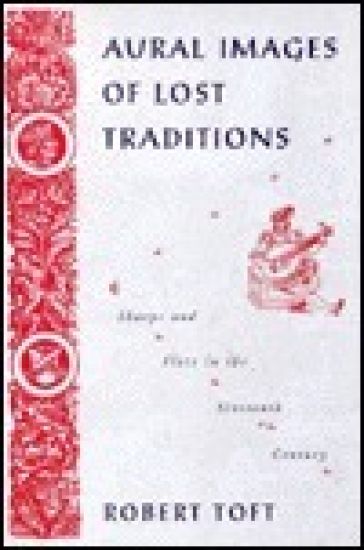
Aural Images of Lost Tradition

Aural Images of Lost Tradition

Robert Toft

University of Toronto Press
1992
sidottu
The oral traditions surrounding the application of sharps and flats to 16th century vocal music are documented in relation to theoretical literature, vocal sources, and intabulations of vocal music. Special reference is made to the motets of Josquin Desprez, Clemens non Papa, and Alexander Agricola.
Recording Classical Music

Recording Classical Music

Robert Toft

CRC Press Inc
2019
nidottu
Recording Classical Music presents the fundamental principles of digitally recording and editing acoustic music in ambient spaces, focusing on stereo microphone techniques that will help musicians understand how to translate "live" environments into recorded sound.The book covers theory and the technical aspects of recording from sound source to delivery: the nature of soundwaves and their behavior in rooms, microphone types and the techniques of recording in stereo, proximity and phase, file types, tracking and critical listening, loudness, meters, and the post-production processes of EQ, control of dynamic range (compressors, limiters, dynamic EQ, de-essers), and reverberation (both digital reflection simulation and convolution), with some discussion of commercially available digital plugins. The final part of the book applies this knowledge to common recording situations, showcasing not only strategies for recording soloists and small ensembles, along with case studies of several recordings, but also studio techniques that can enhance or replace the capture of performances in ambient spaces, such as close miking and the addition of artificial reverberation.Recording Classical Music provides the tools necessary for anyone interested in classical music production to track, mix, and deliver audio recordings themselves or to supervise the work of others.
Recording Classical Music

Recording Classical Music

Robert Toft

CRC Press Inc
2019
sidottu
Recording Classical Music presents the fundamental principles of digitally recording and editing acoustic music in ambient spaces, focusing on stereo microphone techniques that will help musicians understand how to translate "live" environments into recorded sound.The book covers theory and the technical aspects of recording from sound source to delivery: the nature of soundwaves and their behavior in rooms, microphone types and the techniques of recording in stereo, proximity and phase, file types, tracking and critical listening, loudness, meters, and the post-production processes of EQ, control of dynamic range (compressors, limiters, dynamic EQ, de-essers), and reverberation (both digital reflection simulation and convolution), with some discussion of commercially available digital plugins. The final part of the book applies this knowledge to common recording situations, showcasing not only strategies for recording soloists and small ensembles, along with case studies of several recordings, but also studio techniques that can enhance or replace the capture of performances in ambient spaces, such as close miking and the addition of artificial reverberation.Recording Classical Music provides the tools necessary for anyone interested in classical music production to track, mix, and deliver audio recordings themselves or to supervise the work of others.
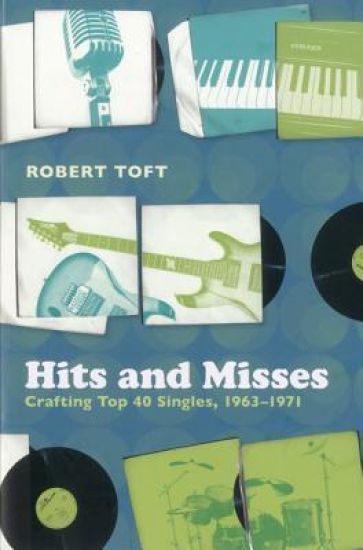
Hits and Misses

Hits and Misses

Robert Toft

Continuum Publishing Corporation
2010
nidottu
This is a concise and insightful piece of popular music scholarship, analyzing the creative processes behind some very familiar hit singles from the 1960s. "Hits and Misses" examines a selection of songs and recordings through the lens of textual criticism and delineates the creative process as it unfolds from the initial conception of a song to the final mix presented on disc. The book takes as its subject top 40 singles released between 1963 and 1971 in the USA, Britain, and Canada, and considers the songs themselves and their transformation in the studio. Robert Toft studies the methods by which recordists (songwriters, arrangers, band members, producers, and engineers) impart their ideas to audiences. The first part of the book concentrates on songs and examines lyrics and the strategies songwriters employ to develop a story, as well as the music that enhances the telling of those stories. The second part of the book investigates the sonic surface of recordings and considers how recordists fashion musical material into effective musical discourse. "Hits and Misses" will be an invaluable text for all those who are studying the sound, craft, and context of pop music.
Tune Thy Musicke to Thy Hart

Tune Thy Musicke to Thy Hart

Robert Toft

University of Toronto Press
1993
pokkari
Many singers today perform Elizabethan and Jacobean lute-songs. Robert Toft offers the first help for singers in understanding the principles which governed song performance and composition in the early seventeenth century. He shows how these historical principles may be used to move and delight modern audiences. The main purpose of early seventeenth-century singing was to persuade listeners using a style of utterance that had two principal parts – to sing eloquently and to act aptly. Toft discusses these two facets of singing within a broad cultural context, drawing upon music’s sister arts, poetry and oratory, to establish the nature of eloquence and action in relation to singing. He concentrates on these techniques which can be transferred easily from one medium to the other. Specifically, he draws on the two aspects of oratory which directly bear on singing: elocutio, the methods of amplifying and decorating poetry and music with figures, and pronunciatio, techniques of making figurative language inflame the passions of listeners. The arrangement of the material has been inspired by the method of schooling William Kempe prescribed in 1588. The first part of the book examines elocutio, for singers need to understand the structure of songs before they can sing them well. The second part considers pronunciatio and focuses on the techniques used to capture and inflame the minds of listeners, that is, the role of pronunciation in utterance, the methods for making figures and other passionate ornaments manifest, the application of divisions and graces to melodies, and the art of gesture. In the final section of the book, Toft applies the techniques of early seventeenth-century eloquent delivery to two songs – ‘Sorrow sorrow stay’ and ‘In darknesse let mee dwell’ – by one of the greatest English songwriters ever to have lived, John Dowland.
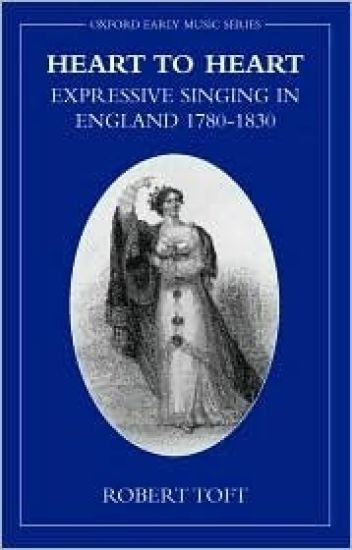
Heart to Heart

Heart to Heart

Toft Robert

Oxford University Press
2000
sidottu
This book establishes the principles of interpretation that singers active in England (both foreign and English) applied to recitatives, arias, and songs, by composers such as Handel, Mozart, and Rossini. Expression lay at the heart of persuasive singing during the late eighteenth and early nineteenth centuries and Robert Toft here ably places the concept and its practices in a broad cultural perspective. Singing was related closely to speaking in this period: when the techniques of delivery that were common to both arts (emphasis, accent, tone of voice, pauses, breathing, and gesture) are combined with resources peculiar to singing (portamento, messa di voce, tempo, rubato, vibrato, and ornamentation), the style which emerges differs markedly from that of the late twentieth century. Most singers today perform the repertoire of the late eighteenth and early nineteenth centuries, but until now no book has addressed the principles which governed song performance in this period or shown how historical understandings may be used to move and delight modern audiences.
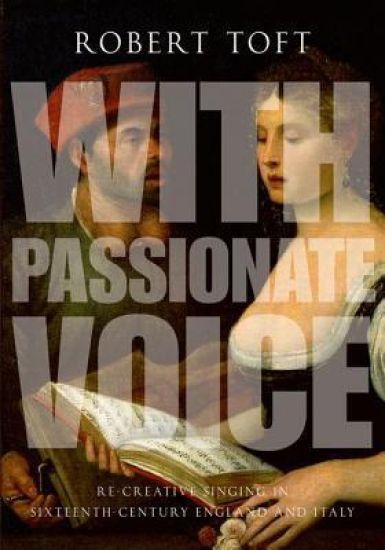
With Passionate Voice

With Passionate Voice

Toft Robert

Oxford University Press Inc
2015
sidottu
Musicians in the 16th century had a vastly different understanding of the structure and performance of music than today's performers. In order to transform inexpressively notated music into passionate declamation, Renaissance singers treated scores freely, and it was expected that each would personalize the music through various modifications, which included ornamentation. Their role was one of musical re-creation rather than of simple interpretation—the score represented a blueprint, not a master plan, upon which they as performer built the music. As is now commonly recognized, this flexible approach to scores changed over the centuries; the notation on the page itself became an ostensible musical Urtext and performers began following it much more closely, their sole purpose being to reproduce what was thought to be the composer's intentions. Yet in recent years, scholars and performers are once again freeing themselves from the written page—but the tools for doing so have long been out of reach. With Passionate Voice gives these tools to modern singers of Renaissance music, enabling them to learn and master the art of "re-creative singing." Providing a much-needed historically-informed perspective, author Robert Toft discusses the music of composers ranging from Marchetto Cara to John Dowland in the context of late Renaissance rhetoric, modal theory (and its antecedents in language), and performance traditions. Focusing on period practice in England and Italy, the two countries which produced the music of greatest interest to today's performers, Toft reconstructs the style of sung delivery through contemporary treatises on music, rhetoric and oratory. Toft remains faithful to the ways these principles were explained in the period, and thus breathes new life into this vital art form. With Passionate Voice is sure to be essential for vocalists, teachers and coaches of early music repertoire.
With Passionate Voice

With Passionate Voice

Toft Robert

Oxford University Press Inc
2015
nidottu
Musicians in the 16th century had a vastly different understanding of the structure and performance of music than today's performers. In order to transform inexpressively notated music into passionate declamation, Renaissance singers treated scores freely, and it was expected that each would personalize the music through various modifications, which included ornamentation. Their role was one of musical re-creation rather than of simple interpretation—the score represented a blueprint, not a master plan, upon which they as performer built the music. As is now commonly recognized, this flexible approach to scores changed over the centuries; the notation on the page itself became an ostensible musical Urtext and performers began following it much more closely, their sole purpose being to reproduce what was thought to be the composer's intentions. Yet in recent years, scholars and performers are once again freeing themselves from the written page—but the tools for doing so have long been out of reach. With Passionate Voice gives these tools to modern singers of Renaissance music, enabling them to learn and master the art of "re-creative singing." Providing a much-needed historically-informed perspective, author Robert Toft discusses the music of composers ranging from Marchetto Cara to John Dowland in the context of late Renaissance rhetoric, modal theory (and its antecedents in language), and performance traditions. Focusing on period practice in England and Italy, the two countries which produced the music of greatest interest to today's performers, Toft reconstructs the style of sung delivery through contemporary treatises on music, rhetoric and oratory. Toft remains faithful to the ways these principles were explained in the period, and thus breathes new life into this vital art form. With Passionate Voice is sure to be essential for vocalists, teachers and coaches of early music repertoire.
Bel Canto

Bel Canto

Toft Robert

Oxford University Press Inc
2013
sidottu
The art of bel canto, or 'beautiful singing,' is perhaps the most referenced and yet the most enigmatic and elusive style in the repertoire of the classically trained singer. During the bel canto era of the late eighteenth and early nineteenth centuries, composers routinely left the final shaping of recitatives, arias, and songs to performers. Vocalists in turn treated scores as a starting point for interpretation and personalized the music as their own, rather than merely giving voice to the score as written, transforming otherwise inexpressively notated music into passionate declamation. In other words, singers saw their role more as one of re-creation than of simple interpretation. Familiarity with the range of strategies prominent vocalists of the past employed to unlock the eloquent expression hidden in scores enables modern singers to take a similar re-creative approach to enhancing the texts before them. In this first ever guide to the bel canto style, author Robert Toft provides singers with the tools they need to bring scores to life in an historically informed manner. Replete with illustrations based on excerpts from Italianate recitatives and arias by composers ranging from Handel to Mozart, each chapter offers a theoretical discussion of one fundamental aspect of bel canto, followed by a practical application of the principals involved. Drawing on a wealth of documents surviving the era, including treatises, scores, newspaper reviews, and letters, this book reflects the breadth of practices utilized by singers of the bel canto era, affording modern day vocalists the opportunity to not only how singers altered and embellished the texts before them, but also to develop their own personal style of doing so. Complete with six complete aria scores for performers to personalize through bel canto techniques, and a companion website offering demonstrations of the principles explained, Bel Canto is an essential resource to any singer or vocal instructor looking to explore and master this repertoire.
Bel Canto

Bel Canto

Toft Robert

Oxford University Press Inc
2013
nidottu
The art of bel canto, or 'beautiful singing,' is perhaps the most referenced and yet the most enigmatic and elusive style in the repertoire of the classically trained singer. During the bel canto era of the late eighteenth and early nineteenth centuries, composers routinely left the final shaping of recitatives, arias, and songs to performers. Vocalists in turn treated scores as a starting point for interpretation and personalized the music as their own, rather than merely giving voice to the score as written, transforming otherwise inexpressively notated music into passionate declamation. In other words, singers saw their role more as one of re-creation than of simple interpretation. Familiarity with the range of strategies prominent vocalists of the past employed to unlock the eloquent expression hidden in scores enables modern singers to take a similar re-creative approach to enhancing the texts before them. In this first ever guide to the bel canto style, author Robert Toft provides singers with the tools they need to bring scores to life in an historically informed manner. Replete with illustrations based on excerpts from Italianate recitatives and arias by composers ranging from Handel to Mozart, each chapter offers a theoretical discussion of one fundamental aspect of bel canto, followed by a practical application of the principals involved. Drawing on a wealth of documents surviving the era, including treatises, scores, newspaper reviews, and letters, this book reflects the breadth of practices utilized by singers of the bel canto era, affording modern day vocalists the opportunity to not only how singers altered and embellished the texts before them, but also to develop their own personal style of doing so. Complete with six complete aria scores for performers to personalize through bel canto techniques, and a companion website offering demonstrations of the principles explained, Bel Canto is an essential resource to any singer or vocal instructor looking to explore and master this repertoire.
Den tolfte spelaren

Den tolfte spelaren

Lena Risberg; Robert Hedman

Lind Co
2026
sidottu
TOPPDOMAREN BILL JAKOBSSON HITTAS brutalt mördad efter en hetsig derbymatch. Kriminalkommissarie Ingela Forsman, gruppchef på Grova Brotts Södermalmsavdelning och kollegan Enzo Conti, får fallet på sina bord och dras in i en värld där gränsen mellan passion och våld sedan länge suddats ut. Jakten på sanningen leder dem till huliganmiljöer och korrupta maktspel där alla har något att dölja – men handlar mordet verkligen bara om domarbeslut på fotbollsplanen? Den tolfte spelaren är en tät och intensiv kriminalroman om besatthet, makt och vad som händer när passion förvandlas till hat. Boken är den andra fristående delen i Södermalmsmorden, som inleddes med Nattvardsbarnet. LENA RISBERG har tidigare skrivit den omtyckta mysdeckarserien om Bim och Ninni, samt den historiska romanen Stulna drömmar. Tillsammans med sin son ROBERT HEDMAN har hon tidigare skrivit Nattvardsbarnet, den första delen i Södermalmsmorden. De bor båda två på Södermalm i Stockholm, där serien utspelar sig.