Kirjojen hintavertailu. Mukana 11 241 044 kirjaa ja 12 kauppaa.

Kirjahaku

Etsi kirjoja tekijän nimen, kirjan nimen tai ISBN:n perusteella.

1000 tulosta hakusanalla Robert Weiss

Loneliness

Loneliness

Robert Weiss

MIT Press
1975
pokkari
Loneliness is among the most common distresses. In one survey, a quarter of Americans interviewed said that they had suffered from loneliness within the past few weeks. Yet for a condition so pervasive, loneliness has received little professional attention. Loneliness: The Experience of Emotional and Social Isolation brings together papers which attempt to capture the phenomena of loneliness with case materials that illuminate the descriptive and theoretical acccounts. It is organized into seven sections, covering: explanations for the neglect of loneliness, and an attept to describe the condition; mechanisms underlying some forms of loneliness; a discussion of situations in which loneliness is commonly found; loneliness among those suffering the loss of a loved one; the loneliness of social isolation; resources available to the lonely; and, finally, a look at issues yet to be dealt with and some suggestions for the management of loneliness. This book is a useful resource for social scientists, clinicians, and individuals who now or in the future may suffer from loneliness.
Sex Addiction 101: A Basic Guide to Healing from Sex, Porn, and Love Addiction
The number of affordable, easy links to pleasurable sexual online content is on the rise. Activity increases with the accessibility of technology. So, too, has sex addiction. People struggling with sex, porn, and love addiction typically have little understanding of this incredibly complicated disease. Sex Addiction 101 covers everything from what sexual addiction is and how it can best be treated, to how it affects various subgroups of the population such as women, gays, and teenagers. The book also provides sex addicts with strategies to protect themselves from the online sexual onslaught. Sex Addiction 101 is intended to enlighten the clinical population as well as actual sex addicts and their loved ones. Along with his mentor Patrick Carnes, Weiss has become the face of and driving force behind understanding and treating sex addiction; this book should be a core title in every addiction collection.
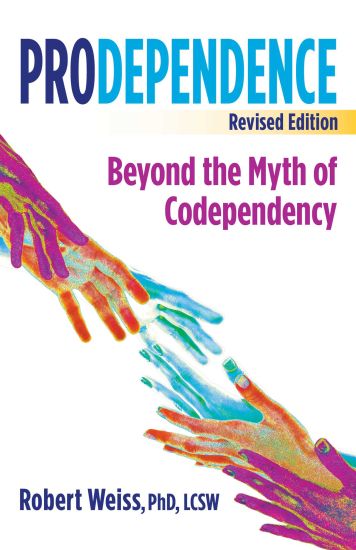
Prodependence

Prodependence

Robert Weiss

HEALTH COMMUNICATIONS
2022
pokkari
Prodependence revolutionized addiction healthcare by improving the ways we treat loved ones of addicts and other troubled people by offering them more dignity for their suffering rather than blame for the problem. This revised edition builds on the model, revealing many more ways to put the method into practice and strategies for setting healthy boundaries. Do you love an addict? Do you sometimes feel like their addiction is your fault? Are people calling you codependent? If our treatment toward loved ones of addicts alienates them, it's time we change our approach.With Prodependence, Dr. Robert Weiss offers us the first fully new paradigm in nearly 40 years for helping those who love and care for addicts. An attachment-focused model, prodependence recognizes that no one can ever love too much, nor should anyone be pathologized for whomever they choose to love as is often the case. Prodependence informs caregivers how to love more effectively, but without having to bear a negative label for the valuable support they give. When treating loved ones of addicts and other troubled people using prodependence, we need not find something “wrong” with them. Instead, we acknowledge the trauma and inherent dysfunction that occurs when living in relationship with someone whose life is failing and keep moving forward. Validating a caregiver's painful journey for what it is opens the door to support them in useful, non-shaming ways.Helping people take incremental, positive steps toward intimate healing is what Prodependence is all about!
Trees of the Northern Pacific Coast

Trees of the Northern Pacific Coast

Robert Weiss

ROWMAN LITTLEFIELD
2024
pokkari
Tress of the Northern Pacific Coast is a photographic guidebook that identifies over sixty of the most prominent native and naturalized tree species of the coastal region spanning from California, Oregon and Washington, to British Columbia and Southern Alaska. Entires for each species contains a full descriptions that details shape and form, physical characteristics, habitat, wildlife uses and informations on identifying potential signs of disease and damage. Each entry will also include multiple photographs, detailing the tree's bark, needles/leaves, seeds/pine cones and overall appearance.
Trees of the Rocky Mountains

Trees of the Rocky Mountains

Robert Weiss

ROWMAN LITTLEFIELD
2025
pokkari
Trees of the Rocky Mountains will fill a gap in Falcon’s nature category by providing readers with a dedicated guidebook to identifying the most prominent tree species occurring in the Rocky Mountain region of North America. This guide will cover a selection of the most prominent native and naturalized tree species of the iconic Rocky Mountain region spanning Colorado, Wyoming, Montana, Utah, and Idaho.Each species will get a full description detailing shape and form, physical characteristics, habitat, wildlife uses, and information on identifying potential signs of disease and damage. Each species entry will include multiple photographs, detailing the tree’s bark, needles/leaves, seeds/pinecones, and overall appearance.
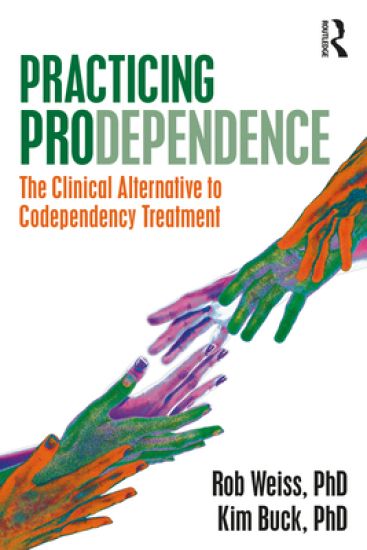
Practicing Prodependence

Practicing Prodependence

Robert Weiss; Kim Buck

TAYLOR FRANCIS LTD
2022
nidottu
In Practicing Prodependence: The Clinical Alternative to Codependency Treatment, Drs. Weiss and Buck present a new social and psychological model of human interdependence-focused treatment for families and loved ones of addicts. Unlike Codependence, Prodependence celebrates the human need for and pursuit of intimate connection, viewing this as a positive force for change. This strength and attachment-based model is focused on accepting and celebrating human connection in ways that are healthy and life affirming for each person – even in the face of addiction. In this way, Prodependence presents a new paradigm through which loved ones can learn to love more effectively, without bearing shame or judgment for the valuable help they give. This book will assist counselors, therapists, and addiction professionals in improving the ways they treat loved ones of addicts and other troubled people, teaching readers how to offer clients more dignity for their suffering than blame for the problem.
Practicing Prodependence

Practicing Prodependence

Robert Weiss; Kim Buck

TAYLOR FRANCIS LTD
2022
sidottu
In Practicing Prodependence: The Clinical Alternative to Codependency Treatment, Drs. Weiss and Buck present a new social and psychological model of human interdependence-focused treatment for families and loved ones of addicts. Unlike Codependence, Prodependence celebrates the human need for and pursuit of intimate connection, viewing this as a positive force for change. This strength and attachment-based model is focused on accepting and celebrating human connection in ways that are healthy and life affirming for each person – even in the face of addiction. In this way, Prodependence presents a new paradigm through which loved ones can learn to love more effectively, without bearing shame or judgment for the valuable help they give. This book will assist counselors, therapists, and addiction professionals in improving the ways they treat loved ones of addicts and other troubled people, teaching readers how to offer clients more dignity for their suffering than blame for the problem.
Always Turned on

Always Turned on

Robert Weiss; Jennifer P. Schneider

Gentle Path Press (imprint of New Freedom Publications)
2015
nidottu
Technology has significantly changed our world. Sexual imagery and encounters can now be accessed anywhere, anytime, using portable electronic devices. Users can generate a stream of graphic pornography, a wide variety of virtual sexual activities, and casual, anonymous, or paid-for sexual encounters with a click or a tap. Simply put, we have greater access to highly stimulating sexual content, and potential sexual partners, with much less built-in accountability. Porn addicts are especially vulnerable to the lure of digital technology and the seemingly endless array of stimulation it provides. Research suggests that cyber-porn addicts spend at least eleven or twelve hours per week online viewing porn. Today, all forms of sex addiction are technology driven--from porn websites to webcams to casual sex hook-up apps found on smartphones. Sex addicts organize their lives around the pursuit of sexual activity with self or others, spending inordinate amounts of time viewing and masturbating to porn or planning, pursuing, and engaging in sex acts. At the same time, they neglect important relationships, work, and personal responsibilities.Overwhelming feelings of guilt, shame, and remorse invade when the acting out ends. While it's complicated, recovery is possible. Always Turned On shows readers how to turn those temptations off while providing practical long-term solutions for recovery.
The Politics of Empowerment

The Politics of Empowerment

Robert Weissberg

Praeger Publishers Inc
1999
sidottu
On today's menu of remedies for our social and economic ills, empowerment has become immensely popular. The scholarly literature abounds with it: computerized searches yield thousands of citations in myriad disciplines. The education profession seems intoxicated by it; it infuses the entire political spectrum—from Marxists to feminists, from Black Power advocates to conservatives. As Weissberg points out, all assume, typically with more hope than proof, that if only people seized control of their lives, betterment would surely ensue. Allegedly, empowerment will cure everything from personal disorders to declining city centers. Weissberg conducts an FDA-like inquiry across numerous academic disciplines to assess the worthiness of this cure. He balances a close reading of the underlying theoretical foundations with empirically demonstrated effectiveness. Entire chapters are devoted to empowerment as a cure for personal problems ranging from health to homelessness, education, community development, and the problems afflicting African Americans. Despite all the promises, however, evidence of accomplishment is not forthcoming. Indeed, as Weissberg demonstrates, much of the evidence is twisted to disguise failure. Worse, much of this helpfulness is merely admonitions for greater dependency and misdirection away from cures of proven utility. Given that almost all this advice emanates from academics, the discrepancy between promise and result raises some troubling issues about today's academy. Clearly, professors do not suffer from ill-conceived remediation though their careers may flourish from publications about uplifting. Bound to be controversial, ^IThe Politics of Empowerment^R is a tonic for social scientists, policy makers, and citizens concerned with America's myriad sociopolitical problems.
Connecting Speaking & Writing in Second Language Writing Instruction

Connecting Speaking & Writing in Second Language Writing Instruction

Robert Weissberg

The University of Michigan Press
2006
nidottu
Connecting Speaking & Writing in Second Language Writing Instruction provides both a theoretical perspective on the importance of L2 learners' development of written language as well as practical strategies for incorporating social interaction into the writing classroom.Weissberg provides a compelling argument for rethinking and reclaiming the speaking-writing connection. He reminds L2 writing specialists about the work of Vygotsky and other sociocultural theorists and how social interaction and inner speech play an integral role in writing. Weissberg also shows how encouraging concurrent oral-writing proficiencies affects L2 learners and how dialogue-writing relationships are developed through writing tasks, group activities, conferencing, dialogue journals, and teacher-written feedback. This well-researched and theoretical treatment of the speaking-writing connection is likely to encourage more teachers to "socialize" their L2 writing classrooms.
Bad Students, Not Bad Schools

Bad Students, Not Bad Schools

Robert Weissberg

Routledge
2017
nidottu
Americans are increasingly alarmed over our nation's educational deficiencies. Though anxieties about schooling are unending, especially with public institutions, these problems are more complex than institutional failure. Expenditures for education have exploded, and far exceed inflation and the rising costs of health care, but academic achievement remains flat. Many students are unable to graduate from high school, let alone obtain a college degree. And if they do make it to college, they are often forced into remedial courses. Why, despite this fiscal extravagance, are educational disappointments so widespread?In Bad Students, Not Bad Schools, Robert Weissberg argues that the answer is something everybody knows to be true but is afraid to say in public America's educational woes too often reflect the demographic mix of students. Schools today are filled with millions of youngsters, too many of whom struggle with the English language or simply have mediocre intellectual ability. Their lackluster performances are probably impervious to the current reform prescriptions regardless of the remedy's ideological derivation. Making matters worse, retention of students in school is embraced as a philosophy even if it impedes the learning of other students. Weissberg argues that most of America's educational woes would vanish if indifferent, troublesome students were permitted to leave when they had absorbed as much as they could learn; they would quickly be replaced by learning-hungry students, including many new immigrants from other countries.American education survives since we import highly intelligent, technically skillful foreigners just as we import oil, but this may not last forever. When educational establishments get serious about world-class mathematics and science, and permit serious students to learn, problems will dissolve. Rewarding the smartest, not spending fortunes in a futile quest to uplift the bottom, should become official policy. This book is a bracing reminder of the risks of political manipulation of education and argues that the measure of policy should be academic achievment.
Pernicious Tolerance

Pernicious Tolerance

Robert Weissberg

AldineTransaction
2008
sidottu
Recent decades have seen a consistent effort by the American educational establishment to instruct schoolchildren about the importance of "appreciating differences," all in the name of "tolerance," so as to quell burgeoning "hate." In Pernicious Tolerance, Robert Weissberg argues that educators' endless obsession with homophobia, sexism, racism, and other alleged hateful disorders is part of a much larger ongoing radical ideological quest to transform America, by first capturing education.In pursuing their objectives, radical pedagogues have abandoned the idea of tolerance of what some find objectionable. In its place they have adopted a fantasy—that tolerance can be replaced with a blank-check appreciation of diversity. Weissberg argues that this approach is guaranteed to promote civil strife. In rejecting a more workable version of tolerance, today's professional educators risk civic disaster in an effort to achieve legitimacy for those they believe are unfairly marginalized, stigmatized, underappreciated, and otherwise disdained.Weissberg also addresses the issue of an ever-expanding welfare state not only concerned with our material being, but, critically, also with our "mental health," defined as beliefs about the vulnerable or victims in waiting—women, ethnic and racial minorities, homosexuals, and others. He shows that this therapeutic state does not stop at imploring good thinking; it goes much further and criminalizes evil thoughts, as if thinking poorly of those at risk is tantamount to inflicting bodily harm. There is substantial collateral damage in this quest for tolerance; it facilitates intellectual sloth while raising anti-intellectualism to an honored professional norm.
Bad Students, Not Bad Schools

Bad Students, Not Bad Schools

Robert Weissberg

AldineTransaction
2010
sidottu
Americans are increasingly alarmed over our nation's educational deficiencies. Though anxieties about schooling are unending, especially with public institutions, these problems are more complex than institutional failure. Expenditures for education have exploded, and far exceed inflation and the rising costs of health care, but academic achievement remains flat. Many students are unable to graduate from high school, let alone obtain a college degree. And if they do make it to college, they are often forced into remedial courses. Why, despite this fiscal extravagance, are educational disappointments so widespread?In Bad Students, Not Bad Schools, Robert Weissberg argues that the answer is something everybody knows to be true but is afraid to say in public America's educational woes too often reflect the demographic mix of students. Schools today are filled with millions of youngsters, too many of whom struggle with the English language or simply have mediocre intellectual ability. Their lackluster performances are probably impervious to the current reform prescriptions regardless of the remedy's ideological derivation. Making matters worse, retention of students in school is embraced as a philosophy even if it impedes the learning of other students. Weissberg argues that most of America's educational woes would vanish if indifferent, troublesome students were permitted to leave when they had absorbed as much as they could learn; they would quickly be replaced by learning-hungry students, including many new immigrants from other countries.American education survives since we import highly intelligent, technically skillful foreigners just as we import oil, but this may not last forever. When educational establishments get serious about world-class mathematics and science, and permit serious students to learn, problems will dissolve. Rewarding the smartest, not spending fortunes in a futile quest to uplift the bottom, should become official policy. This book is a bracing reminder of the risks of political manipulation of education and argues that the measure of policy should be academic achievment.
Pernicious Tolerance

Pernicious Tolerance

Robert Weissberg

AldineTransaction
2011
nidottu
Recent decades have seen a consistent effort by the American educational establishment to instruct schoolchildren about the importance of "appreciating differences," all in the name of "tolerance," so as to quell burgeoning "hate." In Pernicious Tolerance, Robert Weissberg argues that educators' endless obsession with homophobia, sexism, racism, and other alleged hateful disorders is part of a much larger ongoing radical ideological quest to transform America, by first capturing education.In pursuing their objectives, radical pedagogues have abandoned the idea of tolerance of what some find objectionable. In its place they have adopted a fantasy—that tolerance can be replaced with a blank-check appreciation of diversity. Weissberg argues that this approach is guaranteed to promote civil strife. In rejecting a more workable version of tolerance, today's professional educators risk civic disaster in an effort to achieve legitimacy for those they believe are unfairly marginalized, stigmatized, underappreciated, and otherwise disdained.Weissberg also addresses the issue of an ever-expanding welfare state not only concerned with our material being, but, critically, also with our "mental health," defined as beliefs about the vulnerable or victims in waiting—women, ethnic and racial minorities, homosexuals, and others. He shows that this therapeutic state does not stop at imploring good thinking; it goes much further and criminalizes evil thoughts, as if thinking poorly of those at risk is tantamount to inflicting bodily harm. There is substantial collateral damage in this quest for tolerance; it facilitates intellectual sloth while raising anti-intellectualism to an honored professional norm.