Kirjahaku
Etsi kirjoja tekijän nimen, kirjan nimen tai ISBN:n perusteella.
1000 tulosta hakusanalla Robert Wilcher
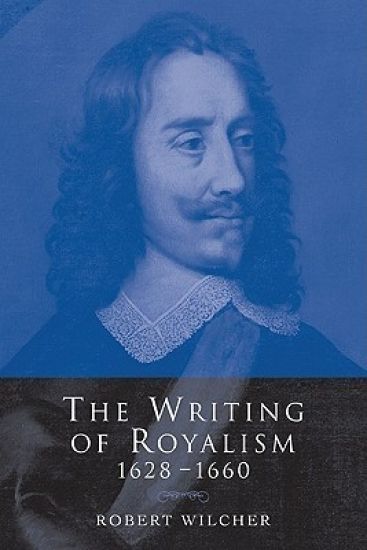
In The Writing of Royalism, Robert Wilcher charts the political and ideological development of 'royalism' between 1628 and 1660. His study of the literature and propaganda produced by those who adhered to the crown during the civil wars and their aftermath takes in many kinds of writing to provide a comprehensive account of the emergence of a partisan literature in support of the English monarchy and Church. Wilcher situates a wide range of minor and canonical texts in the tumultuous political contexts of the time, helpfully integrating them into a detailed historical narrative. He illustrates the role of literature in forging a party committed to the military defence of royalist values and determined to sustain them in defeat. The Writing of Royalism casts light on the complex phenomenon of 'royalism' by making available a wealth of material that should be of interest to historians as well as literary scholars.

This introductory study provides a comprehensive and coherent account of all Andrew Marvell's poetry for those with no specialised knowledge of seventeenth-century literature and history. After a brief account of Marvell's career as student, private tutor, civil servant, and Member of Parliament, there follow six chapters dealing with the major body of lyrical poetry according to subject matter or thematic context. Since inexperienced readers often encounter difficulties with the allusive nature of Marvell's art, it is a particular feature of this book that it provides sufficient information on the literary, cultural and political context of the work without sacrificing an appreciation of the aesthetic qualities and the ironic wit and burnout for which Marvell's verse is celebrated. In the final chapter Dr Wilcher discusses the public writing in verse and prose which occupied Marvell's later years in relation to political developments under Oliver Cromwell and Charles II.
In The Writing of Royalism, Robert Wilcher charts the political and ideological development of 'royalism' between 1628 and 1660. His study of the literature and propaganda produced by those who adhered to the crown during the civil wars and their aftermath takes in many kinds of writing to provide a comprehensive account of the emergence of a partisan literature in support of the English monarchy and Church. Wilcher situates a wide range of minor and canonical texts in the tumultuous political contexts of the time, helpfully integrating them into a detailed historical narrative. He illustrates the role of literature in forging a party committed to the military defence of royalist values and determined to sustain them in defeat. The Writing of Royalism casts light on the complex phenomenon of 'royalism' by making available a wealth of material that should be of interest to historians as well as literary scholars.

Written by one of the editors of the new complete works of Henry Vaughan, Keeping the Ancient Way is the first book-length study of the poet by a single author for twenty years. It deals with a number of key topics that are central to the understanding and appreciation of this major seventeenth-century writer. These include his debt to the hermetic philosophy espoused by his twin brother (the alchemist, Thomas Vaughan); his royalist allegiance in the Civil War; his loyalty to the outlawed Church of England during the Interregnum; the unusual degree of intertextuality in his poetry (especially with the Scriptures and the devotional lyrics of George Herbert); and his literary treatment of the natural world (which has been variously interpreted from Christian, proto-Romantic, and ecological perspectives). Each of the chapters is self-contained and places its topic in relation to past and current critical debates, but the book is organized so that the biographical, intellectual, and political focus of Part One informs the discussion of poetic craftsmanship in Part Two. A wealth of historical information and close critical readings provide an accessible introduction to the poet and his period for students and general readers alike. The up-to-date scholarship will also be of interest to specialists in the literature and history of the Civil War and Interregnum.
This comprehensive study of the literary output of Sir John Suckling reconstructs the various contexts in which the poems, plays, letters, and prose tracts were produced and, by means of close textual analysis, reveals the nature of one writer's engagement_both creative and subversive_with the social, religious, political, and cultural dimensions of Caroline England. It challenges the common view of Suckling as primarily a court wit and courtier playwright and makes a case for reading much of his poetry and drama as a critique of the social values and aesthetic fashions associated with the patronage of Queen Henrietta Maria. In other words, this so-called 'Cavalier' is revealed as an astute and skeptical commentator on national and international affairs, whose discontent with the religious and political consequences of King Charles I's government during the 1630s was often at odds with his unshakable loyalty to the crown.
Wichert, G: Wichtigste Aus Der Phraseologie Bei Nepos Und Ca
Georg Heinrich Robert Wichert
KESSINGER PUBLISHING, LLC
2010
nidottu
Das Wichtigste Aus Der Phraseologie Bei Nepos Und Casar ALS Anhalt Zu Weiteren Selbstandigen Phraseologischen Sammlungen Aus Livius Und Spater Cicero
Georg Heinrich Robert Wichert
Nabu Press
2010
pokkari
Ueber Den Gebrauch Des Adjectivischen Attributs an Stelle Des Subjectiven Oder Objectiven Genetivs Im Lateinischen
Georg Heinrich Robert Wichert
Nabu Press
2010
pokkari
If you extend credit, you will eventually have to deal with a Chapter 13 or Chapter 7 bankruptcy. Creditors typically turn over the bankruptcy to their attorney and let the attorney make all decisions. This book is written for creditors who want to take a pro-active role by directing the attorney in dealing with the bankruptcy. Have you ever heard of a creditor making a regular monthly payment to the trustee on behalf of the debtor to better his position? Neither have most attorneys, but you will see how this can be an effective tactic to save you time and money. This book is guaranteed to help you achieve a better position financially and time-wise than leaving the decisions to an attorney.
Rungholt und die Insel Strand
Robert Brauer; André Wilckerling; Cornelia Mertens
Boyens Buchverlag
2009
nidottu
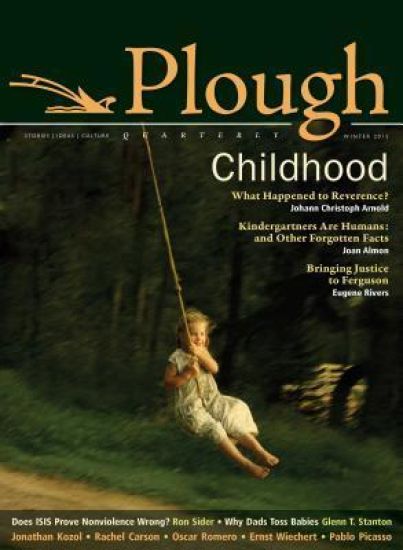
Plough Quarterly No. 3
Jonathan Kozol; Glenn T. Stanton; Johann Christoph Arnold; Rachel Carson; Ron Sider; Oscar Romero; Joan Almon; Robert Lasalle-Klein; Clarence Jordan; Eugene Rivers; Ernst Wiechert; Friedrich Froebel
Plough Publishing House
2014
pokkari
In this issue, we explore why children and childhood are at the heart of the gospel – and of God’s plan for restoring the world. Hear from Johann Christoph Arnold on “Discovering Reverence,” Joan Almon on “Kindergartners Are Humans,” and Glen Stanton on “Why Dads Toss Babies.” A surgeon shares what he’s learned from children with disabilities, while dispatches from Ferguson, Missouri, the US–Mexico border, and the South Bronx focus on places where childhood is especially threatened. Other contributors examine public, homeschool, and Christian education; highlight the role of fathers; and grapple with Jesus’ uncomfortable version of family values. Bold, hope-filled, and down-to-earth, Plough Quarterly features thought-provoking articles, commentary, interviews, short fiction, book reviews, poetry and artwork to inspire everyday faith and action. Each issue brings together essential voices from many traditions to give you fresh insights on a core theme such as peacemaking, biblical justice, children and family, building community, man and woman, nature and the environment, nonviolence, or simple living. Starting from the conviction that the teachings and example of Jesus can transform and renew our world, it aims to apply them to all aspects of life, seeking common ground with all people of goodwill regardless of creed.
In the novel's Preface, the Author states: "In a few short words, the content of the book is this: A boy dedicates himself to the clerical profession with the fire of childlike enthusiasm, the youth goes astray in his profession, and the man, 'because not all flowering dreams ripened, ' has the notion of giving it up and 'fleeing to the desert.' Yet Heaven has decided otherwise. With resignation he comes back to himself and begins again to believe in his calling. Besides this, everything which is presented in the book belongs partly to the characteristics of the hero appearing in it, partly to the characteristics of our time chiefly with regard to religious, ecclesiastical, and especially clerical matters."
Robert
Createspace Independent Publishing Platform
2014
nidottu
Julie, a single mother, and her daughter Karen, are trying to move on after the loss of Julie's soulmate Kmyviks. Kmyviks was an alien who was a criminal on his home planet. He was exiled to Earth for one year until his sentence could be executed. While on Earth he fell in love with Julie and they had an incredible romance. After Kmyviks was taken back to his home planet, Julie discovered she was pregnant with his child. 'Robert' is the story of how Julie and Karen struggled to raise a child who was half alien. Robert quickly discovers he is not like the other children and struggles in a world where he is clearly superior. After awhile, Robert senses a connection with his father whom he has never met. Could Kmyviks still be alive?
Archer's Dynasty1. Delmar2. Peter3. Robert4. William5. Sherman6. DarrelElizabeth Monroe moved from Chicago to a small town in Ohio to live with her grandda, Bingo. He owned the construction company updating Peter's house. Elizabeth was helping out until she could take her medical boards to transfer her license to Ohio.Robert Archer was bored with being an attorney and wanted to try his hand at construction. He had an eye for detail and wanted to help his brother, Peter, out. Robert was focusing so hard on the tile job that when Elizabeth suddenly spoke out of seemingly nowhere, he was startled and fell, hitting his head hard on the tub.Elizabeth went immediately into doctor mode to save Robert. With his head bandaged and his eyes covered, Robert only knew her by the sound of her voice and her surly attitude. Surly or not, Robert was intrigued and falling quickly for the new doctor.