Kirjojen hintavertailu. Mukana 11 244 527 kirjaa ja 12 kauppaa.

Kirjahaku

Etsi kirjoja tekijän nimen, kirjan nimen tai ISBN:n perusteella.

1000 tulosta hakusanalla Robert Wilson

Robert Wilson

Robert Wilson

Maria Shevtsova

Routledge
2018
sidottu
Robert Wilson is an American–European director who is also a performer, installation artist, writer, designer of light and much more besides – a crossover polymath who dissolves both generic and geographical boundaries and is a precursor of globalisation in the arts. This second edition of Robert Wilson combines: an analysis of his main productions, situated in their American and European socio-cultural and political contexts a focused, detailed study of Wilson’s pathbreaking Einstein on the Beach a study of Pushkin's Fairy Tales as the foremost example of his folk-rock music theatre in the twenty-first century an exploration of his ‘visual book’, workshop and rehearsal methods, and collaborative procedures a study of his aesthetic principles and the elements of composition that distinguish his directorial approach a series of practical exercises for students and practitioners highlighting Wilson’s technique. As a first step towards critical understanding, and as an initial exploration before going on to further, primary research, Routledge Performance Practitioners offer unbeatable value for today’s student.

Robert Wilson

Robert Wilson

Maria Shevtsova

Routledge
2018
nidottu
Robert Wilson is an American–European director who is also a performer, installation artist, writer, designer of light and much more besides – a crossover polymath who dissolves both generic and geographical boundaries and is a precursor of globalisation in the arts. This second edition of Robert Wilson combines: an analysis of his main productions, situated in their American and European socio-cultural and political contexts a focused, detailed study of Wilson’s pathbreaking Einstein on the Beach a study of Pushkin's Fairy Tales as the foremost example of his folk-rock music theatre in the twenty-first century an exploration of his ‘visual book’, workshop and rehearsal methods, and collaborative procedures a study of his aesthetic principles and the elements of composition that distinguish his directorial approach a series of practical exercises for students and practitioners highlighting Wilson’s technique. As a first step towards critical understanding, and as an initial exploration before going on to further, primary research, Routledge Performance Practitioners offer unbeatable value for today’s student.
The Seaman's Manual, Containing all the Technical Words and Phrases Used at sea and Belonging to a Ship; ... Together With Instructions to Young men, Entering on a Seafaring Life; With the Duty of a Midshipman; by Robert Wilson,
The 18th century was a wealth of knowledge, exploration and rapidly growing technology and expanding record-keeping made possible by advances in the printing press. In its determination to preserve the century of revolution, Gale initiated a revolution of its own: digitization of epic proportions to preserve these invaluable works in the largest archive of its kind. Now for the first time these high-quality digital copies of original 18th century manuscripts are available in print, making them highly accessible to libraries, undergraduate students, and independent scholars.Medical theory and practice of the 1700s developed rapidly, as is evidenced by the extensive collection, which includes descriptions of diseases, their conditions, and treatments. Books on science and technology, agriculture, military technology, natural philosophy, even cookbooks, are all contained here.++++The below data was compiled from various identification fields in the bibliographic record of this title. This data is provided as an additional tool in helping to insure edition identification: ++++British LibraryT228446London: printed for the Truslers, and sold by all booksellers, 1790]. xi, 1],108p.; 12
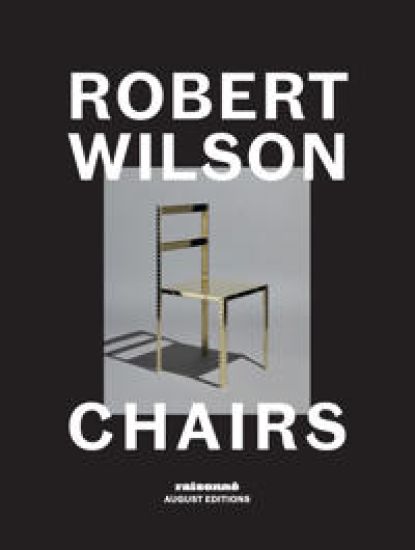
Robert Wilson: Chairs

Robert Wilson: Chairs

Robert Wilson

August Editions
2025
sidottu
This unprecedented angle on the oeuvre of Robert Wilson reveals the importance of chair design for his cross-medium art For American experimental theater stage director and playwright Robert Wilson (born 1941), theater is a totality of visual, textual and performative mediums. Wilson has incorporated furniture designs into his scenography since his earliest productions in the 1960s. "In almost all of my plays, there is a chair specially designed," he said. "Often, the chairs are much like an actor." Wilson’s chairs, with their frequently referential names (the Kafka Chair, Queen Victoria Chairs, the Mondrian Chair), assume expanded significance as the surviving artifacts of each performance. The works in this publication range from 1969 to 2011, from the stainless steel mesh Parzival Sofa (1987) to the painted wood Clementine Hunter Rocker (2011). Wilson’s practice as a designer is illuminated by his practice as a collector, with pieces in materials ranging from wood, bronze and steel to taxidermied legs, tempered glass and neon. This publication includes several works never previously exhibited.
Robert Wilsons "Hamletmaschine" als Vorlage für Diderots Tableautheorie
Studienarbeit aus dem Jahr 2012 im Fachbereich Theaterwissenschaft, Tanz, Note: 1,0, Friedrich-Alexander-Universit t Erlangen-N rnberg (Institut f r Theater- und Medienwissenschaft), Veranstaltung: Proseminar "Theater und Bild," Sprache: Deutsch, Abstract: Bilder und die damit verbundene visuelle Wahrnehmung erscheinen heutzutage berm chtig. Was Georg Simmel bereits Anfang des 20. Jahrhunderts mit "Steigerung des Nervenlebens" beschreibt, ist heute durch eine globalisierte und von immer neuen (Kommunikations-)Technologien beschleunigte Welt noch st rker pr sent: St ndig ziehen Bilder an uns vor ber, egal ob innerhalb von Filmen, in Flugzeug oder Zug, auf Plakaten, Leuchtreklamen oder hnlichem. Das Sehen, so scheint es, ist der Sinn, der in der modernen Welt am meisten beansprucht wird. Betrachtet man das Theater und seine Geschichte, findet schon in der Barockepoche ein Wechsel statt, bei dem die Visualit t in den Vordergrund ger t und der f r die Entstehung des Begriffs der Inszenierung konstituierend ist: Der Paradigmenwechsel von der Dominanz des dramatischen Textes hin zu den visuellen Zeichen, der sich laut Christopher Balme zum einen an der Theatralit t der Historienmalerei des 17. Jahrhunderts, die als passendes Modell f r das Schauspiel fungierte, zeige. Zum anderen finde im 18. Jahrhundert eine Transformation von Begriffen der Literatur- und Kunsttheorie auf die Theatertheorie und eine Ann herung von Malerei und Schauspiel statt. Dieses Primat des Visuellen, diese Anlehnung des Theaters an die Malerei zeigt sich auch in der Tableautheorie eines aufkl rerischen Schriftstellers - Denis Diderot. Laut dieser soll sich "sowohl die Dramaturgie eines St ckes als auch seine Auff hrungspraxis an der Logik des Bildes orientieren ...]." Zur ck zur Gegenwart: Auch ein zeitgen ssischer Theatermacher gibt der Visualit t den Vorrang, wendet sich vom Sprechtheater ab und den Bildern zu: Robert Wilson. Dessen vielzitiertes "Theater der Bilder" eignet sich in meinem Emp
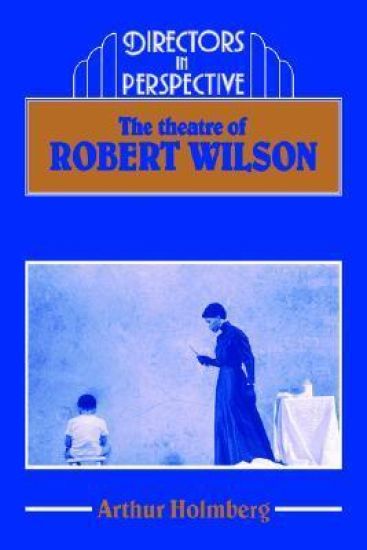
The Theatre of Robert Wilson

The Theatre of Robert Wilson

Holmberg Arthur

Cambridge University Press
2005
pokkari
Robert Wilson, the leading American avant-garde theatre director, revolutionised the stage by making visual communication more important than words. His productions cut across the boundaries that traditionally have defined theatre, dance, opera and the visual arts to create a total work of art. This book, the first comprehensive study of Wilson, traces the evolution of the director's astonishing career as well as his complex relationship to language and his visual rhetoric. It explains how he renovated the stage and describes in detail major productions such as: Deafman Glance, Einstein on the Beach, and the Civil Wars. Arthur Holmberg's numerous personal interviews and first-hand observations of Wilson's creative process, provide an intimate, behind-the-scenes view of one of our most original directors. Photographs and sketches from Wilson's private collection are included, along with a chronology of his work.
Wilson Meetes Wirkkala - the Story of Wirkkala Park Designed by Robert Wilson
This book tells the story of Tapio Wirkkala Park. Robert Wilson's first visit to Arabianranta acted like the conductor's first downbeat in the process of creating the park. The chapter titles, derived from the world of music and opera, introduce readers to the place, the makers, the planning process, the working methods, and, ultimately, the park's artistic elements. The planning phase lasted for 9 years. The creation of the park involved the use of temporary on-site field rehearsals with the designer and members of a local project team. The actual construction of the park by the city of Helsinki took place during 2012. The book presents the protagonists of the piece: the artists Robert Wilson and Tapio Wirkkala. Articles on the art policy of the Helsinki Art Museum and on the percentage-for-art project in the Arabianranta residential area provide background information. The book also highlights the invisible, behind-the-scenes work that an art coordinator does in getting works of art realised. The book includes scores of photographs and collages of images, and Robert Wilson's ideas and sketches for the park. Solargraphy images of the arcs of the sky and the sun over Tapio Wirkkala Park complete the story.
Die "Hamletmaschine" von Heiner Müller und deren Inszenierung von Robert Wilson
Magisterarbeit aus dem Jahr 1999 im Fachbereich Germanistik - Neuere Deutsche Literatur, Note: 1,0, Gottfried Wilhelm Leibniz Universität Hannover (Seminar für deutsche Sprache und Literatur), 177 Quellen im Literaturverzeichnis, Sprache: Deutsch, Abstract: Inhaltsverzeichnis I. Einleitung II. Der Text II.1 Vorbemerkungen zu Heiner Müllers Theaterkonzeption II.1.1 Interpretierbarkeit der HAMLETMASCHINE II.1.2 "Emanzipieren vom diktierten Ergötzen" II.1.3 "Vom Welterretter zum Apokalyptiker": Müllers Reaktion auf die Stagnation der DDR-Politik II.2 Interpretation II.2.1 "Hamlet": Zerstörung eines Klassikers II.2.2 Fragmentarische Form, Monologe und Metaphern II.2.3 "FAMILIENALBUM" II.2.4 "DAS EUROPA DER FRAU" II.2.5 Zur Geschlechterdifferenz bei Heiner Müller II.2.6 "SCHERZO" II.2.7 Das Geschichtsbild Heiner Müllers II.2.8 "PEST IN BUDA SCHLACHT UM GRÖNLAND" II.2.9 "WILDHARREND/IN DER FURCHTBAREN RÜSTUNG/JAHRTAUSENDE" II.2.10 "DAMIT ETWAS KOMMT MUSS ETWAS GEHEN" II.2.11 "Das Denkmal liegt am Boden" III. Die Hamburger Inszenierung von Robert Wilson III.1 Weder Sozialistischer noch Psychologischer Realismus III.2 Robert Wilson "theatre of visions" III.2.1 Robert Wilson und traditionelles Theater III.2.2 Die Bühne in Wilsons Bildertheater III.2.3 Wilsons Lichtgestaltung III.2.4 Kombination Hören und Sehen III.2.5 Die Zuschauer III.2.6 Die Schauspieler III.2.7 Text und Sprache, Inhalt und Illustration III.2.8 Die Zeit III.2.9 Medien und Motive III.2.10 Hermeneutik der Sinne III.3 Eine texanisch-sächsische Kollaboration III.4 Wilsons Arbeitsweise am Beispiel HAMLETMASCHINE III.5 Visuelle und sonore Parallelwelten III.6 "Hohle Bombastik der Metaphern" oder "theatrical masterpiece": Wilsons Inszenierung in der Kritik III.7 Mehr als nur ergänzende Teile IV. "Interpretation violates art" V. Literaturverzeichnis VI. Anhang