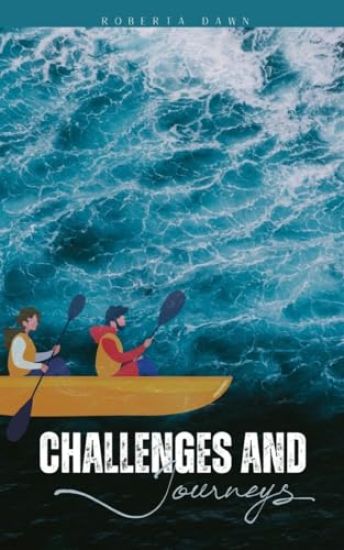
Life's Journey by Roberta Dawn is a collection of one hundred poems she has written over the years. Some poems have been inspired by her personal experiences and some from trying to understand the world around her. There is at least one poem for everyone to relate to, if not several. Anyone who has family, friends, a significant other, a bad or good day, lived military life, and more will have something to relate to. In fact, anyone who has walked this journey through life should enjoy this book.Roberta Dawn hopes these poems can help people understand others better and understand their own thoughts and feelings. These poems can also help others know they are not alone, that others may have faced similar challenges and may be experiencing similar emotions.Life's Journey is a variety of poems written about love, heartache, sadness, happiness, grief, and life from the author's perspective. Each poem is written from the author's heart as they came to her like a gift in the wind when she needed the words to express her thoughts, feelings, love, and sometimes pain. Every word is written with many possible impressions, feelings, thoughts, experiences. These poems are meant to be read and reread, to be read alone and shared, and to be appreciated and enjoyed.
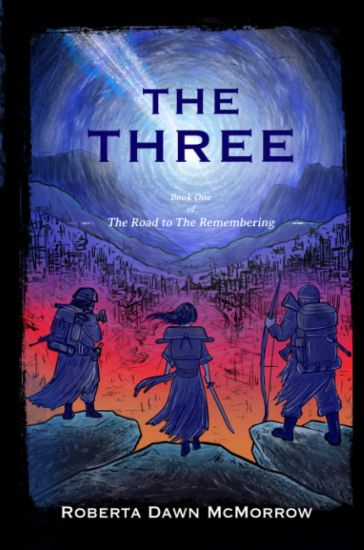
In the second volume of Roberta Dawn McMorrow's THE ROAD TO THE REMEMBERING series, Leo, Conan and Inanna find themselves in an isolated paradise canyon with a crazy shaman who is determined to further their spiritual education. Meanwhile, a group of children and teens who have survived the Three Days of Darkness follow their own path of awakening in coastal California that seems strangely to mirror that of The Three. Is there a Fourth of the Prophecies among them?
With the dawn following Three Days of Darkness, 17-year-old Leo wakens to a strangely altered Earth, in terrain he doesn't recognize. Together with his brother Conan and the mysterious girl Inanna, the three face challenges both mystical and physical as they discover the purpose of their survival.
Alguna vez te han manipulado para conseguir lo que deseaban de ti? Te hubiera gustado conseguir un resultado diferente en una reuni n o conversaci n de negociaci n?Por primera vez, las t cnicas secretas m s efectivas y poderosas de psicolog a oscura reunidas en un libro. En el mundo en el que vivimos hay buenas y malas intenciones, gente que coopera contigo y otra muy diferente que desea conseguir lo que quiere a costa de los dem s. Hay muchas maneras de detectar y evitar que estas personas nos usen a su antojo. Adem s, tambi n podemos usar sus propias t cnicas de an lisis de conducta humana, persuasi n o enga o para conseguir defendernos en una situaci n determinada. Las claves y fundamentos del control mental y la manipulaci n se pueden usar de maneras positivas sin da ar a nadie, con fines y objetivos honestos.En este libro descubrir s: Qu significa manipularC mo son los rasgos de una persona manipuladoraQu significa persuadirPrincipios de la persuasi n de Robert CialdiniFormas de manipular y manipulaci n de las circunstanciasRefuerzo positivo y refuerzo negativoC mo sembrar la dudaC mo darnos cuenta si nos est n manipulandoQui nes son capaces de manipularnos Y mucho m s Utiliza las ventajas de la psicolog a oscura a tu favor
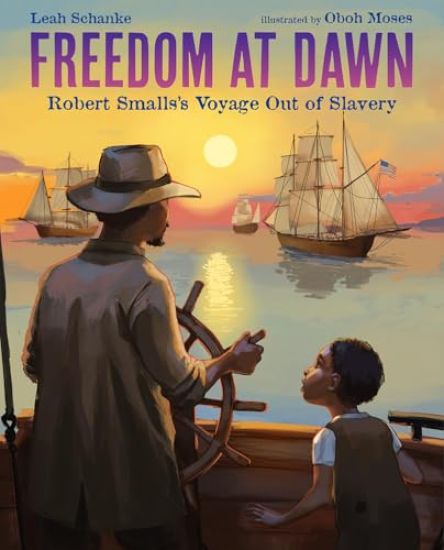
The true story of one man's brave plan to free his family from slavery Lizzy Smalls is proud of her papa, Robert, for being the best boat pilot in Charleston Harbor. But the Smalls family is enslaved, and after the outbreak of the Civil War, Robert is forced to put his skills to work for the Confederates. He knows that reaching Union territory means freedom for his family; to get there, he devises a daring plan to steal a boat and sail out of the harbor under cover of night. This thrilling true story shows how one man's courage, careful planning, and calm under pressure helped him navigate the way to a new life.
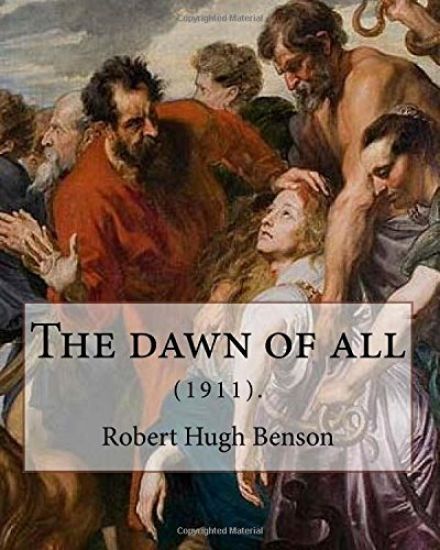
Robert Hugh Benson (18 November 1871 - 19 October 1914) was an English Anglican priest who in 1903 was received into the Roman Catholic Church in which he was ordained priest in 1904. He was lauded in his own day as one of the leading figures in English literature, having written the notable novel Lord of the World (1907).Benson was the youngest son of Edward White Benson (Archbishop of Canterbury) and his wife, Mary, and the younger brother of Edward Frederic Benson and A. C. Benson. 1] Benson was educated at Eton College and then studied classics and theology at Trinity College, Cambridge, from 1890 to 1893. 2] In 1895, Benson was ordained a priest in the Church of England by his father, who was the then Archbishop of Canterbury. After his father died suddenly in 1896, Benson was sent on a trip to the Middle East to recover his own health. While there he began to question the status of the Church of England and to consider the claims of the Roman Catholic Church. His own piety began to tend toward the High Church tradition, and he started exploring religious life in various Anglican communities, eventually obtaining permission to join the Community of the Resurrection. Benson made his profession as a member of the community in 1901, at which time he had no thoughts of leaving the Church of England. As he continued his studies and began writing, however, he became more and more uneasy with his own doctrinal position and, on 11 September 1903, he was received into the Catholic Church. He was awarded the Dignitary of Honour of the Order of the Holy Sepulchre. Benson was ordained as a Roman Catholic priest in 1904 and sent to Cambridge. He continued his writing career along with his ministry as a priest.Like both his brothers, Edward Frederic Benson ("Fred") and Arthur Christopher Benson, Robert wrote many ghost and horror stories, collected in The Light Invisible (1903) and A Mirror of Shallott (1907). His novel, Lord of the World (1907), is generally regarded as one of the first modern dystopias (see List of dystopian literature). As a young man, Benson recalled, he had rejected the idea of marriage as "quite inconceivable". Benson was appointed a supernumerary private chamberlain to the Pope in 1911 and, consequently, styled as Monsignor
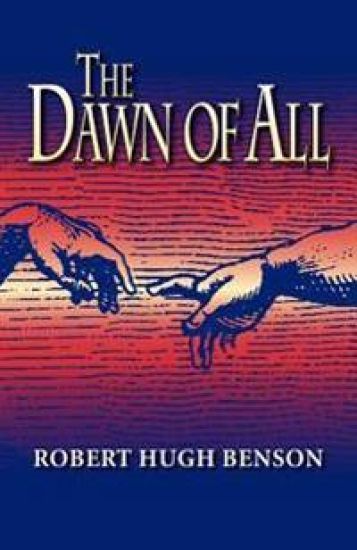
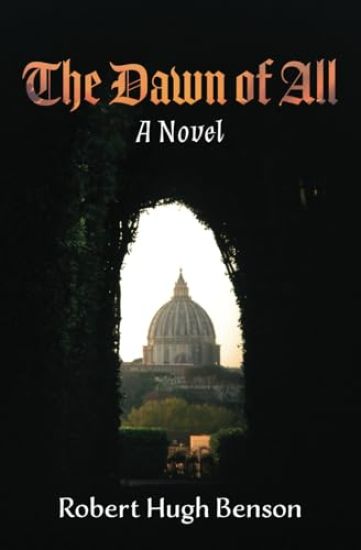
In a former book, called "Lord of the World," I attempted to sketch the kind of developments a hundred years hence which, I thought, might reasonably be expected if the present lines of what is called "modern thought" were only prolonged far enough; and I was informed repeatedly that the effect of the book was exceedingly depressing and discouraging to optimistic Christians. In the present book I am attempting -- also in parable form -- not in the least to withdraw anything that I said in the former, but to follow up the other lines instead, and to sketch -- again in parable -- the kind of developments, about sixty years hence which, I think, may reasonably be expected should the opposite process begin, and ancient thought (which has stood the test of centuries, and is, in a very remarkable manner, being "rediscovered" by persons even more modern than modernists) be prolonged instead. We are told occasionally by moralists that we live in very critical times, by which they mean that they are not sure whether their own side will win or not. In that sense no times can ever be critical to Catholics, since Catholics are never in any kind of doubt as to whether or no their side will win. But from another point of view every period is a critical period, since every period has within itself the conflict of two irreconcilable forces. It has been for the sake of tracing out the kind of effects that, it seemed to me, each side would experience in turn, should the other, at any rate for a while, become dominant, that I have written these two books......... Robert Hugh Benson AFSC KC*SG KGCHS (18 November 1871 - 19 October 1914) was an English Anglican priest who in 1903 was received into the Roman Catholic Church in which he was ordained priest in 1904. He was a prolific writer of fiction and wrote the notable dystopian novel Lord of the World (1907). His output encompassed historical, horror and science fiction, contemporary fiction, children's stories, plays, apologetics, devotional works and articles. He continued his writing career at the same time as he progressed through the hierarchy to become a Chamberlain to the Pope in 1911 and subsequently titled Monsignor. Early life: Benson was the youngest son of Edward White Benson (Archbishop of Canterbury) and his wife, Mary, and the younger brother of Edward Frederic Benson and A. C. Benson. Benson was educated at Eton College and then studied classics and theology at Trinity College, Cambridge, from 1890 to 1893. In 1895, Benson was ordained a priest in the Church of England by his father, who was the then Archbishop of Canterbury. Career: After his father died suddenly in 1896, Benson was sent on a trip to the Middle East to recover his own health. While there he began to question the status of the Church of England and to consider the claims of the Roman Catholic Church. His own piety began to tend toward the High Church tradition, and he started exploring religious life in various Anglican communities, eventually obtaining permission to join the Community of the Resurrection...............
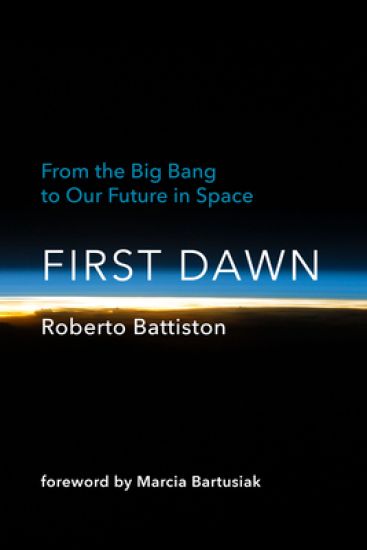
From the very first moments of the universe to the birth of the first star, our solar system, and our planet: a physicist traces the known and the unknown. Since the beginning of the twentieth century, the horizon of our knowledge about the universe has expanded to encompass the infinitesimally small--and the infinitely vast. In First Dawn, physicist Roberto Battiston takes readers on a journey through space and time, to the boundaries of our knowledge and beyond. From the violence of the Big Bang and the birth of the first star, hundreds of millions of years later, to the emergence of our solar system, the dawn of life on Earth, and the possibility of life on other planets, Battiston maps what we know about the universe and how we came to know it--cautioning us, however, that what we know is a minuscule fraction of what there is to know. Battiston outlines discoveries by some of the greatest theoretical physicists of the twentieth century, including Einstein, Bohr, Schr dinger, Heisenberg, Fermi, and Hubble; discusses the mysteries of dark energy and dark matter; and considers what it means for the universe to have emerged out of nothing. The ignition of the first star illuminated a universe that had been expanding, unobserved and unobservable, in the dark. Drawing on his own research, Battiston discusses the birth of the Sun, the formation of planets, the origins of life, interstellar migrations, extrasolar planets, black holes, gravitational waves, and much more. But, he warns, for some questions--the dimensions of the universe, for example, or the existence of other universes--we are destined to remain in the realm of speculation.
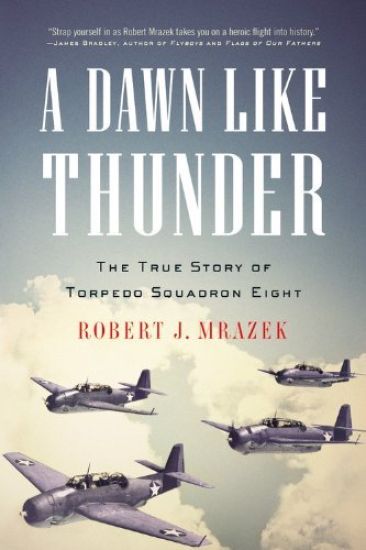
One of the great untold stories of World War II finally comes to light in this thrilling account of Torpedo Squadron Eight and their heroic efforts in helping an outmatched U.S. fleet win critical victories at Midway and Guadalcanal. Thirty-five American men -- many flying outmoded aircraft -- changed the course of the war, going on to become the war's most decorated naval air squadron, while suffering the heaviest losses in U.S. naval aviation history. Mrazek paints moving portraits of the men in the squadron, and exposes a shocking cover-up that cost many lives. Filled with thrilling scenes of battle, betrayal, and sacrifice, A Dawn Like Thunder is destined to become a classic in the literature of World War II.
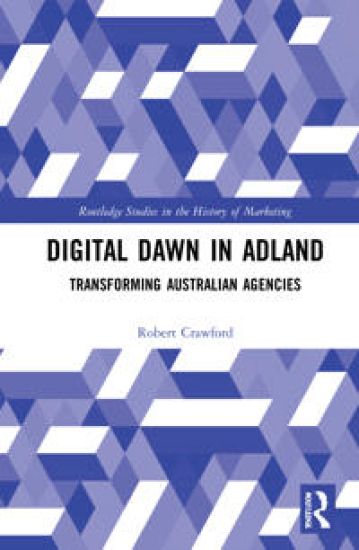
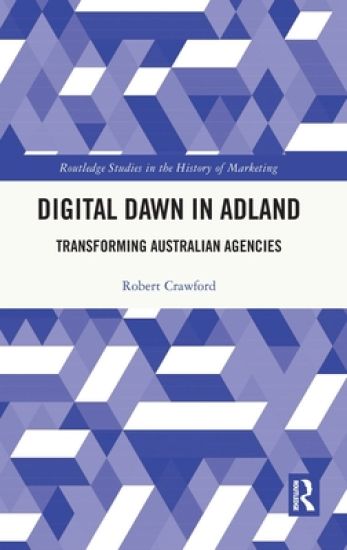
Drawing on a unique study of Australian advertising agencies at the dawn of the digital era, this book provides a hitherto unexplored study of the advertising industry at a point of its disruption. By exploring the dynamic interaction between this established but complacent industry, and a radically new communication medium, this book reveals how advertising agencies were forced to change fundamentally, yet as an industry helped shape the digital economy, and the platforms that dominate it.Based on contemporary reports, company archives, personal archives, and over 50 interviews with past and current advertising practitioners across the range of agency departments, this unique historical narrative reveals how power shifts between agencies, advertisers, and other media platforms forged the current models of advertiser-funded digital media.For scholars of marketing, media, communication, and contemporary history, this is an illuminating perspective on the early impact of the digital revolution and its relevance to the media landscape today.
Drawing on a unique study of Australian advertising agencies at the dawn of the digital era, this book provides a hitherto unexplored study of the advertising industry at a point of its disruption. By exploring the dynamic interaction between this established but complacent industry, and a radically new communication medium, this book reveals how advertising agencies were forced to change fundamentally, yet as an industry helped shape the digital economy, and the platforms that dominate it.Based on contemporary reports, company archives, personal archives, and over 50 interviews with past and current advertising practitioners across the range of agency departments, this unique historical narrative reveals how power shifts between agencies, advertisers, and other media platforms forged the current models of advertiser-funded digital media.For scholars of marketing, media, communication, and contemporary history, this is an illuminating perspective on the early impact of the digital revolution and its relevance to the media landscape today.