Kirjojen hintavertailu. Mukana 12 459 402 kirjaa ja 12 kauppaa.

Kirjahaku

Etsi kirjoja tekijän nimen, kirjan nimen tai ISBN:n perusteella.

1000 tulosta hakusanalla Roberto Buonanno

The Stars of Galileo Galilei and the Universal Knowledge of Athanasius Kircher

The Stars of Galileo Galilei and the Universal Knowledge of Athanasius Kircher

Roberto Buonanno

Springer International Publishing AG
2014
sidottu
In this fascinating book, the author traces the careers, ideas, discoveries, and inventions of two renowned scientists, Athanasius Kircher and Galileo Galilei, one a Jesuit, the other a sincere man of faith whose relations with the Jesuits deteriorated badly. The Author documents Kircher’s often intuitive work in many areas, including translating the hieroglyphs, developing sundials, and inventing the magic lantern, and explains how Kircher was a forerunner of Darwin in suggesting that animal species evolve. Galileo’s work on scales, telescopes, and sun spots is mapped and discussed, and care is taken to place his discoveries within their cultural environment. While Galileo is without doubt the “winner” in the comparison with Kircher, the latter achieved extraordinary insights by unconventional means. For all Galileo’s fine work, the author believes that scientists do need to regain the power of dreaming, vindicating Kirchner’s view.
The Stars of Galileo Galilei and the Universal Knowledge of Athanasius Kircher

The Stars of Galileo Galilei and the Universal Knowledge of Athanasius Kircher

Roberto Buonanno

Springer International Publishing AG
2016
nidottu
In this fascinating book, the author traces the careers, ideas, discoveries, and inventions of two renowned scientists, Athanasius Kircher and Galileo Galilei, one a Jesuit, the other a sincere man of faith whose relations with the Jesuits deteriorated badly. The Author documents Kircher’s often intuitive work in many areas, including translating the hieroglyphs, developing sundials, and inventing the magic lantern, and explains how Kircher was a forerunner of Darwin in suggesting that animal species evolve. Galileo’s work on scales, telescopes, and sun spots is mapped and discussed, and care is taken to place his discoveries within their cultural environment. While Galileo is without doubt the “winner” in the comparison with Kircher, the latter achieved extraordinary insights by unconventional means. For all Galileo’s fine work, the author believes that scientists do need to regain the power of dreaming, vindicating Kirchner’s view.
Il cielo sopra a Roma

Il cielo sopra a Roma

Roberto Buonanno

Springer Verlag
2007
nidottu
L’astronomia a Roma c’è sempre stata, ma un po’ nascosta: era nei palazzi, nelle chiese o, meglio, sopra le chiese, specole disseminate lungo un percorso che oramai conoscono in pochi. I romani hanno assistito, incuriositi ed impauriti, al rogo di Giordano Bruno in un angolo di Campo de' Fiori a loro familiare, ma probabilmente non capirono bene di quale colpa fosse accusato. Non pensarono certo che si trattasse di un filosofo e di uno scienziato che aveva cercato di immaginare in che modo era fatto il mondo. Chi era questo Galileo, di cui si celebrava il processo a S. Maria sopra Minerva? Era un uomo che voleva cambiare la prospettiva del mondo e che, per questo, era stato ammonito da Roberto Bellarmino. E chi era questo gesuita, Secchi, che nel 1870 costringeva gli Italiani a privare Roma del suo Osservatorio Astronomico, visto che il Direttore non riconosceva lo Stato Italiano? Come è possibile che dopo la visita di Hitler a Mussolini alla vigiliadella Guerra, la Germania decise di regalare all’Italia un Osservatorio Astronomico completo? Forse, è a causa di questa storia che i luoghi dell’astronomia a Roma si trovano disseminati lungo un percorso nel quale ancora oggi si possono ritrovare i segni di Osservatori Astronomici che sono stati attivi e che, per la loro natura, restano nascosti e misteriosi. E che, proprio per questo, vale la pena di non dimenticare.
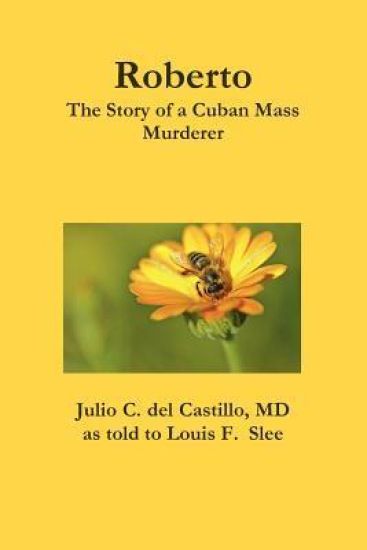
Roberto

Roberto

MD Julio del Castillo

Lulu.com
2011
pokkari
Roberto is the story of a hero of the Cuban revolution, a psychopathic killer with a handsome face and Latin charm. Do honey bees hold the key to his acts of violence?
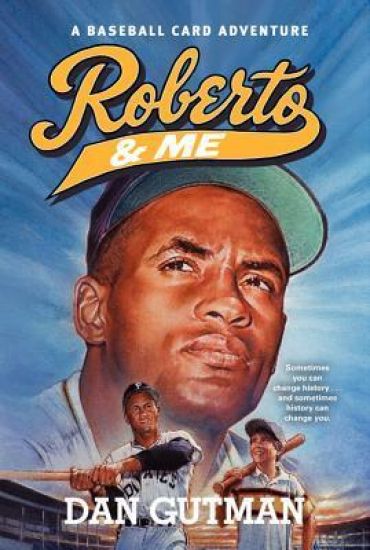
Roberto & Me

Roberto & Me

Dan Gutman

HarperCollins
2012
nidottu
What would you do if you knew there was going to be a terrible accident?When Stosh travels into the past to meet Roberto Clemente, a legendary ballplayer and a beloved humanitarian, he's got only one goal: warning Roberto not to get on the doomed plane that will end his life in a terrible crash. In the sixties, Stosh meets free-spirited Sunrise, and together they travel across the country to a ball game that leaves them breathless--and face-to-face with Roberto. But when the time comes for Stosh to return to the future, he finds that the adventure has only just begun. . . .
Roberto Gerhard

Roberto Gerhard

Oxford University Press
2022
sidottu
Gerhard was one of the most visionary composers of the twentieth century drawing together ideas from science, philosophy, and the arts into an oeuvre that encompasses the folk song of his native Catalonia, to serialism and electronic music. The composer lived through some of the most tumultuous times in recent memory including the Spanish Civil War and the Second World War as an exile in England. This edited volume uniquely brings together specialists in Spanish cultural studies, exile, musicology, and analysis to explore how these events and the post-war cultural and political climate shaped Gerhard's life and work.
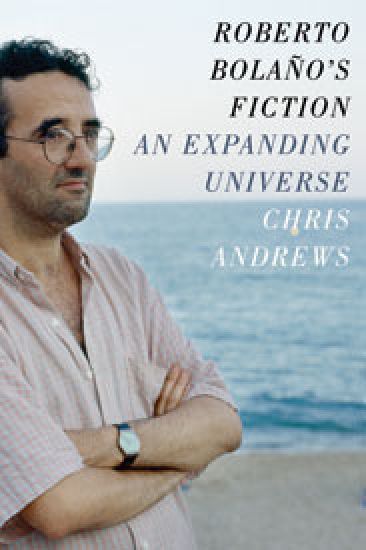
Roberto Bolaño's Fiction

Roberto Bolaño's Fiction

Chris Andrews

Columbia University Press
2014
sidottu
Since the publication of The Savage Detectives in 2007, the work of Roberto Bolano (1953-2003) has achieved an acclaim rarely enjoyed by literature in translation. Chris Andrews, a leading translator of Bolano's work into English, explores the singular achievements of the author's oeuvre, engaging with its distinct style and key thematic concerns, incorporating his novels and stories into the larger history of Latin American and global literary fiction. Andrews provides new readings and interpretations of Bolano's novels, including 2666, The Savage Detectives, and By Night in Chile, while at the same time examining the ideas and narrative strategies that unify his work. He begins with a consideration of the reception of Bolano's fiction in English translation, examining the reasons behind its popularity. Subsequent chapters explore aspects of Bolano's fictional universe and the political, ethical, and aesthetic values that shape it. Bolano emerges as the inventor of a prodigiously effective "fiction-making system," a subtle handler of suspense, a chronicler of aimlessness, a celebrator of courage, an anatomist of evil, and a proponent of youthful openness. Written in a clear and engaging style, Roberto Bolano's Fiction offers an invaluable understanding of one of the most important authors of the last thirty years.
Roberto Bolaño's Fiction

Roberto Bolaño's Fiction

Chris Andrews

Columbia University Press
2015
pokkari
Since the publication of The Savage Detectives in 2007, the work of Roberto Bolano (1953-2003) has achieved an acclaim rarely enjoyed by literature in translation. Chris Andrews, a leading translator of Bolano's work into English, explores the singular achievements of the author's oeuvre, engaging with its distinct style and key thematic concerns, incorporating his novels and stories into the larger history of Latin American and global literary fiction. Andrews provides new readings and interpretations of Bolano's novels, including 2666, The Savage Detectives, and By Night in Chile, while at the same time examining the ideas and narrative strategies that unify his work. He begins with a consideration of the reception of Bolano's fiction in English translation, examining the reasons behind its popularity. Subsequent chapters explore aspects of Bolano's fictional universe and the political, ethical, and aesthetic values that shape it. Bolano emerges as the inventor of a prodigiously effective "fiction-making system," a subtle handler of suspense, a chronicler of aimlessness, a celebrator of courage, an anatomist of evil, and a proponent of youthful openness. Written in a clear and engaging style, Roberto Bolano's Fiction offers an invaluable understanding of one of the most important authors of the last thirty years.
Roberto Burle Marx

Roberto Burle Marx

Jens Hoffmann; Claudia J. Nahson

Yale University Press
2016
sidottu
An unprecedented look at the wide-ranging artistic work of one of the 20th century’s most significant landscape architects The modernist parks and gardens of Brazilian landscape architect and garden designer Roberto Burle Marx (1909–1994) earned him awards, widespread acclaim, and international fame. Over a 60-year career, he designed more than 2,000 gardens worldwide, the most famous of which are those he created in collaboration with the architect Oscar Niemeyer for Brasília. Although he is best known for his landscape work, Burle Marx was a prolific artist in a variety of media, and his larger body of work—which includes paintings, drawings, tile mosaics, sculpture, textile design, jewelry, theater costumes, and more—is critical to understanding his importance as a modernist. An avid horticulturalist, he was among the first to denounce deforestation in the Amazon region; he also discovered over thirty species of Brazilian flora, which bear his name. This beautifully illustrated and groundbreaking publication covers the full range of Burle Marx’s artistic output, as well as his remarkable home, an abandoned estate that he transformed into his office, workshop, gallery, and living space. The enduring influence of Burle Marx’s work is also explored through interviews with seven contemporary artists: Juan Araujo, Paloma Bosquê, Dominique González-Foerster, Luisa Lambri, Arto Lindsay, Nick Mauss, and Beatriz Milhazes. These artists exemplify the extent to which his work continues to be a source of inspiration.Published in association with the Jewish Museum, New YorkExhibition Schedule:Jewish Museum, New York (05/06/16–09/18/16)Deutsche Bank KunstHalle, Berlin (07/07/17–10/08/17)
Roberto Esposito

Roberto Esposito

Peter Langford

Routledge
2015
sidottu
Roberto Esposito: Law, Community and the Political provides a critical legal introduction to this increasingly influential Italian theorist’s work, by focusing on Esposito’s reconceptualisation of the relationship between law, community and the political. The analysis concentrates primarily on Esposito’s Catégories de l’Impolitique, Communitas, Immunitas and Bíos, which, it is argued, are animated by an abiding concern with the position of critique in relation to the tradition of modern and contemporary legal and political philosophy. Esposito’s fundamental rethinking of these notions breaks with the existing framework of political and legal philosophy, through the critique of its underlying presuppositions. And, in the process, Esposito rethinks the very form of critique. As the first monograph-length study of Esposito in English, Roberto Esposito: Law, Community and the Political will be of considerable interest to those working in the areas of contemporary legal and political thought and philosophy.
Roberto Rossellini

Roberto Rossellini

Peter Brunette

University of California Press
2022
pokkari
This is the first full-length study in any language of the most significant film director of Italian Neorealism. Peter Brunette combines close analyses of Roberto Rossellini's formal and narrative style with a thorough account of his position in the political and cultural landscape of postwar Italy. More than forty films are explored, including Open City, Paisan, Voyage to Italy, The Rise to Power of Louis XIV, and films made in the director's later years that documented crucial epochs in human history. Brunette's book is based on eight years of research, during which he interviewed members of the director's family as well as Rossellini himself. Brunette also draws on an enormous body of European and American criticism and discusses the various intellectual debates spawned by the director's work. This landmark study is both a comprehensive introduction to one of the most influential practitioners of the contemporary cinema and a boldly original discussion of Italian Neorealism. This title is part of UC Press's Voices Revived program, which commemorates University of California Press's mission to seek out and cultivate the brightest minds and give them voice, reach, and impact. Drawing on a backlist dating to 1893, Voices Revived makes high-quality, peer-reviewed scholarship accessible once again using print-on-demand technology. This title was originally published in 1996.
Roberto Rossellini

Roberto Rossellini

Peter Brunette

University of California Press
2022
sidottu
This is the first full-length study in any language of the most significant film director of Italian Neorealism. Peter Brunette combines close analyses of Roberto Rossellini's formal and narrative style with a thorough account of his position in the political and cultural landscape of postwar Italy. More than forty films are explored, including Open City, Paisan, Voyage to Italy, The Rise to Power of Louis XIV, and films made in the director's later years that documented crucial epochs in human history. Brunette's book is based on eight years of research, during which he interviewed members of the director's family as well as Rossellini himself. Brunette also draws on an enormous body of European and American criticism and discusses the various intellectual debates spawned by the director's work. This landmark study is both a comprehensive introduction to one of the most influential practitioners of the contemporary cinema and a boldly original discussion of Italian Neorealism. This title is part of UC Press's Voices Revived program, which commemorates University of California Press's mission to seek out and cultivate the brightest minds and give them voice, reach, and impact. Drawing on a backlist dating to 1893, Voices Revived makes high-quality, peer-reviewed scholarship accessible once again using print-on-demand technology. This title was originally published in 1996.
Roberto Rossellini's Rome Open City

Roberto Rossellini's Rome Open City

Cambridge University Press
2004
pokkari
Roberto Rossellini’s Rome Open City instantly, markedly, and permanently changed the landscape of film history. Made at the end of World War II, it has been credited with initiating a revolution in and reinvention of modern cinema, bold claims that are substantiated when its impact on how films are conceptualized, made, structured, theorized, circulated, and viewed is examined. This volume offers a fresh look at the production history of Rome Open City; some of its key images, and particularly its representation of the city and various types of women; its cinematic influences and affinities; the complexity of its political dimensions, including the film’s vision of political struggle and the political uses to which the film was put; and the legacy of the film in public consciousness. It serves as a well illustrated, up to date, and accessible introduction to one of the major achievements of filmmaking.