Kirjojen hintavertailu. Mukana 11 244 527 kirjaa ja 12 kauppaa.

Kirjahaku

Etsi kirjoja tekijän nimen, kirjan nimen tai ISBN:n perusteella.

1000 tulosta hakusanalla Roberto J. Carmack

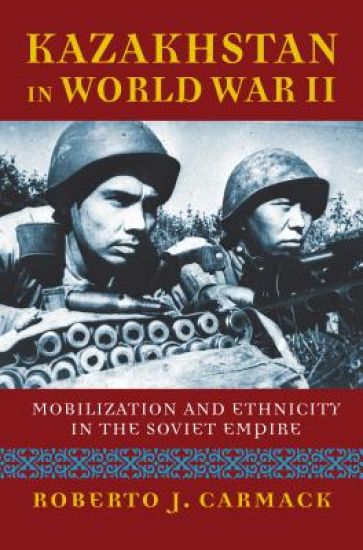
Kazakhstan in World War II

Kazakhstan in World War II

Roberto J. Carmack

University Press of Kansas
2019
sidottu
In July 1941, the Soviet Union was in mortal danger. Imperiled by the Nazi invasion and facing catastrophic losses, Stalin called on the Soviet people to “subordinate everything to the needs of the front.” Kazakhstan answered that call. Stalin had long sought to restructure Kazakh life to modernize the local population—but total mobilization during the war required new tactics and produced unique results. Kazakhstan in World War II analyzes these processes and their impact on the Kazakhs and the Soviet Union as a whole. The first English-Language study of a non-Russian Soviet republic during World War II, the book explores how the war altered official policies toward the region’s ethnic groups—and accelerated Central Asia’s integration into Soviet institutions.World War II is widely recognized as a watershed for Russia and the Soviet Union—not only did the conflict legitimize prewar institutions and ideologies, it also provided a medium for integrating some groups and excluding others. Kazakhstan in World War II explains how these processes played out in the ethnically diverse and socially “backward” Kazakh republic. Roberto J. Carmack marshals a wealth of archival materials, official media sources, and personal memoirs to produce an in-depth examination of wartime ethnic policies in the Red Army, Soviet propaganda for non-Russian groups, economic strategies in the Central Asian periphery, and administrative practices toward deported groups. Bringing Kazakhstan’s previously neglected role in World War II to the fore, Carmack’s work fills an important gap in the region’s history and sheds new light on our understanding of Soviet identities.
Decadence and decay : from ancient Rome to the present

Decadence and decay : from ancient Rome to the present

Faramerz Dabhiowala; Melanie Grundmann; Richard Whatmore; Mattias Hessérus; Adoreé Villany; Andrew Huddleston; Saul David; Andrew Preston; Daniela Cammack; Pernille Røge; Adam Tooze; J.R. McNeill; Jonathan Rees; Robert Beuregard; William O’Reilly; Michael Nelson; Peter Heather; Robert Coates-Stephans; Neil McLynn; Richard Miles

Bokförlaget Stolpe
2019
sidottu
The fear of living in the end times has a long history. In Decadence and Decay, a group of distinguished international scholars describe how societies over time have handled and interpreted the concept of decline. In times of unrest and transition, declinism the notion that a culture or civilisation is headed towards irreversible decline tends to capture the public imagination. The essays in this volume address how notions of decadence and decay have been used both as opprobrium and as a form of self-definition and empowerment an instrument to protect individualism against collectivistic oppression. From ancient Rome to the present, ideas and expressions of decadence and decay have played a critical role in how we perceive the world.
Zapotec Science

Zapotec Science

Roberto J. González

University of Texas Press
2001
pokkari
2003 — Julian Steward Award – Anthropology & Environment Section, American Anthropological Association2002 — A CHOICE Outstanding Academic BookHow Zapotec agricultural and dietary theories and practices constitute a valid local science. Zapotec farmers in the northern sierra of Oaxaca, Mexico, are highly successful in providing their families with abundant, nutritious food in an ecologically sustainable fashion, although the premises that guide their agricultural practices would be considered erroneous by the standards of most agronomists and botanists in the United States and Europe. In this book, Roberto González convincingly argues that in fact Zapotec agricultural and dietary theories and practices constitute a valid local science, which has had a reciprocally beneficial relationship with European and United States farming and food systems since the sixteenth century. González bases his analysis upon direct participant observation in the farms and fields of a Zapotec village. By using the ethnographic fieldwork approach, he is able to describe and analyze the rich meanings that campesino families attach to their crops, lands, and animals. González also reviews the history of maize, sugarcane, and coffee cultivation in the Zapotec region to show how campesino farmers have intelligently and scientifically adapted their farming practices to local conditions over the course of centuries. By setting his ethnographic study of the Talea de Castro community within a historical world systems perspective, he also skillfully weighs the local impact of national and global currents ranging from Spanish colonialism to the 1910 Mexican Revolution to NAFTA. At the same time, he shows how, at the turn of the twenty-first century, the sustainable practices of "traditional" subsistence agriculture are beginning to replace the failed, unsustainable techniques of modern industrial farming in some parts of the United States and Europe.
Liver Transplantation, An Issue of Clinics in Liver Disease

Liver Transplantation, An Issue of Clinics in Liver Disease

Roberto J. Firpi

Elsevier - Health Sciences Division
2017
sidottu
Cirrhosis from hepatitis C (HCV) is now the most common indication for liver transplant (LT) in the U.S., but between 2004 and 2013, new LT listings for NASH increased by 170%. Unfortunately, fibrosis progression leading to cirrhosis, liver cancer, and liver decompensation continues to occur after transplantation. Once cirrhosis and decompensation are evident, patient survival is poor and repeat LT is considered to improve outcomes. Therefore, the never-ending thirst for new approaches in the management of patients pre- and post-transplant has led to a very promising future in transplantation, thought there is much to learn to achieve better patient outcomes. This issue of Clinics in Liver Disease addresses the core areas to achieve better patient outcomes, with articles devoted to coagulopathy before liver transplant, challenges in renal failure before LT, LT for acute alcoholic hepatitis, LT in the pregnant patient, bariatric surgery and LT,and MELD Scores in prioritization of LT, to name a few. Readers will place a high value on the current state of liver transplantation in this issue.
Connected

Connected

Roberto J. González

University of California Press
2020
sidottu
This is the true story of how, against all odds, a remote Mexican pueblo built its own autonomous cell phone network—without help from telecom companies or the government. Anthropologist Roberto J. González paints a vivid and nuanced picture of life in a Oaxaca mountain village and the collective tribulation, triumph, and tragedy the community experienced in pursuit of getting connected. In doing so, this book captures the challenges and contradictions facing Mexico's indigenous peoples today, as they struggle to wire themselves into the 21st century using mobile technologies, ingenuity, and sheer determination. It also holds a broader lesson about the great paradox of the digital age, by exploring how constant connection through virtual worlds can hinder our ability to communicate with those around us.
Connected

Connected

Roberto J. González

University of California Press
2020
pokkari
This is the true story of how, against all odds, a remote Mexican pueblo built its own autonomous cell phone network—without help from telecom companies or the government. Anthropologist Roberto J. González paints a vivid and nuanced picture of life in a Oaxaca mountain village and the collective tribulation, triumph, and tragedy the community experienced in pursuit of getting connected. In doing so, this book captures the challenges and contradictions facing Mexico's indigenous peoples today, as they struggle to wire themselves into the 21st century using mobile technologies, ingenuity, and sheer determination. It also holds a broader lesson about the great paradox of the digital age, by exploring how constant connection through virtual worlds can hinder our ability to communicate with those around us.
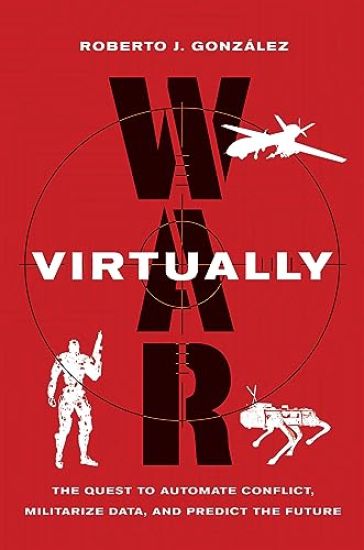
War Virtually

War Virtually

Roberto J. González

University of California Press
2022
sidottu
A critical look at how the US military is weaponizing technology and data for new kinds of warfare—and why we must resist.War Virtually is the story of how scientists, programmers, and engineers are racing to develop data-driven technologies for fighting virtual wars, both at home and abroad. In this landmark book, Roberto J. González gives us a lucid and gripping account of what lies behind the autonomous weapons, robotic systems, predictive modeling software, advanced surveillance programs, and psyops techniques that are transforming the nature of military conflict. González, a cultural anthropologist, takes a critical approach to the techno-utopian view of these advancements and their dubious promise of a less deadly and more efficient warfare. With clear, accessible prose, this book exposes the high-tech underpinnings of contemporary military operations—and the cultural assumptions they're built on. Chapters cover automated battlefield robotics; social scientists' involvement in experimental defense research; the blurred line between political consulting and propaganda in the internet era; and the military's use of big data to craft new counterinsurgency methods based on predicting conflict. González also lays bare the processes by which the Pentagon and US intelligence agencies have quietly joined forces with Big Tech, raising an alarming prospect: that someday Google, Amazon, and other Silicon Valley firms might merge with some of the world's biggest defense contractors. War Virtually takes an unflinching look at an algorithmic future—where new military technologies threaten democratic governance and human survival.
War Virtually

War Virtually

Roberto J. González

University of California Press
2024
pokkari
A critical look at how the US military is weaponizing technology and data for new kinds of warfare—and why we must resist.War Virtually is the story of how scientists, programmers, and engineers are racing to develop data-driven technologies for fighting virtual wars, both at home and abroad. In this landmark book, Roberto J. González gives us a lucid and gripping account of what lies behind the autonomous weapons, robotic systems, predictive modeling software, advanced surveillance programs, and psyops techniques that are transforming the nature of military conflict. González, a cultural anthropologist, takes a critical approach to the techno-utopian view of these advancements and their dubious promise of a less deadly and more efficient warfare. With clear, accessible prose, this book exposes the high-tech underpinnings of contemporary military operations—and the cultural assumptions they're built on. Chapters cover automated battlefield robotics; social scientists' involvement in experimental defense research; the blurred line between political consulting and propaganda in the internet era; and the military's use of big data to craft new counterinsurgency methods based on predicting conflict. González also lays bare the processes by which the Pentagon and US intelligence agencies have quietly joined forces with Big Tech, raising an alarming prospect: that someday Google, Amazon, and other Silicon Valley firms might merge with some of the world's biggest defense contractors. War Virtually takes an unflinching look at an algorithmic future—where new military technologies threaten democratic governance and human survival.
American Counterinsurgency

American Counterinsurgency

Roberto J. Gonzalez

Prickly Paradigm Press, LLC
2009
nidottu
Politicians, pundits, and Pentagon officials are singing the praises of a kinder, gentler American counterinsurgency. Some claim that counterinsurgency is so sophisticated and effective that it is the 'graduate level of war'. Private military contracting firms have jumped on the bandwagon, and many have begun employing anthropologists, political scientists, psychologists, and sociologists to help meet the Department of Defense's new demand. The $60 million Human Terrain System (HTS), an intelligence gathering program that embeds social scientists with combat brigades in Iraq and Afghanistan, dramatically illustrates the approach. But when the military, transnational corporations, and the human sciences become obsessed with controlling the 'human terrain' - the civilian populations of Iraq and Afghanistan - what are the consequences? In this timely pamphlet, Roberto J. Gonzalez offers a searing critique of HTS, showing how the history of anthropology can be used to illuminate the problems of turning 'culture' into a military tool.
Plight of the Lions

Plight of the Lions

Roberto J. Ramos

Roberto J Ramos
2015
nidottu
SET IN THE MEDITERRANEAN WORLD OF BIBLICAL TIMES, PLIGHT OF THE LIONS begins one night when Akiva, a young runaway, inadvertently stumbles into the rabbi Yeshua on the night he is arrested on the Mount of Olives. The chance encounter changes his life forever. Years later the streets of Rome are filled with political betrayal, murder and unrest under Nero. Across the Great Sea Jerusalem is on the brink of chaos under Roman rule. Its citizens are doing all that they can to prepare for certain doom. It is amid this world that Tessius Trulius, a Roman boy, and Farrenthias Theophilus, a Greek boy, arrive at Clivus. Hidden deep in the mountains of Armenia, Clivus is occupied by priests who study and translate sacred scrolls that they have gathered throughout the world. Trulius and Farrenthias spend most of their youth at Clivus, and although very different in character, they form a friendship that bonds them for life. Eventually, they must leave Clivus. Trulius sets out in search of his father who has been wrongly convicted of murder. At first, Farrenthias accompanies Trulius and then goes his separate way on a quest to search for Akiva and discover what Akiva uncovered and wrote about the life of Yeshua. Follow their lives and the lives of the other men and women who make up Plight of the Lions
Concrete Permeability and Durability Performance

Concrete Permeability and Durability Performance

Roberto J. Torrent; Rui D. Neves; Kei-ichi Imamoto

TAYLOR FRANCIS LTD
2024
nidottu
Durability and service life design of concrete constructions have considerable socio-economic and environmental consequences, in which the permeability of concrete to aggressive intruders plays a vital role.Concrete Permeability and Durability Performance provides deep insight into the permeability of concrete, moving from theory to practice, and presents over 20 real cases, such as Tokyo’s Museum of Western Art, Port of Miami Tunnel and Hong Kong-Zhuhai-Macao sea-link, including field tests in the Antarctic and Atacama Desert. It stresses the importance of site testing for a realistic durability assessment and details the "Torrent Method" for non-destructive measurement of air-permeability. It also delivers answers for some vexing questions:Should the coefficient of permeability be expressed in m² or m/s?How to get a "mean" pore radius of concrete from gas-permeability tests?Why should permeability preferably be measured on site?How can service life of reinforced concrete structures be predicted by site testing of gas-permeability and cover thickness?Practitioners will find stimulating examples on how to predict the coming service life of new structures and the remaining life of existing structures, based on site testing of air-permeability and cover thickness. Researchers will value theoretical principles, testing methods, as well as how test results reflect the influence of concrete mix composition and processing.
Concrete Permeability and Durability Performance

Concrete Permeability and Durability Performance

Roberto J. Torrent; Rui D. Neves; Kei-ichi Imamoto

TAYLOR FRANCIS LTD
2021
sidottu
Durability and service life design of concrete constructions have considerable socio-economic and environmental consequences, in which the permeability of concrete to aggressive intruders plays a vital role.Concrete Permeability and Durability Performance provides deep insight into the permeability of concrete, moving from theory to practice, and presents over 20 real cases, such as Tokyo’s Museum of Western Art, Port of Miami Tunnel and Hong Kong-Zhuhai-Macao sea-link, including field tests in the Antarctic and Atacama Desert. It stresses the importance of site testing for a realistic durability assessment and details the "Torrent Method" for non-destructive measurement of air-permeability. It also delivers answers for some vexing questions:Should the coefficient of permeability be expressed in m² or m/s?How to get a "mean" pore radius of concrete from gas-permeability tests?Why should permeability preferably be measured on site?How can service life of reinforced concrete structures be predicted by site testing of gas-permeability and cover thickness?Practitioners will find stimulating examples on how to predict the coming service life of new structures and the remaining life of existing structures, based on site testing of air-permeability and cover thickness. Researchers will value theoretical principles, testing methods, as well as how test results reflect the influence of concrete mix composition and processing.
Revival: Metropolitan Income Growth and Convergence (2001)
This title was first published in 2001. What determines urban growth? Much has been written on particular causes and incidents which can explain the rise of one metropolis and the fall of another, but these do not illustrate general tendencies. This volume asks whether theories used to explain economic growth of nations or regions can be employed to find characteristics which encourage the growth of cities. Cavazos tests two principal theoretical approaches in this way. The first, the endogenous growth theory, predicts that incomes will diverge and sees technological innovations as the engine of economic growth. The second, the neoclassical growth theory, predicts conditional convergence and rates capital accumulation as the key to economic growth. He uses the two models to study US metropolitan income growth between 1970 and 1990 and compares their performance to determine which provides more insightful explanations of metropolitan growth.
Revival: Metropolitan Income Growth and Convergence (2001)
This title was first published in 2001. What determines urban growth? Much has been written on particular causes and incidents which can explain the rise of one metropolis and the fall of another, but these do not illustrate general tendencies. This volume asks whether theories used to explain economic growth of nations or regions can be employed to find characteristics which encourage the growth of cities. Cavazos tests two principal theoretical approaches in this way. The first, the endogenous growth theory, predicts that incomes will diverge and sees technological innovations as the engine of economic growth. The second, the neoclassical growth theory, predicts conditional convergence and rates capital accumulation as the key to economic growth. He uses the two models to study US metropolitan income growth between 1970 and 1990 and compares their performance to determine which provides more insightful explanations of metropolitan growth.
On the Formation of the Most Massive Stars in the Galaxy

On the Formation of the Most Massive Stars in the Galaxy

Roberto J. Galván-Madrid

Springer-Verlag New York Inc.
2012
nidottu
The most massive stars in the galaxy - those with more than 15 to 20 solar masses - are lilkely to ionize their surroundings before they reach their final mass. How can they accrete in spite of the presence of over-pressurized gas? This thesis presents results of Submillimeter Array (SMA) and Very Large Array (VLA) studies of massive star formation regions in the early stages of ionization, as well as an analysis of numerical simulations of the evolution of these young HII regions. The results favor a picture in which very massive stars form in accretion flows that are partially ionized and that keep accreting material from their environment.
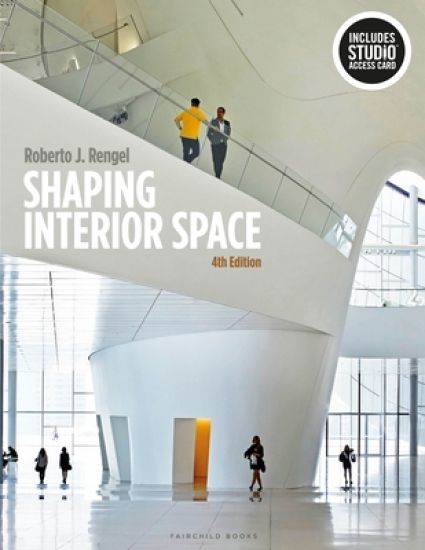
Shaping Interior Space

Shaping Interior Space

Roberto J. Rengel

Fairchild Books
2019
muu
Shaping Interior Space, 4th Edition, emphasizes the experiential contributions of interior design and teaches the principles of space planning. This book reinforces an understanding of conceptual, organizational, and spatial principles to diagnose, select, and execute appropriate design strategies for both residential and commercial environments. Intended for all design students, the author covers strategies for creating interior environments that work as a total system to enhance the experience of the user. Within the STUDIO, students will be able to: Study smarter with self-quizzes featuring scored resultsand personalized study tips. Review concepts with flashcards of essential vocabulary