Kirjahaku
Etsi kirjoja tekijän nimen, kirjan nimen tai ISBN:n perusteella.
1000 tulosta hakusanalla Robin K. Dhillon

Explores the Skidegate model village carved by Haida artists for the 1893 Chicago World's FairIn 1892 seventeen Haida artists were commissioned to carve a model of HlGaagilda Llnagaay (the village of Skidegate on Haida Gwaii, British Columbia) for the 1893 World's Fair in Chicago. The Skidegate model, featuring twenty-nine large houses and forty-two poles, is the only known model village in North America carved by nineteenth-century Indigenous residents of the village it portrayed. Based on over twenty years of collaborative research with the Skidegate Haida community, the book features vital cultural context. Robin K. Wright explores how Haida people represented their culture to the outside world at a time when they were suffering from devastating population loss due to introduced diseases and from ongoing attempts by the settler government to suppress their culture by making the potlatch illegal. While promoters of the Chicago World's Fair used the village to celebrate the perceived "progress" of the dominant society, for Skidegate residents it provided a means to preserve their history and culture. After the exposition, many models were dispersed to the Field Museum of Natural History and other collections, but fourteen of the model houses have not yet been located. The book provides extensive archival information and photographs that contextualize the model village and might help locate the missing houses. Wright's community-engaged research offers valuable insights into Northwest Coast art history.
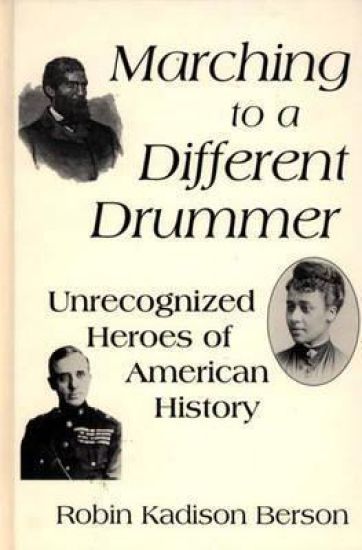
These 35 little known heroes and heroines of American history from across the ethnic spectrum have been virtually ignored in traditional history books. Their inspiring, biographical profiles reveal the struggle, in the face of entrenched opposition, for a just, equitable, and humane society. They spoke for racial and social justice, women's rights, safe working conditions, and freedom of conscience and religion. More than half of the profiles are of women, one fourth are of African-Americans, and Native Americans, Asian Americans, Latino and Chicano Americans are also represented. Each profile integrates the individual life with a detailed explanation of the historical context, and each entry provides excerpts from primary sources--speeches, writings, and interviews--and is followed by broad bibliographical references.An alternative perspective on American history for students is offered in this work. The 35 men and women profiled here all defied the social and moral conventions of their times, frequently facing opposition and condemnation. Their voices were often stilled, muted, or lost, but their ethically grounded courage, their clarity of vision, and their willingness to stand up to injustice provide role models for Americans of all ages. One third of these people cannot be found in standard biographical references and others have never before been the focus of biographical sketches. Subject lists by chronology, gender, ethnicity, and focus of the biographee's concern will enable the student to select an appropriate subject for investigation and reports.

Profiles seventeen young men and women from diverse nations and cultures and from different periods over the past 250 years whose heroic deeds displayed their commitment to integrity, compassion, and service.

Jane Addams is best known as the founder of Hull-House, one of this country's first settlement houses, in the immigrant heart of late Victorian Chicago. This biography chronicles her privileged childhood in rural Illinois, her thirst for a first-class education, and her search for purpose and self-fulfillment, although constrained by notions of the proper role for females. It chronicles Addams' tireless work to better the lives of urban immigrants and her growing national and international role in social reform. The narrative of her family travails, deep friendships, reading, writing, travels, beliefs, and accolades and changing public perception of her causes is consummately woven with historical context of her times—from the Civil War Era to the Great Depression. The range of Addams' concerns, of her active social and political involvement, is astonishing. She belonged to and helped to found many organizations, including the National Association for the Advancement of Colored People. She championed women's suffrage and equality and believed in their moral strength in reform. At one point, she was cast in the role of middle class secular saint, and she became the most honored woman in the United States. As the United States entered World War I and later, Addams was called a dangerous radical and unchristian scoundrel and vilified for her outspoken pacifism and championing of free speech, human rights, and other progressive causes and groups. Her profound contributions to society began to be recognized again in the 1960s, and this biography reveals her greatness to a new generation.

Product placement is now an integral part of what is considered the highest-quality fiction programming on television. Throughout the history of television, until now, direct product placement within fiction has not been a significant marketing strategy. This broadcasting/marketing configuration marks a another definitive step in the history of the commercialization of television. This book is an exploration of the interconnections between media economics and communication discourse. The recessionary, highly competitive economic environment of the 1980s, which affected networks, independent broadcasting, and the media industry in general, has been widely noted in the business pages of the national press. But the dramatic effects on programming wrought by the financial strategies of this period are yet to be understood. Marketing factors account for the heightened emphasis on programming environment during the 1980s. But what are the full implications of the practice of audience marketing and the creation of appropriate programming environments?

Product placement is now an integral part of what is considered the highest-quality fiction programming on television. Throughout the history of television, until now, direct product placement within fiction has not been a significant marketing strategy. This broadcasting/marketing configuration marks a another definitive step in the history of the commercialization of television. This book is an exploration of the interconnections between media economics and communication discourse. The recessionary, highly competitive economic environment of the 1980s, which affected networks, independent broadcasting, and the media industry in general, has been widely noted in the business pages of the national press. But the dramatic effects on programming wrought by the financial strategies of this period are yet to be understood. Marketing factors account for the heightened emphasis on programming environment during the 1980s. But what are the full implications of the practice of audience marketing and the creation of appropriate programming environments?


2019 NATIONAL INDIE EXCELLENCE AWARDS FINALIST. Carl Van Doren (1885-1950), biographer, historian, essayist, and literary critic, wrote during the golden era of literary and cultural criticism that flourished across the 1920s, '30s, and '40s. One of the nation's most prolific literacy critics, Van Doren covered everybody who was anybody; he was in many ways The Man Who Knew Everybody. His personal and professional correspondence with the likes of Sinclair Lewis, Robert Frost, Elinor Wylie, and H. L. Mencken bring to life America's literary and intellectual landscape across the first half of the twentieth century. The Pulitzer Prize winning Van Doren was, most simply, a man of ideas, a public intellectual in a unique era of modern American history when the Intellectual was itself an esteemed vocation. Arriving in New York City with the wave of urban modernism that would come to define Manhattan as simply: The City, Van Doren began his career writing for The Nation and quickly moved on to include Scribner's, Century, Atlantic Monthly, The New Republic, the Saturday Review, and Good Housekeeping. He was the author of many books of American and literary history, was editor of the Literary Guild of America and the Readers Club, and won the Pulitzer Prize for his work on Benjamin Franklin. A self-described "lone hyena", he also suffered more than his share of personal tragedy, including the breakup of two marriages. In this work, historian Robin Foster follows a literary career, and discovers a modern American life.

It Is Now: A Collection of Moments Captured in Poetry
Robin K. Stuart-Tilley
Robin Stuart-Tilley
2014
nidottu

Inside the Dark Underbelly of Rikers Island: (A Retired Female Correction Officer Speaks Out)
Robin K. Miller
Robin K Miller
2016
nidottu
Part of Robin K Miller is still locked up inside Rikers Island, along with the spirit of her deceased sister. The current upheavals and violence taking place in and around the infamous Island are also taking place inside Robin's tortured heart. A correction guard at Rikers Island for 20 years, Robin's story is not merely a bold and brave expose of what really happens "behind closed doors", it is the deeply intimate and wrenching odyssey of a woman who has survived the un-survivable, and who is committed to sharing her truth. Her story is the ultimate triumph over darkness and corruption. The other story is that of an institution riddled with decay and corruption. Together theirs form a strident call to action for the entire American penal system.




Dog-related businesses are booming and this is your roadmap for starting up and running a dog daycare. From set-up to operation this book contains sound information on licensing, zoning, legal, financial and insurance needs and how to work with dogs.