Kirjahaku
Etsi kirjoja tekijän nimen, kirjan nimen tai ISBN:n perusteella.
1000 tulosta hakusanalla Robin P. Waldrop


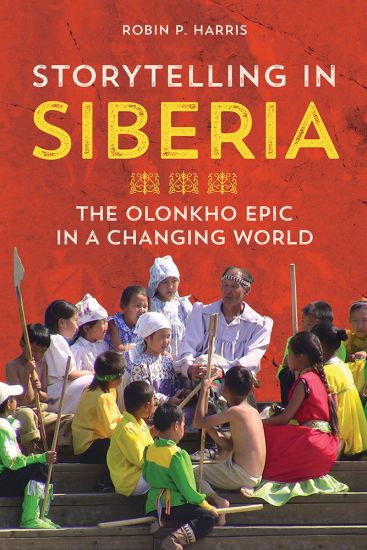
Olonkho, the epic narrative and song tradition of Siberia’s Sakha people, declined to the brink of extinction during the Soviet era. In 2005, UNESCO’s Masterpiece Proclamation sparked a resurgence of interest in olonkho by recognizing its important role in humanity’s oral and intangible heritage. Drawing on her ten years of living in the Russian North, Robin P. Harris documents how the Sakha have used the Masterpiece program to revive olonkho and strengthen their cultural identity. Harris’s personal relationships with and primary research among Sakha people provide vivid insights into understanding olonkho and the attenuation, revitalization, transformation, and sustainability of the Sakha’s cultural reemergence. Interdisciplinary in scope, Storytelling in Siberia considers the nature of folklore alongside ethnomusicology, anthropology, comparative literature, and cultural studies to shed light on how marginalized peoples are revitalizing their own intangible cultural heritage.
Olonkho, the epic narrative and song tradition of Siberia’s Sakha people, declined to the brink of extinction during the Soviet era. In 2005, UNESCO’s Masterpiece Proclamation sparked a resurgence of interest in olonkho by recognizing its important role in humanity’s oral and intangible heritage. Drawing on her ten years of living in the Russian North, Robin P. Harris documents how the Sakha have used the Masterpiece program to revive olonkho and strengthen their cultural identity. Harris’s personal relationships with and primary research among Sakha people provide vivid insights into understanding olonkho and the attenuation, revitalization, transformation, and sustainability of the Sakha’s cultural reemergence. Interdisciplinary in scope, Storytelling in Siberia considers the nature of folklore alongside ethnomusicology, anthropology, comparative literature, and cultural studies to shed light on how marginalized peoples are revitalizing their own intangible cultural heritage.

This book is not for those who just want to be told what to believe. Rather, it is designed to demonstrate to the reader what is the genuine expertise and what is not. And to empower them to discern for themself what is true expertise rather than false. With 36 graphs and hundreds of scientific references, this information-crammed book seeks to guide the reader to answers to crucial questions such as the following. How can you distinguish real expertise from false? How can you tell who are the real medical experts? How do people become experts anyway? How do some get recognised as experts, and others not? Does that expertise-recognition process actually make sense? Or could it actually be severely flawed? Why are many senior science people so critical of medical research? Is "peer review" a useful indicator of competence? Is it safest to just follow what the most senior professors say? Why were no safety studies published of the non-gamma-2 amalgams now contained in millions of people's teeth? This unique book (written before the Covid pandemic) shows for the first time: - How millions of people in the US, UK, and elsewhere have had health and lives devastated by pseudo-evidence-based healthcare promoted by officially-designated experts (causing mainly non-autistic disabilities). The system of evidence-defying untruths issuing from official experts to deceive victims and cover up this catastrophe. How the science bureaucracy's system of "peer-reviewed" journals suppresses scientific truth and talent rather than advances it. How the fact of this medical catastrophe of pseudo-expertise has itself been kept censored by the cheap false excuses of the anonymous unaccountable so-called peer-review system. Why brain-changing air pollution has caused moral and cultural-social transformations, including the revolution of some longstanding attitudes. Practical ways you can distinguish life-saving genuine expertise from death-threatening official charlatanism. The institutional changes needed to end the failures both of health systems and of systems of scientific publication and promotion. Robin P Clarke is uniquely-qualified to write on these matters, having authored a number of notable medical scientific papers including the definitive unfaulted theory of autism, with numerous confirmed predictions, and yet unusually having no conflicts of interests (commercial, institutional, career). And with far too much direct personal experience of how the medical "expertise" system actually works in grim practice.


Semiotics - the study of the general principles of signs and sign systems – is crucial to an understanding of human nature, both social and psychological. The sign systems that we use for interaction with other living beings determine our potential for thought and social action, and language is central among them. It is the implicit claim of this two-volume work that linguistics has something very specific to give to semiotics, and many would further claim that relational network models of language in particular, i.e. systematic and stratificational linguistics, have a fundamental contribution to make.

Semiotics - the study of the general principles of signs and sign systems – is crucial to an understanding of human nature, both social and psychological. The sign systems that we use for interaction with other living beings determine our potential for thought and social action, and language is central among them. It is the implicit claim of this two-volume work that linguistics has something very specific to give to semiotics, and many would further claim that relational network models of language in particular, i.e. systematic and stratificational linguistics, have a fundamental contribution to make.
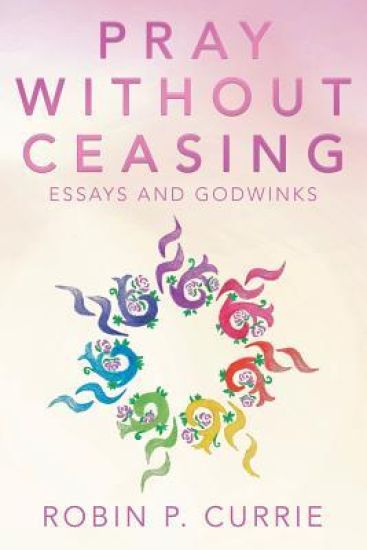
Pray Without Ceasing is a philosophy, filled with original concepts that will keep you moving in one direction: forward Whether you want insights on science, religion, spirituality, history, or something else altogether, you'll find novel and practical approaches to experiencing growth in life, love, and spirituality in this collection of essays and God-winks. In addition to sharing her own insights, the author examines the ideas of Jesus Christ, Buddha, Albert Einstein, Saint Paul, Carl Jung, Mother Earth, and God. There is no limit to where these ideas, and your own, will take you. Throughout the book, you'll consider questions such as: Why have so many people been taught to fear God? Why do we pray, and why should we pray? Why do we struggle with trusting others? The author also examines topics such as yoga, meditation, exposure to toxic beliefs, the role of personal boundaries, and more. Weaved throughout the book are prayers of intention, daily mantras, and daily verses. Gain a greater understanding of yourself, humanity, and the world around you with the lessons in Pray Without Ceasing.

Pray Without Ceasing is a philosophy, filled with original concepts that will keep you moving in one direction: forward Whether you want insights on science, religion, spirituality, history, or something else altogether, you'll find novel and practical approaches to experiencing growth in life, love, and spirituality in this collection of essays and God-winks. In addition to sharing her own insights, the author examines the ideas of Jesus Christ, Buddha, Albert Einstein, Saint Paul, Carl Jung, Mother Earth, and God. There is no limit to where these ideas, and your own, will take you. Throughout the book, you'll consider questions such as: Why have so many people been taught to fear God? Why do we pray, and why should we pray? Why do we struggle with trusting others? The author also examines topics such as yoga, meditation, exposure to toxic beliefs, the role of personal boundaries, and more. Weaved throughout the book are prayers of intention, daily mantras, and daily verses. Gain a greater understanding of yourself, humanity, and the world around you with the lessons in Pray Without Ceasing.