Kirjojen hintavertailu. Mukana 11 213 693 kirjaa ja 12 kauppaa.

Kirjahaku

Etsi kirjoja tekijän nimen, kirjan nimen tai ISBN:n perusteella.

1000 tulosta hakusanalla Robin Wood

Robin Wood on the Horror Film

Robin Wood on the Horror Film

Robin Wood

Wayne State University Press
2018
nidottu
Robin Wood’s writing on the horror film, published over five decades, collected in one volume.Robin Wood—one of the foremost critics of cinema—has laid the groundwork for anyone writing about the horror film in the last half-century. Wood’s interest in horror spanned his entire career and was a form of popular cinema to which he devoted unwavering attention. Robin Wood on the Horror Film: Collected Essays and Reviews compiles over fifty years of his groundbreaking critiques.In September 1979, Wood and Richard Lippe programmed an extensive series of horror films for the Toronto International Film Festival and edited a companion piece: The American Nightmare: Essays on the Horror Film - the first serious collection of critical writing on the horror genre. Robin Wood onthe Horror Film now contains all of Wood’s writings from The American Nightmare and nearly everything else he wrote over the years on horror—published in a range of journals and magazines—gathered together for the first time. It begins with the first essay Wood ever published, ""Psychoanalysis of Psycho,"" which appeared in1960 and already anticipated many of the ideas explored later in his touchstone book, Hitchcock’s Films. The volume ends, fittingly, with, ""What Lies Beneath?"", written almost five decades later, an essay in which Wood reflects on the state of the horror film and criticism since the genre's renaissance in the 1970s. Wood's prose iseloquent, lucid, and convincing as he brings together his parallel interests in genre, authorship, and ideology.Deftly combining Marxist, Freudian, and feminist theory, Wood’s prolonged attention to classic and contemporary horror films explains much about the genre's meanings and cultural functions. Robin Wood on the Horror Film will be an essential addition to the library of anyone interested in horror, science fiction, and film genre.
Robin Wood on the Horror Film

Robin Wood on the Horror Film

Robin Wood

Wayne State University Press
2018
sidottu
Robin Wood’s writing on the horror film, published over five decades, collected in one volume.Robin Wood—one of the foremost critics of cinema—has laid the groundwork for anyone writing about the horror film in the last half-century. Wood’s interest in horror spanned his entire career and was a form of popular cinema to which he devoted unwavering attention. Robin Wood on the Horror Film: Collected Essays and Reviews compiles over fifty years of his groundbreaking critiques.In September 1979, Wood and Richard Lippe programmed an extensive series of horror films for the Toronto International Film Festival and edited a companion piece: The American Nightmare: Essays on the Horror Film - the first serious collection of critical writing on the horror genre. Robin Wood onthe Horror Film now contains all of Wood’s writings from The American Nightmare and nearly everything else he wrote over the years on horror—published in a range of journals and magazines—gathered together for the first time. It begins with the first essay Wood ever published, ""Psychoanalysis of Psycho,"" which appeared in1960 and already anticipated many of the ideas explored later in his touchstone book, Hitchcock’s Films. The volume ends, fittingly, with, ""What Lies Beneath?"", written almost five decades later, an essay in which Wood reflects on the state of the horror film and criticism since the genre's renaissance in the 1970s. Wood's prose iseloquent, lucid, and convincing as he brings together his parallel interests in genre, authorship, and ideology.Deftly combining Marxist, Freudian, and feminist theory, Wood’s prolonged attention to classic and contemporary horror films explains much about the genre's meanings and cultural functions. Robin Wood on the Horror Film will be an essential addition to the library of anyone interested in horror, science fiction, and film genre.
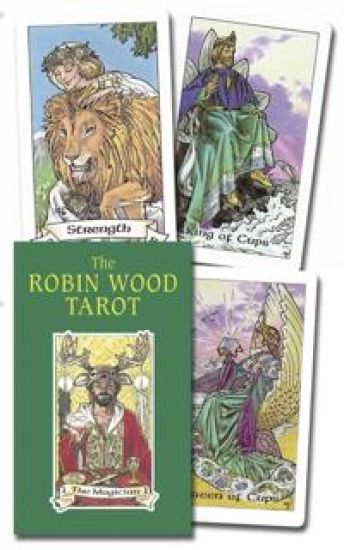
The Robin Wood Tarot

The Robin Wood Tarot

Robin Wood

Llewellyn Publications,U.S.
2002
muu
A Tarot for Pagans and Non-Pagans Alike The Robin Wood Tarot has rapidly become one of the most popular Tarot decks in the world. Its beautiful art, vibrant imagery and luminous energies, enchants everyone. The 22 Major Arcana cards are filled with life that was previously unseen in the Tarot. It is also filled with the energy of nature, taking the images outside of rooms and into the beautiful abodes of the gods. For example, The High Priestess is an ageless woman wearing a lunar headband. Behind her are trees and a darkened sky lit only by the moon. The shining strength of this deck lies in the fifty-six cards of the Minor Arcana. The characters on the cards almost seem to breathe. Often, the cards seem so dimensional you get the feeling you could jump into them. Watch the boy carve pentagrams on wooden disks in the eight of Pentacles. Gleefully help steal blades in the five of Swords. Join in the merry dance on the four of Wands. The 56-page booklet explains everything to give a Tarot reading, including the upright and reversed meaning for each card and 3 different layouts. Each of the pip cards is given a word or short phrase to help you identify the meaning of the card with virtually no effort. Pagans will love the influence of nature on this deck. Beginners will find it makes learning the Tarot fun and easy. Experienced Tarot readers will love the radiantly colorful, symbolic, and infinitely captivating deck.
Robin Wood's CORES Recycled

Robin Wood's CORES Recycled

Schiffer Publishing Ltd
2015
nidottu
Initially, they were the waste product of wooden bowls turned in an ancient technique by Robin Wood of the United Kingdom, an expert pole-lathe turner and author. Known for his historical and functional objects made on a foot-powered lathe, Wood keeps the tradition of pole turning alive. The leg-powered process Wood uses results in thousands of solid, round chunks – Cores – that get broken out of the center of the bowl at the last moment. Wood donated 100 Cores, which ranged in size from 2 x 2” to 3 x 4” to The Center for Art in Wood in Philadelphia. The Center sent Cores to two-score artists who agreed to the challenge of reworking them into new pieces of art. These works, shown here in more than 240 color photos, formed the exhibition – Robin Wood’s CORES Recycled – by The Center for Art in Wood.
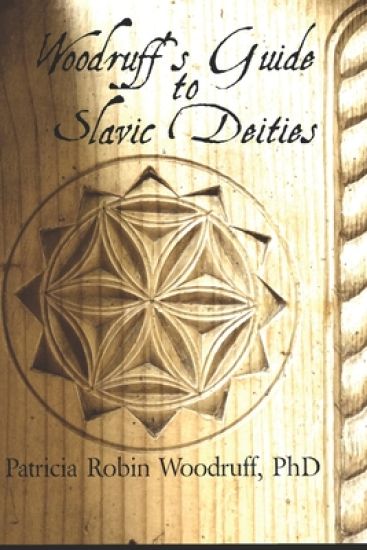
Woodruff's Guide to Slavic Deities

Woodruff's Guide to Slavic Deities

Anita Allen; Patricia Robin Woodruff

R. R. Bowker
2020
nidottu
A new and refreshing look at the ancient beliefs of the people that lived in the Slavic lands. A religion rooted in balance, connection and the Earth. Explore these different faces of deity: Veles, the teacher of magic and lord of the animals; Zhiva, the radiant goddess of life, love and justice; Mat Zemla, who is the "moist Mother Earth" and more Approximately 32 million people in the United States identify as having Slavic heritage and yet most of them have probably never heard of the native gods of their homeland. As more people look to find their own connection to earth spirituality they have only to look to the indigenous religion of their heritage. There is little available in English on these beliefs and the little that has been published is often tainted with white supremacist agendas. Come learn about the deities of the Slavic lands. Woodruff is an academic, an interfaith minister and a practicing Lemko bosorka. Her intense research and multi-disciplinary approach has broken new ground and resulted in same amazing new discoveries about this ancient religion.
Sexual Politics and Narrative Film

Sexual Politics and Narrative Film

Robin Wood

Columbia University Press
1998
pokkari
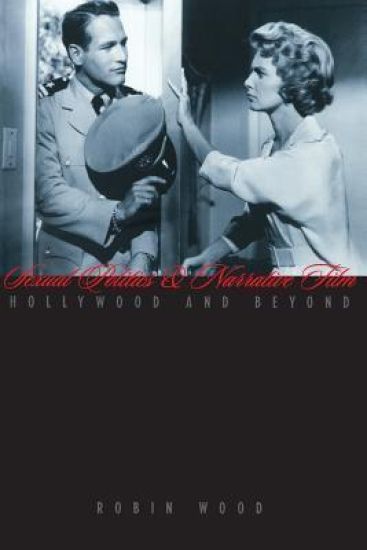
One of the most distinctive voices in film criticism explores relationships between narrative style and sexual politics. Robin Wood, well known for his books Hollywood from Vietnam to Reagan and Hitchcock's Films Revisited, probes the political and sexual ramifications of fascism and cinema, marriage and the couple, romantic love, and representations of women, race, and gender in contemporary films from the United States, Europe, and Japan. He looks closely at the works of Leo McCarey and Jacques Rivette, Ozu's "Noriko Trilogy," and the recent Generation X films Before Sunrise and The Doom Generation. In a chapter on fascism and cinema that juxtaposes Leni Riefenstahl's Triumph of the Will and Alain Resnais's Night and Fog, Wood finds that what is most important is not these films' record of another time and place but "the light they can throw on our contemporary cultural situation." Wood's central concern in these chapters is the ways in which the films relate to sexual politics and the organization within our culture of gender and sexuality. Seeing humanity as a "battleground" of a struggle between forces for Life and those of Death, Wood holds out hope for a joining of the forces of feminism, antiracism, lesbian and gay rights, and environmentalism necessary for authentic movement toward liberation.
Hitchcock's Films Revisited

Hitchcock's Films Revisited

Robin Wood

Columbia University Press
2002
pokkari
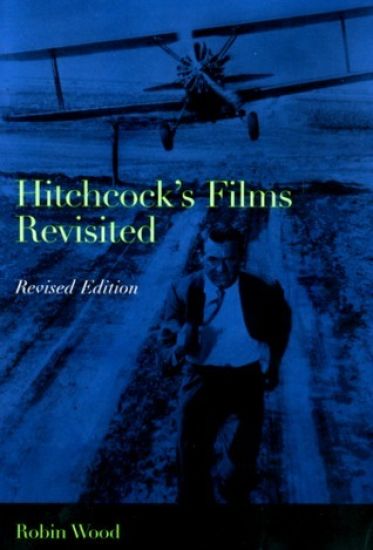
When "Hitchcock's Films" was first published, it quickly became known as a new kind of book on film - one that came to be considered a necessary text in the Hitchcock bibliography. When Robin Wood returned to his writings on Hitchcock's films and published "Hitchcock's Films Revisited" in 1989, the multi-dimensional essays took on a new shape - one that was tempered by Wood's own development as a critic. This new revised edition of "Hitchcock's Films Revisited" includes a substantial new preface in which Wood reveals his personal history as a film scholar - including his coming out as a gay man, his views on his previous critical work, and how his writings, his love of film, and his personal life have remained deeply intertwined through the years. This revised edition includes all original eighteen essays and a new chapter on Marnie titled "Does Mark Cure Marnie? Or, 'You Freud, Me Hitchcock.'"
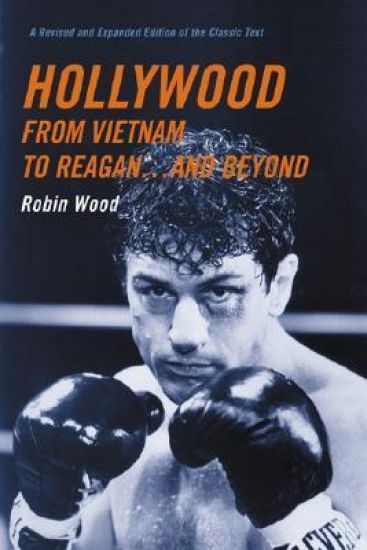
Hollywood from Vietnam to Reagan . . . and Beyond

Hollywood from Vietnam to Reagan . . . and Beyond

Robin Wood

Columbia University Press
2003
sidottu
This classic of film criticism, long considered invaluable for its eloquent study of a problematic period in film history, is now substantially updated and revised by the author to include chapters beyond the Reagan era and into the twenty-first century. For the new edition, Robin Wood has written a substantial new preface that explores the interesting double context within which the book can be read-that in which it was written and that in which we find ourselves today. Among the other additions to this new edition are a celebration of modern "screwball" comedies like My Best Friend's Wedding, and an analysis of '90s American and Canadian teen movies in the vein of American Pie, Can't Hardly Wait, and Rollercoaster. Also included are a chapter on Hollywood today that looks at David Fincher and Jim Jarmusch (among others) and an illuminating essay on Day of the Dead.
Hollywood from Vietnam to Reagan . . . and Beyond

Hollywood from Vietnam to Reagan . . . and Beyond

Robin Wood

Columbia University Press
2003
pokkari
This classic of film criticism, long considered invaluable for its eloquent study of a problematic period in film history, is now substantially updated and revised by the author to include chapters beyond the Reagan era and into the twenty-first century. For the new edition, Robin Wood has written a substantial new preface that explores the interesting double context within which the book can be read-that in which it was written and that in which we find ourselves today. Among the other additions to this new edition are a celebration of modern "screwball" comedies like My Best Friend's Wedding, and an analysis of '90s American and Canadian teen movies in the vein of American Pie, Can't Hardly Wait, and Rollercoaster. Also included are a chapter on Hollywood today that looks at David Fincher and Jim Jarmusch (among others) and an illuminating essay on Day of the Dead.
Howard Hawks

Howard Hawks

Robin Wood

Wayne State University Press
2006
nidottu
Prolific director Howard Hawks made films in nearly every genre, from gangster movies like ""Scarface"" to comedies like ""Bringing Up Baby"" and ""Monkey Business"" and westerns like ""Rio Bravo."" In this new edition of a classic text, author Robin Wood explores the ways in which Hawks pushed the boundaries of each genre and transformed the traditional forms in new, interesting, and creative ways. This reprint also contains an exciting new introduction by Wood, which shows how his thinking about Hawks has deepened over time without fundamentally changing. Since its original publication in 1972, Wood's ""Howard Hawks"" has set the terms for virtually all subsequent discussions of the director. The provocative chapters demonstrate the ways in which Hawks's films were affected by the director's personality and way of looking at and feeling things, and by his celebration of instinct, selfrespect, group responsibility, and male camaraderie. Wood's connections between the professionalism of Hawks's action films and comedies, with their ""lure of irresponsibility,"" has become a standard way of conceptualizing Hawks's films and the model to which all later critical work has had to respond. This book remains as contemporary as when it was first released, although it is grounded in the auteur period of its publication.
The Apu Trilogy

The Apu Trilogy

Robin Wood

Wayne State University Press
2016
nidottu
The Apu Trilogy is the fourth directorial monograph written by influential film critic Robin Wood and republished for a contemporary audience. Focusing on the famed trilogy from Indian director Satyajit Ray, Wood persuasively demonstrates his ability at detailed textual analysis, providing an impressively sustained reading that elucidates the complex view of life in the trilogy. Wood was one of our most insightful and committed film critics, championing films that explore the human condition. His analysis of The Apu Trilogy reveals and illuminates the films’ profoundly humanistic qualities with clarity and rigor, plumbing the psychological and emotional resonances that arise from Ray’s delicate balance of performance, camerawork, and visual design. Wood was the first English language critic to write substantively about Ray’s films, which made the original publication of his monograph on The Apu Trilogy unprecedented as well as impressive. Of late there has been a renewed interest in North America in the work of Satyajit Ray, yet no other critic has come close to equaling the scope and depth of Wood’s analysis.In his introduction, originally published in 1971, Wood says Ray’s work was met with indifference. In response, he offers possible reasons why this occurred, including social and cultural differences and the films’ slow pacing, which contemporary critics tended to associate with classical cinema. Wood notes Ray’s admiration for Western film culture, including the Hollywood cinema and European directors, particularly Jean Renoir and his realist films. Assigning a chapter to each Pather Panchali (1955), Aparajito (1957) and The World of Apu (1959), Wood goes on to explore each film more thoroughly. One of the aspects of this book that is particularly rewarding is Wood’s analytical approach to the trilogy as a whole, as well as detailed attention given to each of the three films. The book, with a new preface by Richard Lippe and foreword by Barry Keith Grant, functions as a masterclass on what constitutes an in-depth reading of a work and the use of critical tools that are relevant to such a task.Robin Wood’s The Apu Trilogy offers an excellent account of evaluative criticism that will appeal to film scholars and students alike.
Personal Views

Personal Views

Robin Wood

Wayne State University Press
2006
nidottu
Robin Wood, the renowned scholarly critic and writer on film, has prepared a new introduction and added three essays to his classic text ""Personal Views."" This important book contains essays on a wide range of films and filmmakers and considers questions of the nature of film criticism and the critic. Wood, the proud ""unreconstructed humanist,"" offers in this collection persuasive arguments for the importance of art, creativity, and personal response and also demonstrates these values in his analyses. ""Personal Views"" is the only book on cinema by Wood never to have been published in the United States. It contains essays on popular Hollywood directors such as Howard Hawks, Vincente Minnelli, and Leo McCarey; as well as pieces on recognized auteurs like Max Ophuls, Orson Welles, Fritz Lang, and Josef von Sternberg; and essays on art-film icons Jean-Luc Godard, Michelangelo Antonioni, and Kenji Mizoguchi. The writings that make up ""Personal Views"" appeared during a pivotal time in both film studies - during its academic institutionalization - and in the author's life. Throughout this period of change, Wood remained a stalwart anchor of the critical discipline, using theory without being used by it and always staying attentive to textual detail. Wood's overall critical project is to combine aesthetics and ideology in understanding films for the ultimate goal of enriching our lives individually and together. This is a major work to be read and reread not just by film scholars and students of film but by anyone with an interest in twentieth-century culture.
Ingmar Bergman

Ingmar Bergman

Robin Wood

Wayne State University Press
2012
nidottu
At a time when few reviewers and critics were taking the study of film seriously, Robin Wood released a careful and thoroughly cinematic commentary on Ingmar Bergman’s films that demonstrated the potential of film analysis in a nascent scholarly field. The original Ingmar Bergman influenced a generation of film scholars and cineastes after its publication in 1969 and remains one of the most important volumes on the director. This new edition of Ingmar Bergman, edited by film scholar Barry Keith Grant, contains all of Wood’s original text plus four later pieces on the director by Wood that were intended for a new volume that was not completed before Wood’s death in 2010. In analysing a selection of Bergman’s films, Wood makes a compelling case for the logic of the filmmaker’s development while still respecting and indicating the distinctiveness of his individual films. Wood’s emphasis on questions of value (What makes a work important? How does it address our lives?) informed his entire career and serve as the basis for many of these chapters. In the added material for this new edition, Wood considers three important films Bergman made after the book was first published—Cries and Whispers, Fanny and Alexander, and From the Life of the Marionettes—and also includes significant reassessment of Persona. These pieces provocatively suggest the more political directions Wood might have taken had he been able to produce Ingmar Bergman Revisited, as he had planned to do before his death. In its day, Ingmar Bergman was one of the most important volumes on the Swedish director published in English, and it remains compelling today despite the multitude of books to appear on the director since. Film scholars and fans of Bergman’s work will enjoy this updated volume.
Rio Bravo

Rio Bravo

Robin Wood

BFI Publishing
2003
nidottu
This volume is a study of the classic western film "Rio Bravo", which, according to the author, remains "beyond politics, as an argument as to why we should all want to go on living".