Kirjojen hintavertailu. Mukana 11 244 527 kirjaa ja 12 kauppaa.

Kirjahaku

Etsi kirjoja tekijän nimen, kirjan nimen tai ISBN:n perusteella.

1000 tulosta hakusanalla Robinson Jeffers

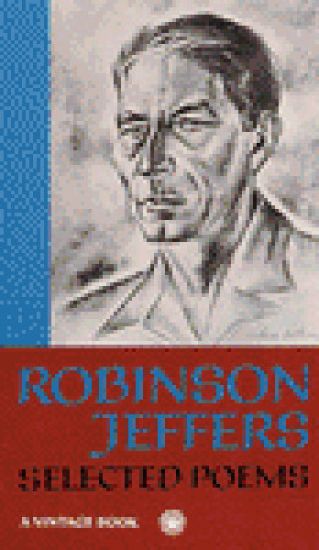
Selected Poems of Robinson Jeffers

Selected Poems of Robinson Jeffers

Robinson Jeffers

Random House USA Paperbacks
1965
pokkari
Robinson Jeffers was one of the most controversial poets of the twentieth century. In this volume, essential poems selected from his major works provide an excellent overview of Jeffers's style and the themes present throughout his work. Drawn from volumes published throughout his career, among them Be Angry at the Sun; Hungerfield; The Double Axe; Roan Stallion; Tamar and Other Poems; as well as The Beginning and the End, which contains his last poems, these poems will introduce new readers to his inimitable voice, while also gathering in one place some of his best work for his confirmed fans.
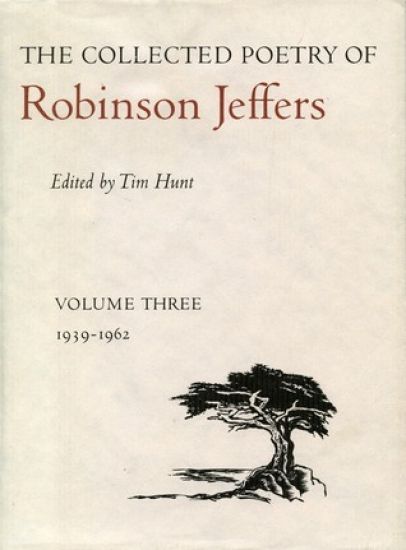
The Collected Poetry of Robinson Jeffers

The Collected Poetry of Robinson Jeffers

Robinson Jeffers

Stanford University Press
1991
sidottu
Robinson Jeffers (1887-1962) is not only the greatest poet that California (and indeed the American West) has produced but a major poet of the twentieth century who occupies a prominent place in the tradition of American prophetic poetry. Jeffers consciously set himself apart from the poetry of his generation—by physical isolation at his home in Carmel, by his unusual poetic form, and by his stance as an "anti-modernist." Yet his work represents a profound, and profoundly original, artistic response to problems that shaped modernist poetry and that still perplex poets today; how to reconcile scientific and artistic discourses and modes of vision; how to connect present-day experience to myths perceived as lying at the origins of human culture; how to renew the poetic language and how (or whether) to present art's claim to moral, spiritual, or epistemological seriousness within representations of modern phenomena. For Jeffers, as for no other important modern American poet, there has never been a collected poems, not even a truly representative selected poems—the current Selected Poetry, first published in 1938, contains no work from the last three volumes published during Jeffers' lifetime or from his posthumous volume. Now, for the first time, all of Jeffers' completed poems, both published and unpublished, are presented in a single, comprehensive, and textually authoritative edition. The first three volumes of this four-volume work, will present chronologically all of Jeffers' published work from 1920 to 1963. The present volume consists of poems written from 1939 to Jeffers' death in 1963, including the dramatic poems The Bowl of Blood, Medea, and The Double Axe byt were eventually omitted for reasons that are unclear; and those poems from his last years, which appeared posthumously in The Beginning and the End, that seem to be completed drafts.
The Collected Poetry of Robinson Jeffers

The Collected Poetry of Robinson Jeffers

Robinson Jeffers

Stanford University Press
2000
sidottu
Robinson Jeffers (1887-1962) is not only the greatest poet that California (and indeed the American West) has produced but a major poet of the twentieth century who occupies a prominent place in the tradition of American prophetic poetry. Jeffers consciously set himself apart from the poetry of his generation—by physical isolation at his home in Carmel, by his unusual poetic form, and by his stance as an "anti-modernist." Yet his work represents a profound, and profoundly original, artistic response to problems that shaped modernist poetry and that still perplex poets today. For Jeffers, as for no other important modern American poet, there has never been a collected poems, not even a truly representative selected poems—the current Selected Poetry, first published in 1938, contains no poems from the last three volumes published during Jeffers's lifetime or from his posthumous volume. Now, for the first time, all of Jeffers's completed poems, both published and unpublished, are presented in a single, comprehensive, and textually authoritative edition of five volumes. The present volume is in three parts. "Poetry 1903-1920" consists of some of the poems published while Jeffers was a college student, two early collections (Flagons and Apples and Californians), and a number of poems that were never published or were recently rediscovered. "Introductions, Forewords, and Miscellaneous Prose, 1920-1948" gathers all the major prose works. "Unpublished Poems and Fragments, 1910-1962" is mostly material that Jeffers never published, and apparently never tried to publish. The fifth volume of commentary will contain various procedural explanations and textual evidence for the texts presented in the edition, as well as transcriptions of working notes for the poems and of alternate and discarded passages. The Collected Poetry is designed by Adrian Wilson.
The Collected Poetry of Robinson Jeffers Vol 5

The Collected Poetry of Robinson Jeffers Vol 5

Robinson Jeffers

Stanford University Press
2002
sidottu
Robinson Jeffers (1887-1962) is not only the greatest poet that California (and indeed the American West) has produced but a major poet of the twentieth century who occupies a prominent place in the tradition of American prophetic poetry. Jeffers consciously set himself apart from the poetry of his generation—by physical isolation at his home in Carmel, by his unusual poetic form, and by his stance as an "anti-modernist." Yet his work represents a profound, and profoundly original, artistic response to problems that shaped modernist poetry and that still perplex poets today. Now, for the first time, all of Jeffers's completed poems, both published and unpublished, are presented in a single, comprehensive, and textually authoritative edition of five volumes. The present volume is in four parts. An Introduction deals with the scope and principles of selection for the edition, including the decision to present the poems in chronological order, and gives a brief review of the textual evidence and commentary that form the bulk of this volume. The essay "Chronology" offers an overview of Jeffers's career, the evidence for dating the poems, and the arguments drawn from that evidence. The two parts that follow describe the rationale and evidence for establishing the texts of the poems for this edition, and present, in the form of extensive commentary and tabulations for each poem, the material (notes, preliminary workings, revisions, discarded passages, and variations in published versions) that both complicate and enrich the study of Jeffers's poetry and prose. These commentaries also incorporate a number of additional selections from Jeffers's previously unpublished writings. There are three appendixes: tables of contents for original editions as well as some planned editions that were never published; poems (not included in this edition) that have appeared in posthumous compilations; and errata for the first four volumes. The book concludes with two indexes, of titles and of first lines.
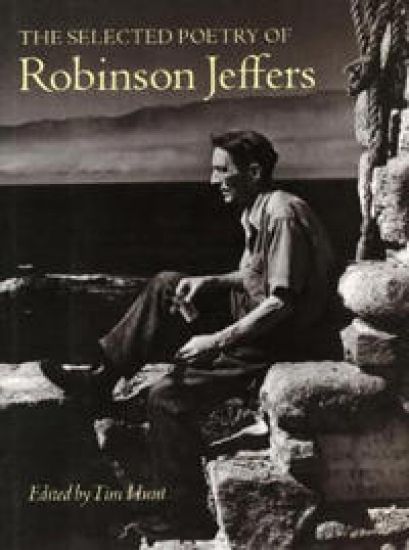
The Selected Poetry of Robinson Jeffers

The Selected Poetry of Robinson Jeffers

Robinson Jeffers

Stanford University Press
2002
pokkari
In 1938 Random House published The Selected Poetry of Robinson Jeffers, a volume that would remain in print for more than fifty years. For decades it drew enough poets, students, and general readers to keep Jeffers—in spite of the almost total academic neglect that followed his fame in the 1920s and 1930s—a force in American poetry. Now scholars are at last beginning to recognize that he created a significant alternative to the High Modernism of Pound, Eliot, and Stevens. Similarly, contemporary poets who have returned to the narrative poem acknowledge Jeffers to be a major poet, while those exploring California and the American West as literary regions have found in him a foundational figure. Moreover, Jeffers stands as a crucial precursor to contemporary attempts to rethink our practical, ethical, and spiritual obligations to the natural world and the environment. These developments underscore the need for a new selected edition that would, like the 1938 volume, include the long narratives that were to Jeffers his major work, along with the more easily anthologized shorter poems. This new selected edition differs from its predecessor in several ways. When Jeffers shaped the 1938 Selected Poetry, he drew from his most productive period (1917-37), but his career was not over yet. In the quarter century that followed, four more volumes of his poetry were published. This new selected edition draws from these later volumes, and it includes a sampling of the poems Jeffers left unpublished, along with several prose pieces in which he reflects on his poetry and poetics. This edition also adopts the texts of the recently completed The Collected Poetry of Robinson Jeffers (five volumes, Stanford, 1988-2000). When the poems were originally published, copy editors and typesetters adjusted Jeffers's punctuation, often obscuring the rhythm and pacing of what he actually wrote, and at points even obscuring meaning and nuance. This new selected edition, then, is a much broader, more accurate representation of Jeffers's career than the previous Selected Poetry. Reviews of volumes in The Collected Poetry of Robinson Jeffers "A masterful job of contemporary scholarly editing, this book begins an edition intended to clarify a 'Jeffers canon,' establishing for times to come the verse legacy of a poet who looked on all things with the eyes of eternity."—San Francisco Chronicle "This edition will be standard . . . a tribute and justice to a poet whose independent strength has survived to challenge personal and public canons."—Virginia Quarterly Review "Jeffers is the last of the major poets of his generation—Frost, Stevens, Williams, Pound, Moore, Eliot—to get his collected poems. Now that the job is at hand, it is done very well. . . . Tim Hunt has been painstaking in his editorial preparation and judicious in his presentation. . . . A great poet is ready for his due."—Philadelphia Inquirer "Few American poets are treated as well by publishers as Jeffers is by Stanford University Press. . . . These poems represent a distinctive voice in the American canon, and it is good to have them so wonderfully set forth."—Christian Century
The Collected Poetry of Robinson Jeffers

The Collected Poetry of Robinson Jeffers

Robinson Jeffers

Stanford University Press
2002
sidottu
Robinson Jeffers (1887-1962) is not only the greatest poet that California (and indeed the American West) has produced but a major poet of the twentieth century who occupies a prominent place in the tradition of American prophetic poetry. Jeffers consciously set himself apart from the poetry of his generation-by physical isolation at his home in Carmel, by his unusual poetic form, and by his stance as an "anti-modernist." Yet his work represents a profound, and profoundly original, artistic response to problems that shaped modernist poetry and that still perplex poets today; how to reconcile scientific and artistic discourses and modes of vision; how to connect present-day experience to myths perceived as lying at the origins of human culture; how to renew the poetic language and how (or whether) to present art's claim to moral, spiritual, or epistemological seriousness within representations of modern phenomena. For Jeffers, as for no other important modern American poet, there has never been a collected poems, not even a truly representative selected poems-the current Selected Poetry, first published in 1938, contains no work from the last three volumes published during Jeffers' lifetime or from his posthumous volume. Now, for the first time, all of Jeffers' completed poems, both published and unpublished, are presented in a single, comprehensive, and textually authoritative edition. The first three volumes of this four-volume work, will present chronologically all of Jeffers' published work from 1920 to 1963. The fourth volume will include apprentice work of 1912-1919, completed poems Jeffers left in manuscript, documents such as Jeffers' "Preface" to The Selected Poetry editorial apparatus that discusses the textual decisions made for the edition, and indexes of titles and first lines.
The Collected Letters of Robinson Jeffers, with Selected Letters of Una Jeffers
This book is the first volume in what will be a three-volume, fully annotated edition that collects all of Robinson Jeffers' letters and the most important of Una Jeffers' letters. Volume One, comprised of letters written between 1890 and 1930, also contains a substantial introduction to Jeffers' life and work. Readers of Volume One will acquire a completely new understanding of Jeffers' formative years. Topics of special interest include the evolution of Robinson and Una's relationship (which involved the breakup of her first marriage), their move to Carmel, the building of Tor House and Hawk Tower, Jeffers' maturation as a poet, the couple's widening circle of friends, and their first trip together to the British Isles.
Robinson Jeffers

Robinson Jeffers

James Karman

Stanford University Press
2015
pokkari
The precipitous cliffs, rolling headlands, and rocky inlets of the California coast come alive in the poetry of John Robinson Jeffers, an icon of the environmental movement. In this concise and accessible biography, Jeffers scholar James Karman reveals deep insights into this passionate and complex figure and establishes Jeffers as a leading American poet of prophetic vision. In a move that would define his life's work, Jeffers' family relocated to California from Pennsylvania in 1903 when he was sixteen. While a graduate student at the University of Southern California he met Una Call Kuster, a student who was the wife of a prominent Los Angeles attorney, and they began a scandalous affair that made the front page of the Los Angeles Times. They eventually married and escaped to Carmel, California to write poetry; there they would spend the rest of their lives. At the height of his popularity in the 1920s and 1930s, Jeffers became one of the few poets ever featured on the cover of Time magazine, and posthumously put on a U.S. postage stamp. Writing by kerosene lamp in a granite tower that he had built himself, his vivid and descriptive poetry of the coast evoked the difficulty and beauty of the wild and inspired photographers such as Edward Weston and Ansel Adams. He was known for long narrative blank verse that shook up the national literary scene, but in the 1940s his interest in the Greek classics led to several adaptations which were staged on Broadway to great success. Inspiring later artists from Charles Bukowski to Czeslaw Milosz and even the Beach Boys, Robinson Jeffers' contribution to American letters is skillfully brought back out of the shadows of history in this compelling biography of a complex man of poetic genius who wrote so powerfully of the astonishing beauty of nature.
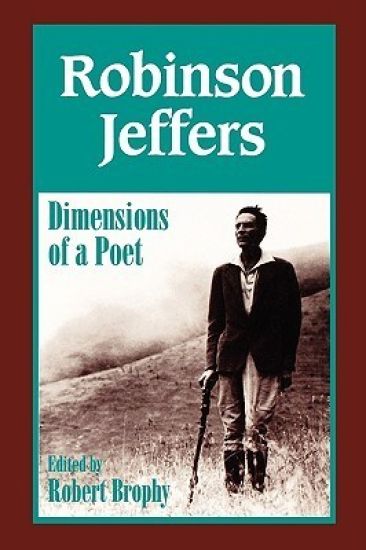
Robinson Jeffers

Robinson Jeffers

Robert J. Brophy

Fordham University Press
1995
sidottu
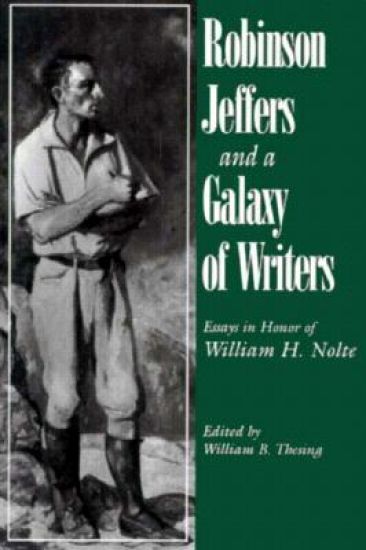
American Poet Robinson Jeffers (1887-1962) was educated in the classics from an early age and published his first book of poetry in 1912. Most of Jeffers' work is distinguished by strong elemental narratives set in the California Carmel/Big Sur area. His imagery often puts the rugged beauty of the landscape in opposition to the degraded and introverted condition of modern humanity. Jeffers' themes draw on classical and biblical sources from his early education, and his strong interest in Nietzsche's concept of individualism. Many of his contemporaries erroneously regarded him as a nihilist. This collection of essays attempts to illustrate the art and complexity of Jeffers, while presenting new insights into his work and its perception among his contemporaries. The essayists are Robert Brophy, Alex Vardamis, Robert Zaller, Terry Beers, Tim Hunt, David J. Rothman, Alan Soldofsky, Kirk Glaser, and William Everson. The essays represent a range of critical points of entry-some are on the cutting-edge of criticism and break new ground, others attempt to place Jeffers in the established perspectives of Western civilization's Christian humanism and American poetry's landscape-centered mysticism. The collection constitutes some of the most conversant and active research in the field of Jeffers studies. The critiques speak to the nature of Jeffer's poetry- how it challenged both the minds and hearts of its readers and prompted them to carefully define their own values and authentically find their own center.
Robinson Jeffers

Robinson Jeffers

Robert J. Brophy

Fordham University Press
1995
pokkari
American Poet Robinson Jeffers (1887-1962) was educated in the classics from an early age and published his first book of poetry in 1912. Most of Jeffers' work is distinguished by strong elemental narratives set in the California Carmel/Big Sur area. His imagery often puts the rugged beauty of the landscape in opposition to the degraded and introverted condition of modern humanity. Jeffers' themes draw on classical and biblical sources from his early education, and his strong interest in Nietzsche's concept of individualism. Many of his contemporaries erroneously regarded him as a nihilist. This collection of essays attempts to illustrate the art and complexity of Jeffers, while presenting new insights into his work and its perception among his contemporaries. The essayists are Robert Brophy, Alex Vardamis, Robert Zaller, Terry Beers, Tim Hunt, David J. Rothman, Alan Soldofsky, Kirk Glaser, and William Everson. The essays represent a range of critical points of entry-some are on the cutting-edge of criticism and break new ground, others attempt to place Jeffers in the established perspectives of Western civilization's Christian humanism and American poetry's landscape-centered mysticism. The collection constitutes some of the most conversant and active research in the field of Jeffers studies. The critiques speak to the nature of Jeffer's poetry- how it challenged both the minds and hearts of its readers and prompted them to carefully define their own values and authentically find their own center.
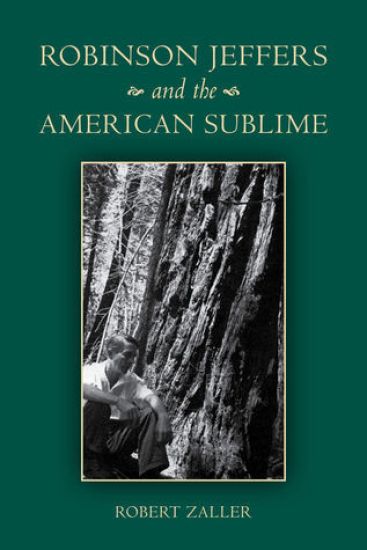
Robinson Jeffers and the American Sublime

Robinson Jeffers and the American Sublime

Robert Zaller

Stanford University Press
2012
sidottu
Robinson Jeffers and the American Sublime is the most comprehensive and most substantial critical work ever devoted to the major American poet Robinson Jeffers (1887–1962). Jeffers, the best known poet of California and the American West, particularly valorized the Big Sur region, making it his own as Frost did New England and Faulkner, Mississippi, and connecting it to the wider tradition of the American sublime in Emerson, Thoreau, and John Muir. The book also links Jeffers to a Puritan sublime in early American verse and explores his response to the Darwinian and Freudian revolutions and his engagement with modern astronomy. This discussion leads to a broad consideration of Jeffers' focus on the figure of Christ as emblematic of the human aspiration toward God—a God whom Jeffers defines not in Christian terms but in those of an older materialist pantheism and of modern science. The later sections of the book develop a conspectus of the democratic sublime that addresses American exceptionalism through the prism of Jeffers' Jeffersonian ethos. A final chapter places Jeffers' poetic thought in the larger cosmological perspective he sought in his late works.
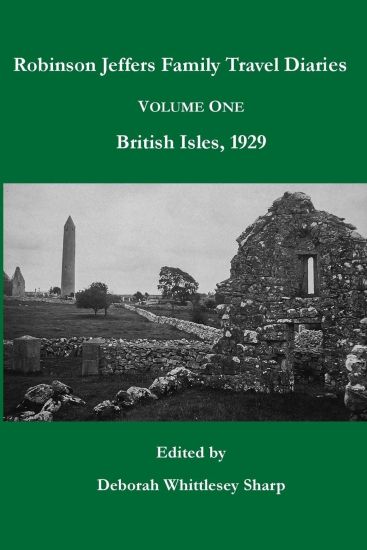
Robinson Jeffers Family Travel Diaries: Volume One, British Isles, 1929
In June 1929, the distinguished poet Robinson Jeffers--along with his wife Una and their twelve-year-old twin sons Donnan and Garth--set sail for Ireland, their first stop on a seven-month journey throughout the British Isles. During extended stays in Ireland, Scotland, and England, all four members of the family contributed to a remarkable travel diary recording their individual responses to the places and people that they encountered. The descriptions include many vivid observations as well as evident of Robinson's and Una's extensive knowledge of the history, literature, art, music, folklore, and architecture of the places that they explored. Readers of Jeffers will find much that adds to their understanding of the poet and his work.
Robinson Jeffers Family Travel Diaries: Volume One, British Isles, 1929
In June 1929, the distinguished poet Robinson Jeffers--along with his wife Una and their twelve-year-old twin sons Donnan and Garth--set sail for Ireland, their first stop on a seven-month journey throughout the British Isles. During extended stays in Ireland, Scotland, and England, all four members of the family contributed to a remarkable travel diary recording their individual responses to the places and people that they encountered. The descriptions include many vivid observations as well as evidence of Robinson's and Una's extensive knowledge of the history, literature, art, music, folklore, and architecture of the places that they explored. Readers of Jeffers will find much that adds to their understanding of the poet and his work.
Robinson Jeffers, a Study in Inhumanism. --

Robinson Jeffers, a Study in Inhumanism. --

Mercedes Cunningham Monjian

Hassell Street Press
2021
nidottu
This work has been selected by scholars as being culturally important and is part of the knowledge base of civilization as we know it.This work is in the public domain in the United States of America, and possibly other nations. Within the United States, you may freely copy and distribute this work, as no entity (individual or corporate) has a copyright on the body of the work.Scholars believe, and we concur, that this work is important enough to be preserved, reproduced, and made generally available to the public. To ensure a quality reading experience, this work has been proofread and republished using a format that seamlessly blends the original graphical elements with text in an easy-to-read typeface.We appreciate your support of the preservation process, and thank you for being an important part of keeping this knowledge alive and relevant.
The Collected Poetry of Robinson Jeffers

The Collected Poetry of Robinson Jeffers

Tim Hunt

Stanford University Press
1988
sidottu
Robinson Jeffers (1887-1962) is not only the greatest poet that California (and indeed the American West) has produced but a major poet of the twentieth century who occupies a prominent place in the tradition of American prophetic poetry. Jeffers consciously set himself apart from the poetry of his generation—by physical isolation at his home in Carmel, by his unusual poetic form, and by his stance as an "anti-modernist." Yet his work represents a profound, and profoundly original, artistic response to problems that shaped modernist poetry and that still perplex poets today; how to reconcile scientific and artistic discourses and modes of vision; how to connect present-day experience to myths perceived as lying at the origins of human culture; how to renew the poetic language and how (or whether) to present art's claim to moral, spiritual, or epistemological seriousness within representations of modern phenomena. For Jeffers, as for no other important modern American poet, there has never been a collected poems, not even a truly representative selected poems—the current Selected Poetry, first published in 1938, contains no work from the last three volumes published during Jeffers' lifetime or from his posthumous volume. Now, for the first time, all of Jeffers' completed poems, both published and unpublished, are presented in a single, comprehensive, and textually authoritative edition. The first three volumes of this four-volume work, will present chronologically all of Jeffers' published work from 1920 to 1963. The present volume consists of poems published between 1920 and 1928, and includes some of his greatest and best-known poems—Tamar,Roan Stallion,The Women at Point Sur, and Cawdor—as well as a recently discovered long poem, "Home." There is also an Editorial Note and a General Introduction.
The Collected Poetry of Robinson Jeffers

The Collected Poetry of Robinson Jeffers

Tim Hunt

Stanford University Press
1989
sidottu
Robinson Jeffers (1887-1962) is not only the greatest poet that California (and indeed the American West) has produced but a major poet of the twentieth century who occupies a prominent place in the tradition of American prophetic poetry. Jeffers consciously set himself apart from the poetry of his generation—by physical isolation at his home in Carmel, by his unusual poetic form, and by his stance as an "anti-modernist." Yet his work represents a profound, and profoundly original, artistic response to problems that shaped modernist poetry and that still perplex poets today; how to reconcile scientific and artistic discourses and modes of vision; how to connect present-day experience to myths perceived as lying at the origins of human culture; how to renew the poetic language and how (or whether) to present art's claim to moral, spiritual, or epistemological seriousness within representations of modern phenomena. For Jeffers, as for no other important modern American poet, there has never been a collected poems, not even a truly representative selected poems—the current Selected Poetry, first published in 1938, contains no work from the last three volumes published during Jeffers' lifetime or from his posthumous volume. Now, for the first time, all of Jeffers' completed poems, both published and unpublished, are presented in a single, comprehensive, and textually authoritative edition. The first three volumes of this four-volume work, will present chronologically all of Jeffers' published work from 1920 to 1963. The present volume consists of poems written between 1928 and 1938—the narratives Dear Judes, Thurso's Landing, Give Your Heart to the Hawks, Solstice, and Such Counsels You Gave to Me, as well as shorter verse dramas and lyric poems.
The Collected Letters of Robinson Jeffers, with Selected Letters of Una Jeffers
The 1930s marked a turning point for the world. Scientific and technological revolutions, economic and social upheavals, and the outbreak of war changed the course of history. The 1930s also marked a turning point for Robinson Jeffers, both in his career as a poet and in his private life. The letters collected in this second volume of annotated correspondence document Jeffers' rising fame as a poet, his controversial response to the turmoil of his time, his struggles as a writer, the growth and maturation of his twin sons, and the network of friends and acquaintances that surrounded him. The letters also provide an intimate portrait of Jeffers' relationship to his wife Una—including a full account of the 1938 crisis at Mabel Dodge Luhan's home in Taos, New Mexico that nearly destroyed their marriage.
The Collected Letters of Robinson Jeffers, with Selected Letters of Una Jeffers
This volume of correspondence, the last in a three-volume edition, spans a pivotal moment in American history: the mid-twentieth century, from the beginning of World War II, through the years of rebuilding and uneasy peace that followed, to the election of President John F. Kennedy. Robinson Jeffers published four important books during this period—Be Angry at the Sun (1941), Medea (1946), The Double Axe (1948), and Hungerfield (1954). He also faced changes to his hometown village of Carmel, experienced the rewards of being a successful dramatist in the United States and abroad, and endured the loss of his wife Una. Jeffers' letters, and those of Una written in the decade prior to her death, offer a vivid chronicle of the life and times of a singular and visionary poet.