Kirjojen hintavertailu. Mukana 11 213 693 kirjaa ja 11 kauppaa.

Kirjahaku

Etsi kirjoja tekijän nimen, kirjan nimen tai ISBN:n perusteella.

1000 tulosta hakusanalla Roderick Beaton

Greece

Greece

Roderick Beaton

Penguin Books Ltd
2020
pokkari
SHORTLISTED FOR THE CUNDILL HISTORY PRIZE 2020 AND THE RUNCIMAN AWARD 2021A FINANCIAL TIMES BOOK OF THE YEAR 'The best history of Greece around... Beautifully written and packed with insights about the culture and the people. I will be dipping into this book for the rest of my life' Victoria HislopWe think we know ancient Greece, the civilisation that shares the same name and gave us just about everything that defines 'western' culture today, in the arts, sciences, social sciences and politics. Yet, as Greece has been brought under repeated scrutiny during the financial crises that have convulsed the country since 2010, worldwide coverage has revealed just how poorly we grasp the modern nation. This book sets out to understand the modern Greeks on their own terms.How did Greece come to be so powerfully attached to the legacy of the ancients in the first place, and then define an identity for themselves that is at once Greek and modern? This book reveals the remarkable achievement, during the last 300 years, of building a modern nation on, sometimes literally, the ruins of a vanished civilisation. This is the story of the Greek nation-state but also, and perhaps more fundamentally, of the collective identity that goes with it. It is not only a history of events and high politics, it is also a history of culture, of the arts, of people and of ideas.
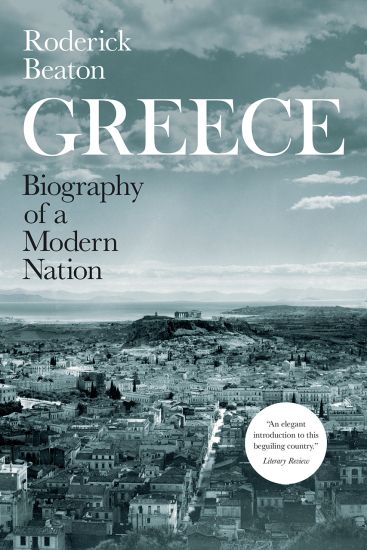
Greece: Biography of a Modern Nation

Greece: Biography of a Modern Nation

Roderick Beaton

University of Chicago Press
2021
nidottu
For many, "Greece" is synonymous with "ancient Greece," the civilization that gave us much that defines Western culture today. But, how did Greece come to be so powerfully attached to the legacy of the ancients in the first place and then define an identity for itself that is at once Greek and modern? This book reveals the remarkable achievement, during the last three hundred years, of building a modern nation on the ruins of a vanished civilization--sometimes literally so. This is the story of the Greek nation-state but also, and more fundamentally, of the collective identity that goes with it. It is not only a history of events and high politics; it is also a history of culture, of the arts, of people, and of ideas. Opening with the birth of the Greek nation-state, which emerged from encounters between Christian Europe and the Ottoman Empire, Roderick Beaton carries his story into the present moment and Greece's contentious post-recession relationship with the rest of the European Union. Through close examination of how Greeks have understood their shared identity, Beaton reveals a centuries-old tension over the Greek sense of self. How does Greece illuminate the difference between a geographically bounded state and the shared history and culture that make up a nation? A magisterial look at the development of a national identity through history, Greece: Biography of a Modern Nation is singular in its approach. By treating modern Greece as a biographical subject, a living entity in its own right, Beaton encourages us to take a fresh look at a people and culture long celebrated for their past, even as they strive to build a future as part of the modern West.
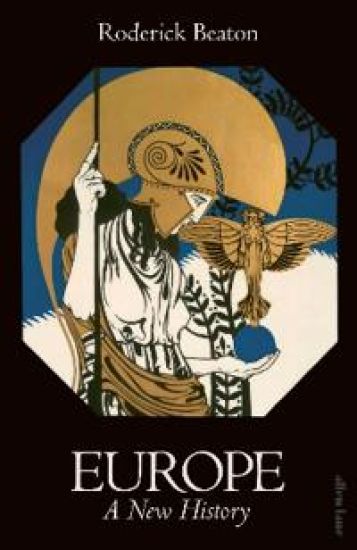
Europe

Europe

Roderick Beaton

PENGUIN BOOKS LTD
2026
sidottu
This wise, thoughtful and entertaining book draws on a lifetime of knowledge to tell the story as crisply as possible of the European continent and its people. Beginning in the Ancient World and ending with the war in Ukraine, Europe: A New History is both the story of the whole land mass and of the shifting points when a particular country or region has become dominant or extraordinary. The book is both a reliable and thoughtful guide to what has happened to this small western outcrop of the Asian landmass and a meditation on what is and what is not Europe - how this has changed but also the strange continuities. Europe: A New History is above all extraordinarily useful - Roderick Beaton is as good at writing about the great social, economic and climatic changes across the continent as on those small individual moments where suddenly history takes a new and sometimes drastic course.
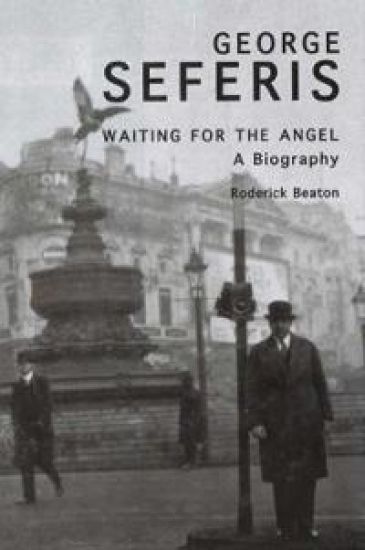
George Seferis

George Seferis

Roderick Beaton

Yale University Press
2013
pokkari
The first biography in any language of one of the world’s greatest modernist poets Poet, essayist, diarist, novelist, and diplomat, George Seferis brought about a revolution in the way people viewed his native Greece. Acclaimed for his thought-provoking lyric poetry, he was awarded the Nobel Prize for Literature in 1963. At the same time, he rose in the diplomatic corps to the position of Ambassador to Britain. This elegantly written book—the first full biography of Seferis—provides insights into his work, life, and country. Roderick Beaton, an acknowledged authority on modern Greek literature and culture, draws on previously unknown sources to tell Seferis’s story. He describes how Seferis occupied key diplomatic positions during periods of historic crisis before, during, and after World War II. He explores Seferis’s service as Ambassador to London at a time when Greece and Great Britain were disputing the future of Cyprus, noting that some of Seferis’s finest poetry was written about that troubled island. He analyzes Seferis’s literary production and his impact on Lawrence Durrell, Henry Miller, and other British and American writers. Exploring the interplay between poet and diplomat, public and private, and poetry and politics in Seferis’s life and career, this book will fascinate anyone interested in twentieth-century Greek literature, culture, or history.
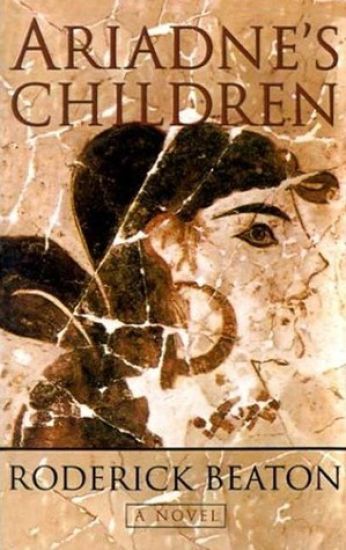
Ariadne's Children

Ariadne's Children

Roderick Beaton

St. Martin's Griffin
1996
nidottu
Ancient history, family past, present day - all collide in this intricately woven first novel about three generations of one family, set against seventy years of political turmoil in Europe. At the outbreak of World War I, renowned archaeologist Lionel Richardson flees Sarajevo to begin an excavation at Ano Meri, an ancient palace in Crete. His success there becomes a lifelong obsession for which there is a very high price - one that his family must pay.
The Medieval Greek Romance

The Medieval Greek Romance

Roderick Beaton

Routledge
1996
nidottu
First published by CUP in 1989, The Medieval Greek Romance provides basic information for the non-specialist about Greek fiction during the period 1071-1453, as well as proposing new solutions to problems that have vexed previous generations of scholars. Roderick Beaton applies sophisticated methods of literary analysis to the material, and the bridges of the artificial gap which has separated `Byzantine'literature, in a form of ancient Greek as both homogenous and of a high level of literary sophistication.Throughout, consideration is given to relations and interconnections with similar literature in western Europe. As most of the texts discussed are not available in English translation, the argument is illustrated by lucid plot summaries and extensive quotation (accompanied by literal English renderings).For this edition, The Medieval Greek Romance has been revised throughout and expanded with the addition of an `Afterword' which assesses and responds to recent work on the subject.
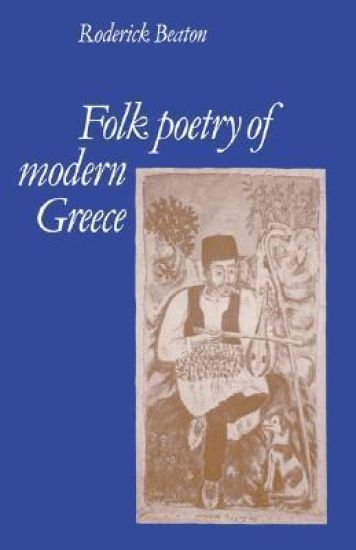
Folk Poetry of Modern Greece

Folk Poetry of Modern Greece

Roderick Beaton

Cambridge University Press
2004
pokkari
A wide-ranging study of popular poetry and song in the Greek language from the last years of the Byzantine Empire to the present day. The folk poetry of the title includes the songs, composed and handed down by word of mouth, of unlettered villagers, of wandering minstrels with pretensions to professionalism, and, in more recent times, of the poorer inhabitants of Ottoman and Greek cities. The creative period of this folk poetry covers, at the minimum, 500 years of history and a geographical area stretching from Corsica in the west to Cyprus and Trebizond in the east, as well as northwards into the Balkans. This is not a general or theoretical survey of folk poetry, but an exploration, based on literary, historical and sociological evidence, of a single cultural tradition and the forces which have shaped it.
From Byzantium to Modern Greece

From Byzantium to Modern Greece

Roderick Beaton

Ashgate Publishing Limited
2008
sidottu
The twelfth century was a time of cultural renewal and innovation in Byzantium, just as it was in the west. In literature, the long disused genres of epic, satire and the novel (or 'romance') took new forms during that century; at the same time, in language, the vernacular made its first tentative literary appearances. These developments continued uninterruptedly through the late Byzantine and early modern periods. Scholarship since the nineteenth century has been sharply divided over these texts: do they represent the first 'breakthrough' of an emergent 'Modern Greek' literature, or merely a footnote to the Byzantine learned tradition? What, in particular, do they have to tell us about the collective self-definition of the Greek-speakers who wrote them (roughly during the period 1100-1600)? And how has their subsequent reception contributed to defining and consolidating the national identity of the Modern Greeks, since the nation state was established in the 1820s? The papers collected in this book explore the relation between literary texts and collective consciousness, scrutinizing the evidence of the texts themselves in their late- or post-Byzantine context, and assessing how their reception both influenced and was influenced by the processes of nation-building in Modern Greece.
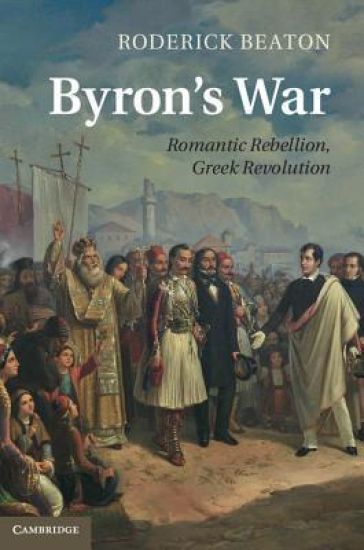
Byron's War

Byron's War

Roderick Beaton

Cambridge University Press
2013
sidottu
Roderick Beaton re-examines Lord Byron's life and writing through the long trajectory of his relationship with Greece. Beginning with the poet's youthful travels in 1809–1811, Beaton traces his years of fame in London and self-imposed exile in Italy, that culminated in the decision to devote himself to the cause of Greek independence. Then comes Byron's dramatic self-transformation, while in Cephalonia, from Romantic rebel to 'new statesman', subordinating himself for the first time to a defined, political cause, in order to begin laying the foundations, during his 'hundred days' at Missolonghi, for a new kind of polity in Europe – that of the nation-state as we know it today. Byron's War draws extensively on Greek historical sources and other unpublished documents to tell an individual story that also offers a new understanding of the significance that Greece had for Byron, and of Byron's contribution to the origin of the present-day Greek state.
The Greeks: A Global History

The Greeks: A Global History

Roderick Beaton

BASIC BOOKS
2023
nidottu
A "monumental, sweeping" (Peter Frankopan, author of The Silk Roads) history of the Greeks, from the Bronze Age to today More than two thousand years ago, the Greek city-states, led by Athens and Sparta, laid the foundation for much of modern science, the arts, politics, and law. But the influence of the Greeks did not end with the rise and fall of this classical civilization. As historian Roderick Beaton illustrates, over three millennia Greek speakers produced a series of civilizations that were rooted in southeastern Europe but again and again ranged widely across the globe. In The Greeks, Beaton traces this history from the Bronze Age Mycenaeans who built powerful fortresses at home and strong trade routes abroad, to the dramatic Eurasian conquests of Alexander the Great, to the pious Byzantines who sought to export Christianity worldwide, to today's Greek diaspora, which flourishes on five continents. The product of decades of research, this is the story of the Greeks and their global impact told as never before.
The Greeks: A Global History

The Greeks: A Global History

Roderick Beaton

BASIC BOOKS
2021
sidottu
A sweeping history of the Greeks, from the Bronze Age to today More than two thousand years ago, the Greek city-states, led by Athens and Sparta, laid the foundation for much of modern science, the arts, politics, and law. But the influence of the Greeks did not end with the rise and fall of this classical civilization. As historian Roderick Beaton illustrates, over three millennia Greek speakers produced a series of civilizations that were rooted in southeastern Europe but again and again ranged widely across the globe. In The Greeks, Beaton traces this history from the Bronze Age Mycenaeans who built powerful fortresses at home and strong trade routes abroad, to the dramatic Eurasian conquests of Alexander the Great, to the pious Byzantines who sought to export Christianity worldwide, to today's Greek diaspora, which flourishes on five continents. The product of decades of research, this is the story of the Greeks and their global impact told as never before.
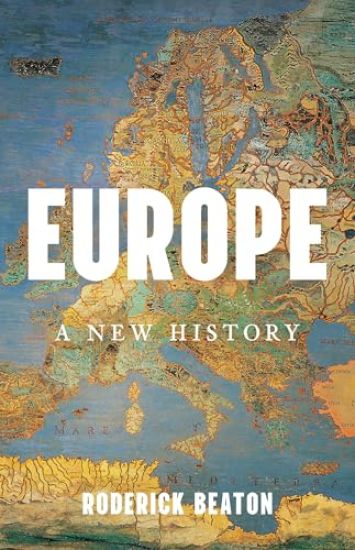
Europe: A New History

Europe: A New History

Roderick Beaton

BASIC BOOKS
2026
sidottu
A bold new history of Europe, from ancient Greece to the Russian invasion of Ukraine What do we talk about when we talk about Europe? Is it defined by geography? Or is it politics, or shared culture? In Europe, award-winning historian Roderick Beaton tells the story of Europe as never before--as the history of an idea, and a collective identity. Since its dramatic birth in ancient Greece, "Europe" has been defined, and redefined, by its people. Through this powerful lens, and with the narrative drive and scope of a novelist, Beaton deftly surveys Europe's major historical developments: the rise and fall of Rome; the explosion of Christianity; the intellectual ferment of the Renaissance and the Enlightenment; the arrival of Europeans in the Americas; the violent upheavals of the nineteenth and twentieth centuries; and the uncertainties of the present. Throughout, original sources allow the voices of the past, from Tacitus to Thatcher, to speak for themselves. Grappling with the multilayered identities that have always come with being European, Europe places the Europe of today in a long arc of history stretching back more than 2,500 years.
Digenes Akrites

Digenes Akrites

Roderick Beaton; David Ricks

Variorum
1993
sidottu
Called variously the ’Byzantine epic’, the ’epic of Modern Greece’, an ’epic-romance’ and ’romance’, the poem of Digenes Akrites has, since its rediscovery towards the end of the nineteenth century, exerted a tenacious hold on the imagination of scholars from a wide range of disciplines and from many countries of the world, as well as of writers and public figures in Greece. There are many reasons for this, not least among them the prestige accorded to ’national epics’ in the nineteenth century and for some time afterwards. Another reason must surely be the work’s uniqueness: there is nothing quite like Digenes Akrites in either Byzantine or Modern Greek literature. However, this uniqueness is not confined to its problematic place in the literary ’canon’ and literary history. As historical testimony, and in its complex relationship to later oral song and to older myth and story-telling, Digenes Akrites again has no close parallels of comparable length in Byzantine or Modern Greek culture. Whether as a literary text, a historical source, or a manifestation of an oral popular culture, Digenes Akrites remains, more than a century after its rediscovery, persistently enigmatic. This Byzantine ’epic’ or ’romance’ has now become the focus of new research across a range of disciplines since the publication in 1985 of a radically revised edition based on the Escorial text of the poem, by Stylianos Alexiou. The papers in this volume, derived from a conference held in May 1992 at King’s College London, seeks to present and discuss the results of this new research. Digenes Akrites: New Approaches to Byzantine Heroic Poetry is the second in the series published by Variorum for the Centre for Hellenic Studies, King’s College London.
Digenes Akrites

Digenes Akrites

Roderick Beaton; David Ricks

Routledge
2016
nidottu
Called variously the ’Byzantine epic’, the ’epic of Modern Greece’, an ’epic-romance’ and ’romance’, the poem of Digenes Akrites has, since its rediscovery towards the end of the nineteenth century, exerted a tenacious hold on the imagination of scholars from a wide range of disciplines and from many countries of the world, as well as of writers and public figures in Greece. There are many reasons for this, not least among them the prestige accorded to ’national epics’ in the nineteenth century and for some time afterwards. Another reason must surely be the work’s uniqueness: there is nothing quite like Digenes Akrites in either Byzantine or Modern Greek literature. However, this uniqueness is not confined to its problematic place in the literary ’canon’ and literary history. As historical testimony, and in its complex relationship to later oral song and to older myth and story-telling, Digenes Akrites again has no close parallels of comparable length in Byzantine or Modern Greek culture. Whether as a literary text, a historical source, or a manifestation of an oral popular culture, Digenes Akrites remains, more than a century after its rediscovery, persistently enigmatic. This Byzantine ’epic’ or ’romance’ has now become the focus of new research across a range of disciplines since the publication in 1985 of a radically revised edition based on the Escorial text of the poem, by Stylianos Alexiou. The papers in this volume, derived from a conference held in May 1992 at King’s College London, seeks to present and discuss the results of this new research. Digenes Akrites: New Approaches to Byzantine Heroic Poetry is the second in the series published by Variorum for the Centre for Hellenic Studies, King’s College London.
The Greeks

The Greeks

Prof Roderick Beaton

FABER FABER
2022
nidottu
'Monumental . . . A wonderful book.' Peter Frankopan 'Magisterial . . . remarkable.' Guardian 'Erudite and highly readable . . . An authoritative guide to the countless ways in which Greek words and ideas have shaped the modern world.' Financial Times The Greeks is a story which takes us from the archaeological treasures of the Bronze Age Aegean and myths of gods and heroes, to the politics of the European Union today. It is a story of inventions, such as the alphabet, philosophy and science, but also of reinvention: of cultures which merged and multiplied, and adapted to catastrophic change. It is the epic, revelatory history of the Greek-speaking people and their global impact told as never before.
Greece

Greece

Beaton Roderick

University of Chicago Press
2019
sidottu
For many, "Greece" is synonymous with "ancient Greece," the civilization that gave us much that defines Western culture today. But, how did Greece come to be so powerfully attached to the legacy of the ancients in the first place and then define an identity for itself that is at once Greek and modern? This book reveals the remarkable achievement, during the last three hundred years, of building a modern nation on the ruins of a vanished civilization--sometimes literally so. This is the story of the Greek nation-state but also, and more fundamentally, of the collective identity that goes with it. It is not only a history of events and high politics; it is also a history of culture, of the arts, of people, and of ideas. Opening with the birth of the Greek nation-state, which emerged from encounters between Christian Europe and the Ottoman Empire, Roderick Beaton carries his story into the present moment and Greece's contentious post-recession relationship with the rest of the European Union. Through close examination of how Greeks have understood their shared identity, Beaton reveals a centuries-old tension over the Greek sense of self. How does Greece illuminate the difference between a geographically bounded state and the shared history and culture that make up a nation? A magisterial look at the development of a national identity through history, Greece: Biography of a Modern Nation is singular in its approach. By treating modern Greece as a biographical subject, a living entity in its own right, Beaton encourages us to take a fresh look at a people and culture long celebrated for their past, even as they strive to build a future as part of the modern West.
Byron's War

Byron's War

Beaton Roderick

Cambridge University Press
2014
pokkari
Roderick Beaton re-examines Lord Byron's life and writing through the long trajectory of his relationship with Greece. Beginning with the poet's youthful travels in 1809–1811, Beaton traces his years of fame in London and self-imposed exile in Italy, that culminated in the decision to devote himself to the cause of Greek independence. Then comes Byron's dramatic self-transformation, while in Cephalonia, from Romantic rebel to 'new statesman', subordinating himself for the first time to a defined, political cause, in order to begin laying the foundations, during his 'hundred days' at Missolonghi, for a new kind of polity in Europe – that of the nation-state as we know it today. Byron's War draws extensively on Greek historical sources and other unpublished documents to tell an individual story that also offers a new understanding of the significance that Greece had for Byron, and of Byron's contribution to the origin of the present-day Greek state.