Kirjojen hintavertailu. Mukana 11 244 527 kirjaa ja 12 kauppaa.

Kirjahaku

Etsi kirjoja tekijän nimen, kirjan nimen tai ISBN:n perusteella.

1000 tulosta hakusanalla Rodney Harrison; John Schofield

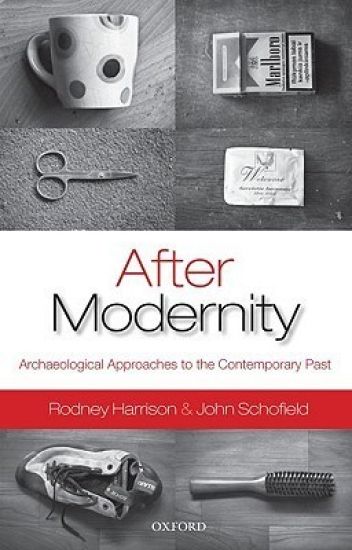
After Modernity

After Modernity

Rodney Harrison; John Schofield

Oxford University Press
2010
sidottu
This book summarizes archaeological approaches to the contemporary past, and suggests a new agenda for the archaeology of late modern societies. The principal focus is the archaeology of developed, de-industrialized societies during the second half of the twentieth century and the beginning of the twenty-first. This period encompasses the end of the Cold War and the beginning of the 'internet age', a period which sits firmly within what we would recognize to be a period of 'lived and living memory'. Rodney Harrison and John Schofield explore how archaeology can inform the study of this time period and the study of our own society through detailed case studies and an in-depth summary of the existing literature. Their book draws together cross-disciplinary perspectives on contemporary material culture studies, and develops a new agenda for the study of the materiality of late modern societies.
After Modernity

After Modernity

Rodney Harrison; John Schofield

Oxford University Press
2010
nidottu
This book summarizes archaeological approaches to the contemporary past, and suggests a new agenda for the archaeology of late modern societies. The principal focus is the archaeology of developed, de-industrialized societies during the second half of the twentieth century and the beginning of the twenty-first. This period encompasses the end of the Cold War and the beginning of the 'internet age', a period which sits firmly within what we would recognize to be a period of 'lived and living memory'. Rodney Harrison and John Schofield explore how archaeology can inform the study of this time period and the study of our own society through detailed case studies and an in-depth summary of the existing literature. Their book draws together cross-disciplinary perspectives on contemporary material culture studies, and develops a new agenda for the study of the materiality of late modern societies.
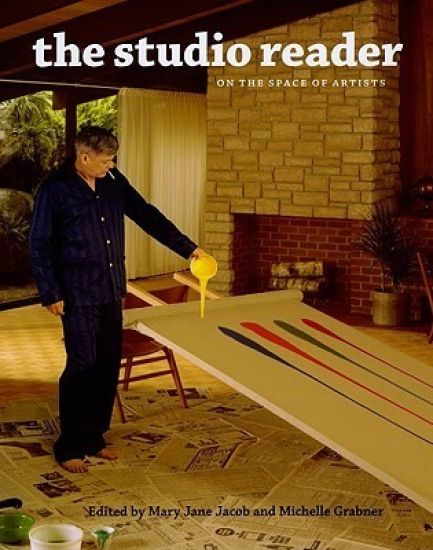
The Studio Reader – On the Space of Artists

The Studio Reader – On the Space of Artists

Mary Jane Jacob; Glenn Adamson; Svetlana Alpers; John Badlessari; Alice Bellony–rewold; Mary Bergstein; Walead Beshty; Andrea Bowers; Daniel Buren; Rochelle Feinstein; David J Getsy; Michelle Grabner; Rodney Graham; Amy Granat; Karl Haendel; Rachel Harrison; Caroline A Jones; Suzanne Lacy; Thomas Lawson; Lynn Lester Hershman; Shana Lutker; Annika Marie; Courtney Martin; Carrie Moyer; Bruce Nauman; Michael Peppiatt; David Reed; Lane Relyea; David Robbins; Judith Rodenbeck; Joe Scanlan; Brenda Schmahmann; Carolee Schneemann

University of Chicago Press
2010
nidottu
The image of a tortured genius working in near isolation has long dominated our conceptions of the artist's studio. Examples are abound: think Jackson Pollock dripping resin on a cicada carcass in his shed in the Hamptons. But times have changed; ever since Andy Warhol declared his art space a 'factory', artists have begun to envision themselves as the leaders of production teams, and their sense of what it means to be in the studio has altered just as dramatically as their practices. "The Studio Reader" pulls back the curtain from the art world to reveal the real activities behind artistic production. What does it mean to be in the studio? What is the space of the studio in the artist's practice? How do studios help artists envision their agency and, beyond that, their own lives? This forward-thinking anthology features an all-star array of contributors, ranging from Svetlana Alpers, Bruce Nauman, and Robert Storr to Daniel Buren, Carolee Schneemann, and Buzz Spector, each of whom locates the studio both spatially and conceptually - at the center of an art world that careens across institutions, markets, and disciplines. A companion for anyone engaged with the spectacular sites of art at its making, "The Studio Reader" reconsiders this crucial space as an actual way of being that illuminates our understanding of both artists and the world they inhabit.
Heritage

Heritage

Rodney Harrison

Routledge
2012
sidottu
Historic sites, memorials, national parks, museums…we live in an age in which heritage is ever-present. But what does it mean to live amongst the spectral traces of the past, the heterogeneous piling up of historic materials in the present? How did heritage grow from the concern of a handful of enthusiasts and specialists in one part of the world to something which is considered to be universally cherished? And what concepts and approaches are necessary to understanding this global obsession? Over the decades, since the adoption of the World Heritage Convention, various ‘crises’ of definition have significantly influenced the ways in which heritage is classified, perceived and managed in contemporary global societies. Taking an interdisciplinary approach to the many tangible and intangible ‘things’ now defined as heritage, this book attempts simultaneously to account for this global phenomenon and the industry which has grown up around it, as well as to develop a ‘toolkit of concepts’ with which it might be studied. In doing so, it provides a critical account of the emergence of heritage studies as an interdisciplinary field of academic study. This is presented as part of a broader examination of the function of heritage in late modern societies, with a particular focus on the changes which have resulted from the globalisation of heritage during the late twentieth and early twenty-first centuries. Developing new theoretical approaches and innovative models for more dialogically democratic heritage decision making processes, Heritage: Critical Approaches unravels the relationship between heritage and the experience of late modernity, whilst reorienting heritage so that it might be more productively connected with other pressing social, economic, political and environmental issues of our time.
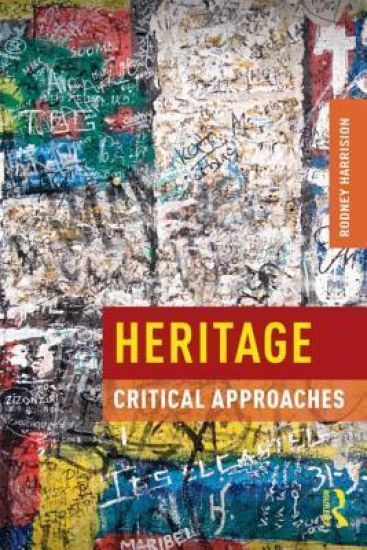
Heritage

Heritage

Rodney Harrison

Routledge
2012
nidottu
Historic sites, memorials, national parks, museums…we live in an age in which heritage is ever-present. But what does it mean to live amongst the spectral traces of the past, the heterogeneous piling up of historic materials in the present? How did heritage grow from the concern of a handful of enthusiasts and specialists in one part of the world to something which is considered to be universally cherished? And what concepts and approaches are necessary to understanding this global obsession? Over the decades, since the adoption of the World Heritage Convention, various ‘crises’ of definition have significantly influenced the ways in which heritage is classified, perceived and managed in contemporary global societies. Taking an interdisciplinary approach to the many tangible and intangible ‘things’ now defined as heritage, this book attempts simultaneously to account for this global phenomenon and the industry which has grown up around it, as well as to develop a ‘toolkit of concepts’ with which it might be studied. In doing so, it provides a critical account of the emergence of heritage studies as an interdisciplinary field of academic study. This is presented as part of a broader examination of the function of heritage in late modern societies, with a particular focus on the changes which have resulted from the globalisation of heritage during the late twentieth and early twenty-first centuries. Developing new theoretical approaches and innovative models for more dialogically democratic heritage decision making processes, Heritage: Critical Approaches unravels the relationship between heritage and the experience of late modernity, whilst reorienting heritage so that it might be more productively connected with other pressing social, economic, political and environmental issues of our time.
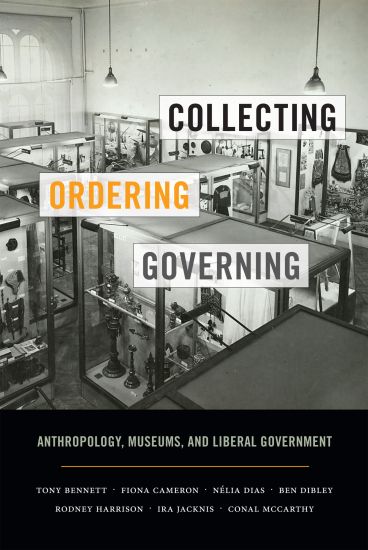
Collecting, Ordering, Governing

Collecting, Ordering, Governing

Tony Bennett; Fiona Cameron; Nélia Dias; Ben Dibley; Rodney Harrison; Ira Jacknis; Conal McCarthy

Duke University Press
2017
sidottu
The coauthors of this theoretically innovative work explore the relationships among anthropological fieldwork, museum collecting and display, and social governance in the early twentieth century in Australia, Britain, France, New Zealand, and the United States. With case studies ranging from the Musée de l'Homme's 1930s fieldwork missions in French Indo-China to the influence of Franz Boas's culture concept on the development of American museums, the authors illuminate recent debates about postwar forms of multicultural governance, cultural conceptions of difference, and postcolonial policy and practice in museums. Collecting, Ordering, Governing is essential reading for scholars and students of anthropology, museum studies, cultural studies, and indigenous studies as well as museum and heritage professionals.
Collecting, Ordering, Governing

Collecting, Ordering, Governing

Tony Bennett; Fiona Cameron; Nélia Dias; Ben Dibley; Rodney Harrison; Ira Jacknis; Conal McCarthy

Duke University Press
2017
pokkari
The coauthors of this theoretically innovative work explore the relationships among anthropological fieldwork, museum collecting and display, and social governance in the early twentieth century in Australia, Britain, France, New Zealand, and the United States. With case studies ranging from the Musée de l'Homme's 1930s fieldwork missions in French Indo-China to the influence of Franz Boas's culture concept on the development of American museums, the authors illuminate recent debates about postwar forms of multicultural governance, cultural conceptions of difference, and postcolonial policy and practice in museums. Collecting, Ordering, Governing is essential reading for scholars and students of anthropology, museum studies, cultural studies, and indigenous studies as well as museum and heritage professionals.