Uudestisyntyminen ei ole ulkoista. Pelastus ei tapahdu järjellä. Pelastus tapahtuu sydämessä. Kun synnyt uudesti, vanha katoaa ja sinusta tulee uusi luomus Kristuksessa Jeesuksessa.
Eräs nykyseurakunnan suurimmista ongelmista on, ettei Jumalan kansalla ole parempaa ilmestystä Pyhän Hengen persoonan todellisuudesta. Siksi tarvitsemme Pyhän Hengen persoonan todellisuudesta. Ilman Häntä kaikki tekomme ovat vain ajanhukkaa ja kuolleita töitä.
Jumala on sydäntenmuuttamisalalla. Valitettavasti monien uskovien sydämet ovat kovettuneet. Jumala haluaa lähettää Henkensä aallon puhaltamaankaiken lian pois. Anna Pyhän Hengen muuttaa sinut!
Jumalan kutsu on pyhä ja ohittaa tavallisuuden. Se on jotain, mistä et koskaan pääse eroon. Anna tämän kirjat innostuttaa sinut voitelusta ja anna Jumalan käyttää sinua aivan erityisesti.
Like many of us, Danny DiAngelo grew up in church. He said he was saved, he even led others to Christ. But, inside his soul, DiAngelo was lost. He played the part of a Christian, at least in public, but he was chasing after everything but the knowledge of God. A popular musician, DiAngelo spent more than fifteen years preaching and performing with respected, well-known Christian ministries. But, his search for significance was all for naught, because he didn't have a relationship with Jesus Christ. Sound familiar? If you're tired of the toil and snare of your life, chasing after fame or fortune, looking for love in the wrong places, then meet Danny DiAngelo. His gripping story and miraculous conversion will inspire you to give it all up for Christ, and find the anointing of the Holy Spirit.
How Far Would You Go to Honor a Code? Honor. Courage. Commitment. These are the pillars of United States Marine Corps values. So why Sgt. Rodney M. Davis lunged atop that enemy grenade at the expense of his own life on Sept. 6, 1967 is the quintessential question that has haunted not only those who stood closest to him at that critical moment, but his own family and friends for over fifty years now. Why would a young African-American with a beautiful wife and two infant children eagerly awaiting his return home from Vietnam commit such a noble and courageous, yet sacrificial act? And for Marines he barely knew if at all? And for a country that often treated him like a second-class citizen at the time? was a brave man and a good Marine. My grandfather always told me that if Davis] had not jumped on that grenade, every Marine in that trench would have been seriously injured or killed. My grandfather believed that he would have died that day. My mother would have been an orphan at the age of one, and I would have never known my grandfather. In a time when the United States was ravaged by racial tension, I wonder what kind of bond men form while fighting a war, for him to have saved the lives of a bunch of white men - including a Texan officer - that he knew for a short period of time? Davis] was a modern-day hero, and the kind of Marine I strive to live up to." Steven Brackeen Turunc, the eldest grandson of Davis' late platoon commander, John Brackeen. Turunc graduated from Officer Candidates School in November 2014 and is currently serving on active duty in the U.S. Marine Corps. That Davis was posthumously awarded the Medal of Honor at the White House on March, 26, 1969 did little to assuage the heartbreak felt by his grieving family and the many friends he left behind. But looking after his own had always been Davis' calling. This is his story.
Dating. Courtship. These words evoke great interest in nearly every reader. In Courtship, the authors explore courtship research, paying particular attention to differences between relationship development and deterioration and courtship development and deterioration. They describe factors that affect the later course of marriage, trace the historical roots of courtship in America, discuss various models of courtship that have guided research in this area for the past 40 years, examine circumstantial factors that discriminate between stable and unstable premarital relationships, explore the "dark side" of courtship--violence between dating partners--and reveal the processes involved in the dissolution phase of premarital relationships. The volume concludes with a look at the future of courtship as an institution and suggestions for further research. Provocative and thoughtfully presented, Courtship is directed to advanced undergraduate students, graduate students and professionals in psychology, communication, sociology, family studies, and social work. "This volume should have broad appeal for both students and professionals. It is clearly and carefully written, and draws on scholarship from several relevant disciplines. The authors do an outstanding job of summarizing extant research in a fashion that is digestible to undergraduate students, yet useful to the interested researcher. Cate and Lloyd have painted a coherent and provocative picture of a broad and difficult phenomenon. Their synthesis should be useful in helping to establish a sound agenda for future research on mating and dating." --ISSPR Bulletin "This volume of the Sage Series on Close Relationships provides a cogent, concise, and highly readable overview of courtship. Given the book's brevity, one is favorably surprised by the amount and depth of material covered. . . . Many insights are offered. . . . The inclusion of the darker side of dating relationships is a welcome addition. . . . Chapters . . . weave a scholarly narrative with such expertise that the reader may come away with the feeling of having read a well-written and well-documented historical novel. . . . The authors are to be commended for their articulate and insightful coverage of this aspect of relational life. Regardless of discipline, students of personal relationships would benefit greatly from this review." --Journal of Marriage & The Family
Collection of 277 litle-known medieval manuscripts, second only in number to Durham; special strengths are scholastic theology, biblical studies and sermons 13c-15c, and early music. Worcester Cathedral Library contains 277 medieval manuscripts, the largest number of any English cathedral except Durham. Most of them belonged to the pre-Reformation Cathedral Priory and date between the eleventh and late fifteenth centuries. The collection has never been adequately catalogued before, and is consequently little known; much of the contents of the books, their physical features and history, is here described for the first time. The libraryis rich in late medieval theology and sermon-literature. Many of the books are important because of their connections with Oxford University, and constitute a valuable source for the history of studies there after c.1300. The Worcester monks tended to annotate and write their names in their books, and some seventy of them are identified. Great treasures are the Worcester Antiphoner, and the fragments of early polyphonic music, some newly-discovered and described for the first time. About half the books are in their medieval bindings, including the second-oldest intact Anglo-Saxon binding. These are described individually, and the history of binding at the Cathedral Priory traced, by Michael Gullick. The rest of the Introduction is devoted to the history of the books and library to the early 1600s. There are indexes of incipits and of manuscripts other than those catalogued, as well as a general index.R.M. THOMSON is Emeritus Professor of History, University of Tasmania; MICHAEL GULLICK..Other Cathedral library catalogues; Catalogue of the Manuscripts of Hereford Cathedral Library and Catalogue of the Manuscripts of Lincoln Cathedral Chapter Library.
Books and learning in 12th-century Europe are the broad concern of the nineteen papers assembled here. The discussion of ’books’ ranges from important individual manuscripts, to collections manufactured in ’scriptoria’ and kept in ’libraries’; the ’learning’ is primarily the composition, transmission and study of Latin literary texts, both ancient and contemporary. Special attention is given to the Latin classics, to the literary culture of the larger Benedictine houses, to the phenomenal quantity of Latin satirical writing of the period, and to the dissemination and reception of texts and ideas over time. While the geographical focus is England, the relationship of English materials and developments to the wider European context is constantly emphasized.
SPANISH GRAMMAR MADE EASIER EASIER is exactly what M s F cil does to learning Spanish - makes it EASIER The book's ingenious design: 1) speeds access to needed information, 2) it enables learning, and 3) it enhances memory. One verified reader refers to M s F cil as "my go-to aide." Another calls it my "NEW FAVE Spanish book ... easily the best concise Spanish grammar, with good explanations ... and no fluff " M s F cil earns its rep by organizing and presenting all key Spanish grammar principles in a comprehensive, tightly organized, well-indexed, and highly cross-referenced guide. At less than 200 pages, it is a thin volume that travels well as a full-service, one-stop-shop reference tool. Topics in M s F cil cover: 1. Grammar rules, principles, and practices2. Parts of speech3. Verb forms4. Pronunciation and punctuation5. Common phrases6. Commonly confused and misused terms7. Days, dates, numbers, telling timeand MORE Creatively designed for ease of use, M s F cil is a first-rate, best-in-class look-up reference manual. By leveraging principles of organization and presentation to optimize the look-up time, M s F cil frees up capacity for accelerated language skill building. Complete with everyday explanations and illustrative examples, M s F cil is a valuable self-study companion, and it complements and extends other study programs (online or in-person).
The collection of medieval manuscripts at Pembroke College is an important one. Its most striking feature is that the majority of MSS 1-120 came from the abbey of Bury St Edmunds, as the gift of Thomas Smart in 1599. The collection of medieval manuscripts at Pembroke College is an important one. Its most striking feature is that the majority of MSS 1-120 came from the abbey of Bury St Edmunds, as the gift of Thomas Smart in 1599. Included among them is the famous 'Bury Gospels' (MS 120). It is one of the largest groups of monastic manuscripts to survive as an ensemble. The rest are, for the most part, the remains of the College's own medieval library, and have been little studied. In addition there are some twenty post-medieval acquisitions, including two splendid Anglo-Saxon Gospel Books. The main part of this catalogue contains individual, detailed descriptions of some 300 MSS and several hundred binding fragments. The descriptions are preceded by an Introduction outlining the history of the collection, and are accompanied by 130 colour plates. The collection was last catalogued by M. R. James in 1911, and over a century later, this publication both updates his account, and brings to bear modern techniques of manuscript study. Because of the Covid pandemic, the final check on MSS 235-327 was carried out after this book had been printed, and considerable additional details were discovered. This is available as a supplement to the Catalogue, which can be downloaded from the website of Pembroke College Library: https://www.pem.cam.ac.uk/college/library/manuscript-catalogue-supplement.
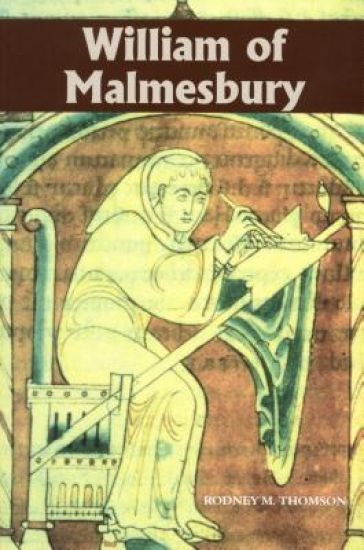
William was a historian, biblical commentator, biographer and classicist; his intellectual achievement is studied here. William of Malmesbury (c.1090-c.1143) was England's greatest historian after Bede. Although best known in his own time, as now, for his historical writings (his famous Deeds of the Bishops and Deeds of the Kings of Britain), William was also a biblical commentator, hagiographer and classicist, and acted as his own librarian, bibliographer, scribe and editor of texts. He was probably the best-read of all twelfth-century men of learning. This is a comprehensive study and interpretation of William's intellectual achievement, looking at the man and his times and his work as man of letters, and considering the earliest books from Malmesbury Abbey library, William'sreading, and his "scriptorium". Important in its own right, William's achievement is also set in the wider context of Benedictine learning and the writing of history in the twelfth century, and on England's contribution to the "twelfth-century renaissance". In this new edition, the text has been thoroughly revised, and the bibliography updated to reflect new research; there is also a new chapter on William as historian of the First Crusade. RODNEY M. THOMSON is Professor Emeritus and Honorary Research Associate in the School of History and Classics, University of Tasmania.
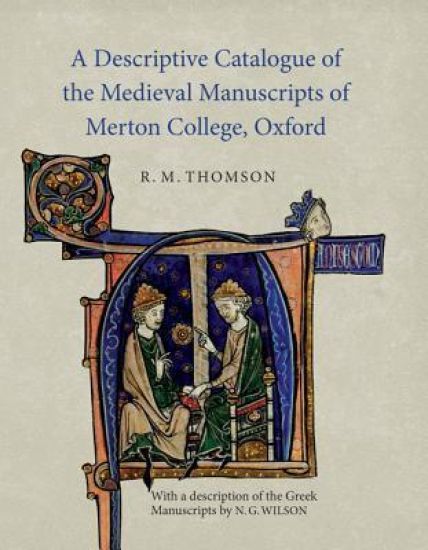
Descriptive catalogue provides a crucial guide to one of the most important repositories of medieval manuscrips. Merton College, Oxford, one of the oldest colleges in the University, was founded in 1264. Its library contains some 328 complete medieval manuscript books (plus several hundred fragments in, or extracted from, the bindings of early printed books), dating from the ninth to the late fifteenth century. Most of them came to the College before the Reformation, and are the remains of its medieval collection, part of which was chained in the library, part in circulation amongst the Fellowship. Together with the College's surviving medieval archive, which includes no fewer than twenty-three book-lists, this material provides an important window on intellectual life at the University of Oxford between the thirteenth and sixteenth centuries, and on the manufacture, acquisition and use of the books that supported it. This first catalogue of the medieval manuscripts since 1852 offers full and detailed descriptions of each item, supported by a colour frontispiece, 50 colour plates, and 107 black and white plates. Its introduction provides the first detailed history of Merton's medieval library, including an account of the building anddesign of the College's 'Old Library', built in the 1370s, western Europe's oldest library room still in use today; and the volume is completed with four appendices (including a comprehensive set of extracts from the College's medieval account rolls referring to its books and library) and two indexes. RODNEY M. THOMSON is Professor of History and Honorary Research Associate in the School of History and Classics, University of Tasmania.