After Lemoine's death, Steve Jensen and the MacArthur handcart company were forced to continue on without Sarah and her family. While Sarah fought for her very existence, Steve narrowly escaped his own death. Called to be a company hunter, he overcame struggles of his own and quickly learned the skills necessary to survive in the wild, but for what purpose? A memorable night at Fort Bridger with unexpected strangers passes before they finally arrived in Zion. Continue with the MacArthur handcart company while Sarah and her family struggle to catch up with them. South Pass: Steve and Sarah is the perfect complimentary companion and continuation to South Pass I: Handcart Journey. This is the continuing saga of Ellie, Sarah, Matthew, Macey, and Kalin Forbes as they finish their handcart journey to Zion. The story begins as the MacArthur handcart company leaves the Forbes family behind in South Pass I. It follows the trials and actions of the handcart company, answering the questions posed in the first book. Once the Forbes family has rejoined the group, the book gives a more in depth explanation of what happened as the company reached Zion. It also follows the family as they settle in Lehi, Utah and sees them get settled in the community before the shocking news of Johnston's Army's march on the territory.
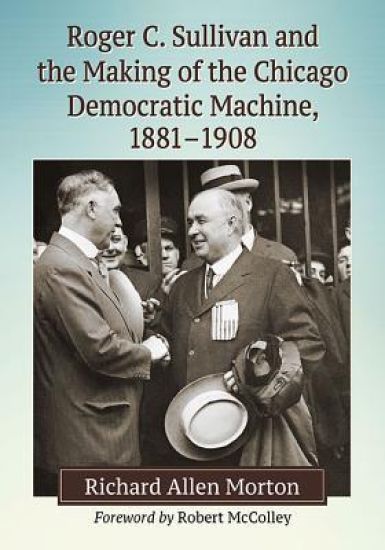
Dominating the Windy City for decades, the Chicago Democratic Machine has become a fixture in American political history. Under Mayor Richard J. Daley, it acquired almost mythical (perhaps notorious) status. Yet its origins have remained murky--some say is began as a shady enterprise during the ethnic upheaval of the late 1920s. Based upon new research, this book offers a fresh perspective. Formed through factional warfare and consolidated with methods borrowed from the business world, the Machine grew out of the unfettered capitalism of the late 19th century. Its principal founder and first "boss," Roger C. Sullivan, represented a generation of businessmen-politicians who emerged in the 1880s. Sullivan and his allies created an informal public power structure that, while serving their own interests, also made government more functional. The Machine is a product of America's Gilded Age and the Progressive Era and offers a lesson in the advantages and limitations of representative government.
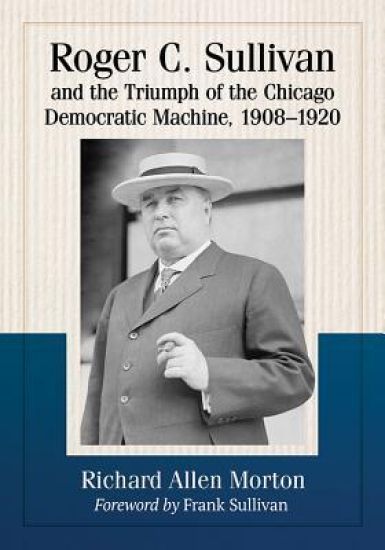
Between 1908 and 1920, Roger C. Sullivan and his political allies consolidated their control of the Chicago and Illinois Democratic parties, creating the enduring structure known as the "Chicago Democratic machine." Not a personal faction nor tied to any cause, it was a coalition of professional political operatives employing business principles to achieve legal profit and advantage. Sullivan was its chief organizer and first "boss," rising to primacy after many political battles--with William Jennings Bryan, among others--and went on to become a kingmaker who helped Woodrow Wilson win the presidency. By the time of his death, Sullivan was widely respected, his achievements recognized even by those who deplored his politics. Based upon new research, this first comprehensive study of Sullivan and the early days of the Chicago "machine" focuses on the daily realities of the city's politics and the personalities who shaped them.
The Trial at Bar of Sir Roger C. D. Tichborne, bart. - in the Court of Queen's bench at Westminster, before Lord Chief Justice Cockburn, Mr. Justice Mellor, & Mr. Justice Lush, for perjury, commencing Wednesday, April 23, 1873 is an unchanged, high-quality reprint of the original edition of 1875. Hansebooks is editor of the literature on different topic areas such as research and science, travel and expeditions, cooking and nutrition, medicine, and other genres. As a publisher we focus on the preservation of historical literature. Many works of historical writers and scientists are available today as antiques only. Hansebooks newly publishes these books and contributes to the preservation of literature which has become rare and historical knowledge for the future.
Un merveilleux t moignage de la marche continue de l'histoire des AA. ERNEST KURTZ, Auteur de Not-God: A History of Alcoholics AnonymousCONTENU: Vingt versions des douze tapes.Les interpr tations de chacune des tapes par quatre experts renomm s: Stephanie Covington, Th r se Jacobs-Stewart, Allen Berger et Gabor Mat .Des gabarits pour crire une version personnelle et des interpr tions de chacune des tapes.Un essai qui trace l'histoire des douze tapes et qui pose un regard critique sur cette histoire.Le petit livre jaune est une c l bration des nombreuses fa ons dont les gens adaptent et interpr tent les douze tapes afin de parvenir un changement de personnalit qui suffit entra ner le r tablissement de l'alcoolique .
"A beautiful testimony to AA's living history." Ernest Kurtz, author, Not God: A History of Alcoholics Anonymous.Inside the book: Part 1: Twenty alternative versions of the 12 Steps reflecting a wide range of perspectives.Part 2: Four interpretations of each of the Steps by well-known authors.After each of these parts, there are templates so the reader can write her or his own personal 12 Steps and an interpretation of each one of them.Part 3: An essay that traces the origins of the AA 12 Step recovery program.The Little Book is a celebration of the many ways people are today adapting and interpreting the original 12 Steps in order to achieve a "personality change sufficient to bring about recovery from alcoholism".
Foreign aid is now a $100bn business and is expanding more rapidly today than it has for a generation. But does it work? Indeed, is it needed at all? Other attempts to answer these important questions have been dominated by a focus on the impact of official aid provided by governments. But today possibly as much as 30 percent of aid is provided by Non-Governmental Organizations (NGOs), and over 10 percent is provided as emergency assistance. In this first-ever attempt to provide an overall assessment of aid, Roger Riddell presents a rigorous but highly readable account of aid, warts and all. Does Foreign Aid Really Work? sets out the evidence and exposes the instances where aid has failed and explains why. The book also examines the way that politics distorts aid, and disentangles the moral and ethical assumptions that lie behind the belief that aid does good. The book concludes by detailing the practical ways that aid needs to change if it is to be the effective force for good that its providers claim it is.
This text is an introduction to electrophysiology, following a quantitative approach. The first chapter summarizes much of the mathematics required in the following chapters. The second chapter presents a very concise overview of the general principles of electrical fields and current flow, mostly es tablished in physical science and engineering, but also applicable to biolog ical environments. The following five chapters are the core material of this text. They include descriptions of how voltages come to exist across membranes and how these are described using the Nernst and Goldman equations (Chapter 3), an examination of the time course of changes in membrane voltages that produce action potentials (Chapter 4), propagation of action potentials down fibers (Chapter 5), the response of fibers to artificial stimuli such as those used in pacemakers (Chapter 6), and the voltages and currents produced by these active processes in the surrounding extracellular space (Chapter 7). The subsequent chapters present more detailed material about the application of these principles to the study of cardiac and neural electrophysiology, and include a chapter on recent developments in mem brane biophysics. The study of electrophysiology has progressed rapidly because of the precise, delicate, and ingenious experimental studies of many investigators. The field has also made great strides by unifying the numerous experimental observations through the development of increasingly accurate theoretical concepts and mathematical descriptions. The application of these funda mental principles has in turn formed a basis for the solution of many different electrophysiological problems.
The only book to combine emergency management principLEs with proven military concepts Good disaster plans do not guarantee a good response. Any disaster plan rarely survives the first rain bands of a hurricane or the first tremors of an earthquake. While developing plans is essential, there must be systems in place to adapt these plans to the ever-changing operational environment of a disaster. Currently there is no set of standard disaster response principles to guide a community. The National Incident Management System (NIMS) and the Incident Command System (ICS) provide the framework to implement operational decisions, but they were never designed as operational concepts. The military has developed just such concepts and many of them can be adapted for civilian use. Disaster Operations and Decision Making adapts those military concepts and combines them with disaster lessons learned to create a new opera-tional paradigm. Emphasizing team building, Emergency Operations Center operational systems, and situational awareness, the book details easily adopted methods. All of these methods are designed to be incorporated into the NIMS and ICS framework to enhance a community's response to any type of disaster. Disaster Operations and Decision Making is an essential resource for emergency managers, fire chiefs, law enforcement officers, homeland security professionals, public health officials, and anyone else involved or interested in crisis management.
Superalloys are unique high-temperature materials used in gas turbine engines, which display excellent resistance to mechanical and chemical degradation. This book presents the underlying metallurgical principles which have guided their development and practical aspects of component design and fabrication from an engineering standpoint. The topics of alloy design, process development, component engineering, lifetime estimation and materials behaviour are described, with emphasis on critical components such as turbine blading and discs. The first introductory text on this class of materials, it will provide a strong grounding for those studying physical metallurgy at the advanced level, as well as practising engineers. Included at the end of each chapter are exercises designed to test the reader's understanding of the underlying principles presented. Solutions for instructors and additional resources are available at www.cambridge.org/9780521859042.
This book, which was originally published in 1985 and has been translated and revised by the author from notes of a course, is an introduction to certain central ideas in group theory and geometry. Professor Lyndon emphasises and exploits the well-known connections between the two subjects and, whilst keeping the presentation at a level that assumes only a basic background in mathematics, leads the reader to the frontiers of current research at the time of publication. The treatment is concrete and combinatorial with a minimal use of analytic geometry. In the interest of the reader's intuition, most of the geometry considered is two-dimensional and there is an emphasis on examples, both in the text and in the problems at the end of each chapter.
Roger Schank's influential book, Dynamic Memory, described how computers could learn based upon what was known about how people learn. Since that book's publication in 1982, Dr Schank has turned his focus from artificial intelligence to human intelligence. Dynamic Memory Revisited contains the theory of learning presented in the original book, extending it to provide principles for teaching and learning. It includes Dr Schank's important theory of case-based reasoning and assesses the role of stories in human memory. In addition, it covers his ideas on non-conscious learning, indexing, and the cognitive structures that underlie learning by doing. Dynamic Memory Revisited is crucial reading for all who are concerned with education and school reform. It draws attention to how effective learning takes place and provides instruction for developing software that truly helps students learn.