The authors use a long-wave framework to examine the historical evolution of British industrial capitalism since the late-18th century, and present a challenging and distinctive economic history of modern and contemporary Britain. The book is intended for undergraduate courses on the economic history of modern Britain within history, economic and social history, economic history and economic degree schemes, and economic theory courses.
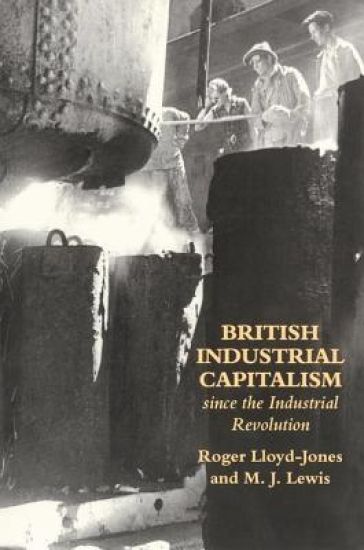
The authors use a long-wave framework to examine the historical evolution of British industrial capitalism since the late-18th century, and present a challenging and distinctive economic history of modern and contemporary Britain. The book is intended for undergraduate courses on the economic history of modern Britain within history, economic and social history, economic history and economic degree schemes, and economic theory courses.
At the beginning of the twentieth century Britain was amongst the world leaders in the production of machine tools, yet by the 1980s the industry was in terminal decline. Focusing on the example of Britain's largest machine tool maker, Alfred Herbert Ltd of Coventry, this study charts the wider fortunes of this vital part of the manufacturing sector. Taking a chronological approach, the book explores how during the late nineteenth century the industry developed a reputation for excellence throughout the world, before the challenges of two world wars necessitated drastic changes and reorganisations. Despite meeting these challenges and emerging with confidence into the post-war market place, the British machine tool industry never regained its pre-eminent position, and increasingly lost ground to foreign competition. By using the example of Alfred Herbert Ltd to illuminate the broader economic and business history of the British machine tool industry, this study not only provides a valuable insight into British manufacturing, but also contributes to the ongoing debates surrounding Britain's alleged decline as a manufacturing nation.
The First World War was above all a war of logistics. Whilst the conflict will forever be remembered for the mud and slaughter of the Western Front, it was a war won on the factory floor as much as the battlefield. Examining the war from an industrial perspective, Arming the Western Front examines how the British between 1900 and 1920 set about mobilising economic and human resources to meet the challenge of 'industrial war'. Beginning with an assessment of the run up to war, the book examines Edwardian business-state relations in terms of armament supply. It then outlines events during the first year of the war, taking a critical view of competing constructs of the war and considering how these influenced decision makers in both the private and public domains. This sets the framework for an examination of the response of business firms to the demand for 'shells more shells', and their varying ability to innovate and manage changing methods of production and organisation. The outcome, a central theme of the book, was a complex and evolving trade-off between the quantity and quality of munitions supply, an issue that became particularly acute during the Battle of the Somme in 1916. This deepened the economic and political tensions between the military, the Ministry of Munitions, and private engineering contractors as the pressure to increase output accelerated markedly in the search for victory on the western front. The Great War created a dual army, one in the field, the other at home producing munitions, and the final section of the book examines the tensions between the two as the country strove for final victory and faced the challenges of the transition to the peace time economy.
The First World War was above all a war of logistics. Whilst the conflict will forever be remembered for the mud and slaughter of the Western Front, it was a war won on the factory floor as much as the battlefield. Examining the war from an industrial perspective, Arming the Western Front examines how the British between 1900 and 1920 set about mobilising economic and human resources to meet the challenge of 'industrial war'. Beginning with an assessment of the run up to war, the book examines Edwardian business-state relations in terms of armament supply. It then outlines events during the first year of the war, taking a critical view of competing constructs of the war and considering how these influenced decision makers in both the private and public domains. This sets the framework for an examination of the response of business firms to the demand for 'shells more shells', and their varying ability to innovate and manage changing methods of production and organisation. The outcome, a central theme of the book, was a complex and evolving trade-off between the quantity and quality of munitions supply, an issue that became particularly acute during the Battle of the Somme in 1916. This deepened the economic and political tensions between the military, the Ministry of Munitions, and private engineering contractors as the pressure to increase output accelerated markedly in the search for victory on the western front. The Great War created a dual army, one in the field, the other at home producing munitions, and the final section of the book examines the tensions between the two as the country strove for final victory and faced the challenges of the transition to the peace time economy.
Manchester and the Age of the Factory (originally published in 1988 and now with a new preface by the authors) focuses on Manchester, the world’s first industrial city, and its transformation into ‘Cottonopolis.’ The book explores the contribution of the factory and the firm to the business structure and political economy of ‘Cottonopolis’. The factory is not examined in isolation but in terms of its relation to a range of economic components. A major, and indeed, new emphasis of the work is centred on the relationship between factory and warehouse. These two components are identified as symbolic of two different systems of production, whose political economy at the nodal point of the Industrial Revolution was associated with a struggle over the merits of the mechanised factory as opposed to the manufacturing putting-out system. To investigate the interdependence of economic components, the authors reconstruct Manchester’s business structure for the years 1815 and 1825. The first reconstruction allows for the examination of the city’s variegated business structure at a point midway through the classic Industrial Revolution and the ramifications of the empirical findings provide a focus of discussion in the subsequent chapters. The second reconstruction provides a comparative basis for exploring shifting business trends, identifying conflicting business interests and assessing the direct and indirect impact of the factory on the pattern of business development. For instance, the evolving business relationship between the factory and warehouse after 1815 played a pivotal role in shaping a new political economy, examined at both local and national levels. This transformation prompted cotton firms to develop distinctive business strategies focused on managing the factory’s human and physical resources.
This book is the first comprehensive history of the development of the British bicycle industry from the perspective of business and economic history. Focusing on themes such as entrepreneurship, personal capitalism, and organisational, technological and cultural change, the shifting fortunes of the industry are traced through the business history of one of its leading firms, Raleigh. The history of the company is then set within the context of more general trends in the industry’s evolution over three chronological periods: 1870 to 1914, 1914 to 1939, and 1939 to 1960. In addition to the story of Raleigh, the business activities of other leading bicycle firms such as Rudge-Whitworth, Hercules, BSA, J. A. Phillips and BCC, the bicycle division of Tube Investments, are examined to inform our understanding of the business evolution of the industry. The book demonstrates that the British bicycle industry was both tenacious and dynamic, typified by the personal leadership of entrepreneurs such as Frank and Harold Bowden at Raleigh.
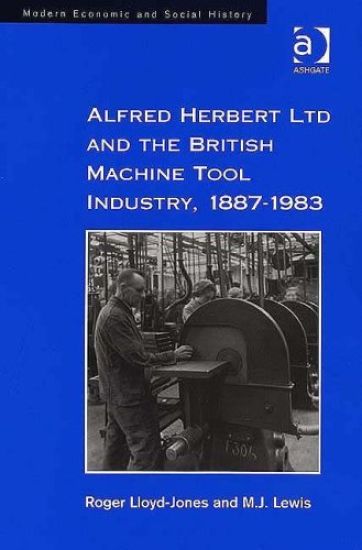
At the beginning of the twentieth century Britain was amongst the world leaders in the production of machine tools, yet by the 1980s the industry was in terminal decline. Focusing on the example of Britain's largest machine tool maker, Alfred Herbert Ltd of Coventry, this study charts the wider fortunes of this vital part of the manufacturing sector. Taking a chronological approach, the book explores how during the late nineteenth century the industry developed a reputation for excellence throughout the world, before the challenges of two world wars necessitated drastic changes and reorganisations. Despite meeting these challenges and emerging with confidence into the post-war market place, the British machine tool industry never regained its pre-eminent position, and increasingly lost ground to foreign competition. By using the example of Alfred Herbert Ltd to illuminate the broader economic and business history of the British machine tool industry, this study not only provides a valuable insight into British manufacturing, but also contributes to the ongoing debates surrounding Britain's alleged decline as a manufacturing nation.
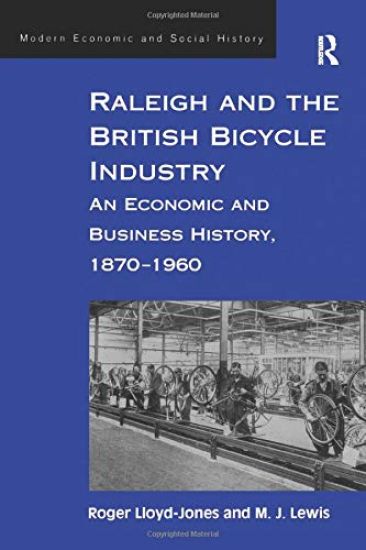
This book is the first comprehensive history of the development of the British bicycle industry from the perspective of business and economic history. Focusing on themes such as entrepreneurship, personal capitalism, and organisational, technological and cultural change, the shifting fortunes of the industry are traced through the business history of one of its leading firms, Raleigh. The history of the company is then set within the context of more general trends in the industry’s evolution over three chronological periods: 1870 to 1914, 1914 to 1939, and 1939 to 1960. In addition to the story of Raleigh, the business activities of other leading bicycle firms such as Rudge-Whitworth, Hercules, BSA, J. A. Phillips and BCC, the bicycle division of Tube Investments, are examined to inform our understanding of the business evolution of the industry. The book demonstrates that the British bicycle industry was both tenacious and dynamic, typified by the personal leadership of entrepreneurs such as Frank and Harold Bowden at Raleigh.
This book is specifically aimed at addressing a gap in the study of the evolution of corporate governance in Britain. In particular its key theme, the relationship between corporate governance and personal capitalism in British manufacturing in the first half of the twentieth century, provides the means for a systematic and critical examination of the dominant Chandlerian paradigm that the long-running persistence of personal capitalism shaped the governance of British manufacturing firms well into the twentieth century and acted to erode their competitive performance. The book helps to identify those aspects of corporate governance that have undergone change, with some critical observations on the magnitude of change and those aspects which have displayed characteristics of continuity. The empirical spine of this book is set out in a series of case studies which provide the basis for the examination of corporate governance in Britain during the period c. 1900 to 1950. By focusing particularly on the responses of a range of businesses to the turbulent environment of the inter-war years, this volume offers an insight into a much neglected, yet vital, area of business and economic history.
This book is specifically aimed at addressing a gap in the study of the evolution of corporate governance in Britain. In particular its key theme, the relationship between corporate governance and personal capitalism in British manufacturing in the first half of the twentieth century, provides the means for a systematic and critical examination of the dominant Chandlerian paradigm that the long-running persistence of personal capitalism shaped the governance of British manufacturing firms well into the twentieth century and acted to erode their competitive performance. The book helps to identify those aspects of corporate governance that have undergone change, with some critical observations on the magnitude of change and those aspects which have displayed characteristics of continuity. The empirical spine of this book is set out in a series of case studies which provide the basis for the examination of corporate governance in Britain during the period c. 1900 to 1950. By focusing particularly on the responses of a range of businesses to the turbulent environment of the inter-war years, this volume offers an insight into a much neglected, yet vital, area of business and economic history.
Using Computers in History is designed to introduce students to historical computing through practical workshop exercises. With topics such as the pattern of nineteenth century emigration from the UK, the performance of the American and German economies in the 1930s and the Lancashire cotton industry, Lloyd-Jones and Lewis explain and illustrate the possible uses of the computer for the historian.Using Computers in History:* raises awareness of the use of computers as an important tool for the historian* provides a practical introduction to basic computer terminology* includes high quality diagrams of the screen displays which should appear at each stage* examines the use of spreadsheets and how to design and work with them* discusses the different software packages available, concentrating on Microsoft Excel 4* includes spreadsheet exercises based around a range of historical data sets* explores the use of databases* shows how to construct them* gives guidelines for further study* prompts students to apply the skills they have learnt to a number of examples
This work has been selected by scholars as being culturally important and is part of the knowledge base of civilization as we know it.This work is in the public domain in the United States of America, and possibly other nations. Within the United States, you may freely copy and distribute this work, as no entity (individual or corporate) has a copyright on the body of the work.Scholars believe, and we concur, that this work is important enough to be preserved, reproduced, and made generally available to the public. To ensure a quality reading experience, this work has been proofread and republished using a format that seamlessly blends the original graphical elements with text in an easy-to-read typeface.We appreciate your support of the preservation process, and thank you for being an important part of keeping this knowledge alive and relevant.
This work has been selected by scholars as being culturally important and is part of the knowledge base of civilization as we know it.This work is in the public domain in the United States of America, and possibly other nations. Within the United States, you may freely copy and distribute this work, as no entity (individual or corporate) has a copyright on the body of the work.Scholars believe, and we concur, that this work is important enough to be preserved, reproduced, and made generally available to the public. To ensure a quality reading experience, this work has been proofread and republished using a format that seamlessly blends the original graphical elements with text in an easy-to-read typeface.We appreciate your support of the preservation process, and thank you for being an important part of keeping this knowledge alive and relevant.