This is an extensive survey and critical examination of the literature on the use of expert opinion in scientific inquiry and policy making. Cooke considers how expert opinion is being used today, how an expert's uncertainty is or should be represented, how people do or should reason with uncertainty, how the quality and usefulness of expert opinion can be assessed, and how the views of several experts might be combined. He argues for the importance of developing practical models with a transparent mathematical foundation for the use of expert opinion in science, and presents three tested models. Detailed case studies illustrate how they can be applied to a diversity of real problems in engineering and planning.
A valuable guide to understanding the problem of quantifying uncertainty in dose response relations for toxic substances In today's scientific research, there exists the need to address the topic of uncertainty as it pertains to dose response modeling. Uncertainty Modeling in Dose Response is the first book of its kind to implement and compare different methods for quantifying the uncertainty in the probability of response, as a function of dose. This volume gathers leading researchers in the field to properly address the issue while communicating concepts from diverse viewpoints and incorporating valuable insights. The result is a collection that reveals the properties, strengths, and weaknesses that exist in the various approaches to bench test problems. This book works with four bench test problems that were taken from real bioassay data for hazardous substances currently under study by the United States Environmental Protection Agency (EPA). The use of actual data provides readers with information that is relevant and representative of the current work being done in the field. Leading contributors from the toxicology and risk assessment communities have applied their methods to quantify model uncertainty in dose response for each case by employing various approaches, including Benchmark Dose Software methods, probabilistic inversion with isotonic regression, nonparametric Bayesian modeling, and Bayesian model averaging. Each chapter is reviewed and critiqued from three professional points of view: risk analyst/regulator, statistician/mathematician, and toxicologist/epidemiologist. In addition, all methodologies are worked out in detail, allowing readers to replicate these analyses and gain a thorough understanding of the methods. Uncertainty Modeling in Dose Response is an excellent book for courses on risk analysis and biostatistics at the upper-undergraduate and graduate levels. It also serves as a valuable reference for risk assessment, toxicology, biostatistics, and environmental chemistry professionals who wish to expand their knowledge and expertise in statistical dose response modeling problems and approaches.
This title is written for the numerate nonspecialist, and hopes to serve three purposes. First it gathers mathematical material from diverse but related fields of order statistics, records, extreme value theory, majorization, regular variation and subexponentiality. All of these are relevant for understanding fat tails, but they are not, to our knowledge, brought together in a single source for the target readership. Proofs that give insight are included, but for most fussy calculations the reader is referred to the excellent sources referenced in the text. Multivariate extremes are not treated. This allows us to present material spread over hundreds of pages in specialist texts in twenty pages. Chapter 5 develops new material on heavy tail diagnostics and gives more mathematical detail. Since variances and covariances may not exist for heavy tailed joint distributions, Chapter 6 reviews dependence concepts for certain classes of heavy tailed joint distributions, with a view to regressing heavy tailed variables. Second, it presents a new measure of obesity. The most popular definitions in terms of regular variation and subexponentiality invoke putative properties that hold at infinity, and this complicates any empirical estimate. Each definition captures some but not all of the intuitions associated with tail heaviness. Chapter 5 studies two candidate indices of tail heaviness based on the tendency of the mean excess plot to collapse as data are aggregated. The probability that the largest value is more than twice the second largest has intuitive appeal but its estimator has very poor accuracy. The Obesity index is defined for a positive random variable X as: Ob(X) = P (X1 +X4 > X2 +X3|X1 = X2 = X3 = X4), Xi independent copies of X. For empirical distributions, obesity is defined by bootstrapping. This index reasonably captures intuitions of tail heaviness. Among its properties, if a > 1 then Ob(X) Third and most important, we hope to convince the reader that fat tail phenomena pose real problems; they are really out there and they seriously challenge our usual ways of thinking about historical averages, outliers, trends, regression coefficients and confidence bounds among many other things. Data on flood insurance claims, crop loss claims, hospital discharge bills, precipitation and damages and fatalities from natural catastrophes drive this point home. While most fat tailed distributions are ”bad”, research in fat tails is one distribution whose tail will hopefully get fatter.
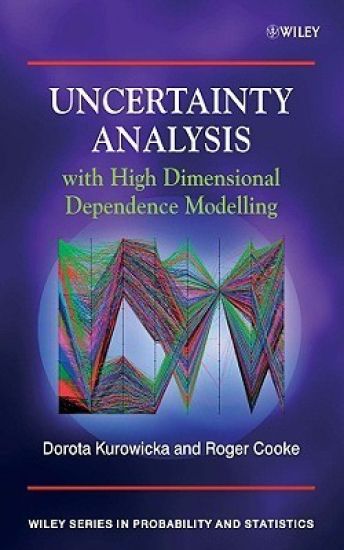
Mathematical models are used to simulate complex real-world phenomena in many areas of science and technology. Large complex models typically require inputs whose values are not known with certainty. Uncertainty analysis aims to quantify the overall uncertainty within a model, in order to support problem owners in model-based decision-making. In recent years there has been an explosion of interest in uncertainty analysis. Uncertainty and dependence elicitation, dependence modelling, model inference, efficient sampling, screening and sensitivity analysis, and probabilistic inversion are among the active research areas. This text provides both the mathematical foundations and practical applications in this rapidly expanding area, including: An up-to-date, comprehensive overview of the foundations and applications of uncertainty analysis.All the key topics, including uncertainty elicitation, dependence modelling, sensitivity analysis and probabilistic inversion.Numerous worked examples and applications.Workbook problems, enabling use for teaching.Software support for the examples, using UNICORN - a Windows-based uncertainty modelling package developed by the authors.A website featuring a version of the UNICORN software tailored specifically for the book, as well as computer programs and data sets to support the examples. Uncertainty Analysis with High Dimensional Dependence Modelling offers a comprehensive exploration of a new emerging field. It will prove an invaluable text for researches, practitioners and graduate students in areas ranging from statistics and engineering to reliability and environmetrics.
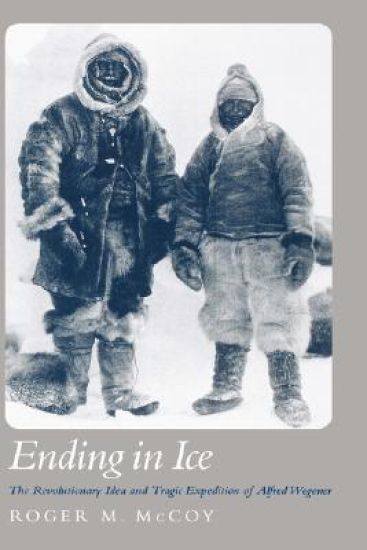
An old truism holds that a scientific discovery has three stages: first, people deny it is true; then they deny it is important; finally, they credit the wrong person. Alfred Wegener's "discovery" of continental drift went through each stage with unusual drama. In 1912, when he published his theory that the world's continents had once come together in a single landmass before splitting apart and floating to their current positions, the world's geologists denied and scorned it. The scientific establishment's rejection of continental drift and plate tectonic theory is a story told often and well. Yet, there is an untold side to Wegener's life: he and his famous father-in-law, Waldimir Koppen (climatologist whose classification of climates is still in use), became fascinated with ice ages and conducted four expeditions in the 1920s to the then--uncharted Greenland icecap to gather data about climate variations (Greenland ice-core sampling continues to this day). Ending in Ice is about Wegener's explorations of Greenland, blending the science of ice ages and Wegener's continental drift measurements with the story of Wegener's fatal final expedition trying to rescue starving workers at the central Greenland ice station of Esmitte in 1930. Arctic exploration books with tragic endings have become all too common, but this book combines the relevant science--now more important than ever as sudden temperature swings become movie-worthy ("The Day After Tomorrow")--with Wegener's fatal adventures in Greenland.
The loss of a loved one can be very painful, with the mourner losing an important source of safety, connection, and life balance. Even when uncomplicated, bereavement can have a significant impact on the mourner. Traumatic circumstances can intensify the grief and complicate the mourning process. EMDR (Eye Movement Desensitization and Reprocessing) therapy, an evidenced based treatment for trauma, can help process the trauma of the loss and the obstacles that interfere with the grief and mourning process. In this book, Roger M. Solomon guides the EDMR therapist through the treatment process by understanding grief reactions and the mourning process, providing an overall model of EMDR treatment for grief and mourning, and highlighting how EMDR can help a mourner experience a positive sense of connection through heartfelt, meaningful memories. The author presents an integrative model for EMDR therapy treatment based on the Adaptive Information Processing Model (AIP), which guides EMDR therapy. Several models of grief and mourning that inform EMDR treatment and a discussion of the eight phases and three prongs (past, present, and future) of EMDR therapy are presented, with many case examples including transcripts of sessions, to illustrate treatment principles and clinical teaching points. A scripted protocol summary to assist the clinician in applying the therapeutic framework presented in this text is available at www.oup.co.uk/companion/Solomon ."
The corporate governance systems of continental Europe have traditionally been quite different to those of the liberal market economies (e.g. the US and the UK). Company ownership has been dominated by incumbent blockholders, with a relatively minor role for minority shareholders and institutional investors. Business strategy has focused on the achievement of social stability - taking into account the interests of a broad group stakeholders - rather than the maximisation of shareholder value. However, since the mid-1990s, European corporations have adopted many of the characteristics of the Anglo-American shareholder model. Furthermore, such an increased shareholder-orientation has coincided with a significant role for the Left in European government. This presents a puzzle, as conventional wisdom does not usually conceive of the Left as an enthusiastic proponent of pro-shareholder capitalism. This book provides an analysis of this paradox by examining how economic factors have interacted with the policy preferences of political parties to cause a significant change in the European system of corporate governance. This book argues that the post-war support of the European Left for the prevailing blockholder-dominated corporate system depended on the willingness of blockholders to share economic rents with employees, both through higher wages and greater employment stability. However, during the 1990s, product markets became more competitive in many European countries. The sharing of rents between social actors became increasingly difficult to sustain. In such an environment, the Left relinquished its traditional social partnership with blockholders and embraced many aspects of the shareholder model. This explanation is supported through a panel data econometric analysis of 15 non-liberal market economies. Subsequent case study chapters examine the political economy of recent corporate governance change in Germany and Italy.
Hyperkinetic Movement Disorders the latest edition to the Contemporary Neurology Series, will cover the signs, the pathophysiology, the genetics (where applicable), and the treatment options of each form of hyperkinetic movement disorder. There is a presentation of clinically-focused information regarding the full spectrum of neurological and psychiatric conditions characterized by involuntary movements. With Parkinson's disease as the most common hypokinetic movement disorder, the book expands on other hyperkinetic movement disorders where substantial progress has been made in the understanding of the role of the basal ganglia in the pathophysiology of these hyperkinesia disorders and in motor control, muscle tone, posture, and cognitive processes. Although therapies that target pathogenesis are still lacking, effective management of hyperkinetic movement disorders demands that physicians are knowledgeable about current and novel pharmacological and surgical approaches. Following background information about how to approach hyperkinetic movement disorders and the neural circuitry underlying them, there are individual chapters that cover tremor, dystonia, Huntington's disease (and other choreas, athetosis, ballism), Tourette's syndrome (and other tic disorders), habits, mannerisms, compulsions, stereotypies, myoclonus, drug-induced disorders, Wilson's disease, hyperkinetic movement disorders with a peripheral trigger and those of unclear origin, and psychogenic movement disorders. Chapters include sections on clinical phenomenology, etiology and pathogenesis and therapy. There are also on-line resources for clinicians and patients to refer to as well. The experienced authors have specifically selected scientific and other published information that best helps clinicians understand, diagnose and optimally treat hyperkinetic movement disorders. The authors' approach is comprehensive yet focused and practical with an emphasis on clinical care.
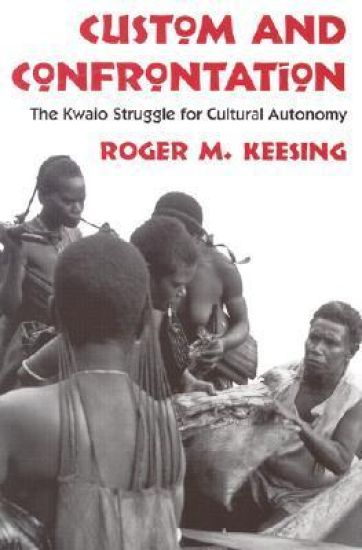
"Anthropologists and students of anthropology may read this book because it is a superior ethnography, detailed and enriched by theoretical insights. But at the heart of this book is a moral take, a simple but powerful story about an indigenous people who were wronged, who resisted for more than 100 years, and who may yet prevail. This message, ultimately, lends the book its true meaning and value."—William Rodman, Anthropologica"A major contribution to the ethnography and history of Malaita and Melanesia, and to the growing literature on cultural resistance. But above all, his humane and painful analysis of the meeting of peoples living in different worlds and constructing their agendas and moralities on incommensurate—and apparently equally arbitrary—principles, represents a major contribution and challenge to anthropological thought, addressing the basic issue of what it is to be human."—Fredrik Barth
"Anthropologists and students of anthropology may read this book because it is a superior ethnography, detailed and enriched by theoretical insights. But at the heart of this book is a moral take, a simple but powerful story about an indigenous people who were wronged, who resisted for more than 100 years, and who may yet prevail. This message, ultimately, lends the book its true meaning and value."—William Rodman, Anthropologica"A major contribution to the ethnography and history of Malaita and Melanesia, and to the growing literature on cultural resistance. But above all, his humane and painful analysis of the meeting of peoples living in different worlds and constructing their agendas and moralities on incommensurate—and apparently equally arbitrary—principles, represents a major contribution and challenge to anthropological thought, addressing the basic issue of what it is to be human."—Fredrik Barth
All hell breaks loose when workaholic head teacher Robert Williams is thrust back in time to blitz torn London. Will he cope any better than his counterpart, shy and retiring Chester Sowby, who finds himself confronted by a class full of today's street wise teens?
Few American entertainers have had the explosive impact, wide-ranging appeal, and continuing popularity of country music superstar Hank Williams. Such Williams standards as "Your Cheatin' Heart," "I'm So Lonesome I Could Cry," "Jambalaya," and "I Saw the Light" have entered the pantheon of great American song while Williams's very name remains synonymous with the genre he helped define. Sing a Sad Songs tells the story of Hank Williams's rise from impoverished Alabama roots, his coming of age during and after World War II, his meteoric climb to national acclaim and star status on the Grand Ole Opry, his star-crossed marriages and recurring health problems, the chronic bouts with alcoholism and the alienation it caused in those he loved and sang for, and finally his tragic death at twenty-nine and subsequent emergence as a folk hero.In addition, the book includes an essential discography compiled by Bob Pinson of the Country Music Foundation.
With this guide, major help for term papers relating to Colonial American history has arrived in a volume sure to enrich and stimulate students in challenging and enjoyable ways.Chock full of stimulating and creative term paper suggestions and vetted research resources focusing on the Colonial Era, this volume is indispensable for students, librarians, and instructors. Students from high school age to undergraduate will use it to get a jumpstart on assignments in Colonial American history with the hundreds of term paper suggestions and research information offered here in an easy-to-use format. Users can quickly choose from the 100 important events, ranging from the first attempt at colonization at the Lost Colony of Roanoke, Virginia, in 1585 to the ratification of the Constitution in 1791.With this book, the research experience is transformed and elevated. Term Paper Resource Guide to Colonial American Historyis a superb source to motivate and educate students who have a wide range of interests and talents. Coverage includes key wars and conflicts, establishment of colonies and colleges, legislation and treaties, religious events, exploration, publications, and more.Each event entry begins with a brief summary to pique interestEach entry offers original and thought-provoking term paper ideas in both standard and alternative formats that often incorporate the latest in electronic media, such as the iPod and iMovieThe best in primary and secondary sources for further research are annotatedVetted, stable website suggestions and multimedia resources, usually videos, are noted for further viewingAlternative term paper suggestions encourage role-playing to personalize the learning experience
This unique, day-by-day compilation of important events helps students understand and appreciate five centuries of Native American history.Encompassing more than 500 years, American Indian History Day by Day: A Reference Guide to Events is a marvelous research tool. Students will learn what occurred on a specific day, read a brief description of events, and find suggested books and websites they can turn to for more information. The guide's unique treatment and chronological arrangement make it easy for students to better understand specific events in Native American history and to trace broad themes across time.The book covers key occurrences in Native American history from 1492 to the present. It discusses native interactions with European explorers, missionaries and colonists, as well as the shifting Indian policies of the U.S. government since the nation's founding. Contemporary events, such as the opening of Indian casinos, are also covered. In addition to accessing comprehensive information about frequently researched topics in Native American history, students will benefit from discussions of lesser-known subjects and events whose causes and significance are often misunderstood.
The purpose of this book is to provide an accessible introduction to a new set of methods for the analysis of Lagrangian motion in geophysical ?ows. These methods were originally developed in the abstract mathem- ical setting of dynamical systems theory, through a geometric approach to di?erential equations that ultimately owes much to the insights of Poincar´ e (1892). In the 1980s and 1990s, researchers in applied mathematics and ?uid dynamics recognized the potential of this approach for the analysis of ?uid motion. Despite these developments and the existence of a substantial body of work on geophysical ?uid problems in the dynamical systems and geophysicalliterature,nointroductorytexthasbeenavailablethatpresents these methods in the context of geophysical ?uid ?ow. The text is meant to be accessible to geophysical ?uid scientists and students familiar with the mathematics of ordinary (mostly) and partial (sometimes) di?erential equations. It assumes little or no prior knowledge of dynamical systems theory. An e?ort is made to explain concepts from a physical point of view, and to avoid the theorem and proof constructions that appear in dynamical systems texts. We hope that this book will prove usefultograduatestudents,researchscientists,andeducatorsinanybranch of geophysical ?uid science in which the motion and transport of ?uid, and ofmaterialscarriedbythe?uid,isofinterest.Wehopethatitwillalsoprove interesting and useful to applied mathematicians who seek an introduction to an intriguing and rapidly developing area of geophysical ?uid dynamics.
Reservoir characterization as a discipline grew out of the recognition that more oil and gas could be extracted from reservoirs if the geology of the reservoir was understood. Prior to that awakening, reservoir development and production were the realm of the petroleum engineer. In fact, geologists of that time would have felt slighted if asked by corporate management to move from an exciting exploration assignment to a more mundane assignment working with an engineer to improve a reservoir’s performance. Slowly, reservoir characterization came into its own as a quantitative, multidisciplinary endeavor requiring a vast array of skills and knowledge sets. Perhaps the biggest attractor to becoming a reservoir geologist was the advent of fast computing, followed by visualization programs and theaters, all of which allow young geoscientists to practice their computing skills in a highly technical work environment. Also, the discipline grew in parallel with the evolution of data integration and the advent of asset teams in the petroleum industry. Finally, reservoir characterization flourished with the quantum improvements that have occurred in geophysical acquisition and processing techniques and that allow geophysicists to image internal reservoir complexities.
With the end of the Cold War, will the space race become a cooperative venture? This book, which tells the story of the European Space Agency, shows how such a cooperative enterprise has worked over the past three decades and how it might apply to future space science.Linking fifteen European nations, the European Space Agency offers a working model of scientific, technological, and political cooperation on an international scale. Roger M. Bonnet and Vittorio Manno give us an insiders’ view of the agency—its beginnings as the European Space Research Organization, its development in the face of early difficulties, and its daily operations. Covering thirty years, this account traces the evolution of ESA’s programs, facilities, and capabilities and the establishment of its scientific, technological, industrial, and political policies and objectives. With an eye to future global space activities, the authors detail ESA’s relationships with its own member states and with other countries, particularly the United States. The history of cooperation between ESA and NASA as exemplified by two specific projects—Ulysses and the international space station—highlights the difficulties of associating different decision-making bodies and political systems.Illustrated with pictures and diagrams, enlivened with anecdotes involving key world players in space science, this book provides a rich blend of factual information and personal recollection, history and interpretation. A timely contribution to the study of the politics of science and technology, it points the way to future international cooperation.