Kirjojen hintavertailu. Mukana 11 244 527 kirjaa ja 12 kauppaa.

Kirjahaku

Etsi kirjoja tekijän nimen, kirjan nimen tai ISBN:n perusteella.

1000 tulosta hakusanalla Roland Boer

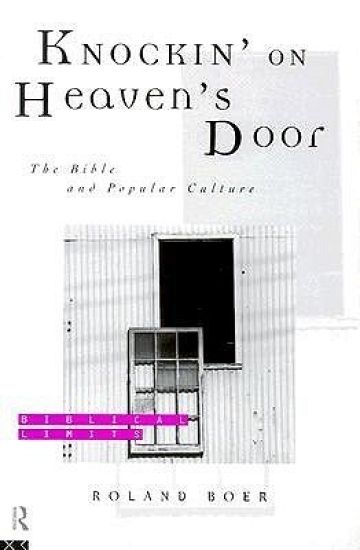
Knockin' on Heaven's Door

Knockin' on Heaven's Door

Roland Boer

Routledge
1999
nidottu
Knockin' On Heaven's Door offers a critically sophisticated and truly interdisciplinary analysis of the relationship between biblical studies and contemporary culture.Specific biblical texts are examined in the light of cultural criticism and areas of popular culture including pornography, heavy metal music and McDonald's hamburgers in the light of biblical criticism.
Marxist Criticism of the Hebrew Bible: Second Edition
The only large-scale critical introduction to Western Marxism for biblical criticism. Roland Boer introduces the core concepts of major figures in the tradition, specifically Althusser, Gramsci, Deleuze and Guattari, Eagleton, Lefebvre, Lukács, Adorno, Bloch, Negri, Jameson, and Jameson. Throughout, Boer shows how Marxist criticism is relevant to biblical criticism, in terms of approaches to the Bible and in the use of those approaches in the interpretation of specific texts. In this second edition, Boer has added chapters on Deleuze and Guattari, and Negri. Each chapter has been carefully revised to make the book more useful on courses, while maintaining challenges and insights for postgraduate students and scholars. Theoretical material has been updated and sharpened in light of subsequent research and a revised conclusion considers the economies of the ancient world in relation to biblical societies.
Marxist Criticism of the Hebrew Bible: Second Edition
The only large-scale critical introduction to Western Marxism for biblical criticism. Roland Boer introduces the core concepts of major figures in the tradition, specifically Althusser, Gramsci, Deleuze and Guattari, Eagleton, Lefebvre, Lukács, Adorno, Bloch, Negri, Jameson, and Jameson. Throughout, Boer shows how Marxist criticism is relevant to biblical criticism, in terms of approaches to the Bible and in the use of those approaches in the interpretation of specific texts. In this second edition, Boer has added chapters on Deleuze and Guattari, and Negri. Each chapter has been carefully revised to make the book more useful on courses, while maintaining challenges and insights for postgraduate students and scholars. Theoretical material has been updated and sharpened in light of subsequent research and a revised conclusion considers the economies of the ancient world in relation to biblical societies.
Political Grace

Political Grace

Roland Boer

Westminster/John Knox Press,U.S.
2009
nidottu
In this exploration of John Calvin's political thought, Roland Boer treats Calvin as a biblical scholar and political philosopher, showing us elusive aspects of Calvin's Institutes. Boer investigates Calvin's careful thinking in the Institutes as well as in his biblical commentaries, pursuing Calvin's understanding of political freedom.Boer also explores Calvin's views on grace with the eye of a careful interpreter, and suggests what we might find in Calvin's political thought if we took the Bible, grace, and freedom as seriously as Calvin did.
The Sacred Economy of Ancient Israel

The Sacred Economy of Ancient Israel

Roland Boer

Westminster/John Knox Press,U.S.
2015
nidottu
The Sacred Economy of Ancient Israel offers a new reconstruction of the economic context of the Bible and of ancient Israel. It argues that the key to ancient economies is with those who worked on the land rather than in intermittent and relatively weak kingdoms and empires. Drawing on sophisticated economic theory (especially the Régulation School) and textual and archaeological resources, Roland Boer makes it clear that economic “crisis� was the norm and that economics is always socially determined. He examines three economic layers: the building blocks (five institutional forms), periods of relative stability (three regimes), and the overarching mode of production. Ultimately, the most resilient of all the regimes was subsistence survival, for which the regular collapse of kingdoms and empires was a blessing rather than a curse. Students will come away with a clear understanding of the dynamics of the economy of ancient Israel. Boer's volume should become a new benchmark for future studies.
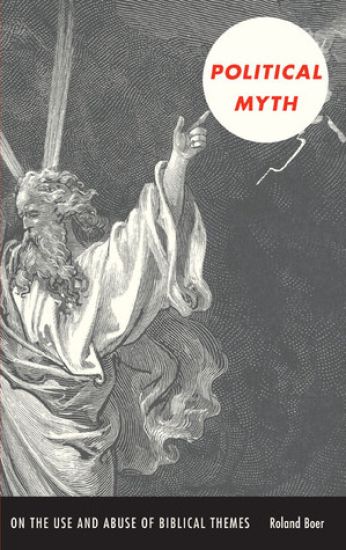
Political Myth

Political Myth

Roland Boer

Duke University Press
2009
sidottu
In this provocative and necessary work, Roland Boer, a leading biblical scholar and cultural theorist, develops a political myth for the Left: a powerful narrative to be harnessed in support of progressive policy. Boer focuses on foundational stories in the Hexateuch, the first six books of the Bible, from Genesis through Joshua. He contends that the “primal story” that runs from Creation, through the Exodus, and to the Promised Land is a complex political myth, one that has been appropriated recently by the Right to advance reactionary political agendas. To reclaim it in support of progressive political ends, Boer maintains, it is necessary to understand the dynamics of political myth.Boer elaborates a theory of political myth in dialogue with Ernst Bloch, Theodor Adorno, Alain Badiou, Jacques Lacan, and Slavoj Žižek. Through close readings of well-known biblical stories he then scrutinizes the nature of political myth in light of feminism, psychoanalysis, and Marxism. Turning to contemporary politics, he examines the statements of prominent American and Australian politicians to show how the stories of Creation, conquest, Paradise, and the Promised Land have been distorted into a fantasy of Israel as a perpetual state in the making and a land in need of protection. Boer explains how this fantasy of Israel shapes U.S. and Australian foreign and domestic policies, and he highlights the links between it and the fantasy of unfettered global capitalism. Contending that political myths have repressed dimensions which if exposed undermine the myths’ authority, Boer urges the Left to expose the weakness in the Right’s mythos. He suggests that the Left make clear what the world would look like were the dream of unconstrained capitalism to be realized.
Political Myth

Political Myth

Roland Boer

Duke University Press
2009
pokkari
In this provocative and necessary work, Roland Boer, a leading biblical scholar and cultural theorist, develops a political myth for the Left: a powerful narrative to be harnessed in support of progressive policy. Boer focuses on foundational stories in the Hexateuch, the first six books of the Bible, from Genesis through Joshua. He contends that the “primal story” that runs from Creation, through the Exodus, and to the Promised Land is a complex political myth, one that has been appropriated recently by the Right to advance reactionary political agendas. To reclaim it in support of progressive political ends, Boer maintains, it is necessary to understand the dynamics of political myth.Boer elaborates a theory of political myth in dialogue with Ernst Bloch, Theodor Adorno, Alain Badiou, Jacques Lacan, and Slavoj Žižek. Through close readings of well-known biblical stories he then scrutinizes the nature of political myth in light of feminism, psychoanalysis, and Marxism. Turning to contemporary politics, he examines the statements of prominent American and Australian politicians to show how the stories of Creation, conquest, Paradise, and the Promised Land have been distorted into a fantasy of Israel as a perpetual state in the making and a land in need of protection. Boer explains how this fantasy of Israel shapes U.S. and Australian foreign and domestic policies, and he highlights the links between it and the fantasy of unfettered global capitalism. Contending that political myths have repressed dimensions which if exposed undermine the myths’ authority, Boer urges the Left to expose the weakness in the Right’s mythos. He suggests that the Left make clear what the world would look like were the dream of unconstrained capitalism to be realized.
Tracking "The Tribes of Yahweh"

Tracking "The Tribes of Yahweh"

Roland Boer

Continuum Publishing Corporation
2002
sidottu
Norman Gottwald's monumental The Tribes of Yahweh caused an immediate sensation when first published in 1979, and its influence has continued to be felt, both in the area of biblical politics and in the application of sociological methods to the Hebrew Bible. This book reflects on the impact and the implications of the work after twenty years. The distinguished contributors are David Jobling, Frank Frick, Charles Carter, Carol Meyers, Jacques Berlinerblau, Itumeleng Mosala, Gerald West, Roland Boer and, in a response to contributors as well as an interview with the editor, Norman Gottwald himself.
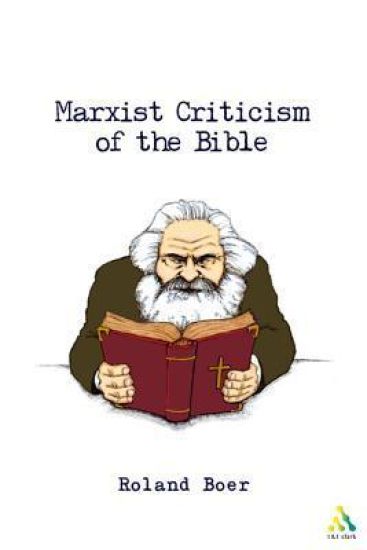
Marxist Criticism of the Bible

Marxist Criticism of the Bible

Roland Boer

Continuum Publishing Corporation
2003
nidottu
This is the first large-scale critical introduction for biblical criticism of a significant area of contemporary cultural and literary theory, namely Marxist literary criticism. The book comprises studies of major figures in the tradition, specifically Althusser, Gramsci, Eagleton, Adorno, Benjamin, Bloch, Lefebvre, Lukacs and Jameson. At the same time, through careful choice of critics, the book will function as a general introduction to Marxist literary theory as a whole in relation to biblical studies. Throughout the aim is to show how this material is relevant to biblical criticism, in terms of both particular approaches to the Bible and the use of those approaches for interpreting selected texts from Genesis, Exodus, Ruth, 1 Samuel, 1-2 Kings, Jeremiah, Ezekiel, Psalms and Daniel. This is volume 87 in the Biblical Seminar Series.
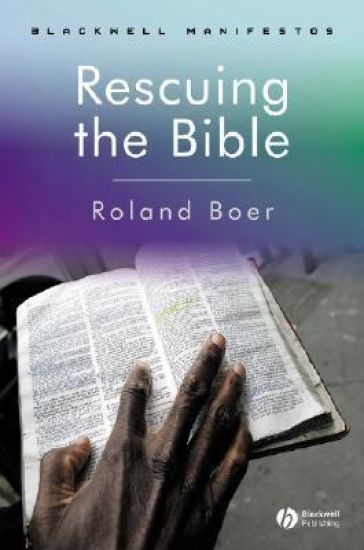
Rescuing the Bible

Rescuing the Bible

Roland Boer

Wiley-Blackwell (an imprint of John Wiley Sons Ltd)
2007
nidottu
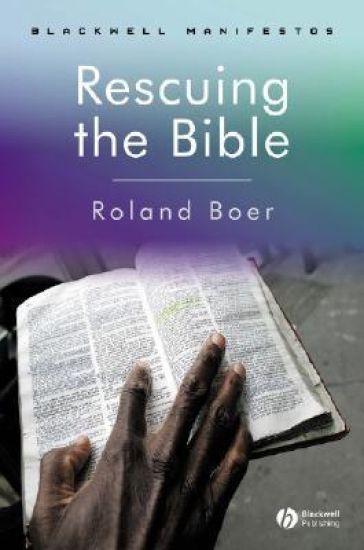
What is the future for the Bible, one of the most important books in the world? In this manifesto, Roland Boer explores the idea that the Bible is an unruly and uncontrollable text that has been colonized by church, synagogue, and state. Powerfully argues that the Bible needs to be rescued from its abuse by the religious and political right Considers the history of revolutionary readings of the Bible, from Gerrard Winstanley to the present Urges a role for the Bible in a new "worldly left": an alliance between the religious and secular left that can promote more progressive readings of the text Concludes by offering a "political myth" from the Bible that condemns oppression, imagines a better society and celebrates the biblical themes of opposition and chaos.
Rescuing the Bible

Rescuing the Bible

Roland Boer

Wiley-Blackwell (an imprint of John Wiley Sons Ltd)
2007
sidottu
What is the future for the Bible, one of the most important books in the world? In this manifesto, Roland Boer explores the idea that the Bible is an unruly and uncontrollable text that has been colonized by church, synagogue, and state. Powerfully argues that the Bible needs to be rescued from its abuse by the religious and political right Considers the history of revolutionary readings of the Bible, from Gerrard Winstanley to the present Urges a role for the Bible in a new "worldly left": an alliance between the religious and secular left that can promote more progressive readings of the text Concludes by offering a "political myth" from the Bible that condemns oppression, imagines a better society and celebrates the biblical themes of opposition and chaos.
Criticism Of Heaven: On Marxism And Theology
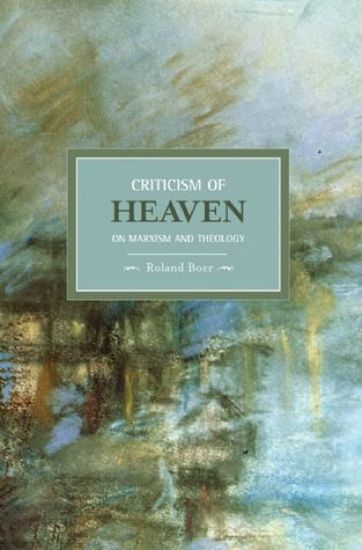
This volume consists of a critical commentary on the interactions between Marxism and theology in the work of the major figures of Western Marxism. It deals with the theological writings of Ernst Bloch, Walter Benjamin, Louis Althusser, Henri Lefebvre, Antonio Gramsci, Terry Eagleton, Slavoj Zizek and Theodor Adorno. In many cases their theological writings are dealt with for the first time in this book. Apart from the critical engagement with the way they use theology, the book also explores how their theological writings infiltrate and enrich their Marxist work.
Criticism Of Theology: Marxism And Theology Iii
Criticsism of Theology offers commentary on the engagements with religion and theology by a range of Marxist philosophers and critics. Boer's aim is to gather insights in order to develop a comprehensive theory of religion. Following hot on the heels of Criticism of Heaven (Haymarket, 2009), for which he received scholarly acclaim, Richard Boer's latest volume in the Criticism of Heaven and Earth series (which will ultimately comprise five volumes) is guaranteed find an excited critical niche.
Criticism Of The Earth: On Marx, Engels And Theology
Criticism of Earth thoroughly reassesses Marx and Engels's engagement with theology, analyzing their collected works for discussions of spiritual matters and the persistence of biblical allusions. What emerges is a continued interest that is maintained throughout their lives, from Marx's Critique of Hegel's Philosophy of Right, until the very end with Engels's treatise on the revolutionary origins of early christianity.
In The Vale Of Tears: On Marxism And Theology, V
In the Vale of Tears brings to a culmination the project for a renewed and enlivened debate over the interaction between Marxism and religion. The book simultaneously draws upon the rich insights of a significant number of Western Marxists and strikes out on its own. Thus, it argues for the crucial role of political myth on the Left; explores the political ambivalence at the heart of Christianity; challenges the bent among many on the Left to favour the unexpected rupture of kairos as a key to revolution. The conclusion to the series 'The Criticism of Heaven and Earth'.
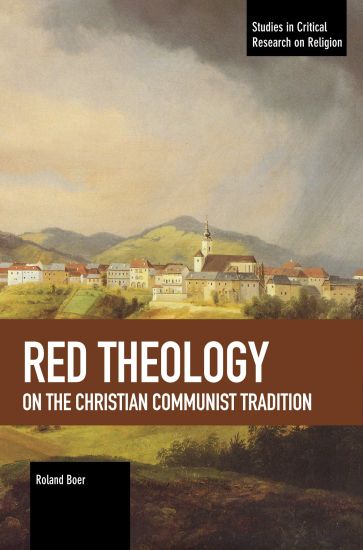
Red Theology

Red Theology

Roland Boer

Haymarket Books
2020
pokkari
In Red Theology: On the Christian Communist Tradition, Roland Boer presents key moments in the 2,000 year tradition of Christian communism. Defined by the two features of alternative communal practice and occasional revolutionary action, Christian communism is predicated on profound criticism of the way of the world. The book begins with Karl Kautsky—the leading thinker of second-generation Marxism—and his oft-ignored identification of this tradition. From there, it offers a series of case studies that deal with European instances, the Russian Revolution, and to East Asia. Here we find the emergence of Christian communism not only in China, but also in North Korea. This book will be a vital resource for scholars and students of religion and the many aspects of socialist tradition.
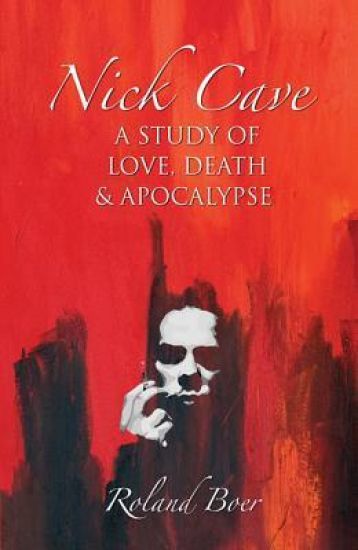
Nick Cave

Nick Cave

Roland Boer

Equinox Publishing Ltd
2013
nidottu
This study analyses the work of Nick Cave, a singular, idiosyncratic and brilliant musician, specifically through his engagements with theology and the Bible. It does so not merely in terms of his written work - the novels and plays and poetry and lyrics that he continues to produce - but also the music itself. Covering more than three decades of extraordinarily diverse creativity, this book explores such themes as the depravity of the worlds invoked in Cave's novels and other written work, the consistent invocation of apocalyptic, his restoration of death as a valid dimension of life, the twists of the love song, and the role of a sensual and heretical Christ. This book draws upon a select number of theorists who provide the methodological possibilities of digging deep into the theological nature of Cave's work, namely Ernst Bloch, the methodological foundation stone, as well as Theodor Adorno, Theodore Gracyk and Jacques Attali.