
Kirjahaku
Etsi kirjoja tekijän nimen, kirjan nimen tai ISBN:n perusteella.
1000 tulosta hakusanalla Rolf G. Orfgen






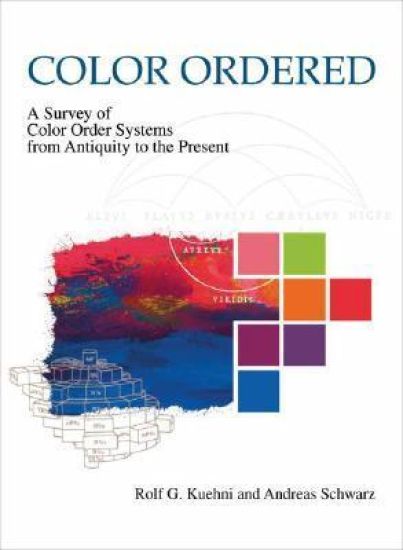
Since antiquity, people have searched for a way to understand the colours we see-what they are, how many there are, and how they can be systematically identified and arranged in some kind of order. How to order colours is not merely a philosophical question, it also has many practical applications in art, design, and commerce. Our intense interest in colour and its myriad practical applications have led people throughout history to develop many systems to characterize and order it. The number of colour order systems developed throughout history is unknown but ranges in the hundreds. Many are no longer used, but continue to be of historical interest. Despite wrong turns and slow progress, our understanding of colour and its order has improved steadily. Although full understanding continues to elude us, it seems clear that it will ultimately come from research in neurobiology, perception and consciousness. Color Ordered is a comprehensive, in-depth compendium of 165 systems, dating from antiquity to the present. In it, Rolf Kuehni and Andreas Schwarz present a history and categorization of colour systems, describe each one using original figures and schematic drawings, and provide a broad review of the underlying theory. Included are a brief overview of colour vision and a synthesis of the various systems.
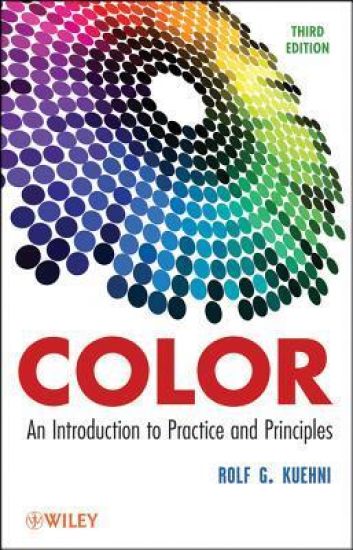
The one-stop reference to the essentials of color science and technology—now fully updated and revised The fully updated Third Edition of Color: An Introduction to Practice and Principles continues to provide a truly comprehensive, non-mathematical introduction to color science, complete with historical, philosophical, and art-related topics. Geared to non-specialists and experts alike, Color clearly explains key technical concepts concerning light, human vision, and color perception phenomena. It covers color order systems in depth, examines color reproduction technologies, and reviews the history of color science as well as its relationship to art and color harmony. Revised throughout to reflect the latest developments in the field, the Third Edition: Features many new color illustrations, now fully incorporated into the textOffers new perspectives on what color is all about, diverging from conventional thinkingIncludes new information on perception phenomena, color order, and technological advancesUpdates material on such topics as the CIE colorimetric system and optimal object colorsExtends coverage of color reproduction to display systems, photography, and color managementContains a unique timetable of color in science and art, plus a glossary of important terms Praise for the previous editions: “A nice bridge to areas usually not covered in academic visual science programs … outstanding.” —Joel Pokorny, visual scientist at The University of Chicago “A good addition to any library, this should be useful for the color interests of artists, designers, craftsmen, philosophers, psychologists, color technologies, and students in related fields.” —CHOICE

Insect Morphology and Phylogeny
Rolf G. Beutel; Frank Friedrich; Xing-Ke Yang; Si-Qin Ge
De Gruyter
2013
sidottu
In the last decades a remarkable renaissance has materialized in insect morphology, mainly triggered by the development of new cutting-edge technologies. This is an exciting time for biological synthesis where the mysteries and data derived from genomes can be combined with centuries of data from morphology and development. And, now, more than ever, detailed knowledge of morphology is essential to understanding the evolution of all groups of organisms. In this “age of phylogenomics” researchers rely on morphological data to support molecular findings, test complex evolutionary scenarios, and for placing fossil taxa. This textbook provides an in-depth treatment of the structures and the phylogeny of the megadiverse Hexapoda. The first part presents an up-to-date overview of general insect morphology with detailed drawings, scanning electron micrographs, and 3-D reconstructions. Also included is a chapter covering innovative morphological techniques (e.g., µ-computer tomography, 3-D modeling), brief treatments of insect development and phylogenetic methods, and a comprehensive morphological glossary. The second part is of a modern synthesis of insect systematics that includes taxon-specific morphological information for all Orders. The work is an invaluable reference for students and researchers working in all facets of biology and is a must for evolutionary biologists. A detailed understanding of morphology is essential in unraveling phylogenetic relationships and developing complex evolutionary scenarios. Increasingly researchers in phylogenomics are re/turning to morphological data to support their findings, while the development of new cutting-edge technologies has further increased interest in this growing field. This definitive handbook provides an in-depth treatment of insect morphology. The first part presents an up-to-date overview of insect morphology with detailed drawings, brilliant scanning electron micrographs and 3-D reconstructions as interactive PDFs. This is complemented by a chapter on innovative morphological techniques (e.g., µ-computer tomography, 3-D modeling) and a comprehensive morphological glossary. The second part treats the state of the art in insect systematics and includes taxon-specific morphological information for all orders. Systematics are treated formally, with for example the arguments for relationships (“apomorphies”) always listed explicitly. The work is a useful reference for students and researchers working in different fields of biology and a must for those dealing with insects from an evolutionary perspective.
Strukturwandel und Strukturpolitik in Nordrhein-Westfalen
Rolf G. Heinze
Vs Verlag Fur Sozialwissenschaften
2012
nidottu