Kirjojen hintavertailu. Mukana 11 244 527 kirjaa ja 12 kauppaa.

Kirjahaku

Etsi kirjoja tekijän nimen, kirjan nimen tai ISBN:n perusteella.

1000 tulosta hakusanalla Ronald Aronson

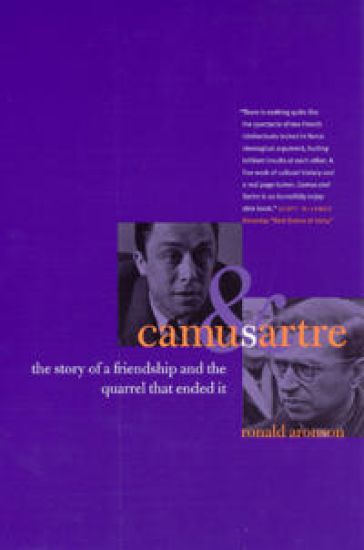
Camus and Sartre

Camus and Sartre

Ronald Aronson

University of Chicago Press
2005
nidottu
Albert Camus and Jean-Paul Sartre first met in 1943, during the German occupation of France. Intellectual as well as political allies, they grew famous overnight after Paris was liberated. But East West tensions began to strain their friendship as they evolved in opposing directions, disagreeing over philosophy, the responsibilities of intellectuals, and what sorts of political changes were necessary or possible. And while Sartre embraced violence as a path to change, Camus sharply opposed it, leading to a bitter and very public falling out in 1952, after which they never spoke again. Ronald Aronson chronicles this riveting story while demonstrating how Camus and Sartre developed first in connection with and then against each other, each keeping the other in his sights long after their break. Combining biography and intellectual history, philosophical and political passion, Camus and Sartre will fascinate anyone interested in these great writers or the world-historical issues that tore them apart.
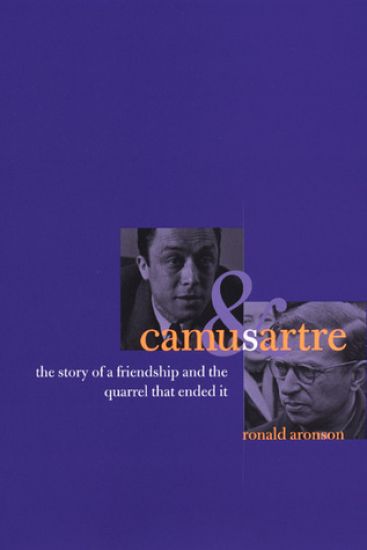
Camus and Sartre

Camus and Sartre

Ronald Aronson

University of Chicago Press
2004
sidottu
Until now it has been impossible to read the full story of the relationship between Albert Camus and Jean-Paul Sartre. Their dramatic rupture at the height of the Cold War, like that conflict itself, demanded those caught in its wake to take sides rather than to appreciate its tragic complexity. Now, using newly available sources, Ronald Aronson offers the first book-length account of the twentieth century's most famous friendship and its end. Albert Camus and Jean-Paul Sartre first met in 1943, during the German occupation of France. The two became fast friends. Intellectual as well as political allies, they grew famous overnight after Paris was liberated. As playwrights, novelists, philosophers, journalists, and editors, the two seemed to be everywhere and in command of every medium in post-war France. East-West tensions would put a strain on their friendship, however, as they evolved in opposing directions and began to disagree over philosophy, the responsibilities of intellectuals, and what sorts of political changes were necessary or possible. As Camus, then Sartre adopted the mantle of public spokesperson for his side, a historic showdown seemed inevitable. Sartre embraced violence as a path to change and Camus sharply opposed it, leading to a bitter and very public falling out in 1952. They never spoke again, although they continued to disagree, in code, until Camus's death in 1960. In a remarkably nuanced and balanced account, Aronson chronicles this riveting story while demonstrating how Camus and Sartre developed first in connection with and then against each other, each keeping the other in his sights long after their break. Combining biography and intellectual history, philosophical and political passion, Camus and Sartre will fascinate anyone interested in these great writers or the world-historical issues that tore them apart.
"Stay Out of Politics"

"Stay Out of Politics"

Ronald Aronson

University of Chicago Press
1990
sidottu
As a lifelong radical and political activist, Ronald Aronson accepted an invitation to lecture in South Africa only after two years of deliberation. "Stay Out of Politics," which begins with the moral questions that Aronson confronted in his decision to go, is a reaffirmation of the necessity for majority rule and the abolition of apartheid. Amidst the pressure of widespread talk of an academic boycott of South Africa, Aronson decided to lecture there as a contribution to the struggle for majority rule. He decided to become mobilized as a philosopher and activist by engaging in the effort close at hand rather than settling for a distant and comfortable protest by avoidance. Along with his visa, Aronson was given the following warning by a consular officer: "Stay out of politics!" Believing that philosophy not only has a role to play but that it can, and must, involve itself in the vital social and political issues of our time, Aronson equally discovered that in South Africa politics is everywhere and inescapable. The lectures Aronson delivered focused on the meaning of progress and hope, on the threat—and experience—of disaster today, and on our responsibility to join the struggle for a humane and rational world. Two of the most provocative lectures are included here, the first a discussion of the Holocaust that has direct and intentional applications to the current situation in South Africa. The second lecture, in memory of the assassinated political philosopher Richard Turner, is a sketch of Aronson's philosophy of hope as seen from within the South African context. Despite the limitations of teaching under possible surveillance in a revolutionary situation, Aronson witnessed the social reality of apartheid and heard the voices of its victims. Aronson's love for the South African people motivated him to write this powerful account. He presents a lecturer's tour of South Africa: the experiences that both confirmed his belief in the urgent need for majority rule but also revealed the complexities of the society that seeks to continue apartheid through all reforms; and his philosopher's reflections upon returning to the United States on the irrationality of apartheid and the ambiguities of the struggle to end it. "Stay Out of Politics" is not only a powerful encounter with South Africa today, it is a provocative statement about philosophy—its nature, its tasks, its duty to understand and change the world in which we live.
"Stay Out of Politics"

"Stay Out of Politics"

Ronald Aronson

University of Chicago Press
1990
nidottu
As a lifelong radical and political activist, Ronald Aronson accepted an invitation to lecture in South Africa only after two years of deliberation. "Stay Out of Politics," which begins with the moral questions that Aronson confronted in his decision to go, is a reaffirmation of the necessity for majority rule and the abolition of apartheid. Amidst the pressure of widespread talk of an academic boycott of South Africa, Aronson decided to lecture there as a contribution to the struggle for majority rule. He decided to become mobilized as a philosopher and activist by engaging in the effort close at hand rather than settling for a distant and comfortable protest by avoidance. Along with his visa, Aronson was given the following warning by a consular officer: "Stay out of politics!" Believing that philosophy not only has a role to play but that it can, and must, involve itself in the vital social and political issues of our time, Aronson equally discovered that in South Africa politics is everywhere and inescapable. The lectures Aronson delivered focused on the meaning of progress and hope, on the threat—and experience—of disaster today, and on our responsibility to join the struggle for a humane and rational world. Two of the most provocative lectures are included here, the first a discussion of the Holocaust that has direct and intentional applications to the current situation in South Africa. The second lecture, in memory of the assassinated political philosopher Richard Turner, is a sketch of Aronson's philosophy of hope as seen from within the South African context. Despite the limitations of teaching under possible surveillance in a revolutionary situation, Aronson witnessed the social reality of apartheid and heard the voices of its victims. Aronson's love for the South African people motivated him to write this powerful account. He presents a lecturer's tour of South Africa: the experiences that both confirmed his belief in the urgent need for majority rule but also revealed the complexities of the society that seeks to continue apartheid through all reforms; and his philosopher's reflections upon returning to the United States on the irrationality of apartheid and the ambiguities of the struggle to end it. "Stay Out of Politics" is not only a powerful encounter with South Africa today, it is a provocative statement about philosophy—its nature, its tasks, its duty to understand and change the world in which we live.
We

We

Ronald Aronson

University of Chicago Press
2017
sidottu
What was it about Barack Obama's campaign of hope that resonated so much not just with Americans, but people the world over? Have we really become so despairing in the face of collapsed economies and the threat of violence around every corner that a simple rallying cry to remember hope can have such a powerful effect? In this moving and thoughtful book, Ronald Aronson explores our relationship to hope at a time some have called the end of history, others the end of politics, in order to formulate a more active stance, one in which hope is far more than a mood or feeling it is the very basis of social will and political action. Aronson examines our own heartbreaking story: a century of violence, upheaval, and the undelivered promises of progress all of which have contributed to the evaporation of social hope. As he shows, we are now in an era when hope has been privatized, when despite all the ways we are connected to each other we are desperately alone, struggling to weather the maelstrom around us, demoralized by the cynicism that permeates our culture and politics, and burdened with finding personal solutions to social problems. Yet social hope, Aronson argues, still persists. Carefully exploring what we mean when we say we "hope" and teasing hope apart from its dangerously misconstrued sibling, progress, he locates real seeds of change. He argues that always underlying our experience even if we completely ignore it is a sense of social belonging, and that this can be reactivated into a powerful collective force, an active we. He looks to various political movements, from the massive collective force of environmentalists to the stunning rise of movement-centered politicians such as Bernie Sanders and Jeremy Corbyn, as powerful examples of socially energized, politically determined, and actionably engaged forms of hope. The result is an illuminating and inspiring call that anyone can clearly hear: we can still create a better future for ourselves, but only if we do it together.
Living Without God

Living Without God

Ronald Aronson

Counterpoint
2009
pokkari
Aronson has a mission: to demonstrate that a life without religion can be coherent, moral, and committed. Offering guidance for atheists, agnostics, secularists, and the undecided, Living Without God explores the experience and issues of 21st-century secularists.
Ronald Reagan

Ronald Reagan

Michael Schaller

Oxford University Press Inc
2011
sidottu
In this short biography, Michael Schaller, acclaimed historian of the American political right, offers readers a poignant account of Ronald Reagan's life and achievements, from his small-town upbringing in rural Illinois to his cinematic success in Hollywood, entry into politics as governor of California, and meteoric rise to the White House, where he served for eight years. The polarizing Great Communicator oversaw many developments that changed the face of American politics and life-the Iran-Contra Affair, the establishment of ¨Reaganomics,¨ the largest military buildup in peacetime US history--and as such remains a figure about whom much is written and much has yet to be discovered. Schaller revisits each of these episodes during and leading up to the Reagan presidency, taking into account the latest scholarship and research. In doing so, he makes clear their significance at the time and in later years. While most presidential biographies approach 1,000 pages, this succinct narrative comes in at just over 100 pages, continuing the tradition of excellence in brevity established by James McPherson's New York Times bestseller Abraham Lincoln and Alan Brinkley's recent short biography of Franklin Delano Roosevelt. Schaller's biography of Ronald Reagan will be available in time to commemorate the centennial of Reagan's birth, an opportune time to reflect on the accomplishments of America's fortieth president.
Ronald Johnson’s Modernist Collage Poetry
Using a critical examination of the collage poetics of Ronald Johnson, this book sets out to understand Johnson's poetry in the context of the "New American" collage tradition, stretching from Ezra Pound to Louis Zukofsky and beyond. Additionally, the book assesses Johnson's work in relation to wider questions concerning literary chronologies, especially the discontinuities commonly seen to exist between nineteenth-century Romantic and twentieth-century modernist literary forms.
Ronald Dworkin's Theory of Equality

Ronald Dworkin's Theory of Equality

Alexander Brown

Palgrave Macmillan
2009
sidottu
Ronald Dworkin's work on equality has shaped debates in the field of distributive justice for nearly three decades. In this book Alexander Brown attempts to provide a critique but also a defence of that work, and to extend equality of resources globally.
Ronald Reagan and the 1980s
By the end of the 1980s, many Americans looked at the state of the nation with a renewed optimism, which was personified by an enduring American president - Ronald Wilson Reagan. The essays in this volume revisit the 1980s in order to examine the factors that contributed to his political and cultural triumphs and assess his legacy.
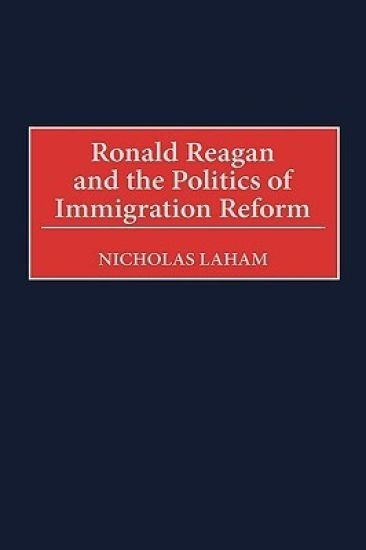
Ronald Reagan and the Politics of Immigration Reform

Ronald Reagan and the Politics of Immigration Reform

Nicholas Laham

Praeger Publishers Inc
2000
sidottu
Laham argues that Ronald Reagan demonstrated gross ineptitude in his conduct of immigration policy. He failed to press for much-needed reforms in legal immigration while he supported the establishment of a fraud-ridden employer sanctions regime, which had no discernible effect in achieving its goal of stemming the flow of illegal immigration. He failed to take the first step toward the establishment of a fraud-resistant worker verification system, which would enable the employer sanctions provisions of the Immigration Reform and Control Act (IRCA) to be effectively enforced. Additionally, he supported the amnesty provisions of IRCA, which granted permanent legal residence to 2.7 million often poorly educated, unskilled, and low-wage illegal aliens.According to Laham, Reagan's failure to develop a sound and effective immigration policy was not due to the president's urge to satisfy the desires of special interests. Rather, the Reagan administration was crippled in its ability to design a sound and effective immigration policy by the lack of accurate and reliable information on this issue and by the president's own ideological hostility toward big government. These factors impeded the ability of Congress to design an effective employer sanctions regime capable of stemming the flow of illegal immigration to the United States. This thorough and controversial analysis will be of particular interest to scholars, students, and researchers involved with American immigration studies, the presidency, and contemporary public policy.
Ronald Reagan

Ronald Reagan

David Henry; Kurt Ritter

Greenwood Press
1992
sidottu
This reference combines a critical analysis of Ronald Reagan's style as a public speaker with a set of selected speeches and an extensive bibliography. Kurt Ritter and David Henry cover his oratory from his days in the motion picture industry and as a political candidate to his years as Governor of California and as President of the United States. This analysis of his use of mass media as a pulpit and his command of the TV medium is intended for students, teachers, and professionals in communications and in government.The volume defines Ronald Reagan's role as a political pastor, his emphasis on heroes, and his appeals to values of freedom and promise. Selected speeches illustrate points made in the analysis. A chronology of his major speeches is given, along with an extensive bibliography of primary and secondary sources. A full index is also provided. This book will be of great interest to students of oratory, speech communication specialists, political scientists, and others needing an overview and texts of President Reagan's speeches.
Ronald Colman

Ronald Colman

Sam Frank

Greenwood Press
1997
sidottu
One of the most enchanting figures of the silver screen, Ronald Colman appeared in such classic films as Beau Geste, The Prisoner of Zenda, Lost Horizon, and A Tale of Two Cities. He was nominated four times for the Academy Award, which he won for a spectacular performance in A Double Life. His voice was unrivaled, and he had a brilliant career as a radio star. A charismatically photogenic performer, he was voted the handsomest actor in Hollywood on several occasions. His superior skills, his dashing visage, and his resonant speech made him one of the most sought after and acclaimed stars of his day. In spite of his enormous talent and supreme achievements, Ronald Colman has strangely been overlooked. This immensely detailed reference book brings Colman's life and career into sharp focus, corrects misleading information about him, and comments on the critical response to his work. The heart of this expertly researched volume is a series of chapters with entries for Colman's many hundreds of performances in film, radio, and television. Entries provide full production information, plot synopses, excerpts from reviews, and valuable commentary. An extensive annotated bibliography summarizes and assesses material written about Colman, and the author scrupulously debunks the many myths that have been written about Colman in previous publications.
Ronald Reagan's America
Supporters of the Reagan presidency claim that the Reagan Revolution defeated inflation, reduced the role of government, rehabilitated the authority of the states and local government, and established a sensible balance between industrial progress and environmental protection. Opponents assert that these policies increased the national debt by more than $1 trillion, gutted social programs, and created a trickle-down economy that increased unemployment, insecurity, homelessness, and the percentage of Americans living at or below the poverty level. Both positions are argued by such participants as Edwin Meese III, James G. Watt, and Lyn Nofzinger, and such commentators and scholars as Mike Wallace, Roy Innis, and Kenneth W. Thompson. Students of the era as well as of the presidency and the evolution of domestic political and social affairs will find provocative and insightful observations in this volume.
Ronald Reagan's America
Supporters of the Reagan presidency claim that the Reagan Revolution defeated inflation, reduced the role of government, rehabilitated the authority of the states and local government, and established a sensible balance between industrial progress and environmental protection. Opponents assert that these policies increased the national debt by more than $1 trillion, gutted social programs, and created a trickle-down economy that increased unemployment, insecurity, homelessness, and the percentage of Americans living at or below the poverty level. Both positions are argued by Reagan aides and scholars of the era.Supporters of the Reagan presidency claim that the Reagan Revolution defeated inflation, reduced the role of government, rehabilitated the authority of the states and local government, and established a sensible balance between industrial progress and environmental protection. Opponents assert that these policies increased the national debt by more than $1 trillion, gutted social programs, and created a trickle-down economy that increased unemployment, insecurity, homelessness, and the percentage of Americans living at or below the poverty level. Both positions are argued by such participants as Edwin Meese III, James G. Watt, and Lyn Nofzinger, and such commentators and scholars as Mike Wallace, Roy Innis, and Kenneth W. Thompson. Students of the era as well as of the presidency and the evolution of domestic political and social affairs will find provocative and insightful observations in this volume.
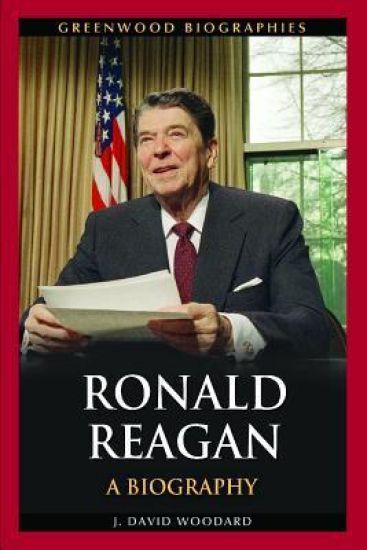
Ronald Reagan

Ronald Reagan

J. David Woodard Ph.D.

Greenwood Press
2012
sidottu
Ronald Reagan's story reads like a Hollywood script complete with a small-town boyhood, movie stardom, financial success, and unmatched political popularity. This book tells Reagan's true-life tale in an engaging and easily accessible manner.The trajectory of his life was remarkable: from Midwestern schoolboy, sports announcer, and Hollywood actor to governor of California and two-term President of the United States. There is no doubt that Ronald Reagan was one of the most complex and fascinating personalities of our time. Ronald Reagan: A Biography captures all the varied aspects of Reagan's life and career, portraying him as a politician, a husband, a father—and as a human being with a unique brand of charisma.Anchored by Reagan's memorable personality and appeal, this lively, concise biography explores the full range of the former president's humor, character, and faith in a book that is also a study of history and political science. Students and general readers alike will come away understanding why Ronald Reagan's hold on America was so potent, and why it becomes more so with time.
Ronald Reagan

Ronald Reagan

John Patrick Diggins

WW Norton Co
2008
nidottu
In this bold, revisionist biography, distinguished historian John Patrick Diggins shows that Ronald Reagan, in his distrust of big government, his pursuit of libertarian ideals, and his negotiations with Gorbachev, was a far more active and sophisticated president than we previously knew. Affirming the fortieth president to be an exemplar of the truest conservative values, Diggins “identifies Reagan as the ‘Emersonian President,’ who believed that power is best when it resides in people, not government” (Library Journal).