Kirjojen hintavertailu. Mukana 11 244 527 kirjaa ja 12 kauppaa.

Kirjahaku

Etsi kirjoja tekijän nimen, kirjan nimen tai ISBN:n perusteella.

1000 tulosta hakusanalla Ronald C. Hall

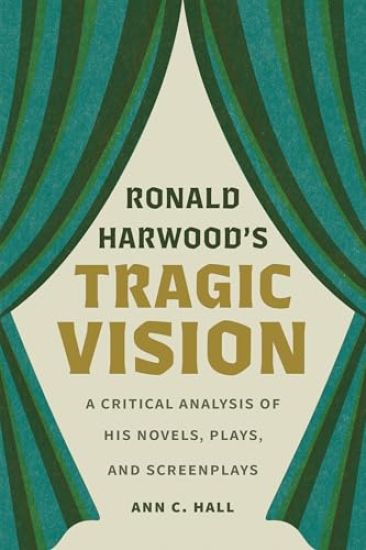
Ronald Harwood's Tragic Vision

Ronald Harwood's Tragic Vision

Ann C. Hall

UNIVERSITY OF IOWA PRESS
2024
nidottu
“Art has a lot to answer for.” So says Sarah Bernhardt in Ronald Harwood’s play After the Lions. Harwood’s own career can be summarized by that same quote as well.Ronald Harwood’s Tragic Vision offers the first critical analysis of prolific and award-winning British author Ronald Harwood (1934–2020). Though he received an Oscar for The Pianist, a knighthood, and numerous other awards and nominations, Harwood worked as a ghostwriter, script doctor, and veritable unknown for many years. As he became successful, many critics still misread his works and positioned him as a less-fashionable counterpart to his lifelong friend Harold Pinter. This study proposes a conceptual framework to approach his, and others’, work based on the genre of tragedy, offering a greater appreciation for and understanding of the Harwood canon.
The Political Economy of Financing Scottish Government

The Political Economy of Financing Scottish Government

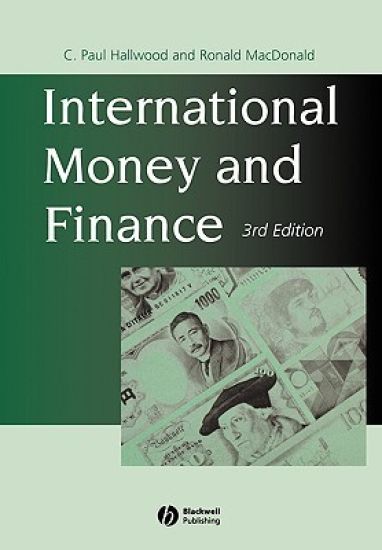
C. Paul Hallwood; Ronald MacDonald

Edward Elgar Publishing Ltd
2009
sidottu
Fiscal autonomy could raise economic growth and efficiency in Scotland, benefiting both Scotland and the rest of the United Kingdom. C. Paul Hallwood and Ronald MacDonald discuss how other reform proposals, which amount to cutting Scotland's block grant, would not be seen as legitimate by Scottish voters, and would be unlikely to reduce the burden on the Westminster budget. The authors demonstrate how public finances can be organized to minimize the price of tranquillity in multi-regional states. Advances proposed in the 'new fiscal federalism' literature are used to explain why fiscal autonomy would be a superior system compared to the present block grant system and fiscal federalism, whereby Scotland would be granted limited tax powers. Their extensive review of recent econometric studies finds that tax devolution in other countries has been largely successful.
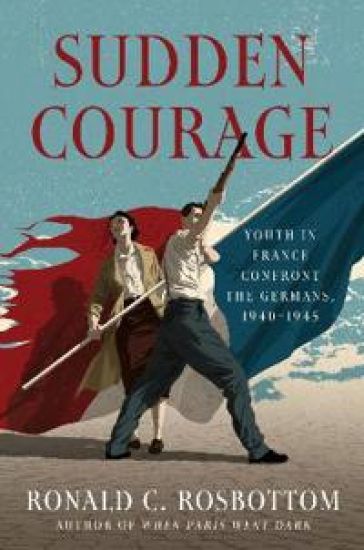
Sudden Courage

Sudden Courage

Ronald C Rosbottom

Custom House
2019
sidottu
The author of When Paris Went Dark returns to World War II to tell the remarkable story of the youngest members of the French Resistance and their war against the German occupiers and their collaboratorsOn June 14, 1940, German tanks entered a nearly deserted Paris. Eight days later, France accepted a humiliating defeat and foreign occupation. Many adapted to the situation—even allied themselves with their new overlords. Yet amid increasing Nazi ruthlessness, shortages and arbitrary curfews, a resistance arose—a shadow army of workers, intellectuals, shop owners, police officers, Jews, immigrants, and communists. Among this army were a remarkable number of adolescents and young men and women; it was estimated by one underground leader that “four-fifths of the members of the resistance were under the age of thirty.” Months earlier, they would have been spending their evenings studying for exams, sneaking out to dates, and finding their footing at first jobs. Now they learned the art of sabotage, the ways of disguise and deception, how to stealthily avoid patrols, steal secrets, and eliminate the enemy—sometimes violently.Nevertheless, in most histories of the French Resistance, the substantial contributions of the young have been minimized or, at worst, ignored. Sudden Courage remedies that amnesia. Amid heart-stopping accounts of subterfuge, narrow escapes, and deadly consequences, we meet blind Jacques Lusseyran, who created one of the most influential underground networks in Paris; Guy Môquet, whose execution at the hands of Germans became a cornerstone of rebellion; Maroussia Naïtchenko, a young communist uncannily adept at escaping Gestapo traps; André Kirschen, who at fifteen had to become an assassin; Anise Postel-Vinay, captured and sent to a concentration camp; and bands of other young rebels who chose to risk their lives for a better tomorrow. But Sudden Courage is more than an inspiring account of youthful daring and determination. It is also a riveting investigation of what it means to come of age under the threat of rising nativism and authoritarianism—one with a deep bearing on our own time.
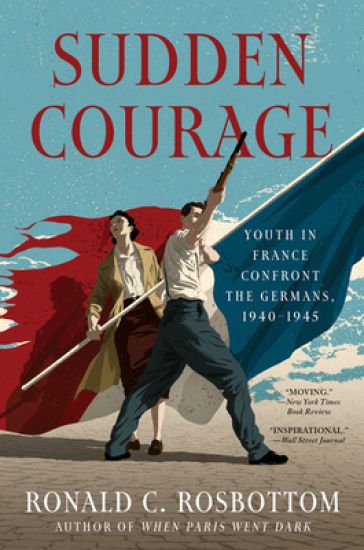
Sudden Courage

Sudden Courage

Ronald C Rosbottom

Custom House
2020
nidottu
The author of When Paris Went Dark returns to World War II to tell the remarkable story of the youngest members of the French Resistance and their war against the German occupiers and their collaboratorsOn June 14, 1940, German tanks entered a nearly deserted Paris. Eight days later, France accepted a humiliating defeat and foreign occupation. Many adapted to the situation—even allied themselves with their new overlords. Yet amid increasing Nazi ruthlessness, shortages and arbitrary curfews, a resistance arose—a shadow army of workers, intellectuals, shop owners, police officers, Jews, immigrants, and communists. Among this army were a remarkable number of adolescents and young men and women; it was estimated by one underground leader that “four-fifths of the members of the resistance were under the age of thirty.” Months earlier, they would have been spending their evenings studying for exams, sneaking out to dates, and finding their footing at first jobs. Now they learned the art of sabotage, the ways of disguise and deception, how to stealthily avoid patrols, steal secrets, and eliminate the enemy—sometimes violently.Nevertheless, in most histories of the French Resistance, the substantial contributions of the young have been minimized or, at worst, ignored. Sudden Courage remedies that amnesia. Amid heart-stopping accounts of subterfuge, narrow escapes, and deadly consequences, we meet blind Jacques Lusseyran, who created one of the most influential underground networks in Paris; Guy Môquet, whose execution at the hands of Germans became a cornerstone of rebellion; Maroussia Naïtchenko, a young communist uncannily adept at escaping Gestapo traps; André Kirschen, who at fifteen had to become an assassin; Anise Postel-Vinay, captured and sent to a concentration camp; and bands of other young rebels who chose to risk their lives for a better tomorrow. But Sudden Courage is more than an inspiring account of youthful daring and determination. It is also a riveting investigation of what it means to come of age under the threat of rising nativism and authoritarianism—one with a deep bearing on our own time.

Boo! Culture, Experience, and the Startle Reflex

Boo! Culture, Experience, and the Startle Reflex

Ronald C. Simons

Oxford University Press Inc
1996
sidottu
It is quite common to reflect on what startles you. In the most diverse social contexts and cultures, the inescapable physiology of the reflex both shapes the experience of startle and biases the social usage to which the reflex is put. This book describes the ways in which the reflex is experienced, culturally elaborated, and socially used, and offers explanations for both patterned commonalities found across cultures, and for the culture-typical differences which differing cultural systems engender.
Essential Logic

Essential Logic

Ronald C. Pine

Oxford University Press Inc
1995
nidottu
Essential Logic offers: BL Readability. A dialogue-like yet challenging style makes this introductory logic textbook engaging and interesting. BL Essentials. Deductive and inductive reasoning, formal and informal logic are placed within a philosophical perspective. BL Rigor. A careful sequence of learning steps communicates the essential skills of reasoning and directs students to write, support, and argue by connecting criticism to key concepts. BL Relevance. Explanations and examples take students' lives into consideration and are designed for students with diverse backgrounds and a wide range of experiences. BL A Theme. Traditional concepts are integrated with a discussion of modern technological issues and the world view of modern science. A unique chapter on Logic and Hope addresses questions students often ask and suggests a global perspective. BL Controversy. Students are encouraged to defend and critique positions--including those presented by the author. A unique final chapter on Fuzzy Logic is framed as a debate between Western and Eastern philosophy. BL Exercises. Students gain confidence in recognizing arguments, structuring them into premises and conclusions, identifying and critiquing informal fallacies, while learning to create, follow, and appreciate symbolic reasoning trails. BL Coverage. Chapters cover Argument Recognition and Language Analysis, Inductive Reasoning, Structuring Informal Fallacies, Symbolic Translation, Truth Tables, Formal Proofs of Validity, Quantification, and the basics of Fuzzy Set Theory and Propositional Logic.
Osteoporosis

Osteoporosis

Ronald C. Hamdy; E. Michael Lewiecki

Oxford University Press Inc
2013
nidottu
Osteoporosis is a common, underdiagnosed, and undertreated condition, complicated by fractures which lead to significant mortality and morbidity. The prevalence of osteoporotic fractures in postmenopausal women exceeds the combined prevalence of breast cancer, stroke, heart failure, and myocardial infarction. Often called "the silent disease," it does not reveal itself with obvious symptoms until a fracture occurs. In the first year after sustaining a hip fracture, mortality is increased by almost 24% in women and is even higher in men. About half of those who sustain an osteoporotic hip fracture become so disabled that they are no longer able to resume their daily activities, and as many as 20% require long-term institutional care. Effective treatments for osteoporosis are now available if it is diagnosed and addressed in a timely manner. Unfortunately, this disease remains shockingly underdiagnosed and undertreated, even in patients who sustain low-trauma hip fractures. The past two decades have witnessed radical changes in the diagnosis and management of osteoporosis. The densitometric diagnosis of osteoporosis is noninvasive, quick, and relatively simple. Tools are now available to predict the patient's probability of sustaining fractures, to identify patients who are particularly vulnerable, and to determine which patients will benefit from further investigation and treatment. Various associations have developed guidelines to help clinicians reach a diagnosis and initiate treatment. Due to better understanding of the basic pathophysiology of bone turnover, potent and relatively safe medications that significantly reduce the risk of fractures are now widely available. It is of paramount importance that this disease be diagnosed and treated as early as possible in order to take advantage of these developments and reduce the enormous socioeconomic and psychological impact of osteoporosis. Given the burden of osteoporotic fractures, all clinicians should have a working knowledge of e diagnosis, treatment, and prevention of the disease. Clinicians should feel comfortable diagnosing and initiating treatment for the majority of patients with osteoporosis. Only complicated cases or patients who are unresponsive to treatment should be referred to specialists. The aim of this book is to distill the available information on osteoporosis into an easily comprehensible format that will serve as a practical guide for busy clinicians. Numerous boxes, tables, diagrams, and figures present the information in an accessible manner. This book will be of particular use to general practitioners, endocrinologists, rheumatologists, gynecologists, internists, geriatricians, and orthopedic surgeons.
Water Resource Economics

Water Resource Economics

Ronald C. Griffin

MIT Press
2016
sidottu
Updated edition of a comprehensive introduction to the economics of water management, with self-contained treatment of all necessary economic concepts.Economics brings powerful insights to water management, but most water professionals receive limited training in it. The second edition of this text offers a comprehensive development of water resource economics that is accessible to engineers and natural scientists as well as to economists. The goal is to build a practical platform for understanding and performing economic analysis using both theoretical and empirical tools. Familiarity with microeconomics or natural resource economics is helpful, but all the economics needed is presented and developed progressively in the text.The book focuses on the scarcity of water quantity (rather than on water quality). The author presents the economic theory of resource allocation, recognizing the peculiarities imposed by water, and then goes on to treat a range of subjects including conservation, groundwater depletion, water law, policy analysis, cost-benefit analysis, water marketing, privatization, and demand and supply estimation. Added features of this updated edition include a new chapter on water scarcity risk (with climate change and necessary risk tools introduced progressively) and new risk-attentive material elsewhere in the text; sharper treatment of block rates and pricing doctrine; expanded attention to contemporary literature and issues; and new appendixes on input-output analysis, water footprinting and virtual water, and cost allocation. Each chapter ends with a summary and exercises.
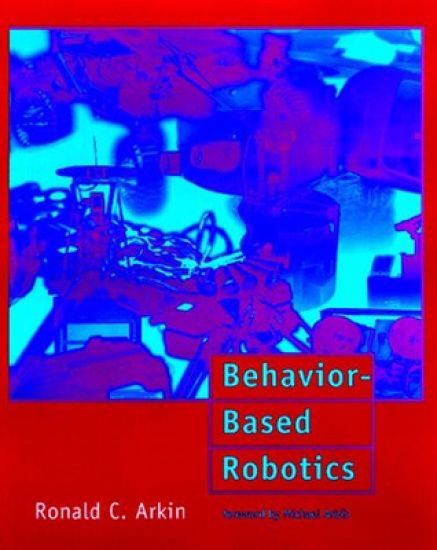
Behavior-Based Robotics

Behavior-Based Robotics

Ronald C. Arkin

Bradford Books
1998
pokkari
Foreword by Michael ArbibThis introduction to the principles, design, and practice of intelligent behavior-based autonomous robotic systems is the first true survey of this robotics field. The author presents the tools and techniques central to the development of this class of systems in a clear and thorough manner. Following a discussion of the relevant biological and psychological models of behavior, he covers the use of knowledge and learning in autonomous robots, behavior-based and hybrid robot architectures, modular perception, robot colonies, and future trends in robot intelligence.The text throughout refers to actual implemented robots and includes many pictures and descriptions of hardware, making it clear that these are not abstract simulations, but real machines capable of perception, cognition, and action.
German Buenos Aires, 1900–1933

German Buenos Aires, 1900–1933

Ronald C. Newton

University of Texas Press
1977
nidottu
This study of the German community of early twentieth-century Buenos Aires is a major contribution to the literature on Argentine history and on the New World immigrant experience. Beginning with the first wave of immigration in the late nineteenth century and continuing to the outbreak of World War II, Ronald C. Newton reconstructs the growth, development, and influence of a powerful foreign population in what was then the largest city in South America. In the three decades before World War I, Argentina became a major food-producing and exporting country. Through the port of Buenos Aires was funneled the bulk of the Pampas’ foodstuff and fiber in one direction and Europe’s capital, technology, and surplus labor in the other. The German speakers made up one of the smaller Western European communities within the Argentine metropolis, but their cultural and economic influence was far out of proportion to their numbers. Based in a large and occupationally diverse middle class, the German community was represented at all social levels. Newton analyzes the experience of this well-demarcated group during a period of rapid demographic growth and increasing pressure to assimilate. He constructs working hypotheses that may be applied and refined in further investigations. The book draws substantially on materials from within the Buenos Aires German community-newspapers, memoirs, the records of associations and welfare agencies-to reconstruct its intense daily life. The author highlights, for instance, the sharp economic reversals German-speaking residents suffered during World War I and shows how their fortunes declined further after continued Germanic immigration in the 1920s. Especially significant is his finding that the German community, which until 1914 had seemed impervious to the currents of Argentine nationalism, became susceptible to assimilation into Argentine society. In concluding chapters Newton demonstrates the way the German economic elite came to terms with the Nazis for opportunistic reasons; thus, the volume also serves as an introduction to the question of Nazism’s diffusion in Argentina.
Miracles and Pilgrims

Miracles and Pilgrims

Ronald C. Finucane

Palgrave Macmillan
1995
nidottu
The records of 'miracles' in the Middle Ages are among the most valuable and unexploited documents of medieval popular Christianity. Now available for the first time in paperback, Ronald Finucane's highly praised historical detective-work, based on over 3000 posthumous miracles (the wonders attributed to saints after their deaths), pieces together a fascinating account of the extent to which the world of pilgrims, miracles and faith-healing exerted its hold over the medieval imagination. Miracle-working at saints' shrines usually concerned curative healing. The book is rich in stories of crippled limbs crackling as they straightened during a miracle, 'possessed' people on the rampage, the screams and groans preceding the moment when blind people could see again. Above all, Ronald Finucane makes important new connections between the medical knowledge of the Middle Ages and the incidence of miracles; for the conditions of medieval life unquestionably reinforced the popular beliefs in wonder-working saints. The events at the curative shrines provide a rare glimpse of the behavior of medieval people at centres of popular religion and an indication of what sorts of people were involved, and why and how they made their journeys.
Culture, Gender, Race, and U.S. Labor History

Culture, Gender, Race, and U.S. Labor History

Ronald C Kent; Sara Markham; David R. Roediger; Herbert Shapiro

Praeger Publishers Inc
1993
sidottu
This contributor volume brings the best work of such established historians as Morris Schappes, Nathan Godfried, and Eric Foner together with the newer voices of Elizabeth Sharpe and Jennifer Bosch. Its eleven essays challenge the boundary between the older, institutional labor history and the more recent social histories of working people. By combining a focus on culture, women's history, and race relations that is characteristic of the best of the latest working class history with an emphasis on formal protests, leadership, and power, the volume suggests that a truly new labor history will reflect a variety of concerns and draw on diverse inspirations.In three chapters elucidating new features of labor biography and working-class politics, the volume's opening section considers George Edwin McNeill, the Socialist Party's efforts to free Eugene Debs, and the Socialist Party's left wing. Turning to women in labor history, the next section includes two chapters on Union W.A.G.E., an organization of mainly white, working class women, and Ellen Gates Starr, co-founder of Hull House. In a third section on African-American history, two scholars consider Black labor and African-American laborers in the Reconstruction era. The final section considers culture, education, and the working class. These chapters analyze the role of broadcasting and the Socialists' effort to establish an alternative radio station; labor education in the 1920s; the literary portrayal of sailors in Dana's Two Years Before the Mast, and the victims of the Rapp-Coudert Committee. By placing workers and their organizations convincingly within the context of their culture, this volume helps to demonstrate the ways the labor movement has remade this nation and how the nation has shaped the labor movement.