Kirjojen hintavertailu. Mukana 11 244 527 kirjaa ja 12 kauppaa.

Kirjahaku

Etsi kirjoja tekijän nimen, kirjan nimen tai ISBN:n perusteella.

1000 tulosta hakusanalla Ronald E Day

Ronald E. Day

Ronald E. Day

Ronald E Day

LITWIN BOOKS, LLC
2024
pokkari
This book contains two early papers written by Ronald E. Day while he was a student at the University of California, Berkeley, during 1992-1993, which mark the beginnings of his deconstruction of the modern conception of information as the latest form of Western metaphysics. The themes in these two pieces run throughout his later works. The papers demonstrate the intersection of formalist poetics and information science, and the appearance of phenomenology and critical theory in information studies. The problematics that they analyze, that of the temporality of information systems and the phenomenological appearance and constitution as knowledge of natural entities, along with the intersection of politics and information studies, remain relevant today.Ronald E. Day is Professor of Information and Library Science at University of Indiana Bloomington. His research is in the philosophy, history, politics, and culture of information, documentation, knowledge, and communication in the 20th and into the 21st centuries in the U.S. and Western Europe and in the discipline of Library and Information Science. The approach he takes is that of Critical Information Studies/ Critical Informatics. In this approach I use rhetorical, conceptual, and historical analyses. Along with many articles and book chapters, he has written Indexing it All: The Subject in the Age of Documentation, Information, and Data (MIT Press, 2014) and The Modern Invention of Information: Discourse, History, and Power (Southern Illinois University Press, 2001). He co-translated into English and co-edited the mid-twentieth century French documentalist Suzanne Briet's book, What is Documentation? With Claire McInerney he co-edited the book Rethinking Knowledge Management: From Knowledge Objects to Knowledge Processes.
The Modern Invention of Information

The Modern Invention of Information

Ronald E Day

Southern Illinois University Press
2001
sidottu
Ronald E. Day provides a historically informed critical analysis of the concept and politics of information in the twentieth century. Analyzing texts in Europe and the United States, his critical reading method goes beyond traditional historiographical readings of communication and information by engaging specific historical texts in terms of their attempts to construct and reshape history. After laying the groundwork and justifying his method of close reading for this study, Day examines the texts of two pre-World War II documentalists, Paul Otlet and Suzanne Briet. Through the work of Otlet and Briet, Day shows how documentation and information were associated with concepts of cultural progress. Day also discusses the social expansion of the conduit metaphor in the works of Warren Weaver and Norbert Wiener. He then shows how the work of contemporary French multimedia theorist Pierre Levy refracts the earlier philosophical writings of Gilles Deleuze and Felix Guattari through the prism of the capitalist understanding of the "virtual society." Turning back to the pre-World War II period, Day examines two critics of the information society: Martin Heidegger and Walter Benjamin. He explains Heidegger's philosophical critique of the information culture's model of language and truth as well as Benjamin's aesthetic and historical critique of mass information and communication. Day concludes by contemplating the relation of critical theory and information, particularly in regard to the information culture's transformation of history, historiography, and historicity into positive categories of assumed and represented knowledge.
Remembering the Days of Sorrow

Remembering the Days of Sorrow

Ronald E. Goodwin

State House Press
2014
nidottu
Buoyed by the Civil Rights movement of the 1950s and 1960s, historians began reevaluating previously held beliefs of American slavery. Under particular scrutiny was the belief in slavery’s paternalistic benevolence. Remembering the Days of Sorrow is not another attempt to revise this outdated perception justifying slavery. Others have already done that. As part of the New Deal’s national agenda of work relief programs, the Slave Narratives project provided employment while simultaneously preserving the memories of former slaves throughout the country. Remembering the Days of Sorrow allows the voices of Texas’s former slaves to resonate to a new generation as they remembered what it was like to suffer under the yoke of slavery as well as the yoke of old age and poverty in the Great Depression of the 1930s.
Documentarity

Documentarity

Ronald E. Day

MIT Press
2019
pokkari
A historical-conceptual account of the different genres, technologies, modes of inscription, and innate powers of expression by which something becomes evident.In this book, Ronald Day offers a historical-conceptual account of how something becomes evident. Crossing philosophical ontology with documentary ontology, Day investigates the different genres, technologies, modes of inscription, and innate powers of expression by which something comes into presence and makes itself evident. He calls this philosophy of evidence documentarity, and it is through this theoretical lens that he examines documentary evidence (and documentation) within the tradition of Western philosophy, largely understood as representational in its epistemology, ontology, aesthetics, and politics.Day discusses the expression of beings or entities as evidence of what exists through a range of categories and modes, from Plato's notion that ideas are universal types expressed in evidential particulars to the representation of powerful particulars in social media and machine learning algorithms. He considers, among other topics, the contrast between positivist and anthropological documentation traditions; the ontological and epistemological importance of the documentary index; the nineteenth-century French novel's documentary realism and the avant-garde's critique of representation; performative literary genres; expression as a form of self evidence; and the "post-documentation" technologies of social media and machine learning, described as a posteriori, real-time technologies of documentation. Ultimately, the representational means are not only information and knowledge technologies but technologies of judgment, judging entities both descriptively and prescriptively.
Ronald E. Goldstein's Esthetics in Dentistry
Ronald E. Goldstein’s Esthetics in Dentistry, Third Edition provides a thoroughly updated and expanded revision to the definitive reference to all aspects of esthetic and cosmetic dentistry, from principles and treatments to specific challenges and complications. Provides a current, comprehensive examination of all aspects of esthetic and cosmetic dentistryPresents 23 new chapters from international experts in the field and complete updates to existing chaptersOffers more than 3,700 high-quality photographs and illustrationsAdds clinical case studies and treatment algorithms for increased clinical relevanceEmphasizes clinical relevance, with all information thoroughly rooted in the scientific evidence
The Kikkoman Chronicles

The Kikkoman Chronicles

Ronald E Yates

McGraw-Hill Inc.,US
1998
sidottu
Combining ancient craftsmanship with modern technology and marketing innovations, Japan's Kikkoman Corporation has quietly become a $2 billion market leader. This book tells the fascinating story of how Kikkoman changed the course of international marketing, shrewdly adapting to 20th-century realities while never turning its back on centuries of tradition.
Recording Tips for Music Educators

Recording Tips for Music Educators

Ronald E. Kearns

Oxford University Press Inc
2017
nidottu
Recording Tips for Music Educators: A Practical Guide for Recording School Groups provides a go-to guide for music educators to plan and execute a successful recording project for school groups. For those teachers who are not comfortable with the recording process, this book functions as a catalyst to becoming comfortable with the planning, execution, and use of a school recording project. One of the most valuable tools for teaching is for students to be able to evaluate themselves. A good recording of the group helps students listen critically and make accurate evaluations of how well they have performed literature they have been taught over time. Covering planning, equipment needs, and equipment use, Recording Tips for Music Educators ensures that educators not trained in music production will be able to create praise-worthy recordings.
March to Armageddon

March to Armageddon

Ronald E. Powaski

Oxford University Press Inc
1989
nidottu
This timely and accessible book traces the evolution of the nuclear arms race from its origin in Roosevelt's decision to develop an atomic bomb to Reagan's decision to continue its expansion in the 1980s. As Powaski explains, the United States and the Soviet Union have a combined total of almost 50,000 nuclear weapons. Nuclear arms treaties and agreements are threatening to collapse, he argues, while the proliferation of nuclear materials and weapons throughout the world has given many countries the capability to produce nuclear weapons. Powaski shows how one President after another has promised to do his utmost to end the nuclear weapons competition, yet each one has actually increased the quantity of these weapons in the American arsenal, revealing a startling discrepancy between Presidential words and actions.
The Cold War

The Cold War

Ronald E. Powaski

Oxford University Press Inc
1997
sidottu
For half of the twentieth century, the Cold War gripped the world. International relations everywhere--and domestic policy in scores of nations--pivoted around this central point, the American-Soviet rivalry. Even today, much of the world's diplomacy grapples with chaos created by the Cold War's sudden disappearance. Here indeed is a subject that defies easy understanding. Now comes a definitive account, a startlingly fresh, clear eyed, comprehensive history of our century's longest struggle. In The Cold War, Ronald E. Powaski offers a new perspective on the great rivalry, even as he provides a coherent, concise narrative. He wastes no time in challenging the reader to think of the Cold War in new ways, arguing that the roots of the conflict are centuries old, going back to Czarist Russia and to the very infancy of the American nation. He shows that both Russia and America were expansionist nations with messianic complexes, and the people of both nations believed they possessed a unique mission in history. Except for a brief interval in 1917, Americans perceived the Russian government (whether Czarist or Bolshevik) as despotic; Russians saw the United States as conspiring to prevent it from reaching its place in the sun. U.S. military intervention in Russia's civil war, with the aim of overthrowing Lenin's upstart regime, entrenched Moscow's fears. Soviet American relations, difficult before World War II--when both nations were relatively weak militarily and isolated from world affairs--escalated dramatically after both nations emerged as the world's major military powers. Powaski paints a portrait of the spiraling tensions with stark clarity, as each new development added to the rivalry: the Marshall Plan, the communist coup in Czechoslovakia, the Berlin blockade, the formation of NATO, the first Soviet nuclear test. In this atmosphere, Truman found it easy to believe that the Communist victory in China and the Korean War were products of Soviet expansionism. He and his successors extended their own web of mutual defense treaties, covert actions, and military interventions across the globe--from the Caribbean to the Middle East and, finally to Southeast Asia, where containment famously foundered in the bog of Vietnam. Powaski skillfully highlights the domestic politics, diplomatic maneuvers, and even psychological factors as he untangles the knot that bound the two superpowers together in conflict. From the nuclear arms race, to the impact of U.S. recognition of China on detente, to Brezhnev's inflexible persistence in competing with America everywhere, he casts new light on familiar topics. Always judicious in his assessments, Powaski gives due credit to Reagan and especially Bush in facilitating the Soviet collapse, but also notes that internal economic failure, not outside pressure, proved decisive in the Communist failure. Perhaps most important, he offers a clear eyed assessment of the lasting distortions the struggle wrought upon American institutions, raising questions about whether anyone really won the Cold War. With clarity, fairness, and insight, he offers the definitive account of our century's longest international rivalry.
Return to Armageddon

Return to Armageddon

Ronald E. Powaski

Oxford University Press Inc
2000
sidottu
Return to Armageddon covers the extraordinary years spanning the Reagan, Bush and Clinton administrations, a period when the United States, through its victory in the Cold War, led the world away from the brink of nuclear annihilation, and then slowly became aware of the increased threat of nuclear confrontation in a world more splintered than ever before.
Return to Armageddon

Return to Armageddon

Ronald E. Powaski

Oxford University Press Inc
2003
nidottu
When the Cold War ended, the world let out a collective sigh of relief as the fear of nuclear confrontation between superpowers appeared to vanish overnight. As we approach the new millennium, however, the proliferation of nuclear weapons to ever more belligerent countries and factions raises alarming new concerns about the threat of nuclear war. In Return to Armageddon, Ronald Powaski assesses the dangers that beset us as we enter an increasingly unstable political world. With the START I and II treaties, completed by George Bush in 1991 and 1993 respectively, and the Comprehensive Test Ban Treaty (CTBT), signed by Bill Clinton in 1996, it seemed as if the nuclear clock had been successfully turned back to a safer hour. But Powaski shows that there is much less reason for optimism than we may like to think. Continued U.S.-Russian cooperation can no longer be assured. To make matters worse, Russia has not ratified the START II Treaty and the U.S. Senate has failed to approve the CTBT. Perhaps even more ominously, the effort to prevent the acquisition of nuclear weapons by nonweapon states is threatened by nuclear tests conducted by India and Pakistan. The nuclear club is growing and its most recent members are increasingly hostile. Indeed, it is becoming ever more difficult to keep track of the expertise and material needed to build nuclear weapons, which almost certainly will find their way into terrorist hands. Accessible, authoritative, and provocative, Return to Armageddon provides both a comprehensive account of the arms control process and a startling reappraisal of the nuclear threat that refuses to go away.
Humanism and the Death of God

Humanism and the Death of God

Ronald E. Osborn

Oxford University Press
2017
sidottu
Humanism and the Death of God is a critical exploration of secular humanism and its discontents. Through close readings of three exemplary nineteenth-century philosophical naturalists or materialists, who perhaps more than anyone set the stage for our contemporary quandaries when it comes to questions of human nature and moral obligation, Ronald E. Osborn argues that "the death of God" ultimately tends toward the death of liberal understandings of the human as well. Any fully persuasive defense of humanistic values--including the core humanistic concepts of inviolable dignity, rights, and equality attaching to each individual--requires an essentially religious vision of personhood. Osborn shows such a vision is found in an especially dramatic and historically consequential way in the scandalous particularity of the Christian narrative of God becoming a human. He does not attempt to provide logical proofs for the central claims of Christian humanism along the lines some philosophers might demand. Instead, this study demonstrates how philosophical naturalism or materialism, and secular humanisms and anti-humanisms, might be persuasively read from the perspective of a classically orthodox Christian faith.
Origen

Origen

Ronald E. Heine

Oxford University Press
2010
sidottu
This book is about the life and thought of Origen (c.185-254 A.D.), the most important Greek-speaking Christian theologian and Biblical scholar in antiquity. His writings included works on the text of the Bible, commentaries and sermons on most of the books of the Bible, a major defense of the Christian faith against a philosophical skeptic, and the first attempt at writing systematic theology ever made. Ronald E. Heine presents Origen's work in the context of the two urban centers where he lived-Alexandria in Egypt, and Caesarea in Palestine. Heine argues that these urban contexts and their communities of faith had a discernable impact on Origen's intellectual work. The study begins with a description of Roman Alexandria where Origen spent the first forty-six years of his life. The thought of the Alexandrian Christian community in which Origen was born and in whose service he produced his first written works is examined from the limited resources that have survived. The remains of Origen's writings produced in Alexandria provide information about his early theological views as well as the circumstances of his life in Alexandria. Heine discusses the issues of the canon and text of the Bible used by Origen and the Alexandrian Christian community and the special work called the Hexapla which he produced on the text of the Septuagint. Origen's later life in Caesarea was shaped by pastoral as well as teaching duties. These responsibilities put him in contact with the city's large Jewish population. Heine argues that the focus of Origen's thought shifts in this period from his earlier Alexandrian occupation with Gnostic issues to the complex questions concerning the relationship between church and synagogue and the ultimate fate of the Jews. In his final years it appears that Origen was rethinking some of the views he had espoused in his earlier work.
Origen

Origen

Ronald E. Heine

Oxford University Press
2010
nidottu
This book is about the life and thought of Origen (c.185-254 A.D.), the most important Greek-speaking Christian theologian and Biblical scholar in antiquity. His writings included works on the text of the Bible, commentaries and sermons on most of the books of the Bible, a major defense of the Christian faith against a philosophical skeptic, and the first attempt at writing systematic theology ever made. Ronald E. Heine presents Origen's work in the context of the two urban centers where he lived-Alexandria in Egypt, and Caesarea in Palestine. Heine argues that these urban contexts and their communities of faith had a discernable impact on Origen's intellectual work. The study begins with a description of Roman Alexandria where Origen spent the first forty-six years of his life. The thought of the Alexandrian Christian community in which Origen was born and in whose service he produced his first written works is examined from the limited resources that have survived. The remains of Origen's writings produced in Alexandria provide information about his early theological views as well as the circumstances of his life in Alexandria. Heine discusses the issues of the canon and text of the Bible used by Origen and the Alexandrian Christian community and the special work called the Hexapla which he produced on the text of the Septuagint. Origen's later life in Caesarea was shaped by pastoral as well as teaching duties. These responsibilities put him in contact with the city's large Jewish population. Heine argues that the focus of Origen's thought shifts in this period from his earlier Alexandrian occupation with Gnostic issues to the complex questions concerning the relationship between church and synagogue and the ultimate fate of the Jews. In his final years it appears that Origen was rethinking some of the views he had espoused in his earlier work.
The Commentaries of Origen and Jerome on St. Paul's Epistle to the Ephesians
This important study provides the first English translation of both the surviving fragments of Origen's Commentary on Ephesians and of the complete text of Jerome's Commentary on Ephesians. The two translations are placed parallel to one another where they treat the same texts in Ephesians thus showing Jerome's extensive dependence on Origen's commentary. By using collateral texts from other works of Origen, Jerome, and Rufinus, the author is able to show Jerome's dependence on Origen in numerous passages in his commentary where the Greek text of Origen's commentary is lost. The translation is accompanied by Heine's illuminating commentary and a substantial introduction sets the works in their historical context. The book makes a significant contribution not only to scholarship on Origen and Jerome, but also to the wider question of the interpretation of scripture in the early Christian centuries.
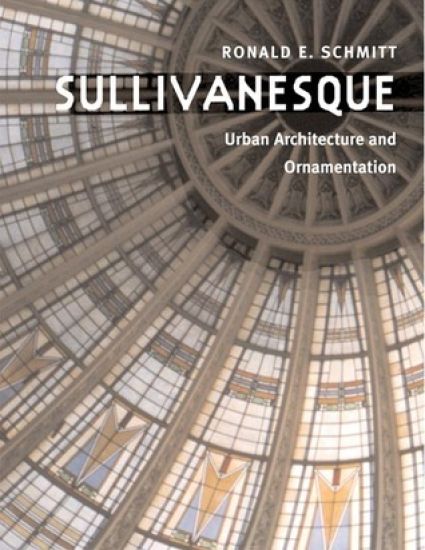
Sullivanesque

Sullivanesque

Ronald E. Schmitt

University of Illinois Press
2007
nidottu
Sullivanesque offers a visual and historical tour of a unique but often overlooked facet of modern American architecture derived from Louis Sullivan.Highly regarded in architecture for inspiring the Chicago School and the Prairie School, Sullivan was an unwilling instigator of the method of facade composition--later influenced by Frank Lloyd Wright, William Gray Purcell, and George G. Elmslie--that came to be known as Sullivanesque. Decorative enhancements with botanical and animal themes, Sullivan's distinctive ornamentation mitigated the hard geometries of the large buildings he designed, coinciding with his "form follows function" aesthetic.Sullivan's designs offered solutions to problems presented by new types and scales of buildings. Widely popular, they were also widely copied, and the style proliferated due to a number of Chicago-based interests, including the Radford Architectural Company and several decorative plaster and terra-cotta companies. Stock replicas of Sullivan's designs manufactured by the Midland Terra Cotta Company and others gave distinction and focus to utilitarian buildings in Chicago's commercial strips and other confined areas, such as the downtown districts of smaller towns. Mass-produced Sullivanesque terra cotta endured as a result of its combined economic and aesthetic appeal, blending the sophistication of high architectural art with the pragmatic functionality of building design.Masterfully framed by the author's photographs of Sullivanesque buildings in Chicago and throughout the Midwest, Ronald E. Schmitt's in-depth exploration of the Sullivanesque tells the story of its evolution from Sullivan's intellectual and aesthetic foundations to its place as a form of commercial vernacular. The book also includes an inventory of Sullivanesque buildings.Honorable Mention recipient of the 2002 PSP Awards for Excellence in Professional/Scholarly Publishing
An Econometric Approach to a Marketing Decision Model

An Econometric Approach to a Marketing Decision Model

Ronald E. Frank; William F. Massy

MIT Press
1971
pokkari
This book describes the creation of a simulation model that is designed to serve as an artificial test market. The market is sufficiently realistic to permit it to be used for experimenting with a wide range of alternative marketing programs for a manufacturer of a branded, frequently purchased food product. The simulator includes characterizations by brand and size of: (1) the rates of retailer promotions (such as retail price discounts, newspaper advertising, displays, signs and banners, special offers, and premiums) as a function of the promotional allowances offered by competing manufacturers; (2) the response of costumers in terms of sales volume to the aforementioned retailer's promotional activities; and (3) the transformation of these volume movement figures into estimates of manufacturer profitability. The simulation model is designed to take advantage of modern time-sharing computation facilities and permit virtually instantaneous assessment of alternatives, and to encourage the combining of executive judgments on current market conditions and probable retailer responses with historical data. In order to develop the component of the stimulator which relates retailer promotional activities to consumer volume movement, econometric methods are used to analyze a remarkably complete set of data in such a way that the reader may follow the author's thought processes as they work through complex quantitative techniques. The econometric model that they develop is a multiple-equation model. The use of this type of model is relatively new in marketing, although econometricians have been familiar with these techniques for a number of years. The present study develops and discusses the special statistical methods required to estimate the parameters of such a model and postulates a specific model linking the demand for a given brand and size to the promotional activities of all the brand-size combinations present in the marketplace for the product in question.
Sartre on Violence

Sartre on Violence

Ronald E. Santoni

Pennsylvania State University Press
2003
pokkari
From "Materialism and Revolution" (1946) through Hope Now (1980), Jean-Paul Sartre was deeply engaged with questions about the meaning and justifiability of violence. In the first comprehensive treatment of Sartre’s views on the subject, Ronald Santoni begins by tracing the full trajectory of Sartre’s evolving thought on violence and shows how the "curious ambiguity" of freedom affirming itself against freedom in his earliest writings about violence developed into his "curiously ambivalent" position through his later writings.