Kirjojen hintavertailu. Mukana 11 244 527 kirjaa ja 12 kauppaa.

Kirjahaku

Etsi kirjoja tekijän nimen, kirjan nimen tai ISBN:n perusteella.

1000 tulosta hakusanalla Ronald K. Nelson

A Photo Pass to the Amazing 1960s: A photo journey from Road America to the Indy 500, Watkins Glen F1, Meadowdale and more.
Photographs from the race tracks and the events they promoted and held. Follow the progress of drivers and events that made the 60s an amazing period in motorsport history. Classic images never before published from the Indy 500, Watkins Glen F1, Road America, Meadowdale, Milwaukee and other tracks in the midwest. The cars and drivers who captured the fans loyal following. A family album of iconic photos that you will enjoy in your library.
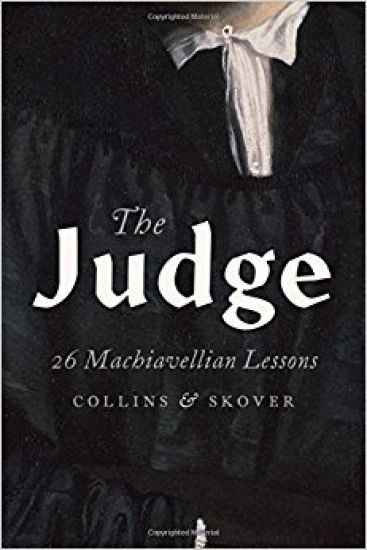
The Judge

The Judge

Ronald K. L. Collins; David M. Skover

Oxford University Press Inc
2017
sidottu
There is no book of political strategy more canonical than Niccolò Machiavelli's The Prince, but few ethicists would advise policymakers to treat it as a bible. The lofty ideals of the law, especially, seem distant from the values that the word "Machiavellian" connotes, and judges are supposed to work above the realm of politics. In The Judge, however, Ronald Collins and David Skover argue that Machiavelli can indeed speak to judges, and model their book after The Prince. As it turns out, the number of people who think that judges in the U.S. are apolitical has been shrinking for decades. Both liberals and conservatives routinely criticize their ideological opponents on the bench for acting politically. Some authorities even posit the impossibility of apolitical judges, and indeed, in many states, judicial elections are partisan. Others advocate appointing judges who are committed to being dispassionate referees adhering to the letter of the law. However, most legal experts, regardless of their leanings, seem to agree that despite widespread popular support for the ideal of the apolitical judge, this ideal is mere fantasy. This debate about judges and politics has been a perennial in American history, but it intensified in the 1980s, when the Reagan administration sought to place originalists in the Supreme Court. It has not let up since. Ronald Collins and David Skover argue that the debate has become both stale and circular, and instead tackle the issue in a boldly imaginative way. In The Judge, they ask us to assume that judges are political, and that they need advice on how to be effective political actors. Their twenty-six chapters track the structure of The Prince, and each provides pointers to judges on how to cleverly and subtly advance their political goals. In this Machiavellian vision, law is inseparable from realpolitik. However, the authors' point isn't to advocate for this coldly realistic vision of judging. There ultimate goal is identify both legal realists and originalists as what they are: explicitly political (though on opposite ends of the ideological spectrum). Taking its cues from Machiavelli, The Judge describes what judges actually do, not what they ought to do.
Discrete-time Dynamic Models

Discrete-time Dynamic Models

Ronald K. Pearson

Oxford University Press Inc
1999
sidottu
Fuelled by advances in computer technology, model-based approaches to the control of industrial processes are now widespread. While there is an enormous literature on modelling, the difficult first step of selecting an appropriate model structure has received almost no attention. This book fills the gap, providing practical insight into model selection for chemical processes and emphasizing structures suitable for control system design.
Talk that Counts

Talk that Counts

Ronald K. S. Macaulay

Oxford University Press Inc
2005
sidottu
In Talk That Counts, distinguished sociolinguist Rinals Macaulay provides a new way of examining sociolinguistic variation. Linguists traditionally take a limited sample of linguistic data from a given population and look at phonological and morphological variables. Macaulay proposes a much different and highly quantitative approach to the study of variation, which correlates features of discourse with three social categories: social class, gender, and age. He uses as data a sample from 33 speakers of English in Glasgow, and his conclusions indicate that age accounts for the greatest number of differences, followed by gender, with social class accounting for the most variation within a group. Macaulay's work offers a new methodological paradigm to an audience of sociolinguists and others like sociologists concerned with discourse analysis.
Talk that Counts

Talk that Counts

Ronald K. S. Macaulay

Oxford University Press Inc
2005
nidottu
In Talk That Counts, distinguished sociolinguist Rinals Macaulay provides a new way of examining sociolinguistic variation. Linguists traditionally take a limited sample of linguistic data from a given population and look at phonological and morphological variables. Macaulay proposes a much different and highly quantitative approach to the study of variation, which correlates features of discourse with three social categories: social class, gender, and age. He uses as data a sample from 33 speakers of English in Glasgow, and his conclusions indicate that age accounts for the greatest number of differences, followed by gender, with social class accounting for the most variation within a group. Macaulay's work offers a new methodological paradigm to an audience of sociolinguists and others like sociologists concerned with discourse analysis.
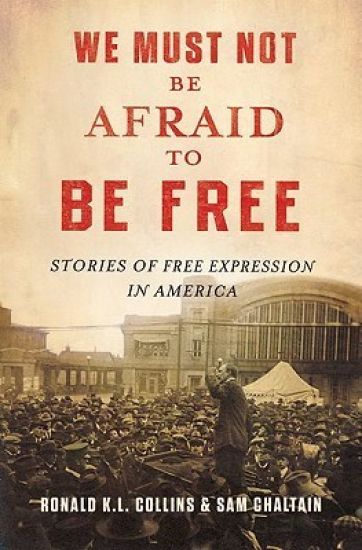
We Must Not Be Afraid to Be Free

We Must Not Be Afraid to Be Free

Ronald K.L. Collins; Sam Chaltain

Oxford University Press Inc
2014
sidottu
In a stinging dissent to a 1961 Supreme Court decision that allowed the Illinois state bar to deny admission to prospective lawyers if they refused to answer political questions, Justice Hugo Black closed with the memorable line, "We must not be afraid to be free." Black saw the First Amendment as the foundation of American freedom--the guarantor of all other Constitutional rights. Yet since free speech is by nature unruly, people fear it. The impulse to curb or limit it has been a constant danger throughout American history. In We Must Not Be Afraid to Be Free, Ron Collins and Sam Chaltain, two noted free speech scholars and activists, provide authoritative and vivid portraits of free speech in modern America. The authors offer a series of engaging accounts of landmark First Amendment cases, including bitterly contested cases concerning loyalty oaths, hate speech, flag burning, student anti-war protests, and McCarthy-era prosecutions. The book also describes the colorful people involved in each case--the judges, attorneys, and defendants--and the issues at stake. Tracing the development of free speech rights from a more restrictive era--the early twentieth century--through the Warren Court revolution of the 1960s and beyond, Collins and Chaltain not only cover the history of a cherished ideal, but also explain in accessible language how the law surrounding this ideal has changed over time. Essential for anyone interested in this most fundamental of our rights, We Must Not Be Afraid to Be Free provides a definitive and lively account of our First Amendment and the price courageous Americans have paid to secure them.
The Reformation of Suffering

The Reformation of Suffering

Ronald K. Rittgers

Oxford University Press Inc
2012
sidottu
Protestant reformers sought to effect a radical change in the way their contemporaries understood and coped with the suffering of body and soul that were so prominent in the early modern period. The reformers did so because they believed that many traditional approaches to suffering were not sufficiently Christian--that is, they thought these approaches were unbiblical. The Reformation of Suffering examines the Protestant reformation of suffering and shows how it was a central part of the larger Protestant effort to reform church and society. Despite its importance, no other text has directly examined this reformation of suffering. This book investigates the history of Christian reflection on suffering and consolation in the Latin West and places the Protestant reformation campaign within this larger context, paying close attention to important continuities and discontinuities between Catholic and Protestant traditions. Focusing especially on Wittenberg Christianity, The Reformation of Suffering examines the genesis of Protestant doctrines of suffering among the leading reformers and then traces the transmission of these doctrines from the reformers to the common clergy. It also examines the reception of these ideas by lay people. The text underscores the importance of consolation in early modern Protestantism and seeks to challenge a scholarly trend that has emphasized the themes of discipline and control in Wittenberg Christianity. It shows how Protestant clergymen and burghers could be remarkably creative and resourceful as they sought to convey solace to one another in the midst of suffering and misfortune. The Protestant reformation of suffering had a profound impact on church and society in the early modern period and contributed significantly to the shape of the modern world.
Handbook of Research on Urban Politics and Policy in the United States
A comprehensive reference work which provides a way to access research on urban politics and policy in the United States. Experts in the field guide readers through major controversies, while evaluating and assessing the subfields of urban politics and policy. Each chapter follows the same basic organization with topics such as methodological and theoretical issues, current states of the field, and directions for future research.For students, this work provides a starting place to guide them to the most important works in a particular subfield and a context to place their work in a larger body of knowledge. For scholars, it serves as a reference work for immediately familiarity with subfields of the discipline, including classic studies and major research questions. For urban policymakers or analysts, the handbook provides a wealth of information and allows quick identification of existing academic knowledge and research relevant to the problem at hand.
The Death Of Discourse

The Death Of Discourse

Ronald K L Collins; David M Skover

Routledge
2019
sidottu
In this innovative book, the authors persuasively argue that the First Amendment to the Constitution has risen in the late twentieth century, like an ill guided individual with knife in hand, to murder a longstanding tradition of fine and meaningful discourse in the United States. We are bombarded with the cacophony of advertisement, the luridity of pornography, and the pointlessness of prime timepoor substitutes for intelligent consideration of ideas. }In this innovative book, the authors persuasively argue that the First Amendment to the Constitution has risen in the late twentieth century, like an ill-guided individual with knife in hand, to murder a long-standing tradition of fine and meaningful discourse in the United States. What has died is the essential kind of political discourse which promotes democracy; informs citizens; enlivens debate; and carries reason, method, and purpose. Instead, we are bombarded with the cacophony of advertisement, the luridity of pornography, and the pointlessness of prime time.With satirical spirit and wityet to a very serious purpose the narrative of this lively study calls upon many of the very tricks it criticizes. The text is augmented by amusing tales, poetry, tv zaps, eyebites, and boxes of aphorisms resonating between high and low culture, between Plato and Geraldo and Madonna and Mahler to make its points, the discussion reveals how discourse in contemporary America has lost its integrity and its soul.
The Death Of Discourse

The Death Of Discourse

Ronald K L Collins; David M Skover

Routledge
2021
nidottu
In this innovative book, the authors persuasively argue that the First Amendment to the Constitution has risen in the late twentieth century, like an ill guided individual with knife in hand, to murder a longstanding tradition of fine and meaningful discourse in the United States. We are bombarded with the cacophony of advertisement, the luridity of pornography, and the pointlessness of prime timepoor substitutes for intelligent consideration of ideas. }In this innovative book, the authors persuasively argue that the First Amendment to the Constitution has risen in the late twentieth century, like an ill-guided individual with knife in hand, to murder a long-standing tradition of fine and meaningful discourse in the United States. What has died is the essential kind of political discourse which promotes democracy; informs citizens; enlivens debate; and carries reason, method, and purpose. Instead, we are bombarded with the cacophony of advertisement, the luridity of pornography, and the pointlessness of prime time.With satirical spirit and wityet to a very serious purpose the narrative of this lively study calls upon many of the very tricks it criticizes. The text is augmented by amusing tales, poetry, tv zaps, eyebites, and boxes of aphorisms resonating between high and low culture, between Plato and Geraldo and Madonna and Mahler to make its points, the discussion reveals how discourse in contemporary America has lost its integrity and its soul.
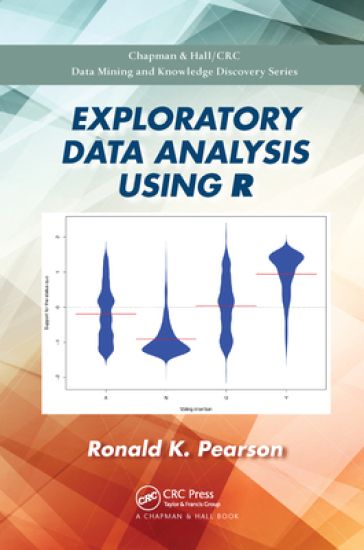
Exploratory Data Analysis Using R

Exploratory Data Analysis Using R

Ronald K. Pearson

CRC Press
2020
nidottu
Exploratory Data Analysis Using R provides a classroom-tested introduction to exploratory data analysis (EDA) and introduces the range of "interesting" – good, bad, and ugly – features that can be found in data, and why it is important to find them. It also introduces the mechanics of using R to explore and explain data.The book begins with a detailed overview of data, exploratory analysis, and R, as well as graphics in R. It then explores working with external data, linear regression models, and crafting data stories. The second part of the book focuses on developing R programs, including good programming practices and examples, working with text data, and general predictive models. The book ends with a chapter on "keeping it all together" that includes managing the R installation, managing files, documenting, and an introduction to reproducible computing.The book is designed for both advanced undergraduate, entry-level graduate students, and working professionals with little to no prior exposure to data analysis, modeling, statistics, or programming. it keeps the treatment relatively non-mathematical, even though data analysis is an inherently mathematical subject. Exercises are included at the end of most chapters, and an instructor's solution manual is available.About the Author:Ronald K. Pearson holds the position of Senior Data Scientist with GeoVera, a property insurance company in Fairfield, California, and he has previously held similar positions in a variety of application areas, including software development, drug safety data analysis, and the analysis of industrial process data. He holds a PhD in Electrical Engineering and Computer Science from the Massachusetts Institute of Technology and has published conference and journal papers on topics ranging from nonlinear dynamic model structure selection to the problems of disguised missing data in predictive modeling. Dr. Pearson has authored or co-authored books including Exploring Data in Engineering, the Sciences, and Medicine (Oxford University Press, 2011) and Nonlinear Digital Filtering with Python. He is also the developer of the DataCamp course on base R graphics and is an author of the datarobot and GoodmanKruskal R packages available from CRAN (the Comprehensive R Archive Network).
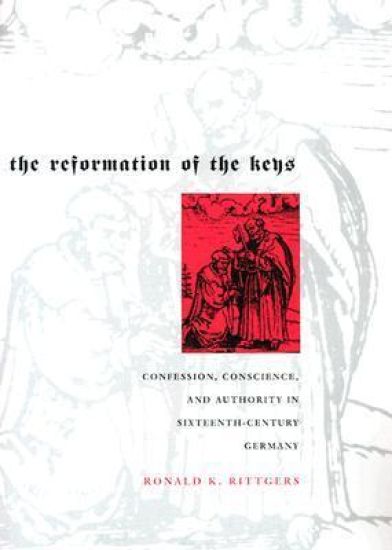
The Reformation of the Keys

The Reformation of the Keys

Ronald K. Rittgers

Harvard University Press
2004
sidottu
The Catholic Church’s claims to spiritual and temporal authority rest on Jesus’ promise in the gospels to give Peter the keys to the kingdom of heaven. In the sixteenth century, leaders of the German Reformation sought a fundamental transformation of this “power of the keys” as part of their efforts to rid Church and society of alleged clerical abuses. Central to this transformation was a thoroughgoing reform of private confession.Unlike other Protestants, Lutherans chose not to abolish private confession but to change it to suit their theological convictions and social needs. In a fascinating examination of this new religious practice, Ronald Rittgers traces the development of Lutheran private confession, demonstrating how it consistently balanced competing concerns for spiritual freedom and moral discipline. The reformation of private confession was part of a much larger reformation of the power of the keys that had profound implications for the use of religious authority in sixteenth-century Germany.As the first full-length study of the role of Lutheran private confession in the German Reformation, this book is a welcome contribution to early modern European and religious history.
Whispers: the Voices of Paranoia

Whispers: the Voices of Paranoia

Ronald K. Siegal

Pocket Books
1996
pokkari
Combining the insights of a gifted research scientist with vivid tales that are usually the realm of the novelist, Dr. Ronald Siegel lets his readers experience the suspicion, terror, and rage that possess the mind of the paranoid. This is the first book to investigate the actual experience of paranoia and to demonstrate that under the right conditions - drugs or deprivation, for example - anyone can be driven into that state. And indeed, eight million Americans already have been. The paranoid inhabits a different realm of being, one that tilts the world ever so slightly. The senses detect these differences and sound mental alarms. Delusions and hallucinations feed on each other, flourishing with amazing speed. The paranoid becomes locked in a new mode of thinking - viewing life as from a cell. In a dozen case studies, Dr. Siegel follows his patients into the shadow lands where paranoia flourishes - drug addiction, prison, organized crime, and terrorism. He introduces us to mild cases where there is only a vague sense that something is out there stalking, to those with apocalyptic visions so intense that they shake the foundations of an entire community. We meet the old woman who hears her teeth whispering, the beautiful ballet dancer who falls in love with a shadow, and the cocaine addict for whom the invasion of imaginary bugs was strong enough to kill. This intrepid journey through the mind's dark corridors ends with a reflective coda exploring the suicide of Ernest Hemingway, and there is no better guide than Dr. Ronald Siegel.
Turnaround Strategies for the Small Church

Turnaround Strategies for the Small Church

Ronald K Crandall; Herb Miller

Abingdon Press
1995
pokkari
This book shows what kind of leadership, evangelism, and outreach will bring about a desirable turnaround. It provides specific actions that will develop the skills of those who minister in the life of a small church, thereby enhancing their daily practice of ministry. It suggests twelve key factors for turning around a congregation, lists obstacles to turn-arounds, and includes an appendix of turn-around churches.
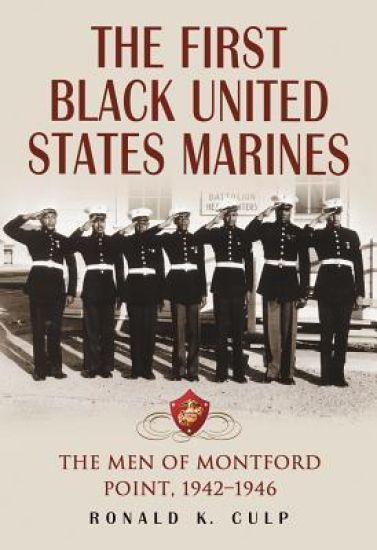
The First Black United States Marines

The First Black United States Marines

Ronald K. Culp

McFarland Co Inc
2013
pokkari
On June 1, 1942, the United States Marine Corps broke a 144-year tradition and enlisted the first black Marines. Three months later, more than 400 black volunteers began their training as members of the 51st Composite Defense Battalion at Montford Point, a Marine camp of over five square miles located within Camp Lejeune in North Carolina. Informed by personal interviews, this volume takes an in-depth look at the men who braved the color barrier and became the first black Marines. Beginning with a look at the pre-World War II Marine Corps, it examines the creed and contemporary image of the USMC. The main focus is the experiences of the new black Marines. Additional topics include internal Marine perspectives on the admittance of blacks, initially enforced quotas, and the difficulties of segregation. Appendices provide information regarding monthly inductions into the Marine Corps from 1941 to 1945; rank and pay structure; depot and ammunition companies from 1943 to 1946; and Pacific Ocean area units of fire for ground weapons.
John Deere Snowmobiles

John Deere Snowmobiles

Ronald K. Leonard; Richard Teal

McFarland Co Inc
2014
pokkari
Long respected as a manufacturer of sturdy agricultural machinery, the John Deere Company began in the 1960s to build a line of consumer products in a dedicated factory in Horicon, Wisconsin. Starting with a lawn and garden tractor in 1963, Deere soon entered the fast-growing snowmobile market, introducing two models in 1971. The next 13 years would see a succession of models as Deere vied against tough competitors in a weather-dependent market. This detailed history, written by two key participants in the snowmobile program, describes the development of John Deere snowmobiles from start to finish: the design and engineering decisions that shaped each important model; reception of the snowmobiles by consumers; the factory race teams; the introduction of front-engine and water-cooled models; the process of selecting engines and negotiating with suppliers, including when problems developed; and the snowmobiles' impact on product engineering. The text provides an inside view of Deere's Consumer Products Division at a time of rapid growth, and of the people and processes that made it all happen.