

Kirjahaku
Etsi kirjoja tekijän nimen, kirjan nimen tai ISBN:n perusteella.
1000 tulosta hakusanalla Ronald L Davis

The Revitalization of the African-American Baptist Church, Association and Convention
Ronald L Davis
Xulon Press
2014
pokkari

A clear picture of how the big studio system operated from the late 1930s to the mid-1950s to create films quickly, inexpensively, and with limited resources is offered in this collection of twelve interviews with house directors from the five big movie studios during the era. Simultaneous.

John Ford remains the most honoured director in Hollywood history, having won six Academy Awards and four New York Film Critics Awards. Drawing upon extensive written and oral history, Ronald L. David explores Ford's career from his silent classic, "The Iron Horse", through the transition to sound, and then into the pioneer years of location filming, the golden years of Hollywood and the movement toward television. During his career, Ford made such classics as "Stagecoach", "The Grapes of Wrath", "How Green Was My Valley", and "The Searchers" - 136 pictures in all, 54 of them Westerns. The complexity of his personality comes alive here through the eyes of his colleagues, friends, relatives, film critics and the actors he worked with, including John Wayne, Henry Fonda, Maureen O'Hara and Katharine Hepburn.

Almost two decades after his death, John Wayne is still America's favorite movie star. More than an actor, Wayne is a cultural icon whose stature seems to grow with the passage of time. In this illuminating biography, Ronald L. Davis focuses on Wayne's human side, portraying a complex personality defined by frailty and insecurity as well as by courage and strength.Davis traces Wayne's story from its beginnings in Winterset, Iowa, to his death in 1979. This is not a story of instant fame: only after a decade in budget westerns did Wayne receive serious consideration, for his performance in John Ford's 1939 film Stagecoach. From that point on, his skills and popularity grew as he appeared in such classics as Fort Apache, Red River, She Wore a Yellow Ribbon, The Quiet Man, The Searches, The Man who Shot Liberty Valance, and True Grit. A man's ideal more than a woman's, Wayne earned his popularity without becoming either a great actor or a sex symbol. In all his films, whatever the character, John Wayne portrayed John Wayne, a persona he created for himself: the tough, gritty loner whose mission was to uphold the frontier's--and the nation's--traditional values.To depict the different facets of Wayne's life and career, Davis draws on a range of primary and secondary sources, most notably exclusive interviews with the people who knew Wayne well, including the actor's costar Maureen O'Hara and his widow, Pilar Wayne. The result is a well-balanced, highly engaging portrait of a man whose private identity was eventually overshadowed by his screen persona--until he came to represent America itself.

At fifteen, Linda Darnell left her Texas home and normal adolescence to live the Hollywood dream promoted by fan magazine and studio publicity offices. She appeared in dozens of films and won international acclaim for Blood and Sand (playing opposite Tyrone Power), Forever Amber, A Letter to Three Wives, and the original version of Unfaithfully Yours.Driven by a stage mother to become rich and Famous, but unable to cope with the career she had longed for as a child, Darnell soon was caught in a downward spiral of drinking, failed marriages, and exploitive relationships. By her early twenties she was an alcoholic, hardened by a life in which beautiful women were chattel, and by the time of her death at age forty- one, she was struggling for recognition in the industry that once had called her its ""glory girl.""Hollywood Beauty begins in the Southwest during the Depression, when Pearl Darnell became obsessed by the glitter of the movie world that would dominate her children's lives. We follow Linda's path from her Texas childhood and first public success-during the state centennial, in 1936-through her contract work with Twentieth Century-Fox in the heyday of the big-studio system. Film historian Ronald L. Davis documents Darnell's discovery and marriages, the adoption of her daughter, the marking of many well-known films, and her emotional difficulties, leading up to her tragic death by fire.This is the story of a native teenager from a dysfunctional middle-class family thrust into the golden age of Hollywood. Hollywood Beauty examines America's public worship of movie stars and superficial success-its motives and consequences-and the addiction to escapism that this worship represents.

The first book-length biography of a theater iconSouth Pacific. The Sound of Music. Peter Pan. As the star of these classic Broadway musicals, Mary Martin captivated theater audiences with her impish persona and magnificent voice. Now Ronald L. Davis fills a major gap in theater history, moving beyond Martin's own 1976 memoir to provide a complete picture of her life and career.Lively and engaging, Davis's biography is the first book-length portrait of the theater icon, spanning her lifetime to reveal facts about her childhood, marriages, and friendships - as well as artistic collaborations that included the likes of Rodgers and Hammerstein, Cole Porter, and Elia Kazan.Born in Weatherford, Texas, and mother to the future actor Larry Hagman, Martin went to California after the failure of her first marriage. There, she auditioned for every studio without success. ""Audition Mary"" finally had her big break when she won a talent contest, leading to her breakthrough 1938 performance in Leave It to Me - in which she wowed audiences singing ""My Heart Belongs to Daddy."" Davis traces Martin's numerous appearances on Broadway, in touring productions, and on television, showing how - through hard work and persistent optimism - she built a career that lasted nearly fifty years and earned her the adoration and respect of fans and colleagues alike.Because Martin's life was entwined with many luminaries of the stage, this biography offers rich insights into theater history, including accounts of how various productions were developed. No other book tells her story in such detail - it is must reading for fans and an essential resource for theater aficionados everywhere.
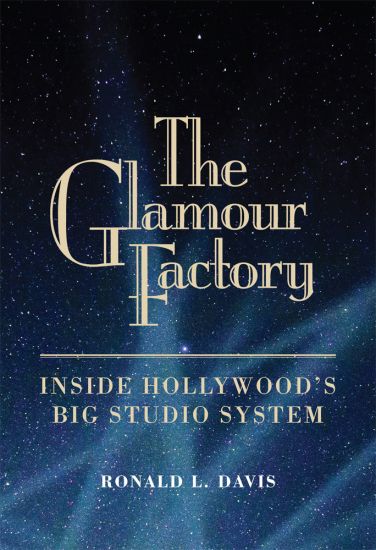
In its heyday Hollywood's big studio system mirrored the corporate ideology that catapulted the United States into economic prominence. By the mid-1920s power was consolidated into four major studios: Metro-Goldyn-Mayer, Paramount, Fox, and Warner Bros., all appropriating the assembly line approach of the Detroit automobile manufacturers. The Glamour Factory is the story of the motion picture business, told with the help of hundreds of insiders - from stars, directors, and producers to stuntmen, hairstylists, makeup artists, and publicists - who watched and contributed to the industry while magic was being made. Much of this story is drawn from the Southern Methodist University Oral History Collection on the Performing Arts, which the author founded.

Stage actor turned Hollywood star, William S. Hart (1864 - 1946) was for movie fans a cherished symbol of the romantic Old West. His silent westerns offered excitement, lessons in righteous behavior, and a nostalgic vision of the American frontier. This intriguing biography explores the personal and professional life of Hollywood's prototypical cowboy hero.Born in Newburgh, New York, Hart grew up in a Victorian atmosphere that gave rise to the rigid morality prevalent in many of his films. From 1914 to 1924, he appeared in or produced more than sixty movies, but it was not until he abandoned Shakespearean characters for parts in The Squaw Man and The Virginian that Hart truly assumed his western persona.For the first time, readers are given insights into Hart's somewhat lonely and tragic personal life, his quarrels with exploitive studios, and his association with such latter-day frontier legends as Charles M. Russell, Bat Masterson, and Wyatt Earp, who regarded him as a kindred spirit. Other highlights of this book include excerpts from his previously unpublished letters to starlet Jane Novak, Hart's one-time fiancée, as well as numerous photographs from studio and private collections.Drawing on Hart's papers, primary sources of the Motion Picture Academy, oral histories, and contemporary newspapers, this chronicle of Hart's life is the first since his own starry-eyed autobiography, My Life East and West, appeared in 1929.

South Pacific. The Sound of Music. Peter Pan. As the star of these classic Broadway musicals, Mary Martin captivated theater audiences with her impish persona and magnificent voice. Now Ronald L. Davis fills a major gap in theater history, moving beyond Martin’s own 1976 memoir to provide a complete picture of her life and career. Lively and engaging, Davis’s biography is the first book-length portrait of the theater icon, spanning her lifetime to reveal facts about her childhood, marriages, and friendships—as well as artistic collaborations that included the likes of Rodgers and Hammerstein, Cole Porter, and Elia Kazan. Born in Weatherford, Texas, and mother to the future actor Larry Hagman, Martin went to California after the failure of her first marriage. There, she auditioned for every studio without success. “Audition Mary” finally had her big break when she won a talent contest, leading to her breakthrough 1938 performance in Leave It to Me—in which she wowed audiences singing “My Heart Belongs to Daddy.” Davis traces Martin’s numerous appearances on Broadway, in touring productions, and on television, showing how—through hard work and persistent optimism—she built a career that lasted nearly fifty years and earned her the adoration and respect of fans and colleagues alike. Because Martin’s life was entwined with many luminaries of the stage, this biography offers rich insights into theater history, including accounts of how various productions were developed. No other book tells her story in such detail—it is must reading for fans and an essential resource for theater aficionados everywhere.
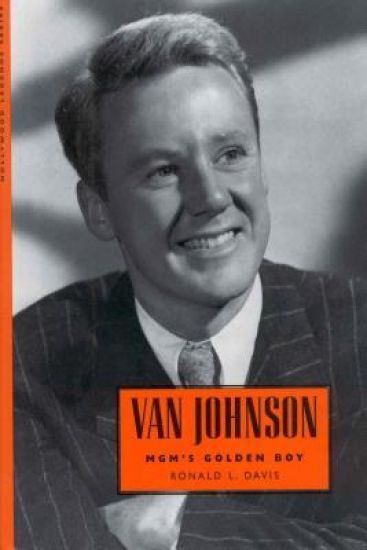
Van Johnson's dazzling smile, shock of red hair, and suntanned freckled cheeks made him a movie-star icon. Among teenaged girls in the 1940s, he was popularized as the bobbysoxer's heartthrob.He won the nation's heart, too, by appearing in a series of blockbuster war films - A Guy Named Joe, Thirty Seconds Over Tokyo, Weekend at the Waldorf, and Battleground. Perennially a leading man opposite June Allyson, Esther Williams, Judy Garland, and Janet Leigh, he rose to fame radiating the sunshine image Metro-Goldwyn-Mayer chose for him, that of an affable, wholesome boy-next-door. Legions of adoring moviegoers were captivated by this idealized persona that generated huge box-office profits for the studio.However, Johnson's off-screen life was not so sunny. His mother had rejected him in childhood, and he lived his adult life dealing with sexual ambivalence. A marriage was arranged with the ex-wife of his best friend, the actor Keenan Wynn. During the waning years of Hollywood's Golden Age, she and Johnson lived amid the glow of Hollywood's A-crowd. Yet their private life was charged with tension and conflict.Although morose and reclusive by nature, Johnson maintained a happy-go-lucky façade, even among co-workers who knew him as a congenial, dedicated professional. Once free of the golden-boy stereotype, he became a respected actor assigned stellar roles in such acclaimed films as State of the Union, Command Decision, The Last Time I Saw Paris, and The Caine Mutiny.With the demise of the big studios, Johnson returned to the stage, where he had begun his career as a song-and-dance man. After this, he appeared frequently in television shows, performed in nightclubs, and became the legendary darling of older audiences on the dinner playhouse circuit. Johnson (1916-2008) spent his post-Hollywood years living in solitude in New York City.This solid, thoroughly researched biography traces the career and influence of a favorite star and narrates a fascinating, sometimes troubled life story.
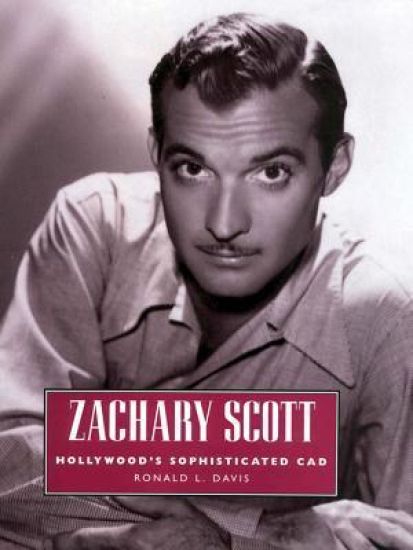
Throughout the 1940s, Zachary Scott (1914-1965) was the model for sophisticated, debonair villains in American film. His best-known roles include a mysterious criminal in The Mask of Dimitrios and the indolent husband in Mildred Pierce. He garnered further acclaim for his portrayal of villains in Her Kind of Man, Danger Signal, and South of St. Louis. Although he earned critical praise for his performance as a heroic tenant farmer in Jean Renoir's The Southerner, Scott never quite escaped typecasting.In Zachary Scott: Hollywood's Sophisticated Cad, Ronald L. Davis writes an appealing biography of the film star. Scott grew up in privileged circumstances--his father was a distinguished physician; his grandfather was a pioneer cattle baron--and was expected to follow his father into medical practice. Instead, Scott began to pursue a career in theater while studying at the University of Texas and subsequently worked his way on a ship to England to pursue acting. Upon his return to America, he began to look for work in New York.Excelling on stage and screen throughout the 1940s, Scott seemed destined for stardom. By the end of 1950, however, he had suffered through a turbulent divorce. A rafting accident left him badly shaken and clinically depressed. His frustration over his roles mounted, and he began to drink heavily. He remarried and spent the rest of his career concentrating on stage and television work. Although Scott continued to perform occasionally in films, he never reclaimed the level of stardom that he had in the mid-1940s.To reconstruct Scott's life, Davis uses interviews with Scott and colleagues and reviews, articles, and archival correspondence from the Scott papers at the University of Texas and from the Warner Bros. Archives. The result is a portrait of a talented actor who was rarely allowed to show his versatility on the screen.

The Sharl. Part 2, The New Breed. A fast action Saga. This second volume of the series is now available on Amazon Kindle. Science Fiction/Fantasy. The Sharl is a series of 3 volumes. Follow the exploits of the immortal brother and sister. Both Extra Terrestrials who, due to a cosmic accident find themselves transported to earth of the year 1788; the female stranded in Papua New Guinea; the male in the African Congo. Their adventures are over a period 500 years as they strive to understand the human condition. Travelling through time, via their massive starships, to Ancient Greece and plotting Earths many alternate realities; to complete their ultimate goal and hopefully return to their own universe to their home world, Firstworld. Author R L Davis. Editor, Liz Brooker.


Vocal Republican, accomplished gardener, lover of large cars, Ernest Haycox was nothing if not three-dimensional. Despite a haphazard childhood that included abandonment by his parents, Haycox (1899-1950) decided early on to be a writer. Once he began he did not stop, approaching writing with both an unparalleled passion and a keen business sense that included normal business hours in a downtown Portland office.Until now little has been written about Haycox, the famed Collier's and Saturday Evening Post contributor who wrote twenty-four novels and more than two hundred short stories. Bridging the gap between the formula Western and the literary western novel, Haycox frequently incorporated actual historical events into his works: Trouble Shooter documents the building of the Union Pacific railroad, The Border Trumpet covers the Apache wars in Arizona, and Bugles in the Afternoon draws upon the Battle of the Little Bighorn. Director John Ford adapted Haycox's work for Stagecoach (1939, starring John Wayne), as did Cecil De Mille for Union Pacific (1939, starring Barbara Stanwyck).Ernest Haycox Jr. describes his father's life, work, and views on the craft of writing. In a remarkably candid biography, original photographs of Hollywood stars and excerpts from Haycox's correspondence, including letters from the last years of his life, round out this incisive look at a literary giant.
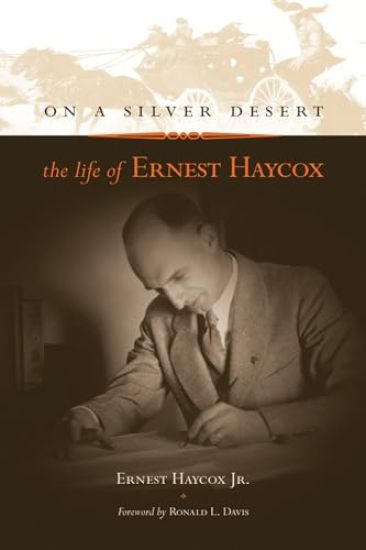
Vocal Republican, accomplished gardener, lover of large cars, Ernest Haycox was nothing if not three-dimensional. Despite a haphazard childhood that included abandonment by his parents, Haycox (1899–1950) decided early on to be a writer. Once he began he did not stop, approaching writing with both an unparalleled passion and a keen business sense that included normal business hours in a downtown Portland office.Until now little has been written about Haycox, the famed Collier’s and Saturday Evening Post contributor who wrote twenty-four novels and more than two hundred short stories. Bridging the gap between the formula Western and the literary western novel, Haycox frequently incorporated actual historical events into his works: Trouble Shooter documents the building of the Union Pacific railroad, The Border Trumpet covers the Apache wars in Arizona, and Bugles in the Afternoon draws upon the Battle of the Little Bighorn. Director John Ford adapted Haycox’s work for Stagecoach (1939, starring John Wayne), as did Cecil De Mille for Union Pacific (1939, starring Barbara Stanwyck).Ernest Haycox Jr. describes his father’s life, work, and views on the craft of writing. In a remarkably candid biography, original photographs of Hollywood stars and excerpts from Haycox’s correspondence, including letters from the last years of his life, round out this incisive look at a literary giant.

L'autisme et les graines du changement
Abigail Marshall; Ronald D Davis
Ioannis Tzivanakis Verlag
2015
pokkari

Applied Plastic Product Design, a Simplified Presentation of Plastic Product Design Principles for Use by Engineers and Students in Plastics
Robert L. Davis; Ronald D. Author Beck
Hassell Street Press
2021
sidottu

Applied Plastic Product Design, a Simplified Presentation of Plastic Product Design Principles for Use by Engineers and Students in Plastics
Robert L. Davis; Ronald D. Author Beck
Hassell Street Press
2021
nidottu

Applied Plastic Product Design: A Simplified Presentation of Plastic Product Design Principles for Use by Engineers and Students in Plastics
Robert L. Davis; Ronald D. Beck; J. H. DuBois
Literary Licensing, LLC
2013
sidottu
""Applied Plastic Product Design"" is a comprehensive guidebook that simplifies the principles of plastic product design for engineers and students in the field of plastics. The book is authored by Robert L. Davis and provides a detailed overview of the design process, from concept development to manufacturing. It covers a range of topics, including material selection, product testing, mold design, and assembly techniques. The book is written in a clear and concise language, making it easy to understand for readers with varying levels of experience in the field. The book is an essential resource for anyone involved in the design and development of plastic products, including engineers, designers, and students.This scarce antiquarian book is a facsimile reprint of the old original and may contain some imperfections such as library marks and notations. Because we believe this work is culturally important, we have made it available as part of our commitment for protecting, preserving, and promoting the world's literature in affordable, high quality, modern editions, that are true to their original work.