

Kirjahaku
Etsi kirjoja tekijän nimen, kirjan nimen tai ISBN:n perusteella.
1000 tulosta hakusanalla Ronald Lombard


The Working Class Republican: Ronald Regan and the Return of the Blue-Collar Conservatism

In this short biography, Michael Schaller, acclaimed historian of the American political right, offers readers a poignant account of Ronald Reagan's life and achievements, from his small-town upbringing in rural Illinois to his cinematic success in Hollywood, entry into politics as governor of California, and meteoric rise to the White House, where he served for eight years. The polarizing Great Communicator oversaw many developments that changed the face of American politics and life-the Iran-Contra Affair, the establishment of ¨Reaganomics,¨ the largest military buildup in peacetime US history--and as such remains a figure about whom much is written and much has yet to be discovered. Schaller revisits each of these episodes during and leading up to the Reagan presidency, taking into account the latest scholarship and research. In doing so, he makes clear their significance at the time and in later years. While most presidential biographies approach 1,000 pages, this succinct narrative comes in at just over 100 pages, continuing the tradition of excellence in brevity established by James McPherson's New York Times bestseller Abraham Lincoln and Alan Brinkley's recent short biography of Franklin Delano Roosevelt. Schaller's biography of Ronald Reagan will be available in time to commemorate the centennial of Reagan's birth, an opportune time to reflect on the accomplishments of America's fortieth president.

Using a critical examination of the collage poetics of Ronald Johnson, this book sets out to understand Johnson's poetry in the context of the "New American" collage tradition, stretching from Ezra Pound to Louis Zukofsky and beyond. Additionally, the book assesses Johnson's work in relation to wider questions concerning literary chronologies, especially the discontinuities commonly seen to exist between nineteenth-century Romantic and twentieth-century modernist literary forms.

Ronald Dworkin's work on equality has shaped debates in the field of distributive justice for nearly three decades. In this book Alexander Brown attempts to provide a critique but also a defence of that work, and to extend equality of resources globally.

Ronald Reagan and the 1980s
Palgrave Macmillan
2008
sidottu
By the end of the 1980s, many Americans looked at the state of the nation with a renewed optimism, which was personified by an enduring American president - Ronald Wilson Reagan. The essays in this volume revisit the 1980s in order to examine the factors that contributed to his political and cultural triumphs and assess his legacy.
Ronald Reagan and the Politics of Immigration Reform
Nicholas Laham
Praeger Publishers Inc
2000
sidottu
Laham argues that Ronald Reagan demonstrated gross ineptitude in his conduct of immigration policy. He failed to press for much-needed reforms in legal immigration while he supported the establishment of a fraud-ridden employer sanctions regime, which had no discernible effect in achieving its goal of stemming the flow of illegal immigration. He failed to take the first step toward the establishment of a fraud-resistant worker verification system, which would enable the employer sanctions provisions of the Immigration Reform and Control Act (IRCA) to be effectively enforced. Additionally, he supported the amnesty provisions of IRCA, which granted permanent legal residence to 2.7 million often poorly educated, unskilled, and low-wage illegal aliens.According to Laham, Reagan's failure to develop a sound and effective immigration policy was not due to the president's urge to satisfy the desires of special interests. Rather, the Reagan administration was crippled in its ability to design a sound and effective immigration policy by the lack of accurate and reliable information on this issue and by the president's own ideological hostility toward big government. These factors impeded the ability of Congress to design an effective employer sanctions regime capable of stemming the flow of illegal immigration to the United States. This thorough and controversial analysis will be of particular interest to scholars, students, and researchers involved with American immigration studies, the presidency, and contemporary public policy.

This reference combines a critical analysis of Ronald Reagan's style as a public speaker with a set of selected speeches and an extensive bibliography. Kurt Ritter and David Henry cover his oratory from his days in the motion picture industry and as a political candidate to his years as Governor of California and as President of the United States. This analysis of his use of mass media as a pulpit and his command of the TV medium is intended for students, teachers, and professionals in communications and in government.The volume defines Ronald Reagan's role as a political pastor, his emphasis on heroes, and his appeals to values of freedom and promise. Selected speeches illustrate points made in the analysis. A chronology of his major speeches is given, along with an extensive bibliography of primary and secondary sources. A full index is also provided. This book will be of great interest to students of oratory, speech communication specialists, political scientists, and others needing an overview and texts of President Reagan's speeches.

One of the most enchanting figures of the silver screen, Ronald Colman appeared in such classic films as Beau Geste, The Prisoner of Zenda, Lost Horizon, and A Tale of Two Cities. He was nominated four times for the Academy Award, which he won for a spectacular performance in A Double Life. His voice was unrivaled, and he had a brilliant career as a radio star. A charismatically photogenic performer, he was voted the handsomest actor in Hollywood on several occasions. His superior skills, his dashing visage, and his resonant speech made him one of the most sought after and acclaimed stars of his day. In spite of his enormous talent and supreme achievements, Ronald Colman has strangely been overlooked. This immensely detailed reference book brings Colman's life and career into sharp focus, corrects misleading information about him, and comments on the critical response to his work. The heart of this expertly researched volume is a series of chapters with entries for Colman's many hundreds of performances in film, radio, and television. Entries provide full production information, plot synopses, excerpts from reviews, and valuable commentary. An extensive annotated bibliography summarizes and assesses material written about Colman, and the author scrupulously debunks the many myths that have been written about Colman in previous publications.

Ronald Reagan's America
Greenwood Press
1997
sidottu
Supporters of the Reagan presidency claim that the Reagan Revolution defeated inflation, reduced the role of government, rehabilitated the authority of the states and local government, and established a sensible balance between industrial progress and environmental protection. Opponents assert that these policies increased the national debt by more than $1 trillion, gutted social programs, and created a trickle-down economy that increased unemployment, insecurity, homelessness, and the percentage of Americans living at or below the poverty level. Both positions are argued by such participants as Edwin Meese III, James G. Watt, and Lyn Nofzinger, and such commentators and scholars as Mike Wallace, Roy Innis, and Kenneth W. Thompson. Students of the era as well as of the presidency and the evolution of domestic political and social affairs will find provocative and insightful observations in this volume.

Ronald Reagan's America
Greenwood Press
1997
sidottu
Supporters of the Reagan presidency claim that the Reagan Revolution defeated inflation, reduced the role of government, rehabilitated the authority of the states and local government, and established a sensible balance between industrial progress and environmental protection. Opponents assert that these policies increased the national debt by more than $1 trillion, gutted social programs, and created a trickle-down economy that increased unemployment, insecurity, homelessness, and the percentage of Americans living at or below the poverty level. Both positions are argued by Reagan aides and scholars of the era.Supporters of the Reagan presidency claim that the Reagan Revolution defeated inflation, reduced the role of government, rehabilitated the authority of the states and local government, and established a sensible balance between industrial progress and environmental protection. Opponents assert that these policies increased the national debt by more than $1 trillion, gutted social programs, and created a trickle-down economy that increased unemployment, insecurity, homelessness, and the percentage of Americans living at or below the poverty level. Both positions are argued by such participants as Edwin Meese III, James G. Watt, and Lyn Nofzinger, and such commentators and scholars as Mike Wallace, Roy Innis, and Kenneth W. Thompson. Students of the era as well as of the presidency and the evolution of domestic political and social affairs will find provocative and insightful observations in this volume.
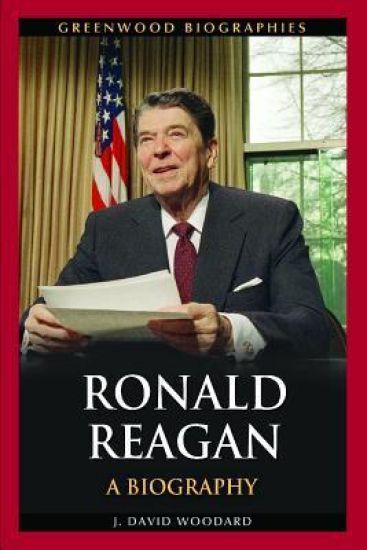
Ronald Reagan's story reads like a Hollywood script complete with a small-town boyhood, movie stardom, financial success, and unmatched political popularity. This book tells Reagan's true-life tale in an engaging and easily accessible manner.The trajectory of his life was remarkable: from Midwestern schoolboy, sports announcer, and Hollywood actor to governor of California and two-term President of the United States. There is no doubt that Ronald Reagan was one of the most complex and fascinating personalities of our time. Ronald Reagan: A Biography captures all the varied aspects of Reagan's life and career, portraying him as a politician, a husband, a father—and as a human being with a unique brand of charisma.Anchored by Reagan's memorable personality and appeal, this lively, concise biography explores the full range of the former president's humor, character, and faith in a book that is also a study of history and political science. Students and general readers alike will come away understanding why Ronald Reagan's hold on America was so potent, and why it becomes more so with time.

In this bold, revisionist biography, distinguished historian John Patrick Diggins shows that Ronald Reagan, in his distrust of big government, his pursuit of libertarian ideals, and his negotiations with Gorbachev, was a far more active and sophisticated president than we previously knew. Affirming the fortieth president to be an exemplar of the truest conservative values, Diggins “identifies Reagan as the ‘Emersonian President,’ who believed that power is best when it resides in people, not government” (Library Journal).
Few politicians in recent American history are as well-known as Ronald Reagan, the 40th U.S. president. An iconic leader, Reagan shifted the direction of American politics toward a newly vigorous conservatism. Though he began his career as a New Deal liberal, by the end of the 1950s, Reagan had embraced conservative views. His presidency saw the longest peacetime prosperity in American history, as well as the fall of the Berlin Wall and the end of the Cold War, but also skyrocketing deficits and the Iran-Contra scandal. In the twenty-first century, Reagan’s legacy is both pervasive and contested, with supporters and detractors often divided along partisan lines. Yet Reagan’s own actions did not always fit into partisan boxes.In a clear-eyed and insightful narrative, James H. Broussard cuts through the mythology of both sides to produce a nuanced portrait of Reagan in his historical context. Supported by primary sources and a robust companion website, this concise biography is an ideal intoduction to this fascinating president and the issues that shaped America in the late 20th century.Routledge Historical Americans is a series of short, vibrant biographies that illuminate the lives of Americans who have had an impact on the world. Each book includes a short overview of the person’s life and puts that person into historical context through essential primary documents, written both by the subjects and about them. A series website supports the books, containing extra images and documents, links to further research, and where possible, multi-media sources on the subjects. Perfect for including in any course on American History, the books in the Routledge Historical Americans series show the impact everyday people can have on the course of history.
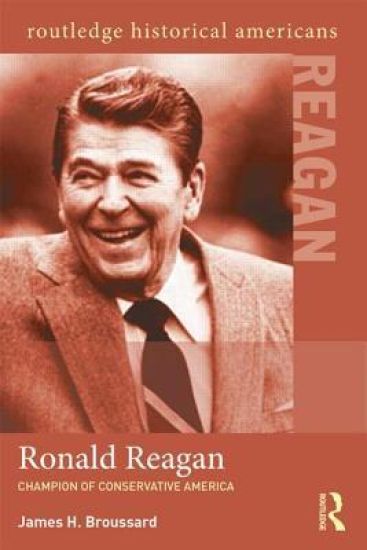
Few politicians in recent American history are as well-known as Ronald Reagan, the 40th U.S. president. An iconic leader, Reagan shifted the direction of American politics toward a newly vigorous conservatism. Though he began his career as a New Deal liberal, by the end of the 1950s, Reagan had embraced conservative views. His presidency saw the longest peacetime prosperity in American history, as well as the fall of the Berlin Wall and the end of the Cold War, but also skyrocketing deficits and the Iran-Contra scandal. In the twenty-first century, Reagan’s legacy is both pervasive and contested, with supporters and detractors often divided along partisan lines. Yet Reagan’s own actions did not always fit into partisan boxes.In a clear-eyed and insightful narrative, James H. Broussard cuts through the mythology of both sides to produce a nuanced portrait of Reagan in his historical context. Supported by primary sources and a robust companion website, this concise biography is an ideal intoduction to this fascinating president and the issues that shaped America in the late 20th century.Routledge Historical Americans is a series of short, vibrant biographies that illuminate the lives of Americans who have had an impact on the world. Each book includes a short overview of the person’s life and puts that person into historical context through essential primary documents, written both by the subjects and about them. A series website supports the books, containing extra images and documents, links to further research, and where possible, multi-media sources on the subjects. Perfect for including in any course on American History, the books in the Routledge Historical Americans series show the impact everyday people can have on the course of history.
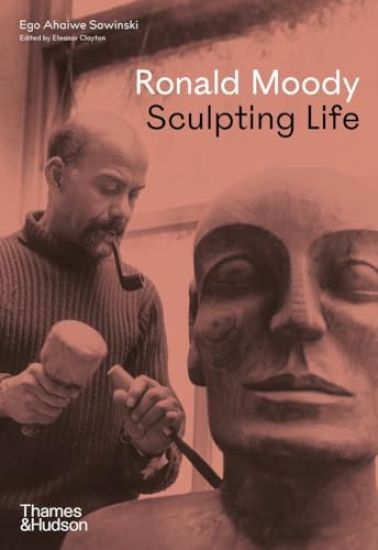
The first major monograph on sculptor Ronald Moody, exploring his legacy and impact through his key artistic relationships, networks and influences, and his relationship with nature, humanity and spirituality. Ronald Moody (1900–1984) was a leading modernist sculptor and yet, until now, there has been no comprehensive overview of his work. This biography explores the development of his sculpture, re-establishing his place within the story of 20th-century art. Contributions by those who knew him – Paul Dash, David A. Bailey, Cynthia Moody, Errol Lloyd and Val Wilmer – punctuate Ego Ahaiwe Sowinski’s biographical account. Their personal reflections and photographs, and transcripts of Moody’s BBC radio broadcasts, offer insights into his cultural influences and studio life, with his brother Harold, a campaigner for racial equality, and the Caribbean Artist Movement, at the core. Born in Jamaica, Moody arrived in Britain in 1923 and initially trained as a dentist, before switching paths to become an artist, establishing studios in London and Paris. In 1939, six of his works were shown alongside African American artists in a large survey exhibition at the Baltimore Museum of Art. By 1941 he had produced some forty known sculptures in bronze and wood, and was regularly exhibiting internationally. On the lead up to the Second World War his creative and cultural life was flourishing. Immersed in the art world, he formed friendships with journalists, actors and artists including Marie Seton, Wifredo Lam and Man Ray, until forced to flee the Nazi occupation of Paris in 1940. Back in London, he continued to work and exhibit for nearly half a century, accepting the prestigious Gold Musgrave Medal from the Institute of Jamaica for his eminence as an international sculptor in 1977. Receiving little recognition in Britain during his lifetime, however, cultural institutions are now rightfully acquiring and celebrating Ronald Moody’s work.
The fear of the subversive has governed American politics, from the racial conflicts of the early republic to the Hollywood anti-Communism of Ronald Reagan. Political monsters - the Indian cannibal, the black rapist, the demon rum, the bomb-throwing anarchist, the many-tentacled Communist conspiracy, the agents of international terrorism - are familiar figures in the dream life that so often dominates American political consciousness. What are the meanings and sources of these demons? And why does the American political imagination conjure them up? Michael Rogin answers these questions by examining the American countersubversive tradition.
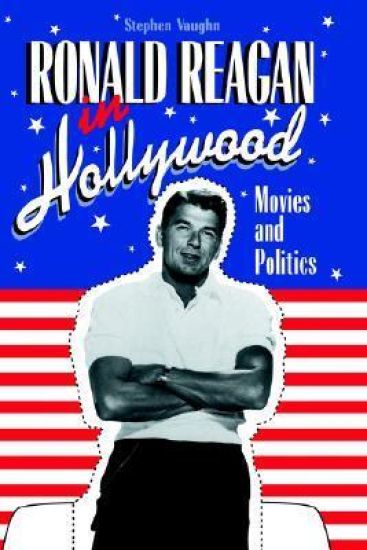
Ronald Reagan in Hollywood explores the relationship between the motion picture industry and American politics through the prism of Reagan's film career at Warner Bros. During the Depression, World War II, and the early Cold War era, the film industry served as a ‘grand, world-wide propaganda base’ using movies to influence attitudes about patriotism, national defence, communism, the welfare state, race, sex, and civil liberties. Ronald Reagan thrived in this environment. During his years in Hollywood from 1937 to 1952 he formed many of the ideas which were later carried into his presidency. Not merely a star, Reagan also became an articulate industry spokesperson and skilled propagandist, playing an important role in the battle to ‘capture the minds’ of humanity in the struggle against communism. By the time he left Warner Bros. in 1952, Reagan had abandoned his New Deal liberalism and had become a militant anti-communist. Based on hundreds of interviews (including some with Reagan himself), formerly secret FBI files, and material from more than 150 archival collections, this is the most comprehensive book on this subject to date, providing incisive analysis of Reagan’s formative years in Hollywood.
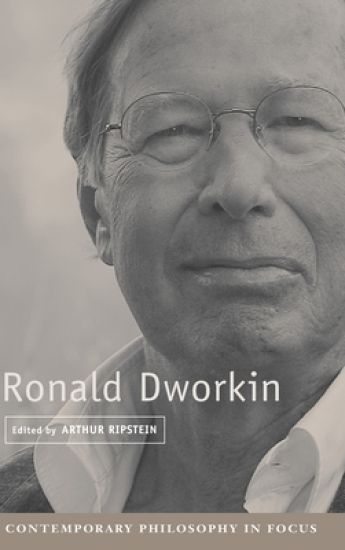
Ronald Dworkin occupies a distinctive place in both public life and philosophy. In public life, he is a regular contributor to The New York Review of Books and other widely read journals. In philosophy, he has written important and influential works on many of the most prominent issues in legal and political philosophy. In both cases, his interventions have in part shaped the debates he joined. His opposition to Robert Bork's nomination for the United States Supreme Court gave new centrality to debates about the public role of judges and the role of original intent in constitutional interpretation. His writings in legal philosophy have reoriented the modern debate about legal positivism and natural law. In political philosophy, he has shaped the ways in which people debate the nature of equality and has reframed debates about the sanctity of life.