This title is part of UC Press's Voices Revived program, which commemorates University of California Press’s mission to seek out and cultivate the brightest minds and give them voice, reach, and impact. Drawing on a backlist dating to 1893, Voices Revived makes high-quality, peer-reviewed scholarship accessible once again using print-on-demand technology. This title was originally published in 1976.
This title is part of UC Press's Voices Revived program, which commemorates University of California Press’s mission to seek out and cultivate the brightest minds and give them voice, reach, and impact. Drawing on a backlist dating to 1893, Voices Revived makes high-quality, peer-reviewed scholarship accessible once again using print-on-demand technology. This title was originally published in 1976.
Biostatistics, Second Edition, is a user-friendly guide on biostatistics, which focuses on the proper use and interpretation of statistical methods. This textbook does not require extensive background in mathematics, making it user-friendly for all students in the public health sciences field. Instead of highlighting derivations of formulas, the authors provide rationales for the formulas, allowing students to grasp a better understanding of the link between biology and statistics. The material on life tables and survival analysis allows students to better understand the recent literature in the health field, particularly in the study of chronic disease treatment. This updated edition contains over 40% new material with modern real-life examples, exercises, and references, including new chapters on Logistic Regression, Analysis of Survey Data, and Study Designs. The book is recommended for students in the health sciences, public health professionals, and practitioners.
Living Sociologically is built around a contemporary, applied framework that is designed to help students find their place in a complex and contradictory social world. Students who enroll in today's introductory sociology courses are already familiar with concepts such as inequality, privilege, conflict, power, and structure -- yet they do not realize how a sociological understanding of these concepts can help them to make sense of and enact change in their diverse social worlds. Living Sociologically pairs central sociological concepts together -- Power and Resistance; Inequality and Privilege; Solidarity and Conflict; Structure and Contingency; and Global and Local giving students a framework and a set of tools to help them develop their sociological imaginations. For example, to understand the sociological and cultural meaning of wealth, you also need to understand the sociological and cultural meaning of poverty. These pairings, illustrated and reinforced through abundant contemporary examples and case studies, offer students relevant opportunities for thinking intersectionally and discovering the many ways in which sociological forces are at play in their lives.
Students are drawn to topics of urgent sociological concern-race, class, gender, family, popular culture, health, and crime-by a need to both understand the forces that shape their world, and their desire to make the world better. It can be challenging, however, for students to link sociological concepts with real-world applications. Living Sociologically: Concepts and Connections helps students make those connections. Encouraging students to observe, explore, and think critically about the social world, Living Sociologically offers a new, class-tested framework for teaching introduction to sociology. The "paired concepts" approach demonstrates the interdependent ways in which social forces work, and encourages students to engage with complexity and contradiction. It also connects students to a broader set of questions and provides them with critical, analytical tools for their post-college lives.In addition, each chapter includes an opening vignette, examples of contemporary research, box features that exemplify the five paired concepts, career boxes, methods and interpretation boxes, case studies, review sections, and practical activities.
While the newspaper op-ed page, the Sunday morning political talk shows on television, and the evening cable-news television lineup have an obvious and growing influence in American politics and political communication, social scientists and media scholars tend to be broadly critical of the rise of organized punditry during the 20th century without ever providing a close empirical analysis. What is the nature of the contemporary space of opinion? How has it developed historically? What kinds of people speak in this space? What styles of writing and speech do they use? What types of authority and expertise do they draw on? And what impact do their commentaries have on public debate? To describe and analyze this complex space of news media, Ronald Jacobs and Eleanor Townsley rely on enormous samples of opinion collected from newspapers and television shows during the first years of the last two Presidential administrations. They also employ biographical data on authors of opinion to connect specific argument styles to specific types of authors, and examine the distribution of authors and argument types across different formats. The result is a close mapping that reveals a massive expansion and differentiation of the opinion space. It tells a complex story of shifting intersections between journalism, politics, the academy, and the new sector of think tanks. It also reveals a proliferation of genres and forms of opinion; not only have the people who speak within the space of opinion become more diverse over time, but the formats of opinion-claims to authority, styles of speech, and modes of addressing publics-have also become more varied. Though Jacobs and Townsley find many changes, they also find continuities. Despite public anxieties, the project of objective journalism is alive and well, thriving in the older, more traditional formats, and if anything, the proliferation of newer formats has resulted in an intensified commitment (by some) to core journalistic values as clear points of difference that offer competing logics of distinction and professional justification. But the current moment does represent a real challenge as more and different shows compete to narrate politics in the most compelling, authoritative, and influential manner. By providing the first systematic study of media opinion and news commentary, The Space of Opinion will fill an important gap on research about media, politics, and the civil society and will attract readers in a number of disciplines, including sociology, communication, media studies, and political science.
While the newspaper op-ed page, the Sunday morning political talk shows on television, and the evening cable-news television lineup have an obvious and growing influence in American politics and political communication, social scientists and media scholars tend to be broadly critical of the rise of organized punditry during the 20th century without ever providing a close empirical analysis. What is the nature of the contemporary space of opinion? How has it developed historically? What kinds of people speak in this space? What styles of writing and speech do they use? What types of authority and expertise do they draw on? And what impact do their commentaries have on public debate? To describe and analyze this complex space of news media, Ronald Jacobs and Eleanor Townsley rely on enormous samples of opinion collected from newspapers and television shows during the first years of the last two Presidential administrations. They also employ biographical data on authors of opinion to connect specific argument styles to specific types of authors, and examine the distribution of authors and argument types across different formats. The result is a close mapping that reveals a massive expansion and differentiation of the opinion space. It tells a complex story of shifting intersections between journalism, politics, the academy, and the new sector of think tanks. It also reveals a proliferation of genres and forms of opinion; not only have the people who speak within the space of opinion become more diverse over time, but the formats of opinion-claims to authority, styles of speech, and modes of addressing publics-have also become more varied. Though Jacobs and Townsley find many changes, they also find continuities. Despite public anxieties, the project of objective journalism is alive and well, thriving in the older, more traditional formats, and if anything, the proliferation of newer formats has resulted in an intensified commitment (by some) to core journalistic values as clear points of difference that offer competing logics of distinction and professional justification. But the current moment does represent a real challenge as more and different shows compete to narrate politics in the most compelling, authoritative, and influential manner. By providing the first systematic study of media opinion and news commentary, The Space of Opinion will fill an important gap on research about media, politics, and the civil society and will attract readers in a number of disciplines, including sociology, communication, media studies, and political science.
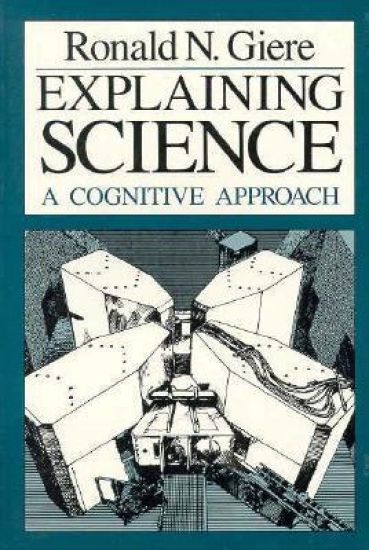
Debate over the nature of science has recently moved from the halls of academia into the public sphere, where it has taken shape as the "science wars." At issue is the question of whether scientific knowledge is objective and universal or socially mediated, whether scientific truths are independent of human values and beliefs. Ronald Giere is a philosopher of science who has been at the forefront of this debate from its inception, and Science without Laws offers a much-needed mediating perspective on an increasingly volatile line of inquiry. Giere does not question the major findings of modern science: for example, that the universe is expanding or that inheritance is carried by DNA molecules with a double helical structure. But like many critics of modern science, he rejects the widespread notion of science--deriving ultimately from the Enlightenment--as a uniquely rational activity leading to the discovery of universal truths underlying all natural phenomena. In these highly readable essays, Giere argues that it is better to understand scientists as merely constructing more or less abstract models of limited aspects of the world. Such an understanding makes possible a resolution of the issues at stake in the science wars. The critics of science are seen to be correct in rejecting the Enlightenment idea of science, and its defenders are seen to be correct in insisting that science does produce genuine knowledge of the natural world. Giere is utterly persuasive in arguing that to criticize the Enlightenment ideal is not to criticize science itself, and that to defend science one need not defend the Enlightenment ideal. Science without Laws thus stakes out a middle ground in these debates by showing us how science can be better conceived in other ways.
Many people assume that the claims of scientists are objective truths. But "Scientific Perspectivism" argues that the acts of observing and theorizing are both matters of perspective - which makes scientific knowledge contingent. Using the example of color vision in humans to illustrate how his theory of 'perspectivism' works, Ronald N. Giere argues that colors do not actually exist in objects; rather, color is the result of an interaction between aspects of the world and the human visual system. Giere extends this argument into a general interpretation of human perception and, more controversially, to scientific observation, conjecturing that the output of scientific instruments is perspectival. Furthermore, as Giere posits, complex scientific principles - such as Maxwell's equations describing the behavior of both the electric and magnetic fields - by themselves make no claims about the world, but models based on those principles can be used to make claims about specific aspects of the world.
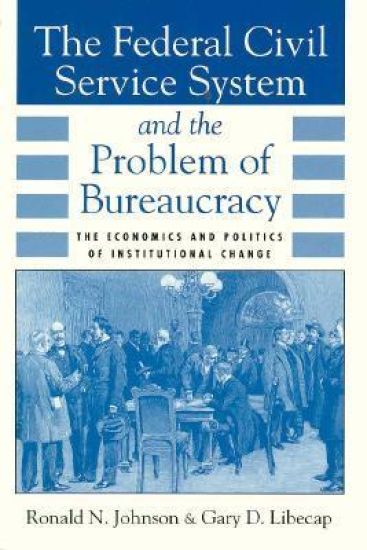
Examining the political and economic forces that have shaped the civil service system from the Pendleton Act of 1883 through today, the authors explain why, despite efforts to overhaul the federal bureaucracy (most recently by Vice President Al Gore), significant change remains a formidable challenge. Although politicians criticize the unwieldiness of the bureaucracy, this volume shows how they have been largely responsible for its design. The authors examine the development of federal employee interest groups and their negotiations with the president and Congress over hiring policies, salaries and conditions for terminating employment. Using transaction cost analysis and public choice theory, this book aims to provide a new understanding of the growth of the federal bureaucracy and the political and economic obstacles to reforming it.
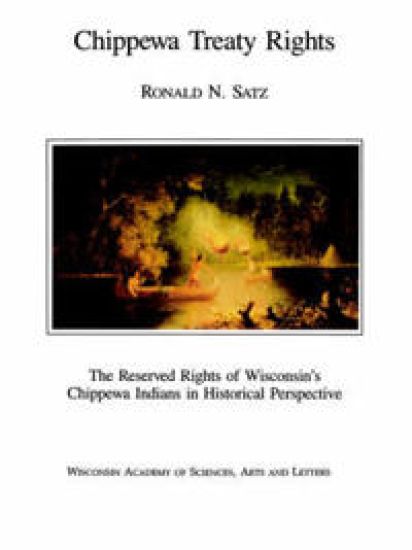
This is an account of the complex political, legal and social history of the Chippewa's struggle for justice, which should appeal to both the general public and serious scholars.
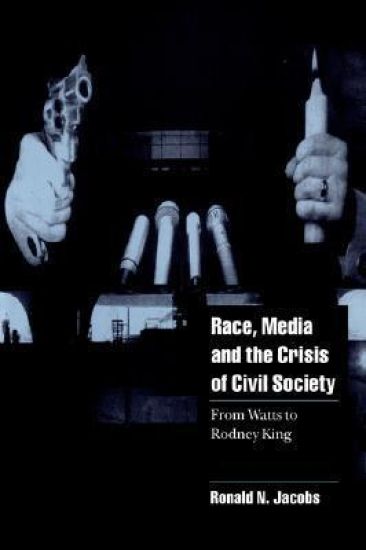
Since the early nineteenth century, African-Americans have turned to black newspapers to monitor the mainstream media and to develop alternative interpretations of public events. Ronald Jacobs tells the stories of these newspapers, showing how they increased black visibility within white civil society and helped to form separate black public spheres in New York, Chicago and Los Angeles. Comparing African-American and ‘mainstream’ media coverage of some of the most memorable racial crises of the last forty years such as the Watts riot, the beating of Rodney King, the Los Angeles uprisings and the O. J. Simpson trial, Jacobs shows why a strong African-American press is still needed today. Race, Media and the Crisis of Civil Society challenges us to rethink our common understandings of communication, solidarity and democracy. Its engaging style and thorough scholarship will ensure its appeal to students, academics and the general reader interested in the mass media, race and politics.
Harpelle focuses on Caribbean migrants and their adaptation to life in a Hispanic society, particularly in Limon, where cultures and economies often clashed. Dealing with such issues as Garveyism, Afro-Christian religious beliefs, and class divisions within the West Indian community, The West Indians of Costa Rica sheds light on a community that has been ignored by most historians and on events that define the parameters of the modern Afro-Costa Rican identity, revealing the complexity of a community in transition. Harpelle shows that the men and women who ventured to Costa Rica in search of opportunities in the banana industry arrived as West Indian sojourners but became Afro-Costa Ricans. The West Indians of Costa Rica is a story about choices: who made them, when, how, and what the consequences were.
Harpelle focuses on Caribbean migrants and their adaptation to life in a Hispanic society, particularly in Limon, where cultures and economies often clashed. Dealing with such issues as Garveyism, Afro-Christian religious beliefs, and class divisions within the West Indian community, The West Indians of Costa Rica sheds light on a community that has been ignored by most historians and on events that define the parameters of the modern Afro-Costa Rican identity, revealing the complexity of a community in transition. Harpelle shows that the men and women who ventured to Costa Rica in search of opportunities in the banana industry arrived as West Indian sojourners but became Afro-Costa Ricans. The West Indians of Costa Rica is a story about choices: who made them, when, how, and what the consequences were.
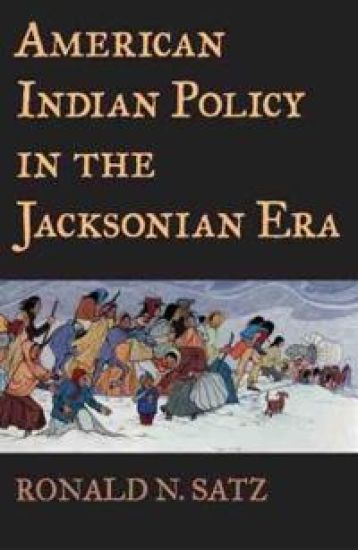
The Jacksonian period has long been recognized as a watershed era in American Indian policy. Ronald N. Satz's American Indian Policy in the Jacksonian Era uses the perspectives of both ethnohistory and public administration to analyze the formulation, execution, and results of government policies of the 1830s and 1840s. In doing so, he examines the differences between the rhetoric and the realities of those policies and furnishes a much-needed corrective to many simplistic stereo-types about Jacksonian Indian policy.
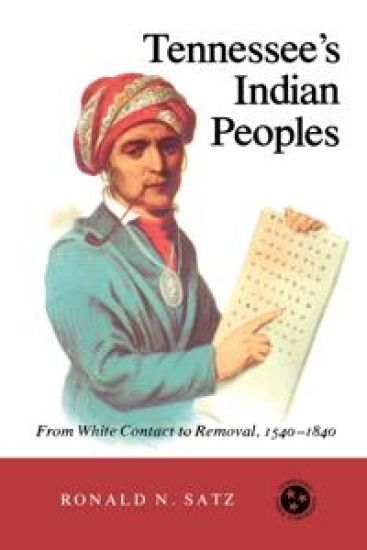
Hernando De Soto’s invasion of Indian lands in 1540 marked the onslaught of great change in the lives of Tennessee’s Native Americans. Although these first Tennesseans boasted a cultural heritage of thousands of years, only three centuries of contact with the white man elapsed before their population was decimated and the remnants driven out. The Indians were a settled people when de Soto visited, not the savage or exotic woods creatures so often depicted. Tennessee’s Indian Peoples, then, is a story of men and women – human beings. Author, Ronald N. Satz tells how the Cherokees, Chickasaws, Creeks, Shawnees, and other Indian peoples lived, reared families, farmed and hunted, worshipped, played, fought, and governed themselves. He describes also the eventful destruction of their societies – destroyed not only by external pressures for Indian lands, but also by internal change wrought by increasing dependence on the white man’s trade goods.Ronald N. Satz is Dean of Graduate Studies and University Research and teaches history at the University of Wisconsin-Eau Claire. In addition to numerous articles and book reviews, his published work includes American Indian Policy in the Jacksonian Era (1975). He has received fellowships from both the Ford Foundation and the National Endowment for the Humanities. Professor Satz has served as a member of the Editorial Advisory Board of the American Indian Quarterly.
This work has been selected by scholars as being culturally important and is part of the knowledge base of civilization as we know it.This work is in the public domain in the United States of America, and possibly other nations. Within the United States, you may freely copy and distribute this work, as no entity (individual or corporate) has a copyright on the body of the work.Scholars believe, and we concur, that this work is important enough to be preserved, reproduced, and made generally available to the public. To ensure a quality reading experience, this work has been proofread and republished using a format that seamlessly blends the original graphical elements with text in an easy-to-read typeface.We appreciate your support of the preservation process, and thank you for being an important part of keeping this knowledge alive and relevant.
Designed for a one-semester course at the junior undergraduate level, Transformational Plane Geometry takes a hands-on, interactive approach to teaching plane geometry. The book is self-contained, defining basic concepts from linear and abstract algebra gradually as needed.The text adheres to the National Council of Teachers of Mathematics Principles and Standards for School Mathematics and the Common Core State Standards Initiative Standards for Mathematical Practice. Future teachers will acquire the skills needed to effectively apply these standards in their classrooms. Following Felix Klein’s Erlangen Program, the book provides students in pure mathematics and students in teacher training programs with a concrete visual alternative to Euclid’s purely axiomatic approach to plane geometry. It enables geometrical visualization in three ways: Key concepts are motivated with exploratory activities using software specifically designed for performing geometrical constructions, such as Geometer’s Sketchpad.Each concept is introduced synthetically (without coordinates) and analytically (with coordinates).Exercises include numerous geometric constructions that use a reflecting instrument, such as a MIRA.After reviewing the essential principles of classical Euclidean geometry, the book covers general transformations of the plane with particular attention to translations, rotations, reflections, stretches, and their compositions. The authors apply these transformations to study congruence, similarity, and symmetry of plane figures and to classify the isometries and similarities of the plane.