Kirjojen hintavertailu. Mukana 11 213 693 kirjaa ja 11 kauppaa.

Kirjahaku

Etsi kirjoja tekijän nimen, kirjan nimen tai ISBN:n perusteella.

1000 tulosta hakusanalla Ronald W. Langacker

Essentials of Cognitive Grammar

Essentials of Cognitive Grammar

Ronald W. Langacker

Oxford University Press Inc
2013
nidottu
Ronald W. Langacker created an approach to linguistics called Cognitive Grammar, which is essentially a system of symbols that can be used to organize and analyze how semantics and phonology interact with each other in human language. Cognitive Grammar lays the groundwork for cognitive linguistics, which has become a major sub-field over the past 30 years. Langacker's 2008 OUP book Cognitive Grammar is the authoritative introduction to CG. But for an introduction it's rather long-584 pages, divided into four sections, two of which are truly introductory and two of which offer a more detailed methodology for researchers. This abridged version of Cognitive Grammar makes the two introductory sections available for course adoption at a reduced price. It will reinvigorate this copyright by tailoring it to the course market that has become its primary audience, and by positioning Langacker's authoritative work as an accessible, attractive cornerstone of cognitive linguistics as the field continues to evolve.
Concept, Image, and Symbol

Concept, Image, and Symbol

Ronald W. Langacker

De Gruyter Mouton
1994
sidottu
This classic research monograph develops and illustrates the theory of linguistic structure known as Cognitive Grammar, and applies it to representative phenomena in English and other languages. Cognitive grammar views language as an integral facet of cognition and claims that grammatical structure cannot be understood or revealingly described independently of semantic considerations.
Grammar and Conceptualization

Grammar and Conceptualization

Ronald W. Langacker

De Gruyter Mouton
1999
sidottu
Grammar and Conceptualization documents some major developments in the theory of cognitive grammar during the last decade. By further articulating the framework and showing its application to numerous domains of linguistic structure, this book substantiates the claim that lexicon, morphology, and syntax form a gradation consisting of assemblies of symbolic structures (form-meaning pairings).
Grammar and Conceptualization

Grammar and Conceptualization

Ronald W. Langacker

De Gruyter Mouton
2000
isokokoinen pokkari
Grammar and Conceptualization documents some major developments in the theory of cognitive grammar during the last decade. By further articulating the framework and showing its application to numerous domains of linguistic structure, this book substantiates the claim that lexicon, morphology, and syntax form a gradation consisting of assemblies of symbolic structures (form-meaning pairings).
Concept, Image, and Symbol

Concept, Image, and Symbol

Ronald W. Langacker

De Gruyter Mouton
2001
isokokoinen pokkari
This classic research monograph develops and illustrates the theory of linguistic structure known as Cognitive Grammar, and applies it to representative phenomena in English and other languages. Cognitive grammar views language as an integral facet of cognition and claims that grammatical structure cannot be understood or revealingly described independently of semantic considerations. It argues that grammar forms a continuum with the lexicon and is reducible to symbolic relationships (i.e. form-meaning pairings), and consequently that all valid grammatical constructs have some kind of conceptual import. The coherence and descriptive potential of cognitive grammar are exemplified by application to a broad variety of grammatical phenomena drawn from numerous languages.
Investigations in Cognitive Grammar

Investigations in Cognitive Grammar

Ronald W. Langacker

De Gruyter Mouton
2009
sidottu
This volume makes accessible a substantial range of recent research in Cognitive Grammar. From disparate sources, it brings together a dozen innovative papers, revised and integrated to form a coherent whole. This work continues the ongoing program of progressively articulating the theoretical framework and showing its descriptive application to varied grammatical phenomena. A number of major topics are examined in depth through multiple chapters viewing them from different perspectives: grammatical constructions (their general nature, their metonymic basis, their role in grammaticization), nominal grounding (quantifiers, possessives, impersonal it), clausal grounding (its relation to nominal grounding, an epistemic account of tense, a systemic view of the English auxiliary), the "control cycle" (an abstract cognitive model with many linguistic manifestations), finite clauses (their internal structure and external grammar), and complex sentences (complementation, subordination, coordination). In each case the presentation builds from fundamentals and introduces the background needed for comprehension. At the same time, by bringing fresh approaches and new descriptive insights to classic problems, it represents a significant advance in understanding grammar and indicates future directions of theory and research in the Cognitive Grammar framework. The book is of great interest to students and practitioners of cognitive linguistics and to scholars in related areas.
Investigations in Cognitive Grammar

Investigations in Cognitive Grammar

Ronald W. Langacker

De Gruyter Mouton
2010
isokokoinen pokkari
This volume makes accessible a substantial range of recent research in Cognitive Grammar. From disparate sources, it brings together a dozen innovative papers, revised and integrated to form a coherent whole. This work continues the ongoing program of progressively articulating the theoretical framework and showing its descriptive application to varied grammatical phenomena. A number of major topics are examined in depth through multiple chapters viewing them from different perspectives: grammatical constructions (their general nature, their metonymic basis, their role in grammaticization), nominal grounding (quantifiers, possessives, impersonal it), clausal grounding (its relation to nominal grounding, an epistemic account of tense, a systemic view of the English auxiliary), the "control cycle" (an abstract cognitive model with many linguistic manifestations), finite clauses (their internal structure and external grammar), and complex sentences (complementation, subordination, coordination). In each case the presentation builds from fundamentals and introduces the background needed for comprehension. At the same time, by bringing fresh approaches and new descriptive insights to classic problems, it represents a significant advance in understanding grammar and indicates future directions of theory and research in the Cognitive Grammar framework. The book is of great interest to students and practitioners of cognitive linguistics and to scholars in related areas.
Sprache und ihre Struktur

Sprache und ihre Struktur

Ronald W Langacker

Walter de Gruyter
1971
sidottu
Die Buchreihe Konzepte der Sprach- und Literaturwissenschaft gibt Aufschluss uber Prinzipien, Probleme und Verfahrensweisen philologischer Forschung im weitesten Sinne und dient einer Bestimmung des Standorts der Linguistik und Literaturwissenschaft. Die Reihe ubergreift Einzelsprachen und Einzelliteraturen. Sie stellt sich in den Dienst der Reflexion und Grundlegung einer allgemeinen Sprach- und Literaturwissenschaft. Die Bande sind zum Teil informierende Einfuhrungen, zum Teil wissenschaftliche Diskussionsbeitrage.
Foundations of Cognitive Grammar

Foundations of Cognitive Grammar

Langacker Ronald W.

Stanford University Press
1991
sidottu
This is the second volume of a two-volume work that introduces a new and fundamentally different conception of language structure and linguistic investigation. The central claim of cognitive grammar is that grammar forms a continuum with lexicon and is fully describable in terms of symbolic units (i.e. form-meaning pairings). In contrast to current orthodoxy, the author argues that grammar is not autonomous with respect to semantics, but rather reduces to patterns for the structuring and symbolization of conceptual content. This volume suggests how to use the theoretical tools presented in Volume I, applying cognitive grammar to a broad array of representative grammatical phenomena, primarily (but by no means exclusively) drawn from English. Reviews "The amount of data and the wealth of analyses presented is impressive. . . . Langacker has again succeeded in producing a very stimulating and coherent piece of work. And the material analyses offered deserve much more careful attention and reflection than is possible within the limits of a review." —Canadian Journal of Linguistics "Finding ways to talk about language as a cognitive process intricately interwoven with conceptual behavior seems to be the unifying concern of cognitive linguistics in general, and Langacker's work is of major significance in this respect. It has not been possible in this short review to do justice to the enormous complexity of the theoretical enterprise presented in Foundations of Cognitive Grammar nor the detail of analytical procedures and findings." —Australian Journal of Linguistics
Foundations of Cognitive Grammar

Foundations of Cognitive Grammar

Langacker Ronald W.

Stanford University Press
1999
pokkari
This is the first volume of a two-volume work that introduces a new and fundamentally different conception of language structure and linguistic investigation. The central claim of cognitive grammar is that grammar forms a continuum with lexicon and is fully describable in terms of symbolic units (i.e. form-meaning pairings). In contrast to current orthodoxy, the author argues that grammar is not autonomous with respect to semantics, but rather reduces to patterns for the structuring and symbolization of conceptual content.
Foundations of Cognitive Grammar

Foundations of Cognitive Grammar

Langacker Ronald W.

Stanford University Press
1999
pokkari
This is the second volume of a two-volume work that introduces a new and fundamentally different conception of language structure and linguistic investigation. The central claim of cognitive grammar is that grammar forms a continuum with lexicon and is fully describable in terms of symbolic units (i.e. form-meaning pairings). In contrast to current orthodoxy, the author argues that grammar is not autonomous with respect to semantics, but rather reduces to patterns for the structuring and symbolization of conceptual content. This volume suggests how to use the theoretical tools presented in Volume I, applying cognitive grammar to a broad array of representative grammatical phenomena, primarily (but by no means exclusively) drawn from English. Reviews "The amount of data and the wealth of analyses presented is impressive. . . . Langacker has again succeeded in producing a very stimulating and coherent piece of work. And the material analyses offered deserve much more careful attention and reflection than is possible within the limits of a review." —Canadian Journal of Linguistics "Finding ways to talk about language as a cognitive process intricately interwoven with conceptual behavior seems to be the unifying concern of cognitive linguistics in general, and Langacker's work is of major significance in this respect. It has not been possible in this short review to do justice to the enormous complexity of the theoretical enterprise presented in Foundations of Cognitive Grammar nor the detail of analytical procedures and findings." —Australian Journal of Linguistics
Einstein: The Life and Times

Einstein: The Life and Times

Ronald W. Clark

William Morrow Company
2007
nidottu
Ronald W. Clark's acclaimed biography of Einstein, the Promethean figure of our age, goes behind the phenomenal intellect to reveal the human side of the legendary absent-minded professor who confidently claimed that space and time were not what they seemed. Here is the classic portrait of the scientist and the man: the boy growing up in the Swiss Alps, the young man caught in an unhappy first marriage, the passionate pacifist who agonized over making the Bomb, the indifferent Zionist asked to head the Israeli state, and the physicist who believed in God.
Designing for Human Reliability

Designing for Human Reliability

Ronald W. McLeod

Gulf Professional Publishing
2015
nidottu
Industry underestimates the extent to which behaviour at work is influenced by the design of the working environment. Designing for Human Reliability argues that greater awareness of the contribution of design to human error can significantly enhance HSE performance and improve return on investment. Illustrated with many examples, Designing for Human Reliability explores why work systems are designed and implemented such that "design-induced human error" becomes more-or-less inevitable. McLeod demonstrates how well understood psychological processes can lead people to make decisions and to take actions that otherwise seem impossible to understand. Designing for Human Reliability sets out thirteen key elements to deliver the levels of human reliability expected to achieve the return on investment sought when decisions are made to invest in projects. And it demonstrates how investigation of the human contribution to incidents can be improved by focusing on what companies expected and intended when they chose to rely on human performance as a barrier, or control, against incidents.
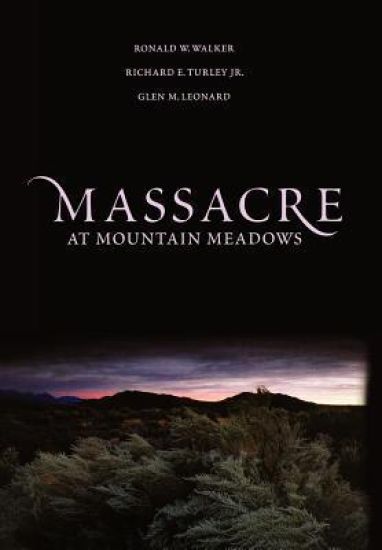
Massacre at Mountain Meadows

Massacre at Mountain Meadows

Ronald W. Walker; Richard E. Turley; Glen M. Leonard

Oxford University Press Inc
2008
sidottu
On September 11, 1857, a band of Mormon militia, under a flag of truce, lured unarmed members of a party of emigrants from their fortified encampment and, with their Paiute allies, killed them. More than 120 men, women, and children perished in the slaughter. Massacre at Mountain Meadows offers the most thoroughly researched account of the massacre ever written. Drawn from documents previously not available to scholars and a careful re-reading of traditional sources, this gripping narrative offers fascinating new insight into why Mormons settlers in isolated southern Utah deceived the emigrant party with a promise of safety and then killed the adults and all but seventeen of the youngest children. The book sheds light on factors contributing to the tragic event, including the war hysteria that overcame the Mormons after President James Buchanan dispatched federal troops to Utah Territory to put down a supposed rebellion, the suspicion and conflicts that polarized the perpetrators and victims, and the reminders of attacks on Mormons in earlier settlements in Missouri and Illinois. It also analyzes the influence of Brigham Young's rhetoric and military strategy during the infamous "Utah War" and the role of local Mormon militia leaders in enticing Paiute Indians to join in the attack. Throughout the book, the authors paint finely drawn portraits of the key players in the drama, their backgrounds, personalities, and roles in the unfolding story of misunderstanding, misinformation, indecision, and personal vendettas. The Mountain Meadows Massacre stands as one of the darkest events in Mormon history. Neither a whitewash nor an exposé, Massacre at Mountain Meadows provides the clearest and most accurate account of a key event in American religious history.
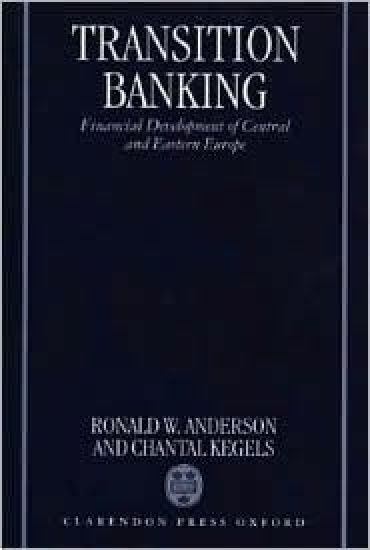
Transition Banking

Transition Banking

Ronald W. Anderson; Chantal Kegels

Clarendon Press
1998
sidottu
Transition Banking assesses the efforts since 1989 to develop financial sectors in the economies of Central and Eastern Europe. In finance above all, the principles of central planning were radically opposed to those of capitalism, and moving from one system to the other has required entirely new institutions and skills. This financial development is crucial to growth and to full partnership with the West. The approach taken here is comprehensive, empirical, and comparative. Anderson and Kegels seek to answer a series of key questions: * Has the State retreated from controlling the allocation of savings? * Is the banking sector competitive? * Do investors direct the use of capital? * Are securities markets developing? * Is outside finance supporting economic growth? * Is the financial system stable? In explaining the logic of finance in a transition setting, Transition Banking both documents the important progress made in institution-building to date and pinpoints the areas where the region remains vulnerable.
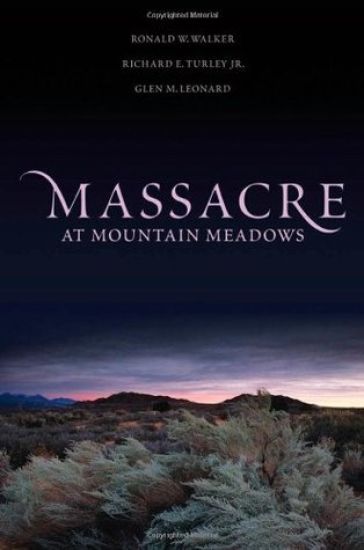
Massacre at Mountain Meadows

Massacre at Mountain Meadows

Ronald W. Walker; Richard E. Turley; Glen M. Leonard

Oxford University Press Inc
2011
nidottu
On September 11, 1857, a band of Mormon militia, under a flag of truce, lured unarmed members of a party of emigrants from their fortified encampment and, with their Paiute allies, killed them. More than 120 men, women, and children perished in the slaughter. Massacre at Mountain Meadows offers the most thoroughly researched account of the massacre ever written. Drawn from documents previously not available to scholars and a careful re-reading of traditional sources, this gripping narrative offers fascinating new insight into why Mormons settlers in isolated southern Utah deceived the emigrant party with a promise of safety and then killed the adults and all but seventeen of the youngest children. The book sheds light on factors contributing to the tragic event, including the war hysteria that overcame the Mormons after President James Buchanan dispatched federal troops to Utah Territory to put down a supposed rebellion, the suspicion and conflicts that polarized the perpetrators and victims, and the reminders of attacks on Mormons in earlier settlements in Missouri and Illinois. It also analyzes the influence of Brigham Young's rhetoric and military strategy during the infamous "Utah War" and the role of local Mormon militia leaders in enticing Paiute Indians to join in the attack. Throughout the book, the authors paint finely drawn portraits of the key players in the drama, their backgrounds, personalities, and roles in the unfolding story of misunderstanding, misinformation, indecision, and personal vendettas. The Mountain Meadows Massacre stands as one of the darkest events in Mormon history. Neither a whitewash nor an exposé, Massacre at Mountain Meadows provides the clearest and most accurate account of a key event in American religious history.