
Kirjahaku
Etsi kirjoja tekijän nimen, kirjan nimen tai ISBN:n perusteella.
1000 tulosta hakusanalla Roosevelt Jean-Fran Ois
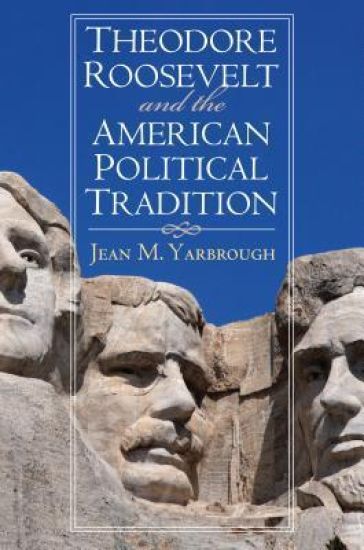
Theodore Roosevelt and the American Political Tradition
Jean M. Yarbrough
University Press of Kansas
2014
nidottu
Rough Rider, hunter, trust-buster, president and Bull Moose candidate. Biographers have long fastened on TR as man of action, while largely ignoring his political thought. Now, in time for the centennial of his Progressive run for the presidency, Jean Yarbrough provides a searching examination of TR’s political thought, especially in relation to the ideas of Washington, Hamilton and Lincoln - the statesmen TR claimed most to admire.Yarbrough sets out not only to explore Roosevelt’s vision for America but also to consider what his political ideas have meant for republican self-government. She praises TR for his fighting spirit, his love of country and efforts to promote republican greatness, but faults him for departing from the political principles of the more nationalistic Founders he esteemed. With the benefit of hindsight, she argues that the progressive policies he came to embrace have over time undermined the very qualities Roosevelt regarded as essential to civic life. In particular, the social welfare policies he championed have eroded industry and self-reliance; the expansion of the regulatory state has multiplied the special interests seeking access to political power; and the bureaucratic experts in whom he reposed such confidence have all too often turned out to be neither disinterested nor effective.Yarbrough argues that TR’s early historical studies - inspired by Darwinian biology and Hegelian political thought - treated westward expansion from an evolutionary and developmental perspective that placed race and conquest at the centre of the narrative, while relegating individual rights and consent of the governed to the sidelines.Although his early career showed him to be a moderate Republican reformer, Yarbrough argues that even then he did not share Hamilton’s enthusiasm for the commercial republic and substituted an appeal to “abstract duty” for The Federalist’s reliance on self-interest. As New York governor and first-term president, TR attempted to strike a “just balance” between democratic and oligarchic interests, but by the end of his presidency he had tipped the balance in favour of progressive policies. From the New Nationalism until his death in 1919, Roosevelt continued to claim the mantle of Washington and Lincoln, even as he moved further from their political principles.Through careful examination of TR’s political thought, Yarbrough’s book sheds new light on his place in the American political tradition, while enhancing our understanding of the roots of progressivism and its transformation of the Constitution.
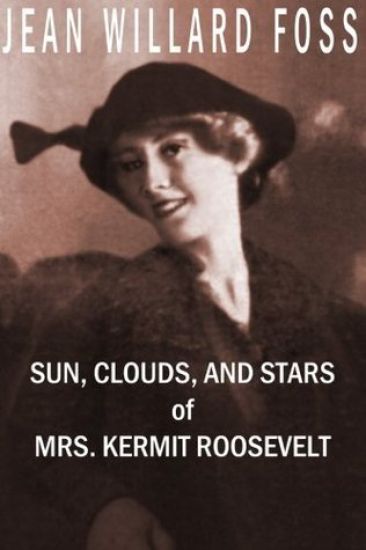
SUN, CLOUDS, AND STARS of MRS. KERMIT ROOSEVELT
Jean Willard Foss
Createspace Independent Publishing Platform
2013
nidottu
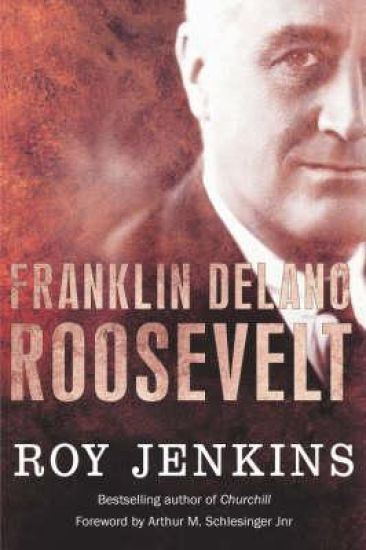
A protean figure and a man of massive achievement, Franklin Delano Roosevelt was the only man to be elected to the presidency more than twice. In a ranking of chief executives, no more than three of his predecessors could truly be placed in contention with his standing, and of his successors, there are so far none. In acute, stylish prose, Roy Jenkins tackles all of the nuances and intricacies of FDR's character. He was a skilled politician with astounding flexibility; he oversaw an incomparable mobilization of American industrial and military effort, all the while arousing great loyalty and dazzling those around him with his personal charm. Despite several setbacks and one apparent catastrophe, his life was buoyed by the influence of Eleanor, who was not only a wife but an adviser and one of the twentieth century's greatest political reformers. Nearly complete before Lord Jenkins's death in January 2003, this volume was finished by historian Richard Neustadt.
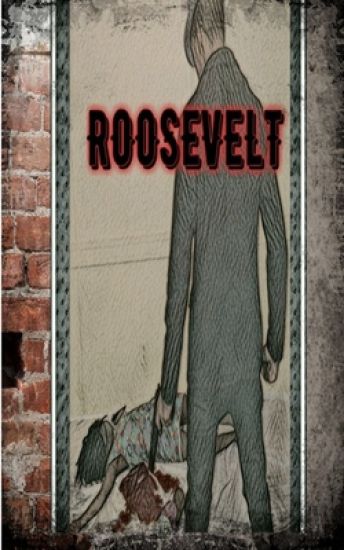
When Roosevelt went out to play she thought that it was just like any other day that she would play outside. But this day was different. REALLY DIFFERENT.
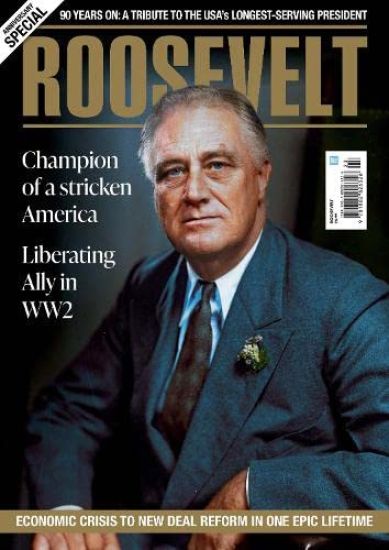
Roosevelt
KEY PUBLISHING LTD
2023
nidottu
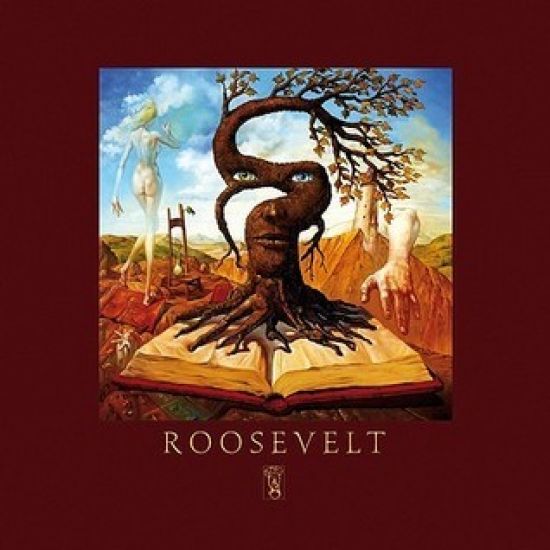
This is a retrospective book about Brazilian painter Jose Roosevelt, a magic realist/Surrealist who now lives in Switzerland. This artist is also a fantastic comic book writer, who has over 10 comic books on his CV. He is a member of the society around Carrusel Luvre in Paris.
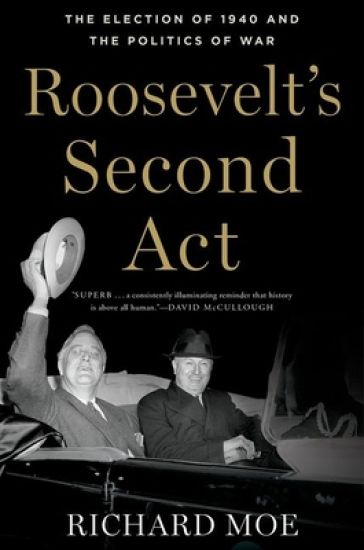
Winner of the 2013 PROSE Award, U.S. History category "In Roosevelt's Second Act Richard Moe has shown in superb fashion that what might seem to have been an inevitable decision of comparatively little interest was far from it." --David McCullough On August 31, 1939, nearing the end of his second and presumably final term in office, President Franklin Delano Roosevelt was working in the Oval Office and contemplating construction of his presidential library and planning retirement. The next day German tanks had crossed the Polish border; Britain and France had declared war. Overnight the world had changed, and FDR found himself being forced to consider a dramatically different set of circumstances. In Roosevelt's Second Act, Richard Moe focuses on a turning point in American political history: FDR's decision to seek a third term. Often overlooked between the passage and implementation of the New Deal and the bombing of Pearl Harbor, that decision was far from inevitable. As the election loomed, he refused to comment, confiding in no one, scrambling the politics of his own party; but after the Republicans surprisingly nominated Wendell Willkie in July 1940, FDR became convinced that no other Democrat could both maintain the legitimacy of the New Deal and mobilize the nation for war. With Hitler on the verge of conquering Europe, Roosevelt, still hedging, began to maneuver his way to the center of the political stage. Moe offers a brilliant depiction of the duality that was FDR: the bold, perceptive, prescient and moral statesman who set lofty and principled goals, and the sometimes cautious, ambitious, arrogant and manipulative politician in pursuit of them. Immersive, insightful and written with an inside understanding of the presidency, this book challenges and illuminates our understanding of FDR and this pivotal moment in American history.
Countless histories have been written about Franklin Roosevelt's creation of the New Deal and about his leadership during World War II, but none has attempted to bridge these two epochal events. In Roosevelt's Second Act, Richard Moe offers a refreshingly original look 32nd president, arguing that the economic policies of FDR's first two terms and the wartime leadership of his second two are bridged by one pivotal moment: the election of 1940, when his decision of whether to run for an unprecedented third term was driven by the war consuming Europe. After Hitler's invasion of Poland in September 1939, Great Britain and France immediately declared war, but it would take many months before serious military action began. Once all-out war started in the spring of 1940, the fate of Britain became inextricably entwined with FDR's agonizing decision of whether to run again, and, for the first time in American history, break the unwritten rules established by George Washington himself. FDR found himself at a place where no other president had been, wanting to help the democracies of Europe to survive without drawing his country into an unwanted war, and with precious little time to do so. For months Roosevelt refused to say whether he would run again or not, but after the Republicans surprisingly nominated the attractive Wendell Willkie in July 1940, FDR believed there was not another Democrat who would continue his policies and who was capable of winning the election. With Hitler on the verge of conquering Europe, the stakes couldn't have been higher -- and the decisions that FDR and the country faced would make 1940 one of the most fateful years in American history. Offering a critical examination of Roosevelt's actions and motives from September 1939 to the end of 1940 and subjecting them to insightful analysis, Roosevelt's Second Act fills an important gap in presidential history. Through the double narrative of the war in Europe and the 1940 election, Moe offers a brilliant depiction of the duality that was FDR: the bold, perceptive, prescient and moral statesman who set lofty and principled goals, and the sometimes cautious, ambitious, arrogant and manipulative politician in pursuit of them.
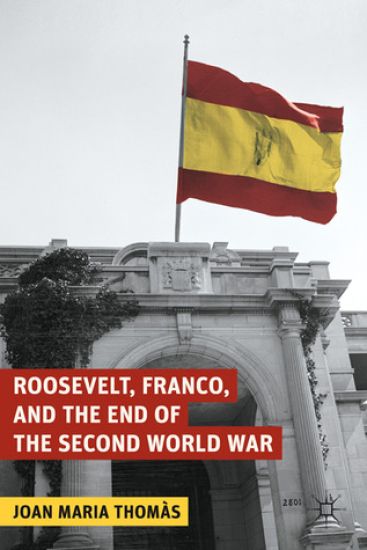
This book is a study of the relations between the US and Spain, particularly during the period from 1943 to 1945, when the Roosevelt Administration and the Joint Chiefs of Staff decided to challenge the Pro-Franco Regime, culminating in the Battle of Wolfram and the embargo of petroleum products.
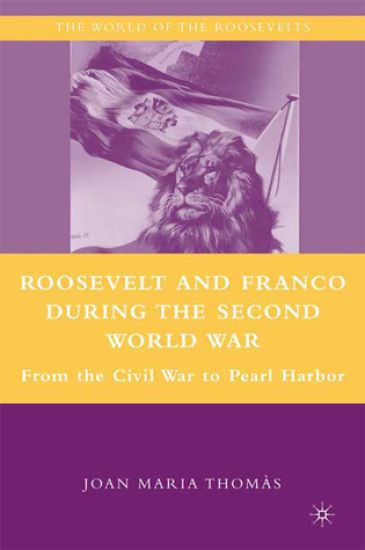
This book examines the internal controversies of the Roosevelt Administration in connection with Spain during World War II, the role of the President in these controversies, and the foundations of the policy that was followed from the outbreak of the Spanish Civil War until the launching of Operation Torch in 1942.
This original contribution largely based on unpublished material to the biography of an American president and to the diplomatic history of the United States traces Franklin Roosevelt's contacts with the French from his childhood until the end of his life. It necessarily concentrates on the years after he ascended the presidency--the pre-war years of the 1930s and the war years from 1939 to 1944. Especially knotty were the war years when Roosevelt had to deal with two French governments--the Vichy government and the Free French government of Charles de Gaulle--as well as their representatives and supporters.
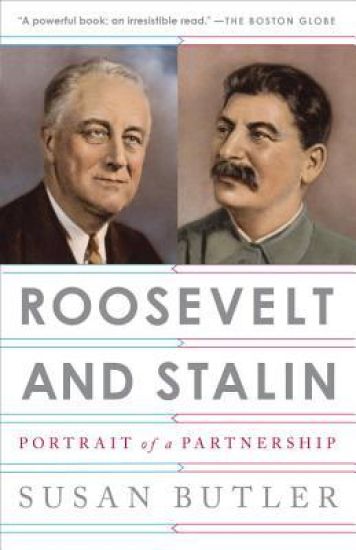
In Roosevelt and Stalin, Susan Butler tells the story of how the leader of the capitalist world and the leader of the Communist world became more than allies of convenience during World War II. They shared the same outlook for the postwar world, and formed an uneasy yet deep friendship, shaping the global stage from the war to the decades leading up to and into the new century. The book makes clear that Roosevelt worked hard to win Stalin over, by always holding out the promise that Roosevelt's own ideas were the best hope for the future peace and security of Russia. Stalin, however, was initially unconvinced that Roosevelt's planned world organization, even with police powers, would be strong enough to keep Germany from starting a new war. In the end we see how Stalin's opinion of Roosevelt evolved and how he began to view FDR as the key to peace. Roosevelt and Stalin is a revelatory portrait of this crucial, geopolitical partnership.