Kirjojen hintavertailu. Mukana 11 717 486 kirjaa ja 12 kauppaa.

Kirjahaku

Etsi kirjoja tekijän nimen, kirjan nimen tai ISBN:n perusteella.

1000 tulosta hakusanalla Rosanna Warren

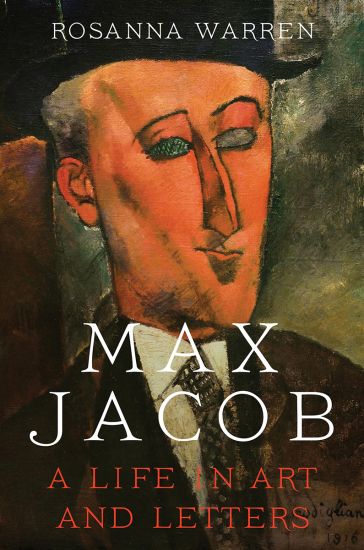
Max Jacob: A Life in Art and Letters

Max Jacob: A Life in Art and Letters

Rosanna Warren

W. W. Norton Company
2020
sidottu
Though less of a household name than his contemporaries in early twentieth century Paris, Jewish homosexual poet Max Jacob was Pablo Picasso's initiator into French culture, Guillaume Apollinaire's guide out of the haze of symbolism, and Jean Cocteau's loyal friend. As Picasso reinvented painting, Jacob helped to reinvent poetry with compressed, hard-edged prose poems and synapse-skipping verse lyrics, the product of a complex amalgamation of Jewish, Breton, Parisian, and Roman Catholic influences.In Max Jacob, the poet's life plays out against the vivid backdrop of bohemian Paris from the turn of the twentieth century through the divisions of World War II. Acclaimed poet Rosanna Warren transports us to Picasso's ramshackle studio in Montmartre, where Cubism was born; introduces the artists gathered at a seedy bar on the left bank, where Max would often hold court; and offers a front-row seat to the artistic squabbles that shaped the Modernist movement.Jacob's complex understanding of faith, art, and sexuality animates this sweeping work. In 1909, he saw a vision of Christ in his shabby room in Montmartre, and in 1915 he converted formally from Judaism to Catholicism--with Picasso as his godfather. In his later years, Jacob split his time between Paris and the monastery of Beno t-sur-Loire. In February 1944, he was arrested by the Gestapo and sent to Drancy, where he would die a few days later.More than thirty years in the making, this landmark biography offers a compelling, tragic portrait of Jacob as a man and as an artist alongside a rich study of his groundbreaking poetry--in Warren's own stunning translations. Max Jacob is a nuanced, deeply researched, and essential contribution to Modernist scholarship.
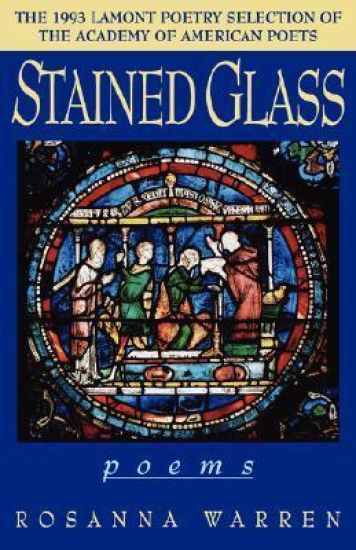
Stained Glass

Stained Glass

Rosanna Warren

WW Norton Co
1995
nidottu
Rosanna Warren's first collection of poetry, Each Leaf Shines Separate, announced the emergence of a fresh voice in contemporary American poetry and earned praise from John Hollander, Richard Eberhart, and Mark Strand. Now, in her second book, Rosanna Warren has fulfilled her promise. In Stained Glass she continues to examine, as John Hollander said of her first book, "the relation of art to nature, exploring the ultimate naturalness of the world of picture, and reading tenderly and shrewdly the forms of fable in which reality presents itself to the passionate gaze." Yet in this volume the poems are more personal and intimate—they possess an emotional depth that extends the earlier work. Stained Glass is a book of mourning. It begins with an echo of Milton's Lycidas and concludes with an evocation of Iliad XXIV; in its course it touches on many scenes of loss, personal and impersonal. In the voice of an Eskimo mother, in a Parisian market scene, in brilliant translations of poems by Max Jacob and Pierre Reverdy, to the more intimate elegies, the human drama unfolds within the larger rhythms of the natural landscape. In poems that are classical and eloquent, ranging from sonnets and rhymed quatrains to highly flexible free verse, Warren vividly probes the savagery of aging, the corruption of the human body and human estrangement from the divine, evoking as well scenes of simple tenderness and beauty. This year's recipient of an Ingram Merrill grant and the Lavan Award from the Academy of American Poets that honors a poet of exceptional merit under the age of forty, Rosanna Warren is clearly one of the most gifted poets of her generation.
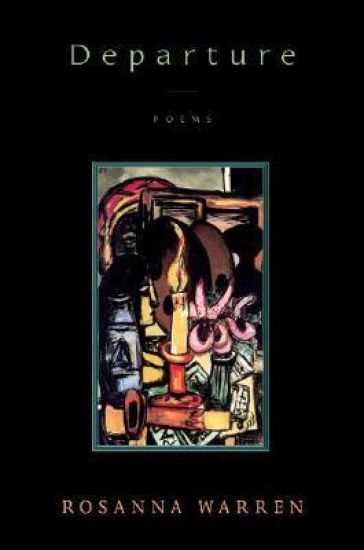
Departure

Departure

Rosanna Warren

WW Norton Co
2005
nidottu
Ancient and modern eras, sacred and earthly forces, personal and communal mourning are all held in the arc of this exquisite new collection. Named an Honor Book in the 2004 Massachusetts Book Awards, Departure celebrates the marriage of contraries in private poems of difficult love as Rosanna Warren explores intimacy and separation between mother and daughter, husband and wife, artist and muse, woman and demon lover.
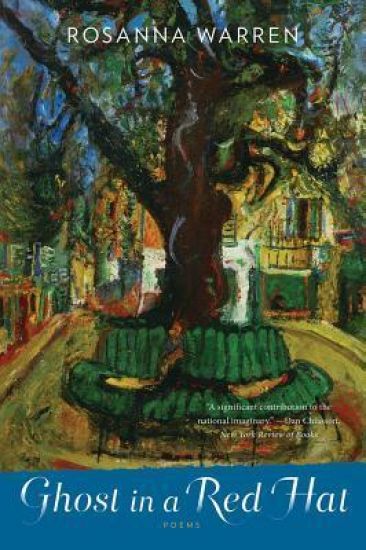
Ghost in a Red Hat

Ghost in a Red Hat

Rosanna Warren

WW Norton Co
2012
pokkari
In her fifth collection, Rosanna Warren draws inspiration not only from her own life but also from the works of other artists, both classical and contemporary, real and imagined. Warren explores the political and the personal through myth, history, elegy, and erotic lyric. She eulogizes her mother in poems such as Mediterranean, where she writes, the mystery was / not that she walked there, ten years after her death, / / but that she vanished, and let twilight take her place . In other poems, Warren contemplates wreckage and sorrow in family life, in Hurricane Katrina, and in the Trojan War, but also moments of eerie blessing. In her most forceful collection to date, she obsessively traces themes, both ancient and modern, in a voice compelling and deeply persuasive. from "Mediterranean" There was something I wanted to say, at the age of twelve, some question she hadn't answered, and yesterday, so clearly seeing her pace before me it rose again to the tip of my tongue, and the mystery was not that she walked there, ten years after her death, but that she vanished, and let twilight take her place "
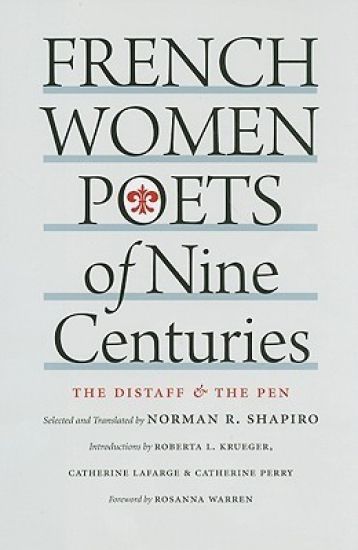
French Women Poets of Nine Centuries

French Women Poets of Nine Centuries

Rosanna Warren

Johns Hopkins University Press
2008
sidottu
Unprecedented in scope and depth, this tour de force collection of poetry by French-speaking women contains over 600 poems from 56 different pens, from the twelfth-century Anglo-Norman Marie de France through such noted poets of the past century as Lucienne Desnoues, Liliane Wouters, and Albertine Sarrazin. Through artful, careful translations that remain true to the authors' voices, style, and artistic integrity, Norman R. Shapiro provides an exceptional window into the development and evolution of French poetry from the Middle Ages up to the present. Original texts and translations are presented on facing pages, allowing readers to appreciate the vigor and variety of the French and the fidelity of the English versions. Divided into three chronological sections spanning the Middle Ages through the sixteenth century, the seventeenth and eighteenth centuries, and the nineteenth and twentieth centuries, the volume includes introductory essays by noted scholars of each era's poetry along with biographical sketches and bibliographical references for each poet. This bilingual panorama is an essential addition to the libraries of all scholars and readers of poetry, French, literature, and-especially-women's writing. It will also interest students of the art and craft of literary translation. Featuring the poetry of: Louise Ackermann, Victoire Babois, Natalie Clifford Barney, Fanny de Beauharnais, Catherine Bernard, Castelloza, Elisabeth-Sophie Cheron, Christine de Pizan, Gabrielle de Coignard, Louise Colet, Marie Dauguet, Lise Deharme, Lucie Delarue-Mardrus, Marceline Desbordes-Valmore, Antoinette Deshoulieres, Lucienne Desnoues, Catherine des Roches, Madeleine des Roches, Stephanie-Felicite de Genlis, Rosemonde Gerard, Delphine Gay de Girardin, Elisabeth Guibert, Pernette du Guillet, Henriette de Coligny de La Suze, Gerard d'Houville, Jeanne d'Albret, Marie-Madeleine Joliveau de Segrais, Anne-Marie Kegels, Louise Labe, Marie-Amable de La Ferandiere, Madeleine de l'Aubespine, Marguerite de Navarre, Marie de Cleves, Marie de France, Anne de Marquets, Elisa Merc ur, Louise Michel, Marie-Emilie Maryon de Montanclos, Amelie Murat, Marie Nizet, Anna de Noailles, Marie Pape-Carpantier, Louisa Paulin, Cecile Perin, Marie de Romieu, Louise-Genevieve Gillot de Sainctonge, Albertine Sarrazin, Cecile Sauvage, Madeleine de Scudery, Sabine Sicaud, Andree Sodenkamp, Amable Tastu, Marie-Catherine Desjardins de Villedieu, Louise de Vilmorin, Renee Vivien, and Liliane Wouters
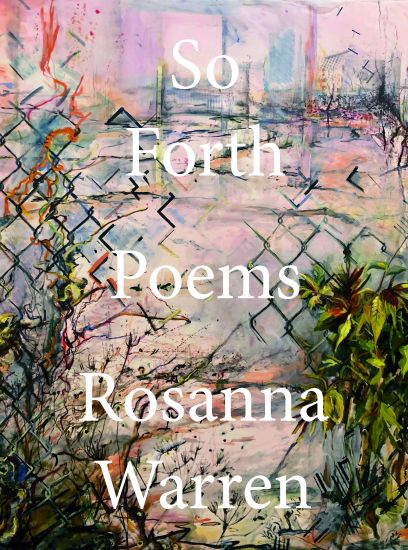
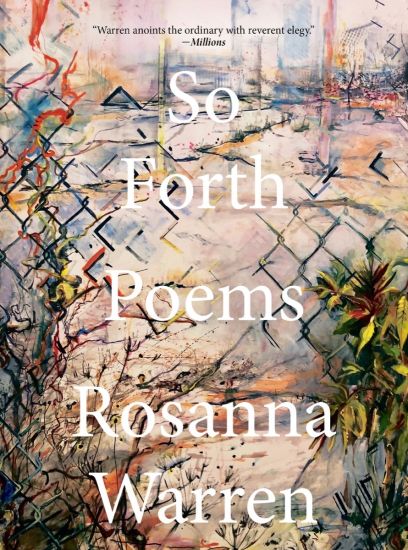
So Forth: Poems

So Forth: Poems

Rosanna Warren

W. W. Norton Company
2020
sidottu
With irony, in mourning tinged with eros, one of our most extraordinary poets blends the personal and the political to meditate on damage, aging, and injustice. The poems in So Forth surge back in memory, pondering guilt and forgiveness. Consciousness flows from singular to plural; identity in these poems does a round dance with other personae, with formidable women artists of the past in the powerful sequence "Legende of Good Women," with pre-Socratic philosophers, and with lovers, children, and strangers--the strangest of whom is the face in the mirror. In response to griefs both historical and contemporary, So Forth contemplates the quest for the holy and traditions of the sacred.
So Forth: Poems

So Forth: Poems

Rosanna Warren

W. W. Norton Company
2022
nidottu
With irony, in mourning tinged with eros, one of our most extraordinary poets blends the personal and the political to meditate on damage, aging, and injustice. The poems in So Forth surge back in memory, pondering guilt and forgiveness. Consciousness flows from singular to plural; identity in these poems does a round dance with other personae, with formidable women artists of the past in the powerful sequence "Legende of Good Women," with pre-Socratic philosophers, and with lovers, children, and strangers--the strangest of whom is the face in the mirror. In response to griefs both historical and contemporary, So Forth contemplates the quest for the holy and traditions of the sacred.
Max Jacob: A Life in Art and Letters

Max Jacob: A Life in Art and Letters

Rosanna Warren

W. W. Norton Company
2022
nidottu
Though less of a household name than his contemporaries in early twentieth century Paris, Jewish homosexual poet Max Jacob was Pablo Picasso's initiator into French culture, Guillaume Apollinaire's guide out of the haze of symbolism, and Jean Cocteau's loyal friend. As Picasso reinvented painting, Jacob helped to reinvent poetry with compressed, hard-edged prose poems and synapse-skipping verse lyrics, the product of a complex amalgamation of Jewish, Breton, Parisian, and Roman Catholic influences.In Max Jacob, the poet's life plays out against the vivid backdrop of bohemian Paris from the turn of the twentieth century through the divisions of World War II. Acclaimed poet Rosanna Warren transports us to Picasso's ramshackle studio in Montmartre, where Cubism was born; introduces the artists gathered at a seedy bar on the left bank, where Max would often hold court; and offers a front-row seat to the artistic squabbles that shaped the Modernist movement.Jacob's complex understanding of faith, art, and sexuality animates this sweeping work. In 1909, he saw a vision of Christ in his shabby room in Montmartre, and in 1915 he converted formally from Judaism to Catholicism--with Picasso as his godfather. In his later years, Jacob split his time between Paris and the monastery of Beno t-sur-Loire. In February 1944, he was arrested by the Gestapo and sent to Drancy, where he would die a few days later.More than thirty years in the making, this landmark biography offers a compelling, tragic portrait of Jacob as a man and as an artist alongside a rich study of his groundbreaking poetry--in Warren's own stunning translations. Max Jacob is a nuanced, deeply researched, and essential contribution to Modernist scholarship.
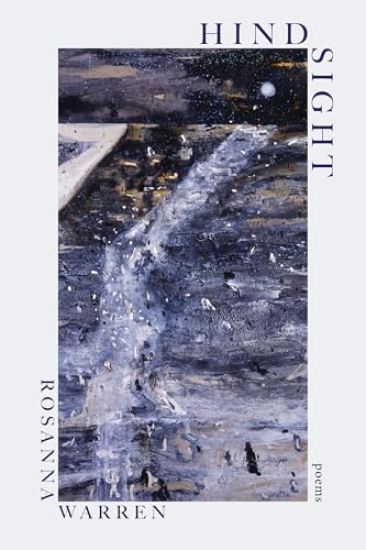
Hindsight

Hindsight

Rosanna Warren

WW NORTON CO
2025
sidottu
Hindsight arises from a tormented time in our country’s history. Some poems contemplate the shocks of the COVID-19 assault. Others consider our nation, which is torn to pieces politically. The poems in this collection attempt to find a language to describe the breakage. But political fracture occurs because of more fundamental dislocations: for this book, most crucially, spiritual. A search for forms of the sacred drives the whole collection. It’s a book of questions, not answers. In places, it struggles with the Christian story of sacrifice and crucifixion: a heretical attempt to make sense of suffering and of aggression. “Offices” and “Concerning ceremonies” borrow Christian liturgy to chart an experience of learning compassion. Each poem asks some version of the driving question from “Dead Flowers”: “What can be made of all this / grief.” Other poems turn to Judaism and Buddhism to see what wisdom they offer. Beneath theology pulses the private life. These poems look into a personal past and try to weigh the moral meaning of experience. In “Hindsight,” the speaker discovers, “I could have / seen you better, I / know that now.” Who have we been as we struggled to grow up? Whom have we hurt? What does it mean to be conscious? Hindsight elegantly embraces life writ large—larger than we are, sometimes violent, sometimes harshly beautiful—as ongoing instruction, in turn leaving the reader with a lyrical compass for orientation in our troubled moment.
Liberties Journal of Culture and Politics

Liberties Journal of Culture and Politics

Anthony Julius; Nicholas Lemann; Alfred Brendel; Paul Berman; Jorie Graham; Fouad Ajami; Jack Goldsmith; Edward Luttwak; Roberto Calasso; Ishion Hutchinson; Walter Sheidel; Helen Vendler; Robert Alter; Daryl Michael Scott; Rosanna Warren; Alastair Macaulay; David Greenberg

Liberties Journal Foundation
2021
pokkari
Liberties – A Journal of Culture and Politics features original essays and poetry from some of today’s best writers and artists to inspire and impact the intellectual and creative lifeblood of culture and politics. This issue of Liberties includes: Anthony Julius on censorship of the arts; Nicholas Lemann on rescuing capitalism; Alfred Brendel on playing Beethoven; Paul Berman on the George Floyd uprising; Fouad Ajami’s story of an honor killing; Jack Goldsmith on conservatives and the courts; Edward Luttwak on understanding China; Roberto Calasso on when journals mattered; Walter Scheidel on life after covid; Helen Vendler on the poet Robert Hayden; Robert Alter on Lolita today; Daryl Michael Scott on the 13th Amendment; Alastair Macaulay on Balanchine; David Greenberg on renaming our heritage; new poetry from Jorie Graham, Ishion Hutchinson, and Rosanna Warren; and, Leon Wieseltier (editor) and Celeste Marcus (managing editor).
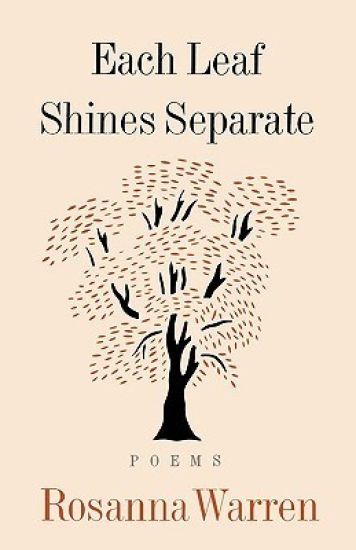
Each Leaf Shines Separate

Each Leaf Shines Separate

Warren Rosanna

WW NORTON CO
1984
nidottu
In elegies of love and death, we learn the legacy of poet Max Jacob, and “the clarity of being alone,” but also that we still have to touch to believe, and that love, to believe in itself, must dress up in death. Yet sources of the future are also brought tenderly to us through the image of an unborn daughter, a child’s room in autumn, and the knowledge that “gene by gene, the tiny transcriptions continue.”
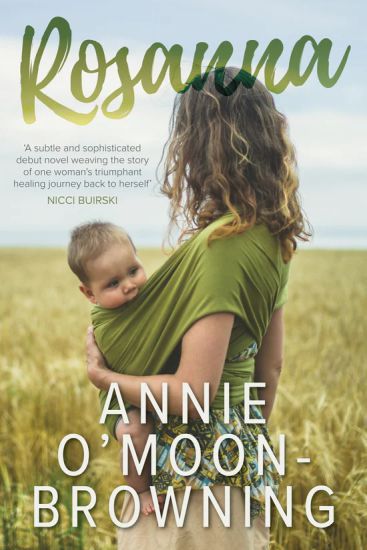
Rosanna

Rosanna

Annie O'Moon-Browning

Hawkeye Publishing Pty Ltd
2024
nidottu
Brisbane. Pre Expo '88. Rosanna walks into Anna's art therapy. She is delusional. Prostituted. Homeless. The government deems her unfit for parenting. Caught up in Brisbane's underbelly, she fights to reclaim her children. As Rosanna's story unravels, Anna's past begins to reveal itself. An elusive familiarity haunts their relationship. What ties these two women together? Rosanna is a deeply Australian story of hidden truths within the glory of our wild landscapes. It illuminates the healing force of sisterhood. Holds the charm of Celtic folklore. Shows the power of our human will to regain dignity out of the destruction of culture.
Rosanna

Rosanna

Maria Edgeworth

Createspace Independent Publishing Platform
2018
nidottu
This work has been selected by scholars as being culturally important, and is part of the knowledge base of civilization as we know it. This work was reproduced from the original artifact, and remains as true to the original work as possible. Therefore, you will see the original copyright references, library stamps (as most of these works have been housed in our most important libraries around the world), and other notations in the work.This work is in the public domain in the United States of America, and possibly other nations. Within the United States, you may freely copy and distribute this work, as no entity (individual or corporate) has a copyright on the body of the work.As a reproduction of a historical artifact, this work may contain missing or blurred pages, poor pictures, errant marks, etc. Scholars believe, and we concur, that this work is important enough to be preserved, reproduced, and made generally available to the public. We appreciate your support of the preservation process, and thank you for being an important part of keeping this knowledge alive and relevant.
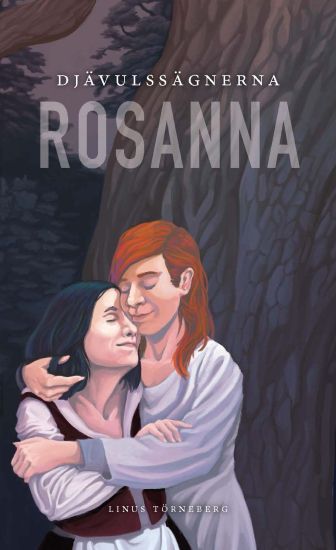
Rosanna

Rosanna

Linus Törneberg

Tallbergs Förlag
2019
nidottu
Rosanna föddes 1603 i en mörk skog med självaste Djävulen närvarande. Det här är berättelsen om Rosannas liv och hennes kärlek, som måste hållas gömd från världen. En kärlek som är mellan två kvinnor, vilket inte ses med blida ögon av sin samtid. Berättelsen om Rosanna är början på en 500 år lång kamp för kärlek och lycka. Kommer kärleken segra eller är den dömd på förhand? Djävulssägnerna är fem queera skräcknoveller som sträcker sig från år 1603 till år 2186. Du får följa Rosanna, Arvid, Gabriella, Hannes, Erik och många fler under olika epoker och ta del av deras öden. Berättelserna går även att läsa enskilt men vi rekommenderar att du läser dem i ordning.
Rosanna and the codfish estate

Rosanna and the codfish estate

Rashid Dossett

Lulu.com
2017
pokkari
When the governor of the Codfish colony dies, the colony is divided into captaincies that are governed from the Azores. The widow of the governor is suspected of involvement in her husband's death. This is soon forgotten when a Portuguese sailor becomes the new governor of a part of the Codfish colony which was named New Sintra. As part of his office he needs to marry and he selects the daughter of the former governor as his consort. This, however, was not a good idea...