
Kirjahaku
Etsi kirjoja tekijän nimen, kirjan nimen tai ISBN:n perusteella.
1000 tulosta hakusanalla Rose Bird Waterman
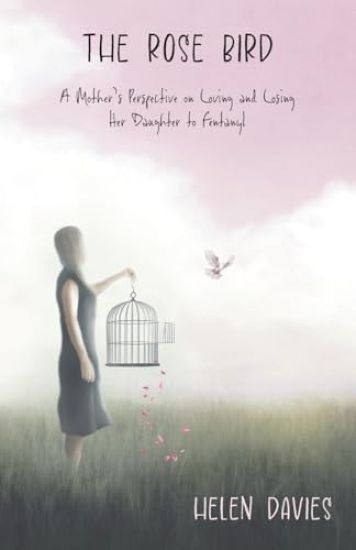
The Rose Bird is a personal account of what goes on behind closed doors in a family coping with severe mental illness. Told as only a mother can, this is the true story of loving and losing a daughter affected by mental illness and addiction. Although author Helen Davies begins the story with the fentanyl-related death of her twenty-three-year-old daughter Katie on the streets of Kitchener, Ontario, The Rose Bird is really a tale about resilience and a family cherishing and supporting a daughter and sister in an impossible situation.By sharing the story of raising Katie through both good times and bad, Helen highlights how mental illness and addictions can affect any family, and the dearth of resources available before a situation hits a crisis point. As Helen watches her spirited, creative, animal-loving daughter slowly get drawn into life on the streets, she shares the frustration and isolation of fighting to save Katie, and the devastation this brings to her and her family.This is a book for anyone who is going through or has gone through a similar journey, or those supporting someone travelling this road. It shares the highs and lows of loving someone no matter what, and the growing need for policy change and better community resourcing. It is also an important reminder that every person affected by mental illness or addictions has their own story and is someone's child, sibling, or family member.

The Rose Bird is a personal account of what goes on behind closed doors in a family coping with severe mental illness. Told as only a mother can, this is the true story of loving and losing a daughter affected by mental illness and addiction. Although author Helen Davies begins the story with the fentanyl-related death of her twenty-three-year-old daughter Katie on the streets of Kitchener, Ontario, The Rose Bird is really a tale about resilience and a family cherishing and supporting a daughter and sister in an impossible situation.By sharing the story of raising Katie through both good times and bad, Helen highlights how mental illness and addictions can affect any family, and the dearth of resources available before a situation hits a crisis point. As Helen watches her spirited, creative, animal-loving daughter slowly get drawn into life on the streets, she shares the frustration and isolation of fighting to save Katie, and the devastation this brings to her and her family.This is a book for anyone who is going through or has gone through a similar journey, or those supporting someone travelling this road. It shares the highs and lows of loving someone no matter what, and the growing need for policy change and better community resourcing. It is also an important reminder that every person affected by mental illness or addictions has their own story and is someone's child, sibling, or family member.
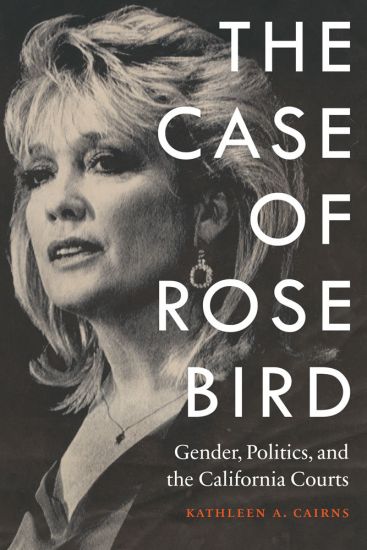
Rose Elizabeth Bird was forty years old when in 1977 Governor Edmund G. “Jerry” Brown chose her to become California’s first female supreme court chief justice. Appointed to a court with a stellar reputation for being the nation’s most progressive, Bird became a lightning rod for the opposition due to her liberalism, inexperience, and gender. Over the next decade, her name became a rallying cry as critics mounted a relentless effort to get her off the court. Bird survived three unsuccessful recall efforts, but her opponents eventually succeeded in bringing about her defeat in 1986, making her the first chief justice to be removed from the California Supreme Court. The Case of Rose Bird provides a fascinating look at this important and complex woman and the political and cultural climate of California in the 1970s and 1980s. Seeking to uncover the identities and motivations of Bird’s vehement critics, Kathleen A. Cairns traces Bird’s meteoric rise and cataclysmic fall. Cairns considers the instrumental role that then-current gender dynamics played in Bird’s downfall, most visible in the tensions between second-wave feminism and the many Americans who felt that a “radical” feminist agenda might topple long-standing institutions and threaten “traditional” values.
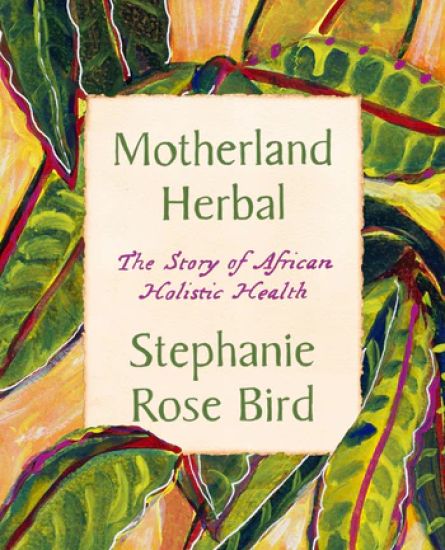
In this powerful and comprehensive guide in the spirit of Jambalaya and Sacred Woman, an herbalist celebrates ancient and modern African holistic healing.“The message of this book is: hold onto your yams, your collards, watermelon, and roots. There is magic, mystery, connection, and healing stored within them.”—Stephanie Rose BirdStephanie Rose Bird grew up surrounded by forests, listening to the stories of her ancestors and learning African healing ways. From an early age, she dedicated herself to herbalism and living a spiritually fulfilled life in harmony with nature. Now, the wisdom she as accrued is gathered in this impressive encyclopedic work of African Healing and herbal medicine.Stephanie teaches you how to garden and harvest in unison with the seasons, and how to use herbalism and magic—derived from ancestral and spiritual helpers—to heal. A treasure trove of knowledge, Motherland Herbal showcases an array of recipes and rituals that nourish every facet of life:Seasonal recipes to support overall well-beingTinctures for common ailments such as headaches, flu, or heartburnRemedies for improving mental health, lessening symptoms of anxiety, stress, or depressionNatural body and home care products, from facials to cleaning solutionsHerbal Baths for relaxation, sexual wellness, and good luckRituals and Altars for universal experiences, such as learning to letting go after loss and improving creativity and fertilityLove Potions, Sleep Potions, Protective Amulets, and moreWritten in Stephanie’s warm and authoritative voice, Motherland Herbal seamlessly blends activism and ancestral folklore with the realms of spirituality, gardening, and holistic wellness. Her deep reverence for the wisdom of her ancestors infuses every page of this guide, which is a foundational resource that will shape the landscape of African healing and folk medicine for generations to come.Motherland Herbal includes 54 original pieces of art, including maps and artwork created by the author.
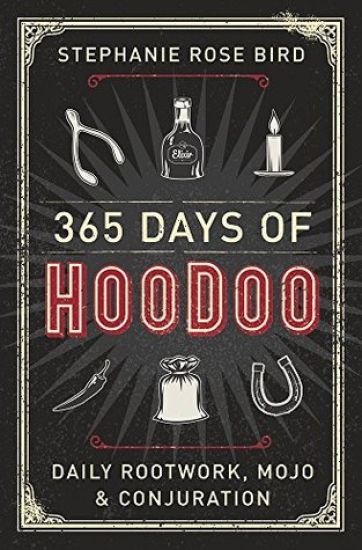
Hoodoo is a bold spiritual tradition that helps enhance your wellbeing and solve everyday problems. This practical, do-it-yourself guide shows how to use spells, rites, recipes, mojos, and curios to enrich your life and be ready for whatever comes your way. 365 Days of Hoodoo starts by providing the basics of Hoodoo, and then gradually builds your knowledge day after day. You ll discover the essential components for your practice, how to master the parts of your life that seem out of control, and the ways Hoodoo can improve love, prosperity, protection, and much more. This impressive book also features lore, prayers, potions, altars, baths, and meditations.
Dieting and description of how Earth Rituals, Goddess Invocations, Incantations, Affirmations and Natural Remedies Enhance Any Weight-loss Plan. The journey is towards wholeness, completion, health and self-realization.
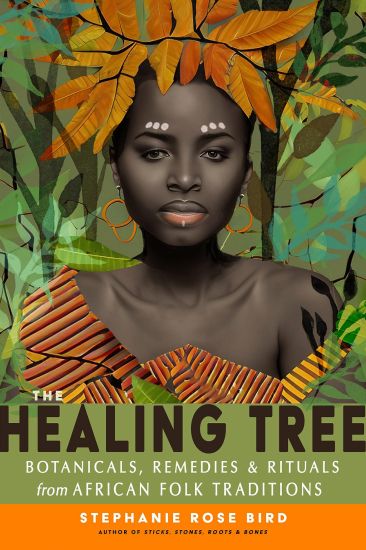
A practical guide to traditional African approaches to healing with remedies and cultural history from one of the most respected authorities on the subject. The Healing Tree celebrates the forest: its powers, spirits, magic, medicine, and mysteries. Author Stephanie Rose Bird shares how trees have provided her with personal healing, then allows us to share in that process for our own benefit and, by extension, provide healing for Earth's beleaguered forests. Reclaiming traditional botanical and herbal practices has never been more important than it is today. So much of our future depends on our ability to use ancient Earth knowledge. Although many botanicals and herbals have been published, they tend to focus on Europe and the Americas. For many, the word "rainforest" is synonymous with the endangered Amazon Basin, as if that were Earth's only endangered patch of healing green. Africa, the Mother Continent and reputedly the birthplace of the entire human race, remains largely ignored. Yet African wild lands are as endangered as the Amazon. Equally endangered are the traditional indigenous cultures of Africa, caretakers of sophisticated botanical medicinal systems whose roots stretch back to the proverbial dawn of time. In this crucially important book, author Stephanie Rose Bird recounts the story of the sacred wood: how to live in it, learn from it, derive spiritual enrichment from it, and how to preserve and protect it. The book offers functional, accessible recipes, remedies, and rituals derived from a variety of African and African American traditions to serve mind, body, soul, and spirit. Bird's book follows her own personal journey, but Africa is always her touchstone, the persistent and tenacious ancestral mother wisdom and spiritual foundation that refuses to fade away. The Healing Tree preserves this knowledge, presenting it as relevant and viable and demonstrating in intimate detail how vestiges of that knowledge took root in the Western Hemisphere, in African American culture, and more broadly in American culture in general. This book was previously published as A Healing Grove from Lawrence Hill Books (9781556527647). This edition includes a new preface by the author and a source guide for the botanicals discussed within.
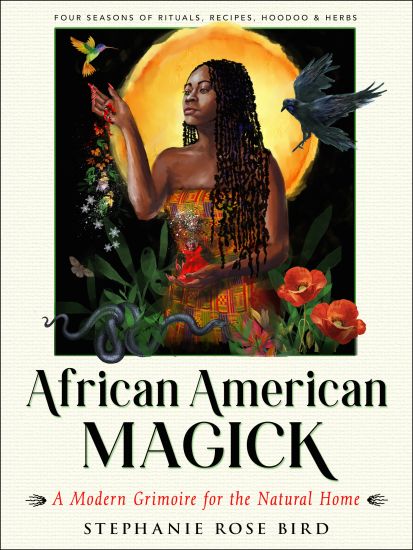
An herbal guide to natural living with ancient techniques, rituals, and methods from around the world for use with each season's inherent energies to supplement the health and well-being of body, mind, and soul. The changing of the seasons can feel magical--greens changing to browns and golds, snow melting to show fresh buds. We all recognize these telltale signs, but few of us are aware of the powerful impact each season has on our spiritual lives. Designed to further spiritual practices by learning from neighboring cultures, this book provides readers with useful ideas unrestricted by geographic borders, ethnicity, religion, or magical path. Included are: Recipes and concepts from the Caribbean African American soul food Buddhist meditation practices Sacred Hindu rites, Old European traditions Aboriginal Australian dreaming lessons Native American wisdom. Previously published in under the title Four Seasons of Mojo.
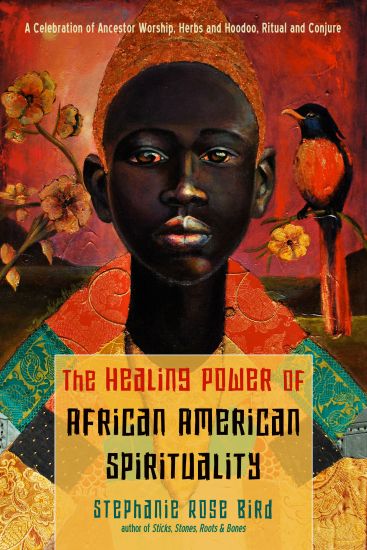
The Healing Power of African-American Spirituality
Stephanie Rose Bird
RED WHEEL/WEISER
2022
nidottu
The essential resource and guide to African American spirituality and traditions. This is a fabulous resource for anyone who wants to understand African American spirituality, shamanism, and indigenous spiritual practices and beliefs. It is designed to be informative while providing hands-on recipes, rituals, projects, and resources to help you become an active participant in its wonderfully soulful traditions. Inside you will find: 1. A celebration of healing, magic, and the divination traditions of ancient African earth-based spirituality 2. An explanation of how these practices have evolved in contemporary African American culture 3. A potpourri of recipes, rituals, and resources that you can use to heal your life Among the topics covered: African spiritual practices of Santeria, Obeah, Lucumi, Orisa, and QuimboisHoodoo--and how to use it to improve your healthAncient healing rituals and magical recipes of DaliluwTalking drums, spiritual dancing, clapping, tapping, singing, and changingower objects, tricks and mojo bats, and herbal remedies Previously published as The Big Book of Soul.
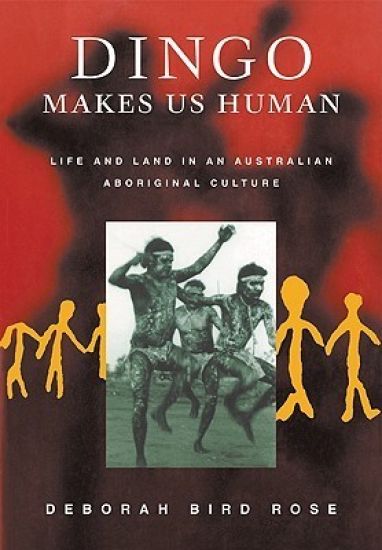
This original ethnography brings indigenous people's stories into conversations around troubling questions of social justice and environmental care. Deborah Bird Rose lived for two years with the Yarralin community in the Northern Territory's remote Victoria River Valley. Her engagement with the people's stories and their action in the world leads her to this analysis of a multi-centred poetics of life and land. The book speaks to issues that are of immediate and broad concern today: traditional ecological knowledge, kinship between humans and other living things, colonising history, environmental history, and sacred geography. Now in paperback, this award-winning exploration of the Yarralin people is available to a whole new readership. The boldly direct and personal approach will be illuminating and accessible to general readers, while also of great value to experienced anthropologists.
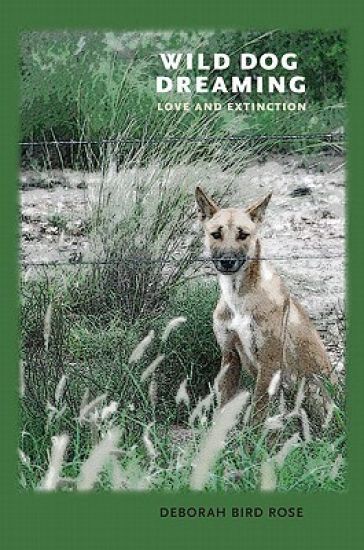
We are living in the midst of the Earth’s sixth great extinction event, the first one caused by a single species: our own. In Wild Dog Dreaming, Deborah Bird Rose explores what constitutes an ethical relationship with nonhuman others in this era of loss. She asks, Who are we, as a species? How do we fit into the Earth’s systems? Amidst so much change, how do we find our way into new stories to guide us? Rose explores these questions in the form of a dialogue between science and the humanities. Drawing on her conversations with Aboriginal people, for whom questions of extinction are up-close and very personal, Rose develops a mode of exposition that is dialogical, philosophical, and open-ended.An inspiration for Rose—and a touchstone throughout her book—is the endangered dingo of Australia. The dingo is not the first animal to face extinction, but its story is particularly disturbing because the threat to its future is being actively engineered by humans. The brazenness with which the dingo is being wiped out sheds valuable, and chilling, light on the likely fate of countless other animal and plant species."People save what they love," observed Michael Soulé, the great conservation biologist. We must ask whether we, as humans, are capable of loving—and therefore capable of caring for—the animals and plants that are disappearing in a cascade of extinctions. Wild Dog Dreaming engages this question, and the result is a bold account of the entangled ethics of love, contingency, and desire.
We are living in the midst of the Earth’s sixth great extinction event, the first one caused by a single species: our own. In Wild Dog Dreaming, Deborah Bird Rose explores what constitutes an ethical relationship with nonhuman others in this era of loss. She asks, Who are we, as a species? How do we fit into the Earth’s systems? Amidst so much change, how do we find our way into new stories to guide us? Rose explores these questions in the form of a dialogue between science and the humanities. Drawing on her conversations with Aboriginal people, for whom questions of extinction are up-close and very personal, Rose develops a mode of exposition that is dialogical, philosophical, and open-ended.An inspiration for Rose—and a touchstone throughout her book—is the endangered dingo of Australia. The dingo is not the first animal to face extinction, but its story is particularly disturbing because the threat to its future is being actively engineered by humans. The brazenness with which the dingo is being wiped out sheds valuable, and chilling, light on the likely fate of countless other animal and plant species.""People save what they love,"" observed Michael Soulé, the great conservation biologist. We must ask whether we, as humans, are capable of loving—and therefore capable of caring for—the animals and plants that are disappearing in a cascade of extinctions. Wild Dog Dreaming engages this question, and the result is a bold account of the entangled ethics of love, contingency, and desire.
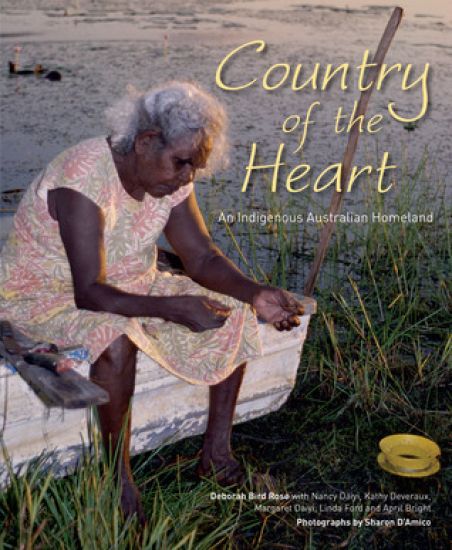
Country of the Heart
Deborah Bird Rose; Nancy Daiyi; Kathy Devereaux; Margaret Daiyi; Linda Ford; April Bright
Aboriginal Studies Press
2011
nidottu
Country of the Heart provides an introduction to the connections between Aboriginal people and the land that has sustained and nurtured them for generations. Through the wonderful photographic images and the stories of the MakMak clan women (white-breasted sea eagle), readers are led into the heart of country: the people, the animals, the plants, the ancestors, the seasons - and the intimate relationships which tie them together. The story is told through the voices of Indigenous academic, Linda Ford, and her family, the traditional custodians of Wagait country. Their story includes the challenges her people continue to meet to maintain the health of 'country'. As Ford says: 'Country gives us our identity.'
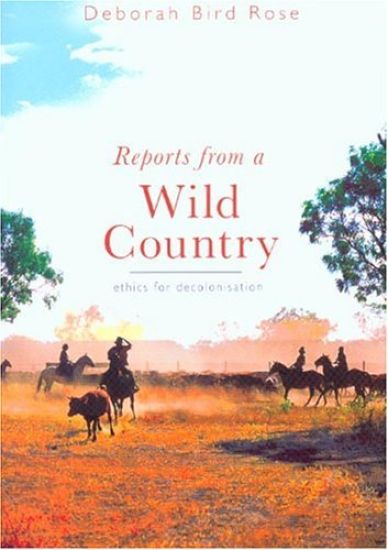
This work explores some of Australia's major ethical challenges. Written in the midst of rapid social and environmental change and in a time of uncertainty and division, it offers powerful stories and arguments for ethical choice and commitment. The focus is on reconciliation between Indigenous and Settler' peoples, and with nature.
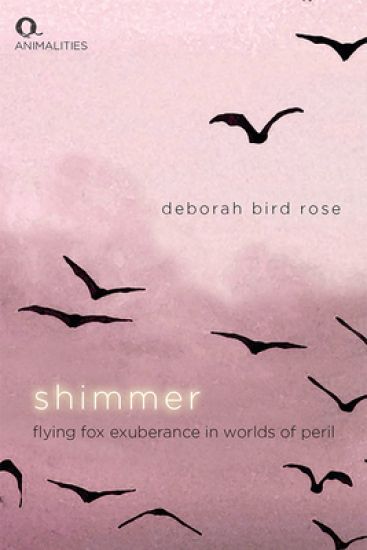
I was called to flying-foxes. My research questions led me into multispecies ethnographic work involving wildlife carers and academically trained scientists in eastern Australia. The people I met were at the front line in the work of holding flying-foxes back from the edge of extinction. I continued to visit the north, and I revisited my notebooks from several decades of research with Aboriginal people. The research was exhilarating, and then again at times deeply disheartening. I was to encounter more passion, intimacy, cruelty, horror, complexity, generosity and wild beauty than I could ever have imagined. Living with flying-foxes, I came to understand, takes us straight to the heart of every big question facing Earth life in the 21st century.' In this deeply personal book, the last one she wrote before hear death in 2018, Deborah Bird Rose explores the shimmer of life the iridescent pulse of beauty and power, the processes of transition and transformation that flows across and between generations. Grounded within this insight, she develops and advocates for an ethics of attention that is in the world within everyday practices, and in this case for and with flying foxes and their worlds.
I was called to flying-foxes. My research questions led me into multispecies ethnographic work involving wildlife carers and academically trained scientists in eastern Australia. The people I met were at the front line in the work of holding flying-foxes back from the edge of extinction. I continued to visit the north, and I revisited my notebooks from several decades of research with Aboriginal people. The research was exhilarating, and then again at times deeply disheartening. I was to encounter more passion, intimacy, cruelty, horror, complexity, generosity and wild beauty than I could ever have imagined. Living with flying-foxes, I came to understand, takes us straight to the heart of every big question facing Earth life in the 21st century.' In this deeply personal book, the last one she wrote before hear death in 2018, Deborah Bird Rose explores the shimmer of life the iridescent pulse of beauty and power, the processes of transition and transformation that flows across and between generations. Grounded within this insight, she develops and advocates for an ethics of attention that is in the world within everyday practices, and in this case for and with flying foxes and their worlds.
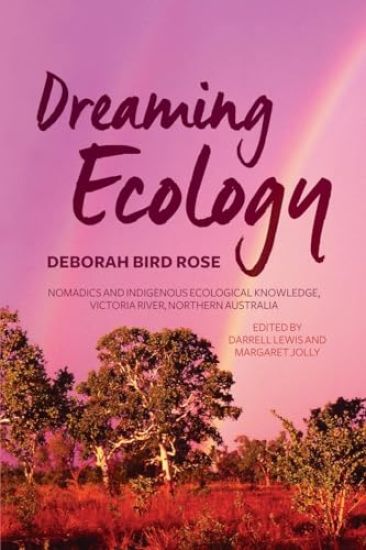
In the author's own words, Dreaming Ecology 'explores a holistic understanding of the interconnections of people, country, kinship, creation and the living world within a context of mobility. Implicitly it asks how people lived so sustainably for so long'. It offers a telling critique of the loss of Indigenous life, human and non-human, in the wake of white settler colonialism and this becoming 'cattle country'. It offers a fresh perspective on nomadics grounded in 'footwalk epistemology' and 'an ethics of return sustained across different species, events, practices and scales'.'This is the final and most substantial of Debbie's love letters to the Aboriginal people of the Victoria River Downs. I say this because there is such a sense of reverence, wonder and respect throughout the book. The introduction of concepts of double-death, footwalk epistemology, wild country ... are not only organising ideas but characterisations arising from what Debbie hears, sees and feels of herself and Aboriginal others ... I think of it in terms of love, if love is care, reciprocal respect, deep connectivity and a strong desire to never make less of the people she chose to commit herself to.'-Richard Davis'This book was a pleasure to read, filled with careful description of people, places, and various plants and animals, and insightful analysis of the patterns and commitments that hold them together in the world.'-Thom van Dooren
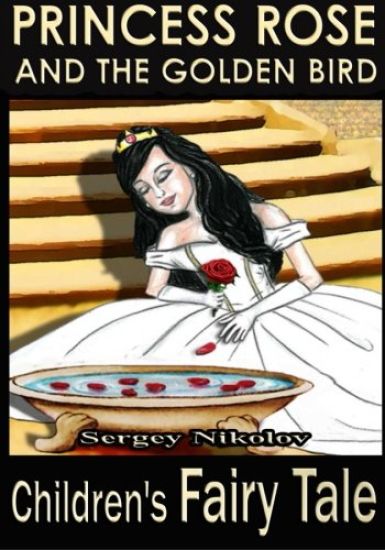
Princess Rose and the Golden Bird
Sergey Nikolov
Createspace Independent Publishing Platform
2016
nidottu
A White Rose From a Caged Bird Named Sirena
Katie Skuse
Createspace Independent Publishing Platform
2016
nidottu
The play takes place over a year in several locations; Pentre Jane Morgan Village (PJM), a university accommodation; a rehearsal room in the university and a film studio. It is throughout the year of 2015. In the afternoon around 5-6pm and midday around 11-1pm. We start and end with the same thing that is slightly different. A dance, a video and a monologue/song; all suggesting that DIRECTOR, KATERINA and EMMA are related and there's something wrong with DIRECTOR. KATERINA is dead and EMMA is gone. The baby in the wedding photo is EMMA. In 2015, DIRECTOR is directing a historical TV show for the History Channel that goes through history looking at different people i.e Greek theatre, Queen Nefertiti, Boudicca, King Arthur, Mary 1st, Elizabeth Bathory, the Witch Trails, the First and Second World War, Cilla Black and Margaret Thatcher. He doesn't like women because of what has happened in his past. His main target is EMMA whenever she is working with him. EMMA is now 21 and in Aberystwyth University studying Performing Arts getting work experience with the History Channel with her flat mates BONNIE 21 who's studying Drama, NINA 22 who's studying French and International Politics, DAI 22 who's studying French and Film and TV and at the end CHRIS 20 comes in. CHRIS is studying Computer Science. The students do a lot of improvising games with PERSON and TALIA one of the Greek Chorus, as well as talking in their flat. PERSON is a time traveller that is not seen by the History Channel crew and cast. In one of the scenes there is a death of PROFESSOR PEACH, the main suspect is DIRECTOR. He did kill PROFESSOR PEACH but DIRECTOR is not charged. We see EMMA go into herself by all what DIRECTOR is doing to her and her close friendship with BONNIE. There are a couple of little scenes of an 8MM video being shown following EMMA going through her life at University. We find out at the end of the play that the camera man is DIRECTOR. At the end DIRECTOR meets his match through MARGARET THATCHER. In the second to last scene, we see EMMA as a 60 year old who seems to be confidant but the audience knows otherwise. The last three are exactly the same as the first three but slightly different. DIRECTOR is dead and happily married to KATERINA with their child EMMA. EMMA is Sirena named in the title as well as women in the play. The meaning of Sirena is "enchanter". In Greek the meaning of the name Sirena is: Sirens.