
Kirjahaku
Etsi kirjoja tekijän nimen, kirjan nimen tai ISBN:n perusteella.
1000 tulosta hakusanalla Rose Elizabeth Siva
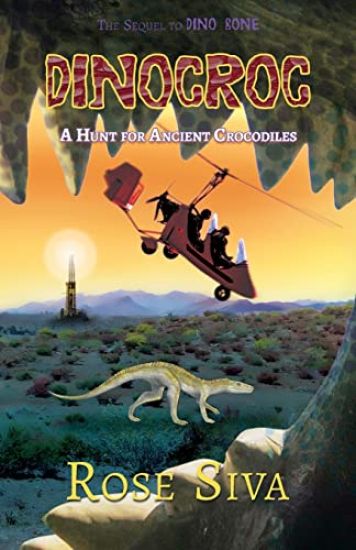
'Will the rescue beacon save us' wondered Josh... Josh goes out on work experience to far inland Australia in the Cooper Oil Basin and meets an eccentric retired professor who is in search of a long extinct crocodile. He plans to use his really clever mad scientist type equipment to survey parts of the country in his home-built gyrocopter in search of croc remains. He convinces Josh to fly with him but unfortunately all does not go to plan. The gyrocopter crashes. The Prof is injured. Josh disobeys all the prescribed safety rules in the Australian desert and leaves the Prof when he sees a flashing light on the horizon.Can he find help in time?This sequel to DINO BONE, DINOPAL and DINOTHAW continues Josh's dinosaur hunting adventures.

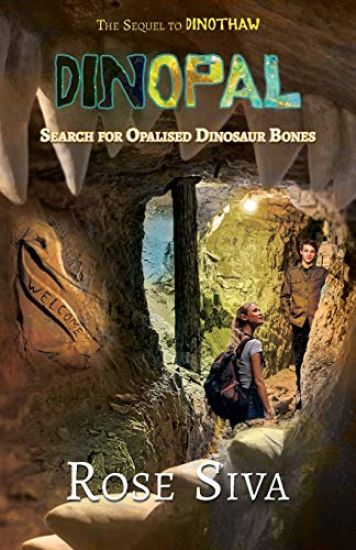
Josh and his father, Steve, go to Lightning Ridge, an outback opal mining town in Australia, in the hope of making a fortune mining opals. All does not go to plan when there is a catastrophic event in the mine they enter. Steve, searching for help for Josh, comes across a team who are working to retrieve extremely rare and precious opalised dinosaur bones. Lightning Ridge is the only place in the world where these precious artefacts are found. They are not the only people who would like to recover such a valuable fossil, and in the dead of night Josh unwittingly becomes involved in a robbery attempt. Will they foil the robbers? Will the opalised bone be safe?
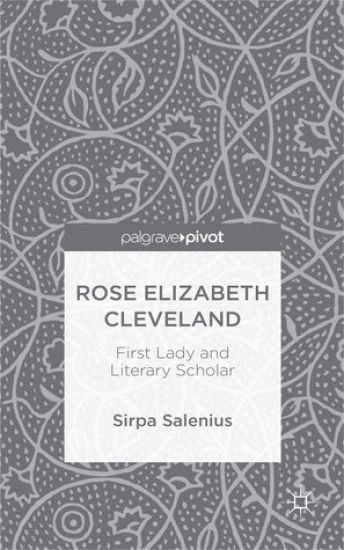
Rose Elizabeth Cleveland was the First Lady of the United States when she assisted her brother, Grover Cleveland. She was also a literary scholar, novelist, and a poet who published work that empowered women. This book positions Cleveland in the historical context of the early twentieth century, when she helped shape female subjectivity and agency.

The Monotheism of Abraham and How It Shaped World History
Teresa Rose Elizabeth Bottoni
Dorrance Publishing Co.
2022
sidottu
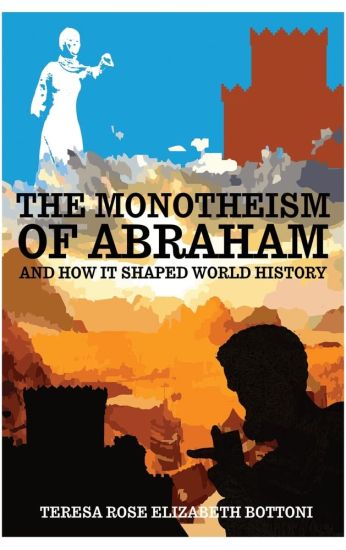
The Monotheism of Abraham sets out to prove that the God of Abraham who came from the city of Ur in Sumeria, in roughly 2,000 BC, is the same God worshipped by three of the world's major religions: Christianity, Islam, and Judaism. The followers of these religions make up over half of the world's population. Like a golden thread, our God connects the world of humanity together. About the AuthorTeresa Rose Elizabeth Bottoni was educated in Boston, Massachusetts. She received her bachelor's degree from Suffolk University in sociology and continued for two more years at Salem College for her teaching certificate in social studies. After becoming a certified history teacher, she received a master's degree in education. She then studied world religions as well as Islam at Harvard University and theology at St. John's Seminary. Teresa taught courses at North Shore Community College on the history of religion. She continues to write books.
The Soliloquies of St. Augustine
Saint Augustine; Rose Elizabeth (TRN) Cleveland
Kessinger Pub
2007
sidottu
The Soliloquies of St. Augustine
Saint Augustine; Rose Elizabeth (TRN) Cleveland
Kessinger Pub
2007
pokkari
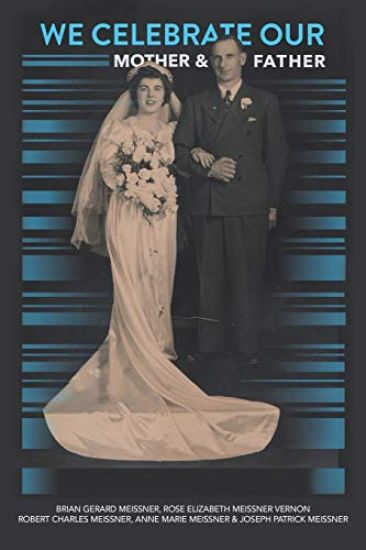
We Celebrate Our Mother and Father
Joseph Patrick Meissner; Brian Gerard Meissner; Rose Elizabeth Meissner Vernon
Authorhouse
2018
pokkari
Honor thy father and thy mother. This is the fourth commandment from the ten God gave us through Moses in the Bible. This fourth follows the initial three signifying our duties to the Supreme Being. After God, our next obligation is to our parents. This shows the importance of parents. Notice the word is honor. It does not say obey; but honor certainly includes obedience. Furthermore, this commandment does not end when we each reach maturity. The commandment of honor signifies we must respect our parents all their lives. Our mother was Norah Attracta Cusack. Our father was Joseph Charles Meissner. By the usual social standards, they were very ordinary people on this planet. However, they possessed their own wonderful beauty and intelligence. They were most extraordinary parents who welcomed us to life, took care of our needs, ensured we received great educations, and devoted their lives unselfishly to us for decades. But they gave us much more than our mere bodies. They gave us faith, hope, and love during their long lives. They showed us how to live as God urges us to live. They continuously nourished us spiritually from our mothers nightly demands to kneel in the living room praying the rosary to our Blessed Virgin to our father who drove us even in the blinding snow, freezing cold, and storms to church every week, ensuring we arrived on time. Here are words from my brother Robert for our parents: As for our son, Scott, who suffering from severe PTSD, ended his life], I agree he is somewhere around and still present in the universe. So are our mom and dad. I think after we die, we will learn how all this is doneyou know Mom and Dad are the greatest proof of God, religion, and an afterlife. They were so good and worked tirelessly for our family. If you asked them about religion, the church, and faith, they might say it really doesnt matter, except you treat your fellow human beings with dignity and acknowledge God as Father. The rest of the argument really doesnt mean that much. So to Mom and Dad, we celebrate your lives and say an enormous thank-you.
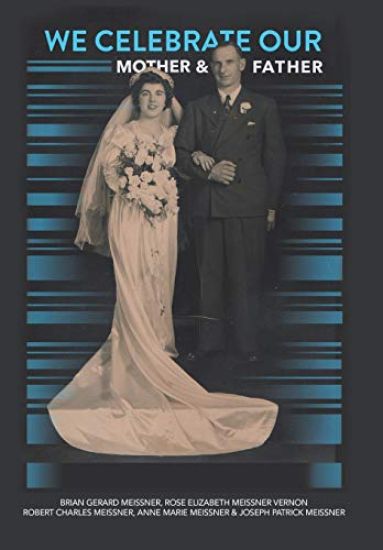
We Celebrate Our Mother and Father
Joseph Patrick Meissner; Brian Gerard Meissner; Rose Elizabeth Meissner Vernon
Authorhouse
2018
sidottu
Honor thy father and thy mother. This is the fourth commandment from the ten God gave us through Moses in the Bible. This fourth follows the initial three signifying our duties to the Supreme Being. After God, our next obligation is to our parents. This shows the importance of parents. Notice the word is honor. It does not say obey; but honor certainly includes obedience. Furthermore, this commandment does not end when we each reach maturity. The commandment of honor signifies we must respect our parents all their lives. Our mother was Norah Attracta Cusack. Our father was Joseph Charles Meissner. By the usual social standards, they were very ordinary people on this planet. However, they possessed their own wonderful beauty and intelligence. They were most extraordinary parents who welcomed us to life, took care of our needs, ensured we received great educations, and devoted their lives unselfishly to us for decades. But they gave us much more than our mere bodies. They gave us faith, hope, and love during their long lives. They showed us how to live as God urges us to live. They continuously nourished us spiritually from our mothers nightly demands to kneel in the living room praying the rosary to our Blessed Virgin to our father who drove us even in the blinding snow, freezing cold, and storms to church every week, ensuring we arrived on time. Here are words from my brother Robert for our parents: As for our son, Scott, who suffering from severe PTSD, ended his life], I agree he is somewhere around and still present in the universe. So are our mom and dad. I think after we die, we will learn how all this is doneyou know Mom and Dad are the greatest proof of God, religion, and an afterlife. They were so good and worked tirelessly for our family. If you asked them about religion, the church, and faith, they might say it really doesnt matter, except you treat your fellow human beings with dignity and acknowledge God as Father. The rest of the argument really doesnt mean that much. So to Mom and Dad, we celebrate your lives and say an enormous thank-you.


◆◆ Will haunting memories of the past doom a marriage before it starts? ◆◆The Scottish Bride: Coira MacDuff has had a hard life. Once a prisoner of the English and held captive in a hanging cage, she is hesitant to marry an Englishman. Still, she does so for an alliance for her clan. Never does she expect her new husband to bring her back to Liddel Castle, the place that still haunts her dreams. The English Knight: Sir Lance de Selby manages to secure a border castle, trying to impress his new Scottish bride. However, the girl seems spooked and wants nothing more than to flee and go back to Scotland. All his attempts to make her accept him as her husband have failed and he doesn't know why.Will past memories haunt a new marriage? Or can love turn nightmares into bliss?
Using Philadelphia as a case study, A Mother's Job explores the history of day care from the perspective of families who used it, tracing day care's transformation from a charity for poor single mothers in the early twentieth century to a legitimate and culturally accepted social need for ordinary families -- and a potential responsibility of government -- by the 1950s.
Americans today live with conflicting ideas about day care. We criticize mothers who choose not to stay at home, but we pressure women on welfare to leave their children behind. We recognize the benefits of early childhood education, but do not provide it as a public right until children enter kindergarten. Our children are priceless, but we pay minimum wages to the overwhelmingly female workforce which cares for them. We are not really sure if day care is detrimental or beneficial for children, or if mothers should really be in the workforce. To better understand how we have arrived at these present-day dilemmas, Elizabeth Rose argues, we need to explore day care's past. A Mother's Job is the first book to offer such an exploration. In this case study of Philadelphia, Rose examines the different meanings of day care for families and providers from the late nineteenth century through the postwar prosperity of the 1950s. Drawing on richly detailed records created by social workers, she explores changing attitudes about motherhood, charity, and children's needs. How did day care change from a charity for poor single mothers at the turn of the century into a recognized need of ordinary families by 1960? This book traces that transformation, telling the story of day care from the changing perspectives of the families who used it and the philanthropists and social workers who administered it. We see day care through the eyes of the immigrants, whites, and blacks who relied upon day care service as well as through those of the professionals who provided it. This volume will appeal to anyone interested in understanding the roots of our current day care crisis, as well as the broader issues of education, welfare, and women's work--all issues in which the key questions of day care are enmeshed. Students of social history, women's history, welfare policy, childcare, and education will also encounter much valuable information in this well-written book.
How did the United States move from seeing preschool as a way to give the nation's poorest children a "head start" to the goal of providing preschool for all children as the beginning of public education? Drawing lessons from the successes and failures of past efforts, advocates, policymakers, and experts have recently been pushing to make preschool education available to all children. They have had remarkable success at expanding preschool in many parts of the country, and are gaining support for federal action as well. Yet questions still remain about the best ways to shape policy that will fulfill the promise of preschool. The Promise of Preschool investigates how policy choices in the past forty-five years-such as the creation of Head Start in the 1960s, efforts to craft a child care system in the 1970s, and the campaign to reform K-12 schooling in the 1980s--helped shape the decisions that policymakers are now making about early education. It traces decisions made by presidents from Lyndon Johnson to George W. Bush, and by members of Congress, governors, state legislators, educators, researchers, children's advocates, community activists, foundation leaders and others who have shaped our nation's approach to the care and education of young children. Having explored the sources of today's preschool movement, the book then discusses policy questions that need to be addressed as we move forward: should preschool be provided to all children, or just to the neediest? Should it be run by public schools, or incorporate private child care providers? What are the most important ways to ensure educational quality? By looking at these policy issues through the lens of history, this book offers a unique perspective on this important area of education reform, and explores how an understanding of the past can help spur debate about today's decisions.