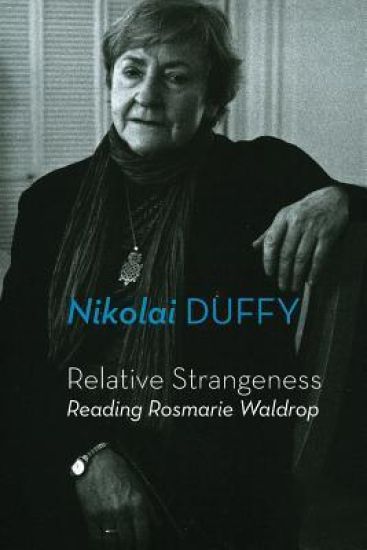
"A sequence of fragments seems the most appropriate form for a work of this kind, introductory, surveying, essentially personal, marked, as with all things, by my own reading and preoccupations. 'Maybe,' Waldrop writes, 'the essence of the fragment is that it cuts out explanation, an essential act of poetry.' It constitutes, Waldrop continues, a 'lessening of distinctness, of "identity."' I do not claim to be comprehensive. Nor do I mean to speak for Waldrop or her work but simply to speak about some of its aspects, its various senses of poetics, the shifting relationships between theory and practice, to draw out a number of examples and to trace certain lines of thinking, ways of thinking." - Nikolai Duffy
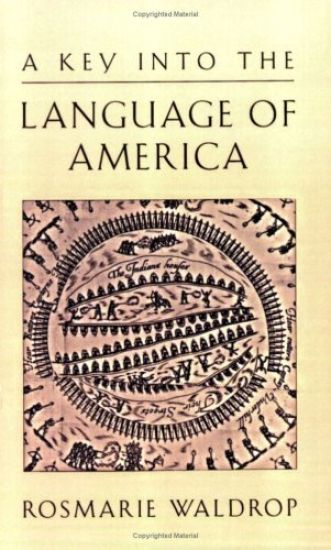
The legacy of cultural imperialism, the consequences of gender, and the marginalization of the conquered are themes that combine and comment, one on the other, in Rosmarie Waldrop’s remarkable new work, A Key into the Language of America. As “formally adventurous” (A.L. Nielson, Washington Review) as ever, German-born Waldrop has based her new collection on Rhode Island founder Roger Williams’s 1643 guide (of the same name) to Narragansett Indian language and lore.
In her new volume of prose poem “dialogues,” Reluctant Gravities, Rosmarie Waldrop once again pushes the boundaries and definitions of poetry, prose, gender, relationship, even language itself. Intended as a sequel to The Reproduction of Profiles and Lawn of Excluded Middle, Reluctant Gravities gives the rhetorical “you” addressed in those earlier volumes a voice and response. Some of Waldrop’s concerns are formal. As the author herself says, she “cultivates cuts, discontinuity, leaps, shifts of reference” in an attempt to compensate for the lack of margin, where verse would turn toward the white of the page, toward what is not. Instead, her “gap gardening” tries to place the margin, the emptiness inside the text. Yet the overriding point of the dialogues is determinedly human as the two voices with wit and philosophical playfulness debate aspects of “Aging,” “Depression,” “Desire,” and even ’’The Millennium.”
The latest book of prose poems by one of America's premier philosophical poets. For the title of her newest collection of prose poems, Rosmarie Waldrop adopts a term"blindsight" used by the neuroscientist Antonio R. Damasio to describe a condition in which a person actually sees more than he or she is consciously aware. "This is one reason," explains Waldrop, "for using collage: joining my fragments to other people's fragments in a dialogue, a net relation that might catch a bit more of the 'world.'" The collectionthe author's fourth with New Directionsis divided into four thematic sections. The first, "H lderlin Hybrids," resonates against the German poet's twisted syntax, while using rhythmic punctuation in counterpoint to sense. "'As Were, '" says Waldrop, "began with looking at the secondary occupations of artistsfor example, Mallarme teaching English, Montaigne serving as mayor of Bordeauxbut this soon gave way to playing more generally with particular aspects of historical figures." The title section, "Blindsight," is most consistent in its use of collage, juxtaposing words and images to jolting, epiphanic effect. "Cornell Boxes," in contrast, has a formal unity, inspired by the constructions of Joseph Cornell, each prose poem "box" composed in a structure of fours: four paragraphs of four sentences each, with four footnotes.
Rosmarie Waldrop's Curves to the Apple brings together three highly praised and influential titles: The Reproduction of Profiles, Lawn of Excluded Middle, and Reluctant Gravities. Though originally published separately, these prose poems have always been intended as a loose trilogy of thought and feelingor of thought manifested as feeling. The author comments: "Just as the title Curves to the Apple combines the organic and geometry (not to mention myth and history of science) the poems navigate the conflicting, but inextricable claims of body and mind, especially the female body and feelings in a space of logic and physics. The poems could all be called dialogic, reaching out across a synaptic (sometimes humorous) gap to a possible 'you' (though it may be rhetorical, another point of view in the same mind). But while the 'I' dominates the first two volumes, the third gives both voices equal space and chance."
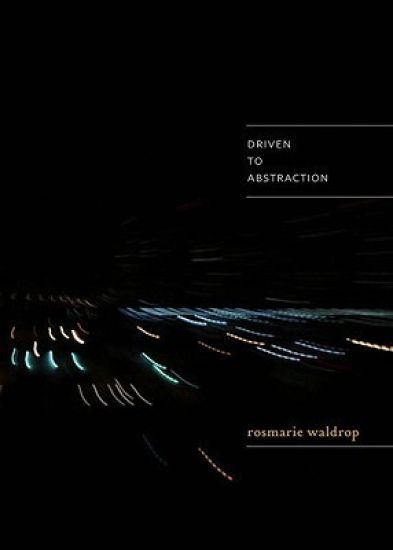
Even in a state of geometrical grace we cannot see time as it is, only as it passes. So the river shows us while softly disfiguring our waterlogged bodies on the way to vast projects of war.—Rosmarie Waldrop Driven to Abstraction is Rosmarie Waldrop’s sixth collection of poetry with New Directions. The first of its two sections, “Sway-Backed Powerlines,” consists of five sequences of prose poems whose subject matter ranges from voyages of discovery and the second Iraq war to geometry, memory, and the music of John Cage. Part two, the title sequence, investigates the tendency to abstraction in our lives which, in the West, began with the Renaissance introduction of zero into arithmetic, the vanishing point into perspective, and imaginary money in economics. Driven by the tension between abstraction and the concrete, and written in the shadow of ongoing wars, these poems are among Waldrop’s most engaging and thrilling works to date, the writing of a master poet at the height of her creative powers.
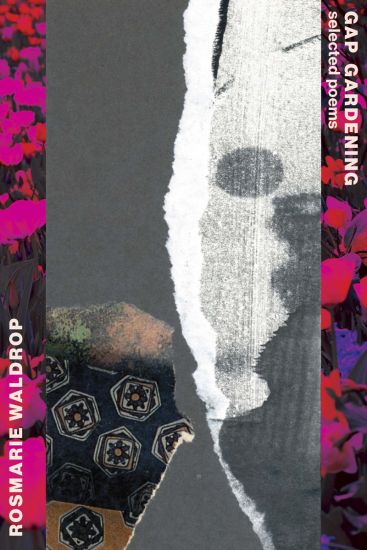
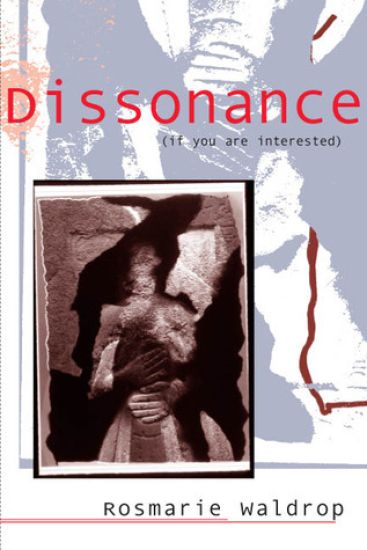
Rosmarie Waldrop says Gap Gardening “spans forty years of exploring the language I breathe and move in and that continues to condition me even while I try to contribute to it. It tracks my turn from verse to prose poems, to focusing on the sentence and its boundaries, my increasing reliance on collage and source texts as a way of engaging with other voices, of being in dialogue.” Gap Gardening also traces Waldrop’s growing sense of writing as an exploration of what happens in between. Between words, sentences, people, cultures. Between fragment and flow, thinking and feeling, mind and body. For the first time, we have a complete and clear view of the work of a great and inquiring, brave and indispensable poet.
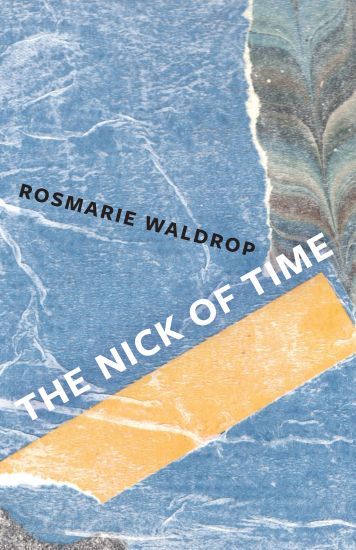
“If memory serves, it was five years ago that yours began to refuse,” Rosmarie Waldrop writes to her husband in The Nick of Time. “Does it feel like crossing from an open field into the woods, the sunlight suddenly switched off? Or like a roof without edge or frame, pushed sideways in time?” Ten years in the making, Waldrop’s phenomenally beautiful new collection explores the felt nature of existence as well as gravity and velocity, the second hemisphere of time, mortality and aging, language and immigration, a Chinese primer, the artist Hannah Höch, and dwarf stars. Of one sequence, “White Is a Color,” first published as a chapbook, the Irish poet Billy Mills wrote, “In what must be less than 1000 words, Waldrop says more about the human condition and how we explore it through words than most of us would manage in a thousand pages.” Love blooms in the cut, in the gap, in the nick between memory and thought, sentence and experience. Like the late work of Cézanne, Waldrop’s art has found a new way of seeing and thinking that “vibrates on multiple registers through endless, restless exploration” (citation for the Los Angeles Times Book Prize).
Incisive essays on modern poetry and translation by a noted poet, translator, and critic. As an immigrant to the United States from Germany, Rosmarie Waldrop has wrestled with the problems of language posed by the discrepancies between her native and adopted tongues, and the problems of translating from one to the other. Those discrepancies and disjunctions, instead of posing problems to be overcome, have become for Waldrop a generative force and the very foundation of her interests as a critic and poet. In this comprehensive collection of her essays, Waldrop addresses considerations central to her life's work: typical genres and ways of countering the conventions of genre; how concrete poets have made syntax spatial rather than grammatical; and the move away from metaphor in poetry toward contiguity and metonymy. Three essays on translation struggle with the sources and targets of translation, or the degree of strangeness or foreignness a translator should allow into any English translation. Finally, other essays examine the two-way traffic between reading and writing, and Waldrop's notion of reading as experience.
Incisive essays on modern poetry and translation by a noted poet, translator, and critic. As an immigrant to the United States from Germany, Rosmarie Waldrop has wrestled with the problems of language posed by the discrepancies between her native and adopted tongues, and the problems of translating from one to the other. Those discrepancies and disjunctions, instead of posing problems to be overcome, have become for Waldrop a generative force and the very foundation of her interests as a critic and poet. In this comprehensive collection of her essays, Waldrop addresses considerations central to her life's work: typical genres and ways of countering the conventions of genre; how concrete poets have made syntax spatial rather than grammatical; and the move away from metaphor in poetry toward contiguity and metonymy. Three essays on translation struggle with the sources and targets of translation, or the degree of strangeness or foreignness a translator should allow into any English translation. Finally, other essays examine the two-way traffic between reading and writing, and Waldrop's notion of reading as experience.
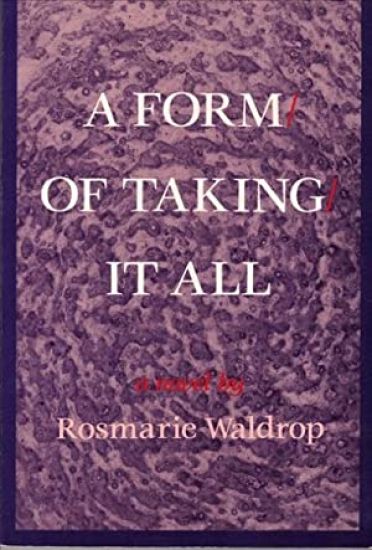
Just as the discovery of America in the fifteenth century forever altered the way Europeans viewed the world, so too did the theories of relativity and quantum physics radically alter the twentieth-century vision of the universe. Both encounters with otherness, on both a global and personal level, form the crux of Rosmarie Waldrop’s extraordinary novel. The story roams the political worlds of old Mexico and Washington, D.C., and goes on to fuse the two great perceptual revolutions of the fifteenth and twentieth centuries—so that it is Columbus, in her fiction, who discovers the unpredicted particles of the new quantum physics. Waldrop’s brilliant narrative shifts from stream of consciousness to first-person narration to poetry, in a unique meditation on love and politics, conquest and tolerance, and the effects of change.
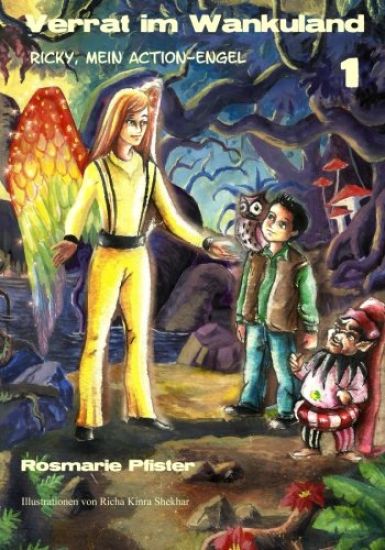
Dieses, mit neun hochwertigen Illustrationen versehene Buch, aus der Serie "Ricky, mein Action-Engel", eignet sich f r Erstleser oder als Vorlesegeschichte f r die Kleinsten. Selbst Erwachsene verlieren sich gerne in den Geschichten. Der sch chterne Tommy macht im Buchladen eine interessante Entdeckung. Durch einen Zauber tritt Ricky, der Action-Engel, in sein Leben. Mit ihm reist Tommy in unbekannte Welten und erlebt dort unglaubliche Abenteuer. Mit seiner Plastikeule "U-Uh", die pl tzlich zum Leben erwacht, muss er die Gnome des Wankulandes vor den Graukalaken retten.
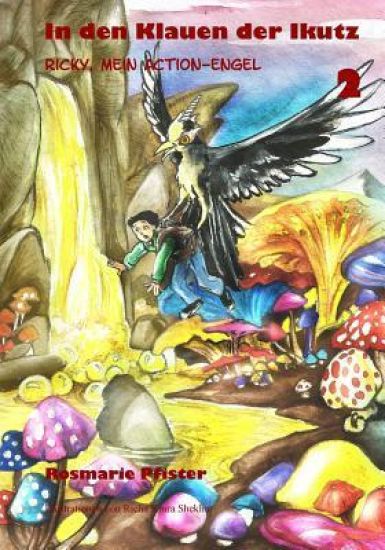
Dieses, mit neun hochwertigen Illustrationen versehene Buch, aus der Serie Ricky, mein Action-Engel, eignet sich f r Erstleser oder als Vorlesegeschichte f r die Kleinsten. Selbst Erwachsene verlieren sich gerne in den Geschichten. Ricky, der Action-Engel, fliegt mit Tommy und seiner Plastikeule U-Uh, in den Urwald der Monsterpilze. Der Junge muss dort den wertvollen Schl ssel der Engelwelt finden. Doch fremde Wesen wollen dies verhindern.