Kirjojen hintavertailu. Mukana 11 244 527 kirjaa ja 12 kauppaa.

Kirjahaku

Etsi kirjoja tekijän nimen, kirjan nimen tai ISBN:n perusteella.

1000 tulosta hakusanalla Ross D. Petty

The Impact of Advertising Law on Business and Public Policy
Are U.S. advertising laws ruining competition? Are they helping or hurting consumers? These questions are answered in the first book ever published to present a comprehensive public policy analysis of advertising law. Using insights from communications theory and economic analysis, Professor Petty analyzes all of the recent reported cases under the principal advertising laws. He examines their tendency to discourage beneficial advertising such as explicit comparisons, and analyzes their potential for protecting consumers from significant injury caused by deceptive advertising.The book begins with an innovative analysis of the Constitutional protection afforded advertising under the First Amendment. Petty proposes a simple test for determining whether particular advertising is fully or partially protected by the First Amendment. This novel analysis continues with an overview of advertising law from an evolutionary perspective and social science perspectives on how advertising works. The bulk of the book examines cases under the Lanham and Federal Trade Commission acts, as well as advertising as regulated by the antitrust laws and the U.S. International Trade Commission.

From Marking Products to Marketing Brands

From Marking Products to Marketing Brands

Ross D. Petty

Springer International Publishing AG
2025
sidottu
This book examines the historical evolution from marking or branding products for ownership purposes to branding products in order to promote the brand itself. In the extreme, some modern brands so strongly promote their brand image or personality that there is little emphasis on promoting the branded products themselves. Central to this evolution is the development and protection of brand identifiers, such as names, logos, and more, as well as the development of registration and conflict-resolution systems to resolve disputes regarding brand identifier similarities. The author meticulously navigates the historical evolution of brand marketing, elucidating the manner in which this practice has evolved over time. To get a sense of how much brand marketing has grown, he examines advertising expenditures, the scholarly and professional literature, a few case studies, and the growing number of brand identifier registrations and disputes. He examines several legal areas including trademarks, unfair competition, copyrights, design patents and even antitrust law. In modern times, the legal system not only enables brand marketing but sets limits on it as well. The book concludes by examining some modern developments that are testing the limits. Catering to researchers vested in the realms of advertising and marketing history as well as law, this landmark text provides a thorough survey of brand marketing and its regulatory landscape.
Textbook of Pediatric Rheumatology

Textbook of Pediatric Rheumatology

Ross E. Petty; Ronald M. Laxer; Carol B Lindsley; Lucy Wedderburn; Robert C Fuhlbrigge; Elizabeth D. Mellins

Elsevier - Health Sciences Division
2021
sidottu
Offering up-to-date, comprehensive coverage of disease progression, diagnosis, management, and prognosis, Textbook of Pediatric Rheumatology is the definitive reference in the field. For physicians caring for children with rheumatic diseases, this revised 8th Edition is an unparalleled resource for the full spectrum of rheumatologic diseases and non-rheumatologic musculoskeletal disorders in children and adolescents. Global leaders in the field provide reliable, evidence-based guidance, highlighted by superb full-color illustrations that facilitate a thorough understanding of the science that underlies rheumatic disease. Offers expanded coverage of autoinflammatory diseases, plus new chapters on Takayasu Arteritis and Other Vasculitides, Mechanistic Investigation of Pediatric Rheumatic Diseases, Genetics and Pediatric Rheumatic Diseases, and Global Issues in Pediatric Rheumatology. Reflects the changes in diagnosis, monitoring, and management that recent advances have made possible. Covers the latest information on small molecule treatment, biologics, biomarkers, epigenetics, biosimilars, and cell-based therapies, helping you choose treatment protocols based on the best scientific evidence available today. Features exhaustive reviews of the complex symptoms, signs, and lab abnormalities that characterize these clinical disorders. Enhanced eBook version included with purchase. Your enhanced eBook allows you to access all of the text, figures, and references from the book on a variety of devices.
The Celluloid Courtroom

The Celluloid Courtroom

Ross D. Levi

Praeger Publishers Inc
2005
sidottu
The genre of legal cinema is an extensive and revealing one: it is a body of films that depicts lawyers, clients, criminals, judges, and juries, often not as they actually are, but as we would like them to be. The idealized courtroom of many legal movies tells us a great deal about what we think of our justice system and what we want it to reflect about America, but the films in the genre vary widely in how they do this. From To Kill a Mockingbird to Liar, Liar, from A Time to Kill to Twelve Angry Men, we see certain stereotypes repeating themselves again and again: the judge as stern referee, the jury as an ultimately fair body of decisionmakers, the lawyer as hardworking and passionate fighter for the underdog. In this new and comprehensive study of this understudied category of film, author Ross D. Levi argues that, contrary to popular belief, legal movies show us a system that is far more fair than our actual one, with corruption downplayed and greed made subordinate to compassion and compromise. With a comprehensive filmography, penetrating analysis—both cinematic and legal—and engaging discussion of a wide array of movies, The Celluloid Courtroom is an indispensable guide to a key aspect of American movies and American justice. The genre of legal cinema is an extensive and revealing one: it is a body of films that depicts lawyers, clients, criminals, judges, and juries, often not as they actually are, but as we would like them to be. The idealized courtroom of many legal movies tells us a great deal about what we think of our justice system and what we want it to reflect about America, but the films in the genre vary widely in how they do this. From To Kill a Mockingbird to Liar, Liar, from A Time to Kill to Twelve Angry Men, we see certain stereotypes repeating themselves again and again: the judge as stern referee, the jury as an ultimately fair body of decisionmakers, the lawyer as hardworking and passionate fighter for the underdog. In this new and comprehensive study of this understudied category of film, author Ross D. Levi argues that, contrary to popular belief, legal movies show us a system that is far more fair than our actual one, with corruption downplayed and greed made subordinate to compassion and compromise. These are films that have affected as much as reflected the American justice system, as we enter the courts hoping, often against hope, that they will be something like what we've seen in the movies. With a comprehensive filmography, penetrating analysis—both legal and cinematic—and engaging and enlightening discussion, The Celluloid Courtroom is an indispensable guide to a key aspect of American movies and American justice.
Substance and the Fundamentality of the Familiar
Substance and the Fundamentality of the Familiar explicates and defends a novel neo-Aristotelian account of the structure of material objects. While there have been numerous treatments of properties, laws, causation, and modality in the neo-Aristotelian metaphysics literature, this book is one of the first full-length treatments of wholes and their parts. Another aim of the book is to further develop the newly revived area concerning the question of fundamental mereology, the question of whether wholes are metaphysically prior to their parts or vice versa. Inman develops a fundamental mereology with a grounding-based conception of the structure and unity of substances at its core, what he calls substantial priority, one that distinctively allows for the fundamentality of ordinary, medium-sized composite objects. He offers both empirical and philosophical considerations against the view that the parts of every composite object are metaphysically prior, in particular the view that ascribes ontological pride of place to the smallest microphysical parts of composite objects, which currently dominates debates in metaphysics, philosophy of science, and philosophy of mind. Ultimately, he demonstrates that substantial priority is well-motivated in virtue of its offering a unified solution to a host of metaphysical problems involving material objects.
End of the Megafauna

End of the Megafauna

Ross D E MacPhee

WW Norton Co
2018
sidottu
Until a few thousand years ago, creatures—“megafauna”—that could have been from a sci-fi thriller roamed the earth. With a handful of exceptions, all are now gone. Ross MacPhee explores the question of what caused the disappearance of these prehistoric behemoths, examining the extinction theories, weighing the evidence and presenting his conclusions. He comments on how past extinctions can shed light on future losses and on the possibility of bringing back extinct species through genetic engineering. Gorgeous four-colour illustrations bring these megabeasts back to life in vivid detail.
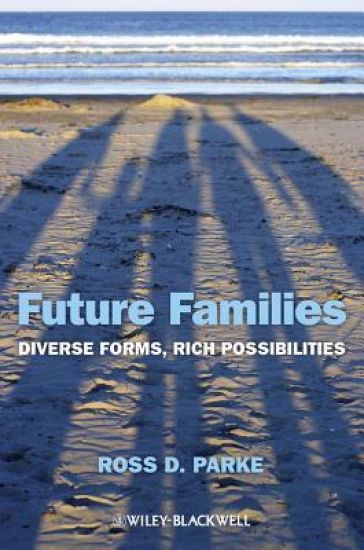
Future Families

Future Families

Ross D. Parke

John Wiley Sons Inc
2013
sidottu
Future Families explores the variety of family forms which characterize our contemporary culture, while addressing the implications of these increasingly diverse family units on child development. Reveals the diversity of new family forms based on the most current research on fathers, same-gender parents, new reproductive technologies, and immigrant familiesIllustrates that children and adults can thrive in a variety of non-traditional family formsShows the interrelatedness of new trends in family organization through the common themes of embedded families and caregiving in community and cultural contextsFeatures an interdisciplinary approach, drawing from works in areas that include child development, family studies, sociology, cross-cultural scholarship, ethnic studies, biology, neuroscience, anthropology and even architectureSets an agenda for future research in the area of families by identifying important gaps in our knowledge about families and parenting
Future Families

Future Families

Ross D. Parke

John Wiley Sons Inc
2013
nidottu
Future Families explores the variety of family forms which characterize our contemporary culture, while addressing the implications of these increasingly diverse family units on child development. Reveals the diversity of new family forms based on the most current research on fathers, same-gender parents, new reproductive technologies, and immigrant familiesIllustrates that children and adults can thrive in a variety of non-traditional family formsShows the interrelatedness of new trends in family organization through the common themes of embedded families and caregiving in community and cultural contextsFeatures an interdisciplinary approach, drawing from works in areas that include child development, family studies, sociology, cross-cultural scholarship, ethnic studies, biology, neuroscience, anthropology and even architectureSets an agenda for future research in the area of families by identifying important gaps in our knowledge about families and parenting
Fatherhood

Fatherhood

Ross D. Parke

Harvard University Press
1996
nidottu
It has been said that fathers are a biological necessity but a social accident. When Ross Parke first wrote about fathers for the Developing Child series, American culture seemed to adhere strongly to the stereotype of Dad the breadwinner, pacing outside the delivery room and peeking through the nursery window, and Mom the homemaker, warming bottles and changing diapers. Simple—in fact, a bit too simple. In the intervening years the conventional image of the uninvolved father has given way to a new stereotype: the father who takes an active part in rearing his children.The dramatic technological, economic, and ideological changes in society over the past several decades have reconfigured the nuclear family and redefined the role of fathers. More women now work outside the home; fewer families can depend on an extended network of relatives for help with childcare; more divorced fathers assume or share custody of their children. Fathers have become partners in parenthood, wielding a more direct influence on their children’s development. But, Parke asks, is the new ideal of fathers—participating in childbirth and sharing in the care and feeding of their children—any more accurate than the earlier uninvolved father stereotype?Social scientists have long ignored fathers, focusing on mothers as the significant figure in infant development. But research is showing that maternal caretaking is not biologically fixed, nor are fathers necessarily restricted to a secondary role in childcare. Turning away from well-worn theories in favor of direct observation, modern studies have revealed a substantial amount about how fathers behave with their children, how this behavior differs from maternal behavior, and how it affects children.In this new book, Parke considers the father–child relationship within the “family system” and the wider society. Using the “life course” view of fathers that has emerged in recent years, he demonstrates that men enact their fatherhood in a variety of ways in response to their particular social and cultural circumstances. And while it is becoming clear that fathers play an important role in their children’s lives, it is also becoming clear that fathering is good for men.
Social Development, EMEA Edition

Social Development, EMEA Edition

Ross D. Parke; Glenn I. Roisman; Amanda J. Rose

John Wiley Sons Inc
2019
nidottu
Social Development provides a comprehensive introduction to the multiple factors that shape a child’s behavior, interaction with others, feelings about themselves, and how and why behaviors change over time. Delving into the biological, cognitive, and perceptual aspects of development and their influence on behavior, socialization, and self-image, this text also recognizes the significance of cultural and societal distinctions by emphasizing the value of context and identifying cultural variation’s role in social development. Special pedagogical features in each chapter enhance the learning experience and promote student understanding: counter-intuitive examples cases challenge reader assumptions, coverage of extreme cases tell the story behind historical advancements, and profiles of current leaders in the field highlight the many paths to a career in social development. With a focus on real-world application, coupled with coverage of cutting-edge methodologies and the latest research findings, this book gives students a strong, highly relevant foundation in core concepts and practices central to the study of social development.
Substance and the Fundamentality of the Familiar
Substance and the Fundamentality of the Familiar explicates and defends a novel neo-Aristotelian account of the structure of material objects. While there have been numerous treatments of properties, laws, causation, and modality in the neo-Aristotelian metaphysics literature, this book is one of the first full-length treatments of wholes and their parts. Another aim of the book is to further develop the newly revived area concerning the question of fundamental mereology, the question of whether wholes are metaphysically prior to their parts or vice versa. Inman develops a fundamental mereology with a grounding-based conception of the structure and unity of substances at its core, what he calls substantial priority, one that distinctively allows for the fundamentality of ordinary, medium-sized composite objects. He offers both empirical and philosophical considerations against the view that the parts of every composite object are metaphysically prior, in particular the view that ascribes ontological pride of place to the smallest microphysical parts of composite objects, which currently dominates debates in metaphysics, philosophy of science, and philosophy of mind. Ultimately, he demonstrates that substantial priority is well-motivated in virtue of its offering a unified solution to a host of metaphysical problems involving material objects.
The True Identity of the People of the Way

The True Identity of the People of the Way

Ross D Harmon; Patrick Schreiner

Wipf Stock Publishers
2024
pokkari
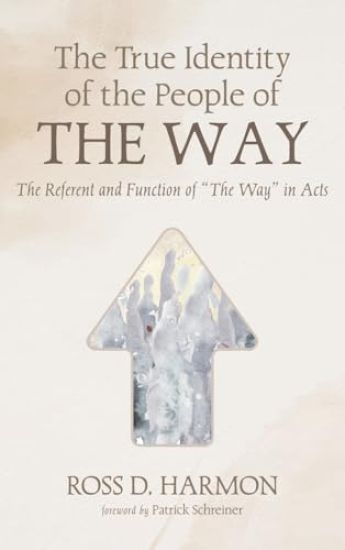
The True Identity of the People of the Way demonstrates that Luke alludes to the book of Proverbs when Luke, in Acts 9 and following, calls the Church "the Way." Consequently, this study shows that Luke identifies the people of the Way as followers of the one and true God depicted in Proverbs. Within Acts, Luke's claim was likely shocking to the Jewish people, which relates directly to the function of "the Way." This fresh perspective on "the way" metaphor in Acts provides a more natural and fitting referent than previous proposals and finds its function as a polemic between Jesus' followers and others. This research identified allusions and motifs in literature to determine that Luke uses "the way" metaphor to describe Christ's followers. The study first shows the need for research concerning Luke's motive or referent for calling the Church "the Way." Second, the study examines the probability of Proverbs' influence on Luke. Third, the study provides an in-depth analysis of "the way" metaphor in Acts, concluding that Proverbs is the referent of "the Way" when referring to the Church.
The True Identity of the People of the Way

The True Identity of the People of the Way

Ross D Harmon; Patrick Schreiner

Wipf Stock Publishers
2024
sidottu
The True Identity of the People of the Way demonstrates that Luke alludes to the book of Proverbs when Luke, in Acts 9 and following, calls the Church "the Way." Consequently, this study shows that Luke identifies the people of the Way as followers of the one and true God depicted in Proverbs. Within Acts, Luke's claim was likely shocking to the Jewish people, which relates directly to the function of "the Way." This fresh perspective on "the way" metaphor in Acts provides a more natural and fitting referent than previous proposals and finds its function as a polemic between Jesus' followers and others. This research identified allusions and motifs in literature to determine that Luke uses "the way" metaphor to describe Christ's followers. The study first shows the need for research concerning Luke's motive or referent for calling the Church "the Way." Second, the study examines the probability of Proverbs' influence on Luke. Third, the study provides an in-depth analysis of "the way" metaphor in Acts, concluding that Proverbs is the referent of "the Way" when referring to the Church.