Kirjojen hintavertailu. Mukana 12 016 292 kirjaa ja 12 kauppaa.

Kirjahaku

Etsi kirjoja tekijän nimen, kirjan nimen tai ISBN:n perusteella.

3 tulosta hakusanalla Rothfarb Lee; Christoph Landerer

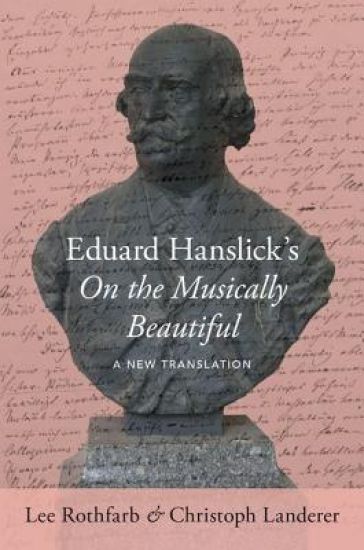
Eduard Hanslick's On the Musically Beautiful

Eduard Hanslick's On the Musically Beautiful

Rothfarb Lee; Christoph Landerer

Oxford University Press Inc
2018
sidottu
Eduard Hanslick's On the Musically Beautiful (Vom Musikalisch-Schönen, 1854), written and published before the author turned 30, is a watershed document in the history of aesthetics, and of thought about music generally. The notion of "absolute music," which lies at the heart of the treatise, is now more than ever at the center of discussions about music, particularly that of the Classic and Romantic eras. Rothfarb and Landerer's translation includes three introductory essays offering fresh perspectives on Hanslick, and on the origins, publications, and translation history of his treatise, as well as its central concepts and philosophical underpinnings. The volume also includes thorough annotations, a readers' guide, a glossary of important terms and concepts, and an appendix, which comprises the original opening of Chapter 1, substantially rewritten in subsequent editions, as well as the original ending of the treatise that was excised by Hanslick in later editions. The book's ideas, cogently and often wittily expressed, are mandatory reading for anyone interested in eighteenth and nineteenth-century music and its cultural and intellectual background.
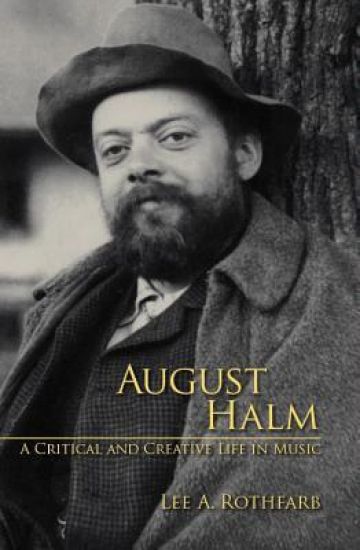
August Halm

August Halm

Lee Lee Rothfarb

University of Rochester Press
2009
sidottu
The first detailed study of a prolific and influential early twentieth-century composer, critic, educator-a true sage of music. In the early 1900s, August Halm was widely acknowledged to be one of the most insightful and influential authors of his day on a wide range of musical topics. Yet, in the eighty years since his untimely death at age 59 (in 1929),Halm -- the author of six widely read books and over 100 essays -- has received much less attention than such contemporaries as Hugo Riemann, Heinrich Schenker, Ernst Kurth, and Arnold Schoenberg. Lee Rothfarb's engaging and deeply researched study provides the missing images that comprise the multifaceted life of this astute musical sage. August Halm: A Critical and Creative Life in Music begins by setting the cultural stage and examining Halm's life with rich details from unpublished personal letters, diaries, notebooks, and lecture notes. Further chapters explore Halm's notion of musical logic and his proposal that the evolution of compositional technique had, by hisday, culminated in three successive musical "cultures" epitomized in Bach (fugue), Beethoven (sonata), and Bruckner (symphony). Another chapter examines, for the first time anywhere, Halm's own compositions, their motivating aesthetic premises, and their connection with late twentieth-century postmodernism. The volume closes with an assessment of Halm's significance for present-day music theory, including its branches that deal with narrativity, plot theory, embodiment, and semiotics. Halm's subject matter and creative activities ranged widely, and he aimed at maintaining a style that would be accessible and intriguing to music amateurs and music educators at all levels. LeeRothfarb's book -- written in the same spirit -- will interest not only music theorists and musicologists but also composers and classroom and private music teachers. Lee Rothfarb is Professor of Music at the University of California, Santa Barbara. His previous publications include Ernst Kurth as Theorist and Analyst and Ernst Kurth: Selected Writings.
Ernst Kurth As Theorist and Analyst

Ernst Kurth As Theorist and Analyst

Lee A. Rothfarb

University of Pennsylvania Press
1989
sidottu
Ernst Kurth as Theorist and Analyst is the first book length study devoted to the writings of one of this century's most important music theorists. In contrast to previous discussions, Lee A. Rothfarb's study explains Kurth's theories in light of his analyses of specific musical examples. Unlike many of his contemporaries, Kurth approached music primarily from a cognitive rather than a purely technical viewpoint. In a unique kind of experiential analysis, he examined the psychological foundations of counterpoint, harmony, and form, and considered the affective, as opposed to solely structural or syntactic, effects of melody, chord, interval, and tone. The introduction provides a biographical sketch of Kurth, based on archival research and personal interview with his widow, son, and many of his doctoral students. Rothfarb also discusses the intellectual currents of the late nineteenth and early twentieth centuries, both musical and nonmusical, which shaped Kurth's outlook. Eight chapters summarize the main ideas of Grundlagen des linearen Kontrapunkts and Romantische Harmonik and show the directions Kurth took in his later works, Bruckner and Musikpsychologie. A final chapter identified his influence on several of his well-known contemporaries. Ernst Kurth as Theorist and Analyst will interest music theorists, musicologists, and advanced students of music theory.