
Kirjahaku
Etsi kirjoja tekijän nimen, kirjan nimen tai ISBN:n perusteella.
1000 tulosta hakusanalla Roy C Ritter


Johan Martin Dostmann was born in 1730 in Nassig, Germany, and today his descendants can be found throughout the United States of America. One of them is Roy C. Ritter III, and he traces his family's origins in this detailed history. Dostmann immigrated to Pennsylvania in 1752 with his sister and several friends and cousins, and so began the story of an enduring German-American family. After some time in Frederick County, Maryland, and Washington County, Pennsylvania, the family, which became known as Dustman, took advantage of the settlement opportunities in the newly formed Connecticut Western Reserve of Ohio, joining the state's earliest pioneers. Johan Martin Dostmann died before that journey, but his surviving children and grandchildren made their mark in Ohio, particularly in Trumbull and Mahoning counties, where they prospered. Covering the first four generations of the Dustman family, this book will be a valuable resource for the descendants of Johan Martin Dostmann.
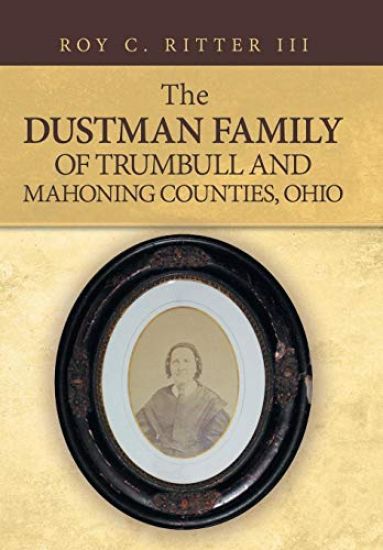
Johan Martin Dostmann was born in 1730 in Nassig, Germany, and today his descendants can be found throughout the United States of America. One of them is Roy C. Ritter III, and he traces his family's origins in this detailed history. Dostmann immigrated to Pennsylvania in 1752 with his sister and several friends and cousins, and so began the story of an enduring German-American family. After some time in Frederick County, Maryland, and Washington County, Pennsylvania, the family, which became known as Dustman, took advantage of the settlement opportunities in the newly formed Connecticut Western Reserve of Ohio, joining the state's earliest pioneers. Johan Martin Dostmann died before that journey, but his surviving children and grandchildren made their mark in Ohio, particularly in Trumbull and Mahoning counties, where they prospered. Covering the first four generations of the Dustman family, this book will be a valuable resource for the descendants of Johan Martin Dostmann.

Roy C. Peterson Movie Reviews
Roy C Peterson
Createspace Independent Publishing Platform
2014
pokkari
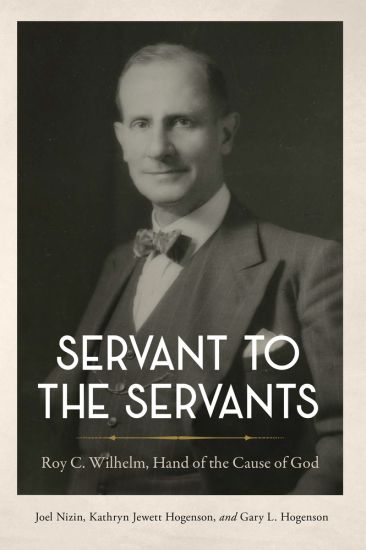
Servant to the Servants: Roy C. Wilhelm, Hand of the Cause of God
Joel Nizin; Gary Hogenson; Kathryn Jewett Hogenson
Baha'i Publishing
2023
nidottu
The Reminiscences of Mrs. Marc A. Mitscher and Mrs. Roy C. Smith Jr.
Naval Institute Press
2017
sidottu
The two memoirs in this volume are, coincidentally, both from the widows of officers who were graduated in the Naval Academy’s class of 1910. Even so, they are strikingly different in tone. Frances Smalley Mitscher was born on 25 Otcober 1890 in Tacoma, Washington, the daughter of attorney and judge Francis A. Smalley. She married Ensign Marc Andrew Mitscher on 16 January 1913. Admiral Mitscher, born in Hillsborough, Oklahoma, on 26 January 1887, died while serving as Commander in Chief Atlantic Fleet in February 1947. Mrs. Mitscher died in 1982 and is buried beside her husband at Arlington National Cemetery. In her oral history, Mrs. Mitscher provides a wife’s-eye view of one of the U.S. Navy’s most famous admirals of World War II. In so doing, she reveals facets of his personality that only she saw. She recognizes that he was a different man at home than on board ship, and she describes the portion of his life that she shared. One gains a realization of the large degree that her life was shaped by her relationship with Marc Mitscher. She went where his career dictated, and thus her interests were dictated largely by her husband’s interests. Mary Taylor Alger Smith was born on 1 May 1892 in Washington, D.C., the daughter of naval officer Philip R. Alger and the former Louisa Taylor. She married Ensign Roy Campbell Smith Jr. on 1 August 1912. Commander Smith, born in the quarters of the Naval Academy Superintendent (his grandfather) on 1 August 1888, retired from the Navy with a physical disability in 1938 and died in 1946. Mrs. Smith died in 1987 and is buried buried beside her husband at Arlington National Cemetery. In her oral history, Mrs. Smith addresses the theme of dependency to an even larger degree than does Mrs. Mitscher. With a wry sense of humor, Mrs. Smith dwells on the inconveniences that go with raising a Navy family at home and abroad (the Smiths had four children). She had to find solutions to a good many problems that don’t confront a mother rearing children entirely in the United States. One reads here about difficulties in dealing with the cultures in such places as China and Panama, and the ways in which her children got into the sort of scrapes that children inevitably do. In addition to being a Navy wife and Navy mother, Mrs. Smith was also a Navy daughter. Her earliest recollections in this memoir extend back to the early 1900s when she was living on the grounds of the Naval Academy, where her father was a professor and an early secretary-treasurer of the Naval Institute. In engaging fashion, Mrs. Smith describes the simplicity of an era long since past—a time before telephones and automobiles were common and when radio and television had yet to be invented.
The Reminiscences of Mrs. Marc A. Mitscher and Mrs. Roy C. Smith Jr.
Naval Institute Press
2017
pokkari
The two memoirs in this volume are, coincidentally, both from the widows of officers who were graduated in the Naval Academy’s class of 1910. Even so, they are strikingly different in tone. Frances Smalley Mitscher was born on 25 Otcober 1890 in Tacoma, Washington, the daughter of attorney and judge Francis A. Smalley. She married Ensign Marc Andrew Mitscher on 16 January 1913. Admiral Mitscher, born in Hillsborough, Oklahoma, on 26 January 1887, died while serving as Commander in Chief Atlantic Fleet in February 1947. Mrs. Mitscher died in 1982 and is buried beside her husband at Arlington National Cemetery. In her oral history, Mrs. Mitscher provides a wife’s-eye view of one of the U.S. Navy’s most famous admirals of World War II. In so doing, she reveals facets of his personality that only she saw. She recognizes that he was a different man at home than on board ship, and she describes the portion of his life that she shared. One gains a realization of the large degree that her life was shaped by her relationship with Marc Mitscher. She went where his career dictated, and thus her interests were dictated largely by her husband’s interests. Mary Taylor Alger Smith was born on 1 May 1892 in Washington, D.C., the daughter of naval officer Philip R. Alger and the former Louisa Taylor. She married Ensign Roy Campbell Smith Jr. on 1 August 1912. Commander Smith, born in the quarters of the Naval Academy Superintendent (his grandfather) on 1 August 1888, retired from the Navy with a physical disability in 1938 and died in 1946. Mrs. Smith died in 1987 and is buried buried beside her husband at Arlington National Cemetery. In her oral history, Mrs. Smith addresses the theme of dependency to an even larger degree than does Mrs. Mitscher. With a wry sense of humor, Mrs. Smith dwells on the inconveniences that go with raising a Navy family at home and abroad (the Smiths had four children). She had to find solutions to a good many problems that don’t confront a mother rearing children entirely in the United States. One reads here about difficulties in dealing with the cultures in such places as China and Panama, and the ways in which her children got into the sort of scrapes that children inevitably do. In addition to being a Navy wife and Navy mother, Mrs. Smith was also a Navy daughter. Her earliest recollections in this memoir extend back to the early 1900s when she was living on the grounds of the Naval Academy, where her father was a professor and an early secretary-treasurer of the Naval Institute. In engaging fashion, Mrs. Smith describes the simplicity of an era long since past—a time before telephones and automobiles were common and when radio and television had yet to be invented.
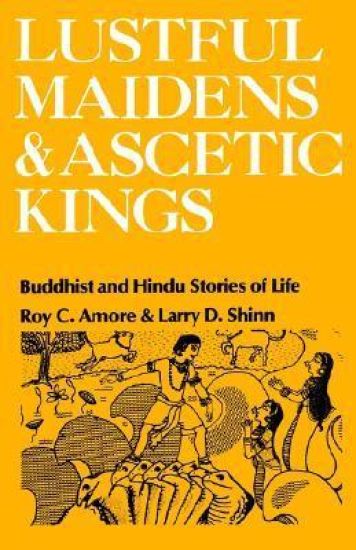
Lustful Maidens and Ascetic Kings
Roy C. Amore; Larry D. Shinn
Oxford University Press Inc
1981
nidottu
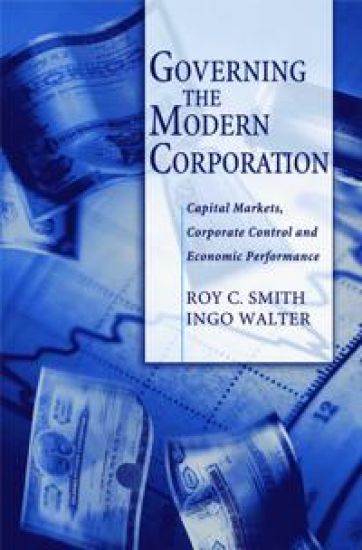
Nearly seventy years after the last great stock market bubble and crash, another bubble emerged and burst, despite a thick layer of regulation designed since the 1930s to prevent such things. This time the bubble was enormous, reflecting nearly twenty years of double-digit stock market growth, and its bursting had painful consequence. The search for culprits soon began, and many were discovered, including not only a number of overreaching corporations, but also their auditors, investment bankers, lawyers and indeed, their investors. In Governing the Modern Corporation, Smith and Walter analyze the structure of market capitalism to see what went wrong. They begin by examining the developments that have made modern financial markets--now capitalized globally at about $70 trillion--so enormous, so volatile and such a source of wealth (and temptation) for all players. Then they report on the evolving role and function of the business corporation, the duties of its officers and directors and the power of its Chief Executive Officer who seeks to manage the company to achieve as favorable a stock price as possible. They next turn to the investing market itself, which comprises mainly financial institutions that own about two-thirds of all American stocks and trade about 90% of these stocks. These investors are well informed, highly trained professionals capable of making intelligent investment decisions on behalf of their clients, yet the best and brightest ultimately succumbed to the bubble and failed to carry out an appropriate governance role. In what follows, the roles and business practices of the principal financial intermediaries--notably auditors and bankers--are examined in detail. All, corporations, investors and intermediaries, are found to have been infected by deep-seated conflicts of interest, which add significant agency costs to the free-market system. The imperfect, politicized role of the regulators is also explored, with disappointing results. The entire system is seen to have been compromised by a variety of bacteria that crept in, little by little, over the years and were virtually invisible during the bubble years. These issues are now being addressed, in part by new regulation, in part by prosecutions and class action lawsuits, and in part by market forces responding to revelations of misconduct. But the authors note that all of the market's professional players--executives, investors, experts and intermediaries themselves--carry fiduciary obligations to the shareholders, clients, and investors whom they represent. More has to be done to find ways for these fiduciaries to be held accountable for the correct discharge of their duties.

Few sectors of the global economy have experienced the dynamic and structural change that has occurred over the past several decades in banking and financial services or as much turbulence and damage to the economy and to ordinary people. Regulatory and technological changes have been among the main catalysts of change in the financial industry worldwide, making entrenched competitive structures obsolete and mandating the development of new products, new processes, new strategies, and new public policies toward the industry. This book attempts to reassess the continuing transformational process of global banking and finance - its causes, its course, and its consequences. It begins with an overview of the most recent developments and goes on to examine the major dimensions of international commercial and investment banking, including money and foreign exchange markets, debt capital markets, international bank lending, derivatives, asset-based and project financing, and equity capital markets. Later, the various advisory businesses -- mergers and acquisitions, privatizations, institutional asset management, and private banking -- are analyzed. In each case, the factors that distinguish the winners from the losers are identified. This is brought together in the final section of the book, which deals with problems of strategic positioning and execution, as well as critical risk issues and regulations.
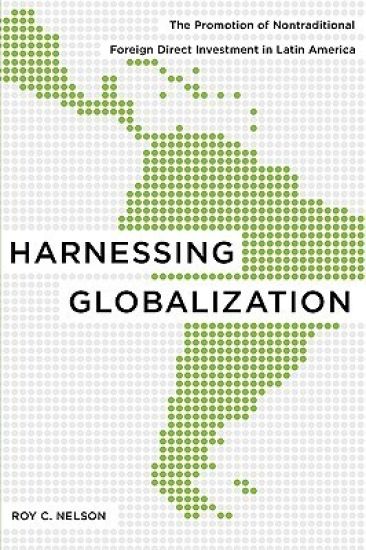
How can countries in the underdeveloped world position themselves to take best advantage of the positive economic benefits of globalization? One avenue to success is the harnessing of foreign direct investment (FDI) in the “nontraditional” forms of the high-technology and service sectors, where an educated workforce is essential and the spillover effects to other sectors are potentially very beneficial. In this book, Roy Nelson compares efforts in three Latin American countries—Brazil, Chile, and Costa Rica—to attract nontraditional FDI and analyzes the reasons for their relative success or failure. As a further comparison, he uses the successes of FDI promotion in Ireland and Singapore to help refine the analysis. His study shows that two factors, in particular, are critical. First is the government’s autonomy from special interest groups, both domestic and foreign, arising from the level of political security enjoyed by government leaders. The second factor is the government’s ability to learn about prospective investors and the inducements that are most important to them—what he calls “transnational learning capacity.” Nelson draws lessons from his analysis for how governments might develop more effective strategies for attracting nontraditional FDI.
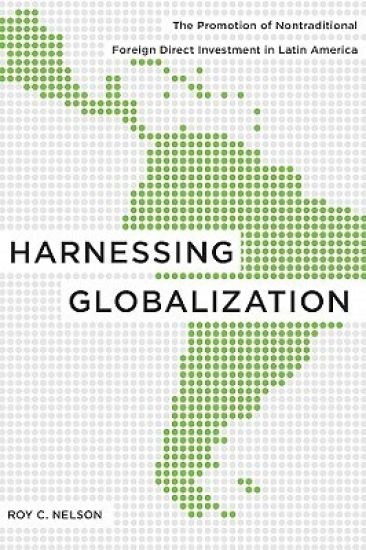
How can countries in the underdeveloped world position themselves to take best advantage of the positive economic benefits of globalization? One avenue to success is the harnessing of foreign direct investment (FDI) in the “nontraditional” forms of the high-technology and service sectors, where an educated workforce is essential and the spillover effects to other sectors are potentially very beneficial. In this book, Roy Nelson compares efforts in three Latin American countries—Brazil, Chile, and Costa Rica—to attract nontraditional FDI and analyzes the reasons for their relative success or failure. As a further comparison, he uses the successes of FDI promotion in Ireland and Singapore to help refine the analysis. His study shows that two factors, in particular, are critical. First is the government’s autonomy from special interest groups, both domestic and foreign, arising from the level of political security enjoyed by government leaders. The second factor is the government’s ability to learn about prospective investors and the inducements that are most important to them—what he calls “transnational learning capacity.” Nelson draws lessons from his analysis for how governments might develop more effective strategies for attracting nontraditional FDI.
Adam Smith was a Scottish professor of moral philosophy. He published his classic "The Wealth of Nations" in 1776, the year the American Revolution began. Smith became widely known for his ideas of free markets, laissez-faire commerce, and the "invisible hand." Yet English politicians, landed gentry, and the nobility paid little attention and enacted none of Smith's suggested reforms.The American colonies, however, began their existence as an independent nation in 1781 with no money, no industry, no banks, and deep in debt. The Founding Fathers-particularly Alexander Hamilton, James Madison, and Benjamin Franklin-turned to the ideas of Adam Smith to create and jump-start an economic system for America with both immediate and long-sustained results.This little-known but vital part of U.S. history is now revealed in Roy C. Smith's highly readable new book.
El Salvador, the smallest Hispanic country in the Western Hemisphere, has had a lion's share of international attention with its civil war of the 1980s. Culture and Customs of El Salvador is the best source for an authoritative, intriguing narrative overview of a country with an embattled history, from wars to devastating earthquakes. Students and general readers will find a sympathetic portrayal of the land, history, people, economy, religion, education, traditional culture and popular entertainment, literature, media, and the arts.El Salvador has been marginalized in Latin America and is still little-known outside of this region. Culture and Customs of El Salvador emphasizes the mixture of indigenous and Spanish heritage that colors the society. Boland brings special insight to the essential topics, from history to the arts. A chronology, glossary, and numerous photos enhance the text. As an up-to-date survey, the book brims with optimism for a better future with social, economic, and environmental reforms. This volume is crucial to understanding Salvadorans today and also the large numbers of Salvadoran immigrants who now live in the United States.
El Salvador, the smallest Hispanic country in the Western Hemisphere, has had a lion's share of international attention with its civil war of the 1980s. Culture and Customs of El Salvador is the best source for an authoritative, intriguing narrative overview of a country with an embattled history, from wars to devastating earthquakes. Students and general readers will find a sympathetic portrayal of the land, history, people, economy, religion, education, traditional culture and popular entertainment, literature, media, and the arts.El Salvador has been marginalized in Latin America and is still little-known outside of this region. Culture and Customs of El Salvador emphasizes the mixture of indigenous and Spanish heritage that colors the society. Boland brings special insight to the essential topics, from history to the arts. A chronology, glossary, and numerous photos enhance the text. As an up-to-date survey, the book brims with optimism for a better future with social, economic, and environmental reforms. This volume is crucial to understanding Salvadorans today and also the large numbers of Salvadoran immigrants who now live in the United States.

First Published in 1992. Routledge is an imprint of Taylor & Francis, an informa company.

Even though second-language learners may master the grammar and vocabulary of the new languages, they almost never achieve a native phonology (accent). Scholars and professionals dealing with second-language learners would agree that this is one of the most persistent challenges they face. Now, for the first time, Roy Major's Foreign Accent covers the exploding scholarship in this area and lays out the issues specifically for audiences in the second language acquisition and applied linguistics community.
This survey, spanning 4000 years, traces the rich visual expression of one of the world's most ancient cultures through the varied arts of India. From the beginnings in the Indus valley, through the masterpieces of Buddhist and Hindu art, to the coming of Islam and the eclectic culture of the Mughal court, the country's artistic history is explored. The author leads the reader through the pantheon of the Hindu gods, the insights of Buddhist mysticism and the complex symbolism of miniature paintings. This revised edition brings the narrative up-to-date, exploring the contribution of 20th-century artists and incorporates a glossary and timeline.