
Kirjahaku
Etsi kirjoja tekijän nimen, kirjan nimen tai ISBN:n perusteella.
1000 tulosta hakusanalla Roy Chowthi

Roy, the paper bag, has always dreamed about what his life could be like outside the grocery store. Almost every day, one of his old friends comes back to visit. They tell him about all of the exciting new things the others are being made into, from hand puppets and wrapping paper to works of art. When Roy finally gets his chance to leave the store will he become something amazing or will his dreams be thrown in the trash?Noah Kapustka writes his first children's book hoping to spark a conversation between children and parents about the importance of recycling and sustainability. To help parents teach their kids about climate consciousness, this picture book offers examples of how to reuse something as simple and common as paper bags. As a starting point, there are instructions on how to decorate and design a new cover for Roy using recycled materials.





Lonely geht ins zweite Drittel Nach dem Tod ihres Gro vaters, der Eishockey-Legende Michael Rahde, hat die f nfzehnj hrige Aylin Rahde das Eishockeyspielen aufgegeben und ist in ihrer Trauer vereinsamt, da ihr Gro vater f r das introvertierte M dchen, das Lonely genannt wird, die einzige Bezugsperson darstellte. Doch der ebenfalls sehr verschlossene aber nichtsdestoweniger beliebte Roy hat es geschafft, Aylins Vertrauen zu gewinnen und das Eis in ihrem Innern zum Schmelzen zu bringen. Und pl tzlich war da auch die neue Freundin ihres Vaters, ihr ehemaliger Mannschaftskamerad Jake, f r den sie pl tzlich mehr zu empfinden scheint, und auch neue Sehnsucht nach dem Eishockey. W hrend Aylin also wieder ihre ersten Versuche auf dem Eis macht, bald ein Geschwisterchen bekommen wird und zudem gl cklich mit Jake ist, scheint sie Michaels Tod zu berwinden und ihr Leben endlich wieder zu genie en. Ganz anders sieht es bei Roy aus, der pl tzlich mit seiner Vergangenheit, der ungekl rten Familiensituation und dem Gef hl zu k mpfen hat, nirgendwo so richtig hinzugeh ren. Und dann l sst ihn eine Kette ungl cklicher Ereignisse beinahe abrutschen und nicht nur er wird vor die Frage gestellt, was Liebe letztendlich ausmacht.
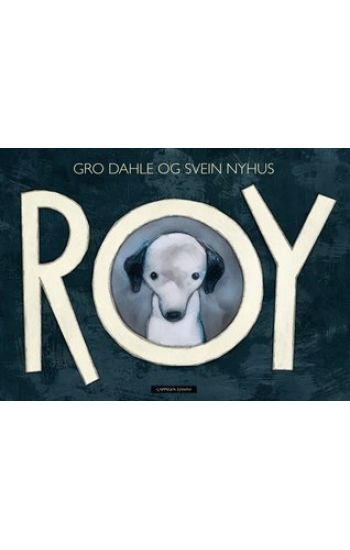
En dag er hunden Roy død. Det er vanskelig å forstå. Det er ingen skraping på dører mer, ingen bjeffing og ingen som kommer løpende. Gangen er tom og det er stille i huset.Det er noen som mangler.Det er Roy som mangler.Men hvor er Roy nå? Ligger han nede i jorda? Er han i hundeparadiset?Eller kanskje han er blitt et spøkelse? Hunden Roy er borte for alltid. Men kanskje han er her likevel?

Gro Dahle och Svein Nyhus är finstämda förmedlare av livets allvar till barn. Den här gången handlar det om hunden Roy som en dag ligger död. Det är svårt att förstå. Men var är Roy nu? Kanske är han i hundparadiset? Kanske har han blivit ett spöke? Roy är borta för alltid, men kanske finns han här ändå, han är ju i mitt huvud, tänker pojken. »Roy är en märkvärdig bilderbok, så skickligt genomförd att dess pedagogiska och psykologiska ärende inte för ett ögonblick skymmer den starka berättelsens egen konstnärliga suggestionskraft.» /Nisse Larsson i DN »DahleNyhus tre böcker för barn (och vuxna, vill jag hävda) är bland de vackraste jag läst, och det är en fröjd att någon vill ta barn på sådant allvar.» /Jenny Rydqvist i Sydsvenskan »Av bilderböcker om döden är Roy en av de bästa jag träffat på.» /Lena Kåreland i SvD »Det finns ingen slumpmässighet eller slentrian i det som uttrycks här. De här böckerna är gjorda med stor konstnärlig integritet och stor inlevelse. Man vill bara citera och citera. Böckerna ser mer än de ger sig ut för att se, ger mer än de påstår sig ge. Lösningarna erbjuds inte på bekostnad av skildringen, utan som en del av den, som en möjlighet bland andra.» /Nora Hämäläinen i Ny Tid om Gro Dahle och Svein Nyhus bilderböcker
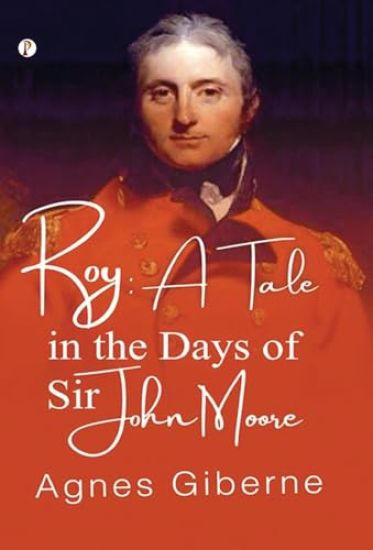
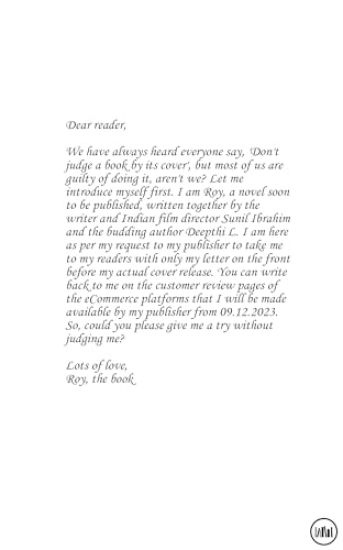
Blurb: A lonely man who believes he has nothing to look forward to magically finds a ray of light in his life, but he must lose himself once again to discover that he is willing to go to any extent for the one he lives for. 'Roy' is the novel adaptation of the Malayalam (Indian) movie of the same name. Fifteen copies of the pre-release paperback form of the book will be available in selected places including Nguyen Van Binh Book Street, Vietnam and Royal Caribbean's Spectrum of the Seas Cruise Ship. A book without a cover design (pre-release version/copies), it introduces itself through a letter addressed to its readers the theme of which is 'don't judge a book by its cover'. 'Roy' released all over the world in paperback and eBook formats on December 9, 2024, on the second anniversary of the movie.

Shortlisted for the 2014 Samuel Johnson PrizeShortlisted for the 2014 Costa Biography AwardLonglisted for the 2015 Orwell PrizeWinner of the 2014 Political Book Awards Political Biography of the YearRoy Jenkins was probably the best Prime Minister Britain never had.
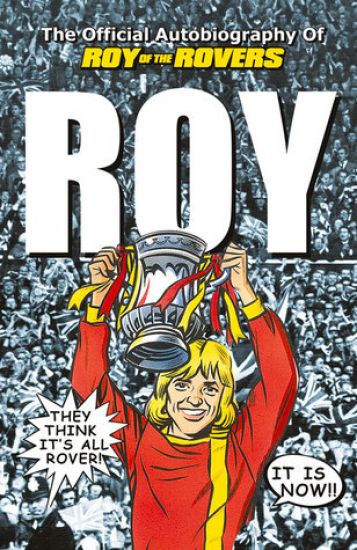
Ten league titles. Eleven FA Cups. Three European Cups. 481 goals across a 38-year playing career. A surprisingly high number of kidnappings. An assassination attempt. Not one, but two narrow escapes from earthquakes. A career-ending helicopter crash.My name is Roy Race. You know me as Roy of the Rovers. This is my story. From the five terrifying kidnappings that threatened to blight his playing career to the stomach-churning murder attempt in 1980, which left Roy in a life-threatening coma; from the sickening car bomb attack that tragically killed eight of Roy's team-mates while on a pre-season tour of Basran to the horrific helicopter crash in 1993 that resulted in the amputation of Roy's legendary left foot: this is the shocking tell-all autobiography of one of England's greatest ever sportsmen.Candid, emotional, optimistic, strangely repetitive, full of crushing lows and dizzying highs, and bearing an inexplicable resemblance to the plot structure of old comic strips, Roy's autobiography shines as brightly as the Melchester Rovers legend himself. Sit down, kick back, and treat yourself to the greatest football fairytale story of all time.**except for Leicester

A thoroughly revised and updated book, this definitive new edition reflects the latest advances in the popular Roy Adaptation Model, one of the most widely implemented nursing theories. Compact and consistent, this book focuses on the essentials of nursing practice and theory while integrating the conceptual framework of the Model into contemporary practice. Standardized nursing NANDA diagnoses are used consistently throughout the book. New case studies are included in all adaptive mode chapters.

A series of articles about Morris and its history. Written from notes left by the late Roy Dommett CBE Advice on dancing, and how to set up your own morris team

Roy Lichtenstein
MIT Press
2009
pokkari
The most comprehensive collection on Lichtenstein, from the earliest reviews to recent reassessments, including several hard-to-find and previously unpublished pieces.Roy Lichtenstein's popular appeal-and his influence on pop culture, seen in everything from greeting cards to sitcoms-at times overshadows his importance to contemporary art. Yet, examined on its own terms, Lichtenstein's comics-inspired, deadpan artwork remains as truly unsettling to art-world orthodoxies today as when it first gained wide attention in the early 1960s. Lichtenstein (1923-1997), a central figure in Pop, consistently savaged the rules of painting-while remaining committed to the most traditional procedures and goals of the medium. (He once said, "The things that I have apparently parodied I actually admire and I really don't know what the implication of that is.") This book offers the most comprehensive collection of writings on Lichtenstein's work to appear in thirty-five years, with early reviews, artist interviews and statements (some never before published), and recent reassessments. The book includes Donald Judd's reviews of Lichtenstein's three solo Pop shows in the early 1960s, an essay on the artist's 1969 Guggenheim retrospective, interviews that touch on topics ranging from the New York art world to Monet and Matisse, the transcript of a 1995 slide presentation in which Lichtenstein surveyed three decades of his work, and an in-depth study of Lichtenstein's first Pop painting, Look Mickey (1961). The texts explore Lichtenstein's career across the boundaries of medium and period, excavating early critical discussions and surveying more recent reexaminations of his artistic practice. The collection will be an indispensable resource for those interested in Lichtenstein, Pop Art, and American culture of the 1960s. ContributorsGraham Bader, Yve-Alain Bois, John Coplans, David Deitcher, Hal Foster, John Jones, Donald Judd, Max Kozloff, Jean-Claude Lebensztejn, Roy Lichtenstein, Michael Lobel
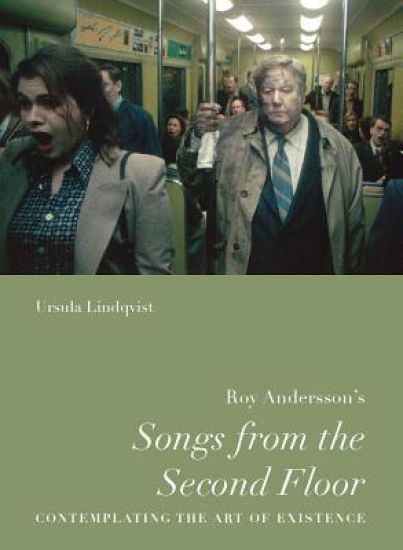
Roy Andersson's "Songs from the Second Floor"
Ursula Lindqvist
University of Washington Press
2016
sidottu
Swedish filmmaker Roy Andersson's celebrated and enigmatic film Songs from the Second Floor, his first feature film in twenty-five years, won the Special Jury Prize at the Cannes Film Festival in 2000. The "songs" of the film's title refer to Andersson's artistic ruminations on the state of mankind from his office on the second floor of Studio 24 in Stockholm. The film presents a series of forty-six tableaux—long, deep-focus shots with a still camera, mostly in studio settings, using older visual tricks such as trompe l'oeil. The tableaux showcase seemingly trivial tragicomic situations designed to provoke thoughts about existential guilt, broken relationships, and the failure of social institutions to treat people as human beings. Lindqvist draws from interviews with Andersson and his team that provide a behind-the-scenes look at how the film was made and investigates its philosophical and artistic influences, providing a nuanced reading of a film that has both befuddled and entranced its viewers. This first book-length study in English of Andersson's work considers his aesthetic agenda and the unique methods that have become hallmarks of his filmmaking, as well as his firm belief in film's revolutionary function as social critique.

Roy Andersson's "Songs from the Second Floor"
Ursula Lindqvist
University of Washington Press
2016
pokkari
Swedish filmmaker Roy Andersson's celebrated and enigmatic film Songs from the Second Floor, his first feature film in twenty-five years, won the Special Jury Prize at the Cannes Film Festival in 2000. The "songs" of the film's title refer to Andersson's artistic ruminations on the state of mankind from his office on the second floor of Studio 24 in Stockholm. The film presents a series of forty-six tableaux—long, deep-focus shots with a still camera, mostly in studio settings, using older visual tricks such as trompe l'oeil. The tableaux showcase seemingly trivial tragicomic situations designed to provoke thoughts about existential guilt, broken relationships, and the failure of social institutions to treat people as human beings. Lindqvist draws from interviews with Andersson and his team that provide a behind-the-scenes look at how the film was made and investigates its philosophical and artistic influences, providing a nuanced reading of a film that has both befuddled and entranced its viewers. This first book-length study in English of Andersson's work considers his aesthetic agenda and the unique methods that have become hallmarks of his filmmaking, as well as his firm belief in film's revolutionary function as social critique.