Kirjojen hintavertailu. Mukana 11 244 527 kirjaa ja 12 kauppaa.

Kirjahaku

Etsi kirjoja tekijän nimen, kirjan nimen tai ISBN:n perusteella.

1000 tulosta hakusanalla Roy K. Gottfried

Joyce's Misbelief

Joyce's Misbelief

Roy K. Gottfried

University Press of Florida
2008
sidottu
Roy Gottfried takes a different and somewhat controversial approach to the study of James Joyce's relation to religion by examining the author's misbelief rather than the disbelief so many scholars claim he professed.Gottfried argues that Joyce in fact had a great deal of respect for the Catholic Church though he did not accept the orthodox dogma he learned as a youth. Instead, Joyce was most interested in actual schisms that challenged the authority and universality of Catholic dogma.This focus on schism is most readily evident in Gottfried's analysis of Joyce's use of key Christian, though not Catholic, texts. He explores Joyce's interest in the Eastern Orthodox Church and in Protestantism, two influences usually ignored in discussions of Joyce and religion. Gottfried offers new readings of Joyce's work including his puzzling use of the term ""epicleti"" to describe Dubliners and his interest in heterodox ideas in Ulysses and Finnegans Wake. Joyce's use of the ""Protestant Bible"" and the ""Anglican Book of Common Prayer"" enabled Joyce to articulate ideas that the Catholic Church of his time suppressed and to challenge Catholic doctrine, power, and hegemony, according to Gottfried.
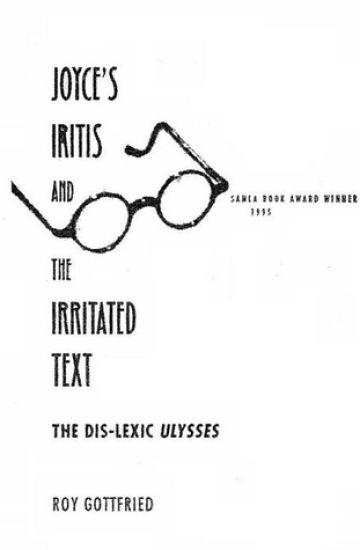
Joyce's Iritis and the Irritated Text

Joyce's Iritis and the Irritated Text

Roy K. Gottfried; Bernard Benstock

University Press of Florida
1995
sidottu
Ulysses was written and proofread when James Joyce's vision was seriously blurred and impaired by iritis. The illness required him to use a magnifying glass to enlarge words, separating them out of context and distorting the simple letters in them. This book considers the effects of Joyce's iritis on the text of ""Ulysses"". Gottfried examines ""Ulysses"" much as Joyce must have tried to see it, in close readings of many small portions of the text, and with a quizzical eye. He locates the particular density and opacity of ""Ulysses"" in two sites: within the iritis in Joyce's eyes and within the body of the text with its irritated confusion of letters. ""No reader's eye can be trusted in seeing ""Ulysses"""", Gottfried claims. Instead, the reader is disoriented and infected with a particular kind of ""Joycean dis-lexia"", so that ""a variety of instabilities arise from the reader's unclear view and reading of the novel"".
Man of High Empire

Man of High Empire

Roy K. Gibson

OXFORD UNIVERSITY PRESS INC
2022
nidottu
Pliny the Younger (c. 60-112 C.E.)--senator and consul in the Rome of emperors Domitian and Trajan, eyewitness to the eruption of Vesuvius in 79, and early 'persecutor' of Christians on the Black Sea--remains Rome's best documented private individual between Cicero and Augustine. No Roman writer, not even Vergil, ties his identity to the regions of Italy more successfully than Pliny. His individuality can be captured by focusing on the range of locales in which he lived: from his hometown of Comum (Como) at the foot of the Italian Alps, down through the villa and farms he owned in Umbria, to the senate and courtrooms of Rome and the magnificent residence he owned on the coast near the capital. Organized geographically, Man of High Empire is the first full-scale biography devoted solely to the Younger Pliny. Reserved, punctilious, occasionally patronizing, and perhaps inclined to overvalue his achievements, Pliny has seemed to some the ancient equivalent of Mr. Collins, the unctuous vicar of Jane Austen's Pride and Prejudice. Roy K. Gibson reveals a man more complex than this unfair comparison suggests. An innovating landowner in Umbria and a deeply generous benefactor in Comum, Pliny is also a consul who plays with words in Rome and dispenses summary justice in the provinces. A solicitous, if rather traditional, husband in northern Italy, Pliny is also a literary modernist in Rome, and--more surprisingly--a secret pessimist about Trajan, the 'best' of emperors. Pliny's life is a window on to the Empire at its zenith. The book concludes with an archaeological tour guide of the sites associated with Pliny.
Man of High Empire

Man of High Empire

Roy K. Gibson

Oxford University Press Inc
2020
sidottu
Pliny the Younger (c. 60-112 C.E.)--senator and consul in the Rome of emperors Domitian and Trajan, eyewitness to the eruption of Vesuvius in 79, and early 'persecutor' of Christians on the Black Sea--remains Rome's best documented private individual between Cicero and Augustine. No Roman writer, not even Vergil, ties his identity to the regions of Italy more successfully than Pliny. His individuality can be captured by focusing on the range of locales in which he lived: from his hometown of Comum (Como) at the foot of the Italian Alps, down through the villa and farms he owned in Umbria, to the senate and courtrooms of Rome and the magnificent residence he owned on the coast near the capital. Organized geographically, Man of High Empire is the first full-scale biography devoted solely to the Younger Pliny. Reserved, punctilious, occasionally patronizing, and perhaps inclined to overvalue his achievements, Pliny has seemed to some the ancient equivalent of Mr. Collins, the unctuous vicar of Jane Austen's Pride and Prejudice. Roy K. Gibson reveals a man more complex than this unfair comparison suggests. An innovating landowner in Umbria and a deeply generous benefactor in Comum, Pliny is also a consul who plays with words in Rome and dispenses summary justice in the provinces. A solicitous, if rather traditional, husband in northern Italy, Pliny is also a literary modernist in Rome, and--more surprisingly--a secret pessimist about Trajan, the 'best' of emperors. Pliny's life is a window on to the Empire at its zenith. The book concludes with an archaeological tour guide of the sites associated with Pliny.
Reading the Letters of Pliny the Younger

Reading the Letters of Pliny the Younger

Roy K. Gibson; Ruth Morello

Cambridge University Press
2016
pokkari
This is the first general introduction to Pliny's Letters published in any language, combining close readings with broader context and adopting a fresh and innovative approach to reading the letters as an artistically structured collection. Chapter 1 traces Pliny's autobiographical narrative throughout the Letters; Chapter 2 undertakes detailed study of Book 6 as an artistic entity; while Chapter 3 sets Pliny's letters within a Roman epistolographical tradition dominated by Cicero and Seneca. Chapters 4 to 7 study thematic letter cycles within the collection, including those on Pliny's famous country villas and his relationships with Pliny the Elder and Tacitus. The final chapter focuses on the 'grand design' which unifies and structures the collection. Four detailed appendices give invaluable historical and scholarly context, including a helpful timeline for Pliny's life and career, detailed bibliographical help on over 30 popular topics in Pliny's letters and a summary of the main characters mentioned in the Letters.
Reading the Letters of Pliny the Younger

Reading the Letters of Pliny the Younger

Roy K. Gibson; Ruth Morello

Cambridge University Press
2012
sidottu
This is the first general introduction to Pliny's Letters published in any language, combining close readings with broader context and adopting a fresh and innovative approach to reading the letters as an artistically structured collection. Chapter 1 traces Pliny's autobiographical narrative throughout the Letters; Chapter 2 undertakes detailed study of Book 6 as an artistic entity; while Chapter 3 sets Pliny's letters within a Roman epistolographical tradition dominated by Cicero and Seneca. Chapters 4 to 7 study thematic letter cycles within the collection, including those on Pliny's famous country villas and his relationships with Pliny the Elder and Tacitus. The final chapter focuses on the 'grand design' which unifies and structures the collection. Four detailed appendices give invaluable historical and scholarly context, including a helpful timeline for Pliny's life and career, detailed bibliographical help on over 30 popular topics in Pliny's letters and a summary of the main characters mentioned in the Letters.
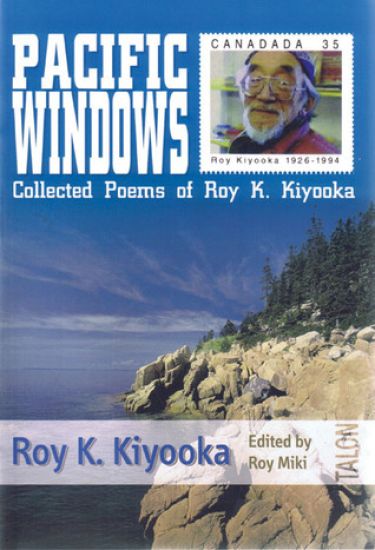
Pacific Windows

Pacific Windows

Roy K. Kiyooka

Talonbooks
1997
pokkari
Roy Kiyooka's reputation as an artist has long been recognized. Such is not the case with his writing and poetry, even though his engagement with language as a medium of artistic consciousness had been a preoccupation all along. For Kiyooka the poet, the poetic text was not a supplement to his visual art, but a medium that he explored in the same spirit and imagination as that of his other work. His poetry reflects his life-long intellectual engagement with the aesthetics of experience and his artistry in transforming the elements of language into poetic texts striking for their care with words, syntax, and the multiform spaces of the imagination. This publication makes evident his collective poetic achievements by bringing together all of his most important poetic works, including many that have only been available in very limited editions. Preparation of this publication had begun in the year preceding Kiyooka's death. Editor Roy Miki and Kiyooka had planned a collaborative form for determining its design and content. With the Kiyooka Estate's permission, Miki has continued with the editorial responsibility of seeing it through to completion.Included are editorial and bibliographic notes on each of the titles as well as an essay on Kiyooka's life as a poet. The title, Pacific Windows, is Kiyooka's own.