Kirjojen hintavertailu. Mukana 11 244 527 kirjaa ja 12 kauppaa.

Kirjahaku

Etsi kirjoja tekijän nimen, kirjan nimen tai ISBN:n perusteella.

1000 tulosta hakusanalla Rudolf Arnheim

Rudolf Arnheim

Rudolf Arnheim

The University of Michigan Press
1998
sidottu
Rudolf Arnheim is one of this century's most influential thinkers in the visual arts, and perhaps the most lucid and accessible writer on the arts today. From his now-classic book on film theory to his definitive texts on visual perception, from his seminal treatment of Picasso's Guernica to his primary research on the psychology of the creative process; from his lasting influence as a professor at Harvard to the overcrowded lectures at the University of Michigan in the final decade of his teaching career, Arnheim has shaped the discourse of the visual arts like no other individual in this century. The collection reflects on the scope, direction, and impact of Arnheim's work, through his own words as well as those of the contemporaries he influenced. The book includes an impressive array of essays, interviews, and tributes by internationally recognized artists, architects, and scholars, including art historian Vincent Scully, graphic artist Paul Rand, architect Daniel Libeskind, and writers and artists such as Gyorgy Kepes, Dore Ashton, and Sir Ernst Gombrich. The collection is enhanced by visual material from Arnheim's personal collection, which forms a further narrative strand. This volume cuts across a series of disciplines including art history, psychology, architecture, and studio art. Rudolf Arnheim: Revealing Vision will find an appreciative audience among scholars and specialists whose thinking has been influenced by Arnheim, as well as among general readers interested in the visual arts. "This imaginatively conceived and executed collection is a fine tribute to one of the major thinkers of modernism of the twentieth century--someone whose work has deeply influenced generations of artists, art historians, psychologists, and historians and critics of film." --Donald Preziosi, University of California, Los Angeles
Film Essays and Criticism

Film Essays and Criticism

Rudolf Arnheim

University of Wisconsin Press
1997
nidottu
This is an English translation of Arnheim's ""Kritiken und Aufsatze zum Film"", which collects both film reviews and theoretical essays, most of them written between 1925 and 1940. Arnheim began writing about film in the 1920s for a satirical magazine, ""Das Stachelschwein"" and later became a film critic for ""Die Weltbuhne"". His most important contributions to both magazines are published here, including comments on the silent and early sound period, incorporating some of Buster Keaton's films. The 30 essays on film theory discuss elements of theory; early sound film; production; style and content; and the relationship of film and the state. The 56 critical pieces include Arnheim's thoughts on the practice of film criticism, his reviews of German, American, French and Soviet films, and his profiles of Greta Garbo, Charlie Chaplin, Felix Bressart, Erich von Stroheim, and others.
New Essays on the Psychology of Art

New Essays on the Psychology of Art

Rudolf Arnheim

University of California Press
1986
pokkari
Thousands of readers who have profited from engagement with the lively mind of Rudolf Arnheim over the decades will receive news of this new collection of essays expectantly. In the essays collected here, as in his earlier work on a large variety of art forms, Arnheim explores concrete poetry and the metaphors of Dante, photography and the meaning of music. There are essays on color composition, forgeries, and the problems of perspective, on art in education and therapy, on the style of artists' late works, and the reading of maps. Also, in a triplet of essays on pioneers in the psychology of art (Max Wertheimer, Gustav Theodor Fechner, and Wilhelm Worringer) Arnheim goes back to the roots of modern thinking about the mechanisms of artistic perception.
Parables of Sun Light

Parables of Sun Light

Rudolf Arnheim

University of California Press
1990
pokkari
For many years Rudolf Arnheim, known as the leading psychologist of art, has been keeping notebooks in which to jot down observations, ideas, questions, and even (after a stay in Japan for a year) poems in the haiku pattern. Some of these notes found their way into his books - known and prized the world over - such as "Art and Visual Perception", "Visual Thinking", and "The Power of the Center" (see list below). Now he has selected, from the remaining riches of his notebooks, the items in this volume. The book will be a joy to ramble through for all lovers of Arnheim's work, and indeed for anyone who shares Arnheim's contagious interest in the order that lies behind art, nature, and human life. It is a seedbed of ideas and observations in his special fields of psychology and the arts. 'I have avoided mere images and I have avoided mere thoughts,' says Arnheim in the Introduction, 'but whenever an episode observed or a striking sentence read yielded a piece of insight I had not met before, I wrote it down and preserved it.' There are also glimpses of his personal life - his wife, his cats, his students, his neighbors and colleagues. He is always concrete, in the manner that has become his trademark, often witty, and sometimes a bit wicked. In the blend of life and thought caught in these jottings, psychology and the arts are of course prominent. But philosophy, religion, and the natural sciences add to the medley of topics - always addressed in a way to sharpen the senses of the reader who, sharing Arnheim's cue from Dylan Thomas, may accompany him through 'the parables of sun light and the legends of the green chapels and the twice told fields of childhood.' All of Rudolf Arnheim's books have been published by the University of California Press.
To the Rescue of Art

To the Rescue of Art

Rudolf Arnheim

University of California Press
1991
pokkari
Never before published essays by the widely admired psychologist of art. Arnheim spiritedly asserts art's fundamental achievements. Rudolf Arnheim has spent a lifetime analyzing the basic psychological principles that make works of visual art meaningful, stirring, indispensable, and lasting. But recent fashionable attitudes and theories about art, he argues, are undermining the foundation of artistic achievement itself. The essays collected in this volume are written in his familiar, careful, and solidly supported manner, but under present circumstances they amount to a call to arms. Included is a series of miniature monographs on a variety of great works of art. In other essays, Arnheim uncovers enlightening perspectives in the art of the blind, in architectural space, in caricature, and in the work of psychotics and autistic children. He also presents new scientific aspects on the psychology of art and widens our range of vision by connecting art with language, literature, and religion.
The Split and the Structure

The Split and the Structure

Rudolf Arnheim

University of California Press
1996
pokkari
Rudolf Arnheim's great forte is his ability to illuminate the perceptual processes that go into the making and reception of artworks - painting, sculpture, architecture, and film. Over the years, his pioneering mode of 'reading' art from a unique scientific/philosophic perspective has garnered him an established and devoted audience. That audience will take pleasure in Arnheim's most recent collection of essays, one that covers a range of topics and includes titles such as "Outer Space and Inner Space," "What Is an Aesthetic Fact?," "As I Saw Children's Art," "Two Ways of Being Human," "Consciousness - an Island of Images," and "From Chaos to Wholeness." The notion of structure is Arnheim's guide in these explorations. Most of the essays examine the nature of structure affirmatively: how it comes about, its incentives and objectives, its celebration of perfection. He is interested in how artists grope for structure to shape powerful, enlightening images, and how a scientist's search for truth is a search for structure. Writing with enviable clarity, even when deploying complex arguments, Arnheim makes it easy and exciting to follow him as he thinks. America is not abundantly supplied with 'public intellectuals' such as Rudolf Arnheim - to have his writings with us is cause for celebration. 'The word 'structure' appears for good reason in the title of this collection...Structure seems to be needed as an arbiter wherever this civilization of ours is split by selfish interests and fighting for either/or decisions. The essays want to speak with the voice of reason, because they want to show how the parts require the whole.'
Visual Thinking

Visual Thinking

Rudolf Arnheim

University of California Press
2004
pokkari
For thirty-five years Visual Thinking has been the gold standard for art educators, psychologists, and general readers alike. In this seminal work, Arnheim, author of "The Dynamics of Architectural Form", "Film as Art", "Toward a Psychology of Art", and "Art and Visual Perception", asserts that all thinking (not just thinking related to art) is basically perceptual in nature, and that the ancient dichotomy between seeing and thinking, between perceiving and reasoning, is false and misleading. This is an indispensable tool for students and for those interested in the arts.
Art and Visual Perception, Second Edition

Art and Visual Perception, Second Edition

Rudolf Arnheim

University of California Press
2004
pokkari
Since its publication fifty years ago, this work has established itself as a classic. It casts the visual process in psychological terms and describes the creative way one's eye organizes visual material according to specific psychological premises. In 1974 this book was revised and expanded, and since then it has continued to burnish Rudolf Arnheim's reputation as a groundbreaking theoretician in the fields of art and psychology.
Film as Art, 50th Anniversary Printing

Film as Art, 50th Anniversary Printing

Rudolf Arnheim

University of California Press
2006
pokkari
In the fall of 1957 the University of California Press expanded Arnheim's 1933 book "Film" by four essays and brought that landmark work back into print as "Film as Art". Now nearly fifty years after that re-edition, this book continues to occupy an important place in the literature of film. Arnheim's method, provocative in this age of technological wizardry, was to focus on the way art in film was derived from that medium's early limitations: no sound, no color, and no three-dimensional depth.
The Genesis of a Painting

The Genesis of a Painting

Rudolf Arnheim

University of California Press
2006
pokkari
Rudolf Arnheim explores the creative process through the sketches executed by Picasso for his mural Guernica. The drawings and paintings shown herein, as well as the photographs of the stages of the final painting, represent the complete visual record of the creative stages of a major work of art.
The Dynamics of Architectural Form, 30th Anniversary Edition

The Dynamics of Architectural Form, 30th Anniversary Edition

Rudolf Arnheim

University of California Press
2009
pokkari
Rudolf Arnheim has been known, since the publication of his groundbreaking "Art and Visual Perception" in 1974, as an authority on the psychological interpretation of the visual arts. Two anniversary volumes celebrate the landmark anniversaries of his works in 2009. In "The Power of the Center", Arnheim uses a wealth of examples to consider the actors that determine the overall organization of visual form in works of painting, sculpture, and architecture. "The Dynamics of Architectural Form" explores the unexpected perceptual consequences of architecture with Arnheim's customary clarity and precision.
The Power of the Center

The Power of the Center

Rudolf Arnheim

University of California Press
2009
pokkari
Rudolf Arnheim has been known, since the publication of his groundbreaking "Art and Visual Perception" in 1974, as an authority on the psychological interpretation of the visual arts. Two anniversary volumes celebrate the landmark anniversaries of his works in 2009. In "The Power of the Center", Arnheim uses a wealth of examples to consider the factors that determine the overall organization of visual form in works of painting, sculpture, and architecture. "The Dynamics of Architectural Form" explores the unexpected perceptual consequences of architecture with Arnheim's customary clarity and precision.
Entropy and Art

Entropy and Art

Rudolf Arnheim

University of California Press
2010
pokkari
This essay is an attempt to reconcile the disturbing contradiction between the striving for order in nature and in man and the principle of entropy implicit in the second law of thermodynamics - between the tendency toward greater organization and the general trend of the material universe toward death and disorder.
Toward a Psychology of Art

Toward a Psychology of Art

Rudolf Arnheim

University of California Press
2010
pokkari
From the Introduction: The papers collected in this book are based on the assumption that art, as any other activity of the mind, is subject to psychology, accessible to understanding, and needed for any comprehensive survey of mental functioning. The author believes, furthermore, that the science of psychology is not limited to measurements under controlled laboratory conditions, but must comprise all attempts to obtain generalizations by means of facts as thoroughly established and concepts as well defined as the investigated situation permits. Therefore the psychological findings offered or referred to in these papers range all the way from experiments in the perception of shape or observations on the art work of children to broad deliberations on the nature of images or of inspiration and contemplation. It is also assumed that every area of general psychology calls for applications to art. The study of perception applies to the effects of shape, color, movement, and expression in the visual arts. Motivation raises the question of what needs are fulfilled by the production and reception of art. The psychology of the normal and the disturbed personality searches the work of art for manifestations of individual attitudes. And social psychology relates the artist and his contribution to his fellow men. A systematic book on the psychology of art would have to survey relevant work in all of these areas. My papers undertake nothing of the kind. They are due to one man's outlook and interest, and they report on whatever happened to occur to him. They are presented together because they turn out to be concerned with a limited number of common themes. Often, but unintentionally, a hint in one paper is expanded to full exposition in another, and different applications of one and the same concept are found in different papers. I can only hope that the many overlappings will act as unifying reinforcements rather than as repetitions. These papers represent much of the output of the quarter of a century during which I have been privileged to live, study, and teach in the United States. To me, they are not so much the steps of a development as the gradual spelling-out of a position. For this reason, I have grouped them systematically, not chronologically. For the same reason, I did not hesitate to change the words I wrote years ago wherever I thought I could clarify their meaning. Removed from my original intimacy with the content, I approached the text as an unprepared reader, and when I stumbled, I tried to repair the road. In some instances, I recast whole sections, not in order to bring them up to date, but in the hope of saying better what I meant at the time. Some of the earlier papers led to my book, Art and Visual Perception, which was written in 1951 and first published in 1954- Sections of the articles on perceptual abstraction, on the Gestalt theory of expression, and on Henry Moore are incorporated in that book. Others continued where the book left off, for instance, the attempts to describe more explicitly the symbolism conveyed by visual form. The short piece on inspiration provided the substance for the introductory chapter on creativity in my more recent book, Picasso's Guernica. Finally, in rereading the material, I was surprised to find how many passages point to what is shaping up as my next task, namely, a presentation of visual thinking as the common and necessary way of productive problem solving in any human activity. Ten of the papers in this book were first published in the Journal of Aesthetics and Art Criticism. To mention this is to express my indebtedness to the only scholarly periodical in the United States devoted to the theory of art. In particular, Thomas Munro, its first editor, showed a great trust in the contribution of psychology. He made me feel at home among the philosophers, art historians, and literary critics whose lively propositions inhabit the hostel he founded and sustained. To him, as well as to my friends of the University of California Press, who are now publishing my fourth book, I wish to say that much of what I thought about in these years might not have been cast into final writing, had it not been for their sympathy, which encouraged the novice and keeps a critical eye on the more self-assured pro. There are a few scientific papers here, originally written for psychological journals but free, I hope, of the terminological incrustation that would hide their meaning from sight. There are essays for the educated friend of the arts. And there are speeches, intended to suggest practical consequences for art education, for the concerns of the artist, and for the function of art in our time. These public lectures are hardly the products of a missionary temperament. In fact, I marveled why anybody would go to a theorist for counsel, illumination, and reassurance in practical matters. However, when I responded to such requests I noticed, bewildered and delighted, that some of my findings pointed to tangible applications, which were taken to be useful.
Kunst Und Sehen

Kunst Und Sehen

Rudolf Arnheim

de Gruyter
2000
sidottu
Die Kunst der Bildanalyse ist so alt wie die Kunst selbst. Arnheims Anleitung zum Sehen ist aber immer noch so jung wie bei ihrem ersten Erscheinen 1954. Kaum ein Buch hat Generationen von Lesern so einfach und so grundlich in die Welt der Kunst eingefuhrt. Kaum ein Buch schlug so seine Leser von Anfang an in ihren Bann. Woran liegt dies? Arnheim ist in seinen Schriften ein immer verstandlicher Vermittler. An einfachen Beispielen beleuchtet er behutsam und kritisch das Wechselspiel von Form und Farbe, Raum und Licht, Bewegung und Gleichgewicht. Am Ende der Lekture wird der Leser kaum bemerkt haben, wieviel Material ihm prasentiert worden ist: von der Steinzeit bis zu Picasso.
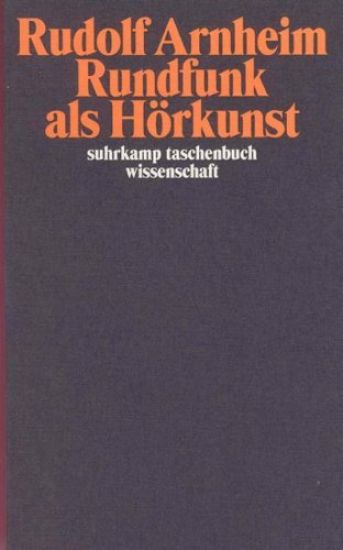
Rundfunk als Hörkunst

Rundfunk als Hörkunst

Rudolf Arnheim

SUHRKAMP VERLAG
2001
pokkari
Mit dieser Broschüre können Eltern mit ihrem Kind das sichere und richtige Verhalten im Straßenverkehr üben. Kinder lernen Schritt für Schritt, wie man ein guter Fußgänger wird. Am Schluss des Heftes gibt es eine kleine "Prüfung". Ist sie bestanden, erhält das Kind seinen Fußgänger-Führerschein. Aus dem Inhalt: - Auf dem Gehweg - Überqueren von Straßen, Zebrastreifen und Ampeln - Wichtige Verkehrszeichen - Kannst du veraussehen? - Mitfahren auf dem Rad und im Auto - Das erste Fahrrad. Broschüre mit 24 Seiten und einer Bastelvorlage für einen Fußgänger-Führerschein, DIN A5, + Fragebogen mit 30 Blatt, DIN A4, doppelseitig farbig bedruckt auf einem Block.
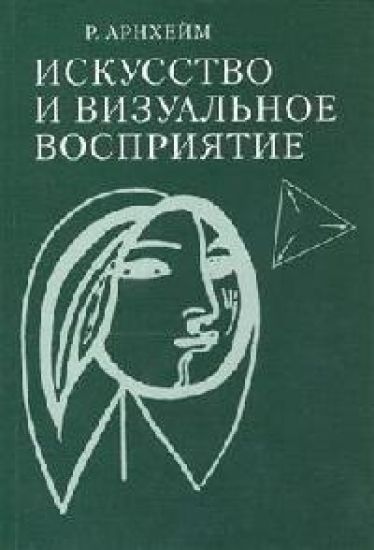
Iskusstvo i vizualnoe vosprijatie

Iskusstvo i vizualnoe vosprijatie

Rudolf Arnheim

Arhitektura-S
2006
nidottu
Eta kniga, perevedennaja na russkij jazyk v 1960 godu, javljaetsja itogom mnogoletnego pedagogicheskogo opyta avtora. V nej shiroko ispolzujutsja empiricheskie dannye: psikhologicheskie eksperimenty, dostizhenija fiziologii, psikhologii i pedagogiki. Privoditsja bolshoe kolichestvo risunkov, skhem, diagramm i t.d. Vse eto pridaet knige fundamentalnost i faktologichnost, poetomu etot trud do sikh por ostaetsja odnim iz osnovnykh issledovanij v oblasti psikhologii iskusstva. Kniga rasschitana na khudozhnikov, spetsialistov v oblasti iskusstva, arkhitektury, dizajna i t.d., a takzhe na shirokij krug chitatelej. Ona mozhet byt ispolzovana i dlja uchebnykh tselej.
Rudolf

Rudolf

Marian Pankowski; John Maslen; Elizabeth Maslen

Northwestern University Press
1996
nidottu
In these two novellas, Volodymyr Dibrova tells the story of how the Soviet system was sustained by individuals who never truly believed in it, but simply lacked the courage to oppose it.Peltse portrays the formation of an average apparatchik. Both funny and alarming, it provides a psychological portrait of an individual trapped in a system he simultaneously dislikes and depends upon for survival. Pentameron tells the story of one day in the life of five colleagues at a Soviet research institute. Each is dissatisfied, yet all are trapped in and by a system that has taken away their ability to act decisively.