
Kirjahaku
Etsi kirjoja tekijän nimen, kirjan nimen tai ISBN:n perusteella.
1000 tulosta hakusanalla Rudolf Nykrin





Musik voraus - Das Entdeckerbuch
Birgit Herwig; Rainer Kotzian; Rudolf Nykrin
Schott Music
2022
nidottu

In these two novellas, Volodymyr Dibrova tells the story of how the Soviet system was sustained by individuals who never truly believed in it, but simply lacked the courage to oppose it.Peltse portrays the formation of an average apparatchik. Both funny and alarming, it provides a psychological portrait of an individual trapped in a system he simultaneously dislikes and depends upon for survival. Pentameron tells the story of one day in the life of five colleagues at a Soviet research institute. Each is dissatisfied, yet all are trapped in and by a system that has taken away their ability to act decisively.

Rudolf: K. Rudolphs II Polizeyordnung Fur Bohmen, 1605 (1792
Rudolf
KESSINGER PUBLISHING, LLC
2009
nidottu

Rudolf Koivun joulukalenteri
Otava
2018
kalenteri
Ihanan nostalgisen joulukalenterin luukkujen takaa löytyy 24 tunnelmallista jouluyllätystä
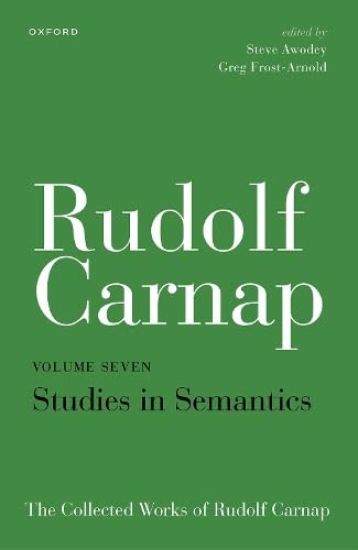
Rudolf Carnap: Studies in Semantics
Oxford University Press
2024
sidottu
This volume contains Carnap's Studies in Semantics, a series of three interlocking books: Introduction to Semantics (1942), Formalization of Logic (1942), and Meaning and Necessity (1947). They were extremely influential in their time, especially the third, and shaped the direction of analytic philosophy during the 1950s and 1960s. They constitute the background to a number of celebrated controversies of that period, especially those between Carnap and Quine. Most of the philosophical debates today in philosophical logic and the philosophy of language ultimately had their origins here. This new edition situates these works in their context, both within Carnap's philosophical development and within the philosophical debates they responded to and influenced. The editors' introduction explains how Carnap arrived at the project of semantics in the 1930s and how it developed into these three successive publications, how the three books fit together, and how the project developed and changed in the course of the 1940s. It also describes the reception of the books as they appeared, as well as Carnap's response. The editorial and textual notes give variant readings, Carnap's own marginal notes on these texts in his personal copies, and elucidatory commentary where Carnap's terminology or notation are no longer familiar. This will be an indispensable volume for anyone interested in the origins and preoccupations of present-day analytic philosophy, especially philosophical logic and philosophy of language.
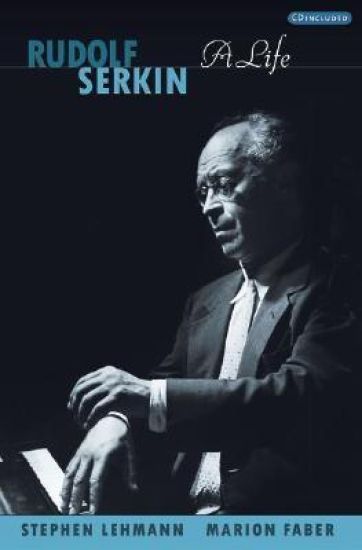
Like Heifitz and Horowitz, Rudolf Serkin was a virtuosic solo performer who made European classical music an important part of American middle class culture in the mid-20th century. This book, the first biography of this influential pianist, chronicles Serkin's life and career and assesses his impact on classical music in America. Beginning with Serkin's upbringing and early adulthood in Europe, the book reveals the story of a religious Czech Jew's assimilation into Austro-German society and particularly into the profoundly German household of Adolf Busch. When Serkin immigrated to the United States, he imported with him a particularly German perspective on classical music performance. Best known for his recordings of Beethoven sonatas, Serkin also performed Brahms, Mozart, Bach, and other composers' works. Later in his career, he became an active teacher, embarking on a long association with the Curtis Institute in Philadelphia. As artistic director of the Marlboro Music School and Festival in Vermont, Serkin played a key role in institutionalizing a redefinition of musical values in America. Extensive interviews with Serkin's friends and students are an important fixture of the book. The book concludes with a discography by Paul Farber that documents an essential part of Serkin's achievement.

Melissa Raphael presents a critical examination of the central contribution to the twentieth-century concept of holiness made by the German Protestant Rudolf Otto (1869-1937). Whereas Otto's work has usually been studied from a phenomenological perspective, this book is original in offering theological arguments for Otto's idea of the holy becoming an anchor concept of contemporary theistic discourse. This volume analyses the scholarly context that shaped Otto's concept of holiness and, finding that the theological significance of the latter has been overlooked, discusses the relation of the numinous and the holy to the divine personality, morality, religious experience, and emancipatory theology.

Rudolf Carnap: Early Writings
Oxford University Press
2019
sidottu
Rudolf Carnap (1891-1970) is generally acknowledged to have been one of the central figures of twentieth-century philosophy. He was the leading philosopher of the Vienna Circle, a group that was central to the international movement known as logical empiricism, which pursued the goal of making philosophy scientific and eliminating metaphysics that went beyond the limits of what humans can coherently comprehend. Carnap was not only well-versed in this area of thought but also contrary ideas; he interacted philosophically with Gottlob Frege, Bertrand Russell, Ludwig Wittgenstein, Edmund Husserl, and Martin Heidegger, and in his formative years he was influenced by the positivists Mach and Ostwald, neo-Kantians such as Cassirer and Natorp, and Husserl's phenomenology. Interest in logical empiricism waned in the decades following Carnap's death but was revived towards the end of the twentieth century; the wave of new scholarship that resulted identified Carnap as far more subtle and interesting than was previously understood. The complete fourteen-volume edition of Carnap's published writings builds upon these more recent interpretations of his philosophy. This first book contains Carnap's early publications up until 1928, none of which have previously been translated from their original German. The introduction and notes place the text in the relevant scientific and historical contexts, in addition to explaining obscure references or outdated notation and terminology. Carnap's neo-Kantian origins are more obvious in these works than in his later writings, and the overall figure which emerges from this volume is a very different Carnap to the caricature that many philosophers will know.
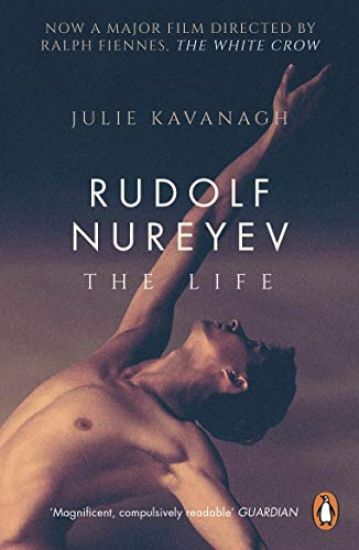
NOW A MAJOR FILM BY RALPH FIENNES, THE WHITE CROW'A gripping account of an extraordinary life' Daily Telegraph Born on a train in Stalin's Russia, Rudolf Nureyev was ballet's first pop icon. No other dancer of our time has generated the same excitement - both on and off stage.Nureyev's achievements and conquests became legendary: he rose out of Tatar peasant poverty to become the Kirov's thrilling maverick star; slept with his beloved mentor's wife; defected to the West in 1961; sparked Rudimania across the globe; established the most rhapsodic partnership in dance history with the middle-aged Margot Fonteyn; reinvented male technique; gatecrashed modern dance; moulded new stars; and staged Russia's unknown ballet masterpieces in the West. He and his life were simply astonishing.'Magnificent, a triumph. Captures every facet of this extraordinary man' Mail on Sunday'The definitive study of a man who, in his combination of aesthetic grace and psychological grime, can truly be called a sacred monster' Observer'Undoubtedly the definitive biography' Sunday Telegraph