Kirjojen hintavertailu. Mukana 11 342 296 kirjaa ja 12 kauppaa.

Kirjahaku

Etsi kirjoja tekijän nimen, kirjan nimen tai ISBN:n perusteella.

1000 tulosta hakusanalla Rudolf Steiner

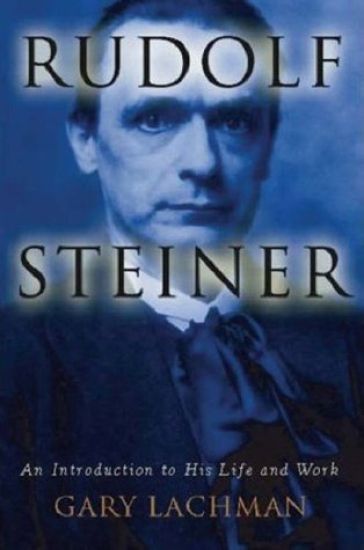
Rudolf Steiner

Rudolf Steiner

Heiner Ullrich

Continuum International Publishing Group Ltd.
2008
sidottu
Rudolf Steiner is indisputably a major thinker in education. Heiner Ullrich's volume offers the most coherent account of Steiner's educational thought. This work is divided into: Intellectual biography; Critical exposition of Steiner's work; The reception and influence of Steiner's work; and, The relevance of the work today.This is a major international reference series providing comprehensive accounts of the work of seminal educational thinkers from a variety of periods, disciplines and traditions. It is the most ambitious and prestigious such project ever published - a definitive resource for at least a generation. The thinkers include: Aquinas, Aristotle, Bourdieu, Bruner, Dewey, Foucault, Freire, Holt, Kant, Locke, Montessori, Neill, Newman, Owen, Peters, Piaget, Plato, Rousseau, Steiner, Vygotsky, West and Wollstonecraft.
Rudolf Steiner in the Waldorf School

Rudolf Steiner in the Waldorf School

Rudolf Steiner

SteinerBooks, Inc
1996
nidottu
Lectures and addresses, 1919-1924 (CW 298) This book contains all of the more-or-less informal talks given by Steiner in the Stuttgart school from 1919 to 1924. Included are speeches given by him at various school assemblies, parents' evenings, and other meetings. Steiner spoke here with spontaneity, warmth, and enthusiasm. Readers will find a unique glimpse of the real Steiner and how he viewed the school and the educational philosophy he brought into being. German source: Rudolf Steiner in der Waldorfschule, Vort ge und Ansprachen, Stuttgart, 1919-1924 (GA 298).
Faculty Meetings with Rudolf Steiner

Faculty Meetings with Rudolf Steiner

Rudolf Steiner

SteinerBooks, Inc
1998
pokkari
The Waldorf school movement has its roots in the chaotic period following World War I. Struggling to create the first school, Rudolf Steiner worked on every detail-lesson plans, religious education, school hours, course resources, administration, finance, and child study. Guiding the faculty, Steiner moved toward his goal of creating a vehicle for social transformation. These two volumes span 1919 to 1924 and cover, meeting by meeting, the development of the first Waldorf school. Participating in a work in progress, Steiner deals with an amazing array of problems, frustrations, successes, and failures. His sleeves rolled up and his sight on a vision that he made a reality, Steiner lays the foundations of Waldorf education. This detailed look behind the scenes will interest not only teachers, but also parents, students, and anyone who wants to know how a successful worldwide school movement arose. German source: Konferenzen mit den Lehren der Freien Waldorfschule 1919-1924 (GA 300a-c)
An Occult Physiology: Eight Lectures by Rudolf Steiner

An Occult Physiology: Eight Lectures by Rudolf Steiner

Rudolf Steiner

Literary Licensing, LLC
2011
sidottu
An Occult Physiology: Eight Lectures By Rudolf Steiner is a book that delves into the esoteric aspects of the human body and its relationship to the spiritual world. The author, Rudolf Steiner, was a philosopher and mystic who founded the spiritual movement known as Anthroposophy. In this book, he presents a series of lectures that explore the hidden aspects of the human body, including the chakras, the etheric body, and the astral body. He explains how these elements interact with the physical body to create a holistic understanding of human health and well-being. Steiner also provides insights into the spiritual nature of illness and disease, and how they can be healed through spiritual practices and understanding. The book is a fascinating exploration of the intersection between science, spirituality, and the human experience, and is a must-read for anyone interested in holistic health and wellness.Eight Lectures By Rudolf Steiner, Given In Prague, March 20-28, 1911.This scarce antiquarian book is a facsimile reprint of the old original and may contain some imperfections such as library marks and notations. Because we believe this work is culturally important, we have made it available as part of our commitment for protecting, preserving, and promoting the world's literature in affordable, high quality, modern editions, that are true to their original work.
The Interpretation of Fairy Tales: A Lecture Given by Rudolf Steiner in Berlin, December 1908
The Interpretation of Fairy Tales is a book that contains the transcript of a lecture given by Rudolf Steiner in Berlin in December 1908. In this lecture, Steiner explores the deeper meanings behind fairy tales and their significance in the development of human consciousness. He argues that fairy tales are not just stories for children, but contain important spiritual and psychological insights that can help us understand ourselves and the world around us. Steiner delves into the symbolism and archetypes found in fairy tales, and explains how they can be interpreted to reveal hidden truths about human nature and the spiritual realm. This book is a must-read for anyone interested in the esoteric and mystical aspects of fairy tales, and the profound wisdom they contain.This is a new release of the original 1929 edition.This scarce antiquarian book is a facsimile reprint of the old original and may contain some imperfections such as library marks and notations. Because we believe this work is culturally important, we have made it available as part of our commitment for protecting, preserving, and promoting the world's literature in affordable, high quality, modern editions, that are true to their original work.
Rudolf Steiner

Rudolf Steiner

Heiner Ullrich

Bloomsbury Academic
2014
nidottu
Rudolf Steiner is one of the most controversially judged educational reformers of the twentieth century. Although he received little recognition within his field, his educational thought has had a sustained and profound influence, not only in the development of the Waldorf Schools, but also in healing, socially therapeutic work, psychosomatic medicine, biological-dynamic agriculture, corporate organisation, fine arts, and architecture. Heiner Ullrich paints a concise and well-grounded portrait of the creator of the anthroposophic doctrine and Waldorf pedagogy. The text describes a wide arc from the intellectual biography of Rudolf Steiner, across his basic ideas on human development and education, to include discussion of the organisation, curriculum, methods and success of the Waldorf Schools.
Rudolf Steiner

Rudolf Steiner

Rudolf Steiner

NORTH ATLANTIC BOOKS,U.S.
2004
pokkari
A pivotal figure of modern isotericism, Rudolf Steiner (1861-1925) was a clairvoyant and supersensitive with a scientific and philosophical education. He believed that man can gain objective knowledge of higher worlds and apply these insights to all fields of human activity. Anthroposophy, the path of wisdom and knowledge he intiated, plots man’s struggle to attain full spiritual development through the practical application of the forces brought by Christ. Steiner saw the spirit as the creative element in evolution, and his work is increasingly accepted as a practical vitalizing force for today’s world.
Rudolf Steiner

Rudolf Steiner

Christoph Lindenberg

Rudolf Steiner Press
2017
pokkari
"I don't want to be revered! I want to be understood." --Rudolf Steiner, 1915Whoever follows Rudolf Steiner's life will gain the impression that, from a certain point on, his constant attempt was to awake, in numerous ways, an active, working understanding for Anthroposophy. He used creative imagination to treat particular themes and tasks, ever anew, and in many forms. If we observe the variations of those presentations, we see in them the intentions that guided his whole life. A biography that shows Steiner's intentions and efforts in the context of the times and his life circumstances will not only relate what happened, but also why. His work does not, as in many modern biographies, disappear behind the life story.This is one of the most comprehensive biographies of Rudolf Steiner, tracing his life and development through a profound look at his life and work, which encompassed numerous areas, including his Goethean research, philosophy, esoteric work, pedagogy, medicine, sociology, agriculture, architecture, painting, movement arts, and poetry. This biography, which tracks his divergent activities, shows how Rudolf Steiner was most concerned with bringing a new approach to knowledge through Spiritual Science and to revitalizing the most important areas of human culture and society. Includes 119 photographic reproductions.C O N T E N T SForewordIntroduction1. The Stranger2. Learning 3. Student in Vienna 4. The Lonely Wanderer 5. Goethe: A Source of Hope 6. In Need of Special Care 7. Theory of Knowledge 8. Social Life in Vienna 9. The Editor: An Excursion into Politics 10. Aesthetics 11. First Journeys12. Friedrich Eckstein, Theosophy, and Rosa Mayreder 13. Spirit and Nature: The Foundation of a Spiritual Philosophy 14. Weimar: At the Goethe-Schiller Archive 15. Lonely in the Company of Many Friends -- Images, Part One16. The Philosophy of Freedom 17. For and against Nietzsche 18. A New World Opens Up 19. The Maelstrom of Berlin 20. Time of Trial 21. Three Attempts at the Turn of the Century 22. The Way into the Theosophical Society 23. The Theosophical Society 24. Establishing the German Section of the Theosophical Society 25. Attempts to Fructify the Art of Living 26. The Three Paths 27. The Munich Congress: A Conference in a Rosicrucian Temple28. Breadth and Depth29. The Illumination of the Christian Mysteries 30. The Mystery Plays 31. Separation from the Theosophical Society 32. Surrounded by Artists: 1907-1918 33. Building -- Images, Part Two34. Wartime in Dornach 35. The Destiny of Central Europe 36. The Idea of the Threefold Human Organism 37. The Threefold Social Movement during the War 38. Preparations for the Postwar Period 39. Struggle for the Threefold Commonwealth 40. The Independent Waldorf School 41. Commercial Ventures 42. The Need to Communicate Impulses for Cultural Renewal 43. A Broader Understanding of Healing 44. Establishing The Christian Community 45. Possibilities--Realities46. The Goetheanum Fire 47. Stuttgart 192348. Spring 1923: The Struggle to Rebuild 49. Summer 1923: England -- Images, Part Three 50. Autumn 1923: The Way to Decision 51. The Christmas Conference of 1923 52. Foundations 53. Spring 1924 54. The Final Intensification: Summer 1924 55. Sickbed and Death Epilogue The Collected Works of Rudolf Steiner Bibliography
Rudolf Steiner Speaks to the British

Rudolf Steiner Speaks to the British

Rudolf Steiner

Rudolf Steiner Press
1998
pokkari
As demonstrated in this book, Rudolf Steiner had the ability to speak to the British in a very lively an d direct way. This volume provides readers with a fuller pic ture of Steiner''s work in Britain and his approach to esoter ic ideas whilst here. '
Rudolf Steiner

Rudolf Steiner

Roy Wilkinson

Temple Lodge Publishing
2005
nidottu
In many ways, Rudolf Steiner is the forgotten genius of recent times. A powerful thinker, who developed an intricate spiritual philosophy based on his ability to research and perceive spiritual dimensions, Steiner is perhaps best known today for his legacy to education, medicine and agriculture. But behind these practical manifestations of his ideas lies a profound teaching, which he called a 'science of the spirit' or 'anthroposophy'. In these wonderfully succinct summaries of Steiner's thought, Roy Wilkinson introduces us to aspects of this spiritual philosophy. The twelve chapters are on the following themes: Rudolf Steiner, herald of a new age; reincarnation and karma; the spiritual nature of the human being; the development of human consciousness; evolution of the world and humanity; relationships between the living and the dead; forces of evil; the modern path of initiation; life between death and rebirth; the spiritual hierarchies; the philosophical approach to the spirit; the mission of Christ.
Rudolf Steiner

Rudolf Steiner

Colin Wilson

Aeon Books Ltd
2005
nidottu
Describes Rudolf Steiner's development from shy scholar to the international figurehead of Anthroposophy, his break with Madam Blavatsky's Theosophy, his struggles to find a voice, and the essence of his insights into the supersensible world. Of all the important thinkers of the twentieth century, Rudolph Steiner (1861-1925) is perhaps the most difficult to come to grips with. For the unprepared reader, his work presents a series of formidable obstacles, from the dauntingly abstract style to the often bizarre pronouncements on the nature of man and his cosmic destiny. And yet, Steiner was perhaps the most influential and charismatic occult philosopher of his generation and the movement he launched, Anthroposophy, with its educational, agricultural, and artistic applications, still has many thousands of followers worldwide. No one interested in esoteric thought can ignore Steiner, but until now there has been no genuinely accessible introduction to his ideas. This lucid and sympathetic account describes Steiner's development from shy scholar to the international figurehead of Anthroposophy, his break with Madam Blavatsky's Theosophy, his struggles to find a voice, and the essence of his insights into the supersensible world.
Rudolf Steiner

Rudolf Steiner

Rudi Lissau

HAWTHORN PRESS
2025
pokkari
"A very lucid, warm hearted and judicious account of anthroposophy, which I read with pleasure and gratitude." -- Saul Bellow, winner of the Nobel Prize for Literature Rudi Lissau offers a fascinating overview of Rudolf Steiner's life, philosophy, meditative path, and work. He summarizes Steiner's revolutionary thinking on Waldorf education, biodynamic farming, medicine, the arts, and the sciences, offering an inspiring alternative to bleak materialism. Unique among spiritual teachers, Steiner was also an activist who campaigned against totalitarianism, nationalism, imperialism, and free-market capitalism, and advocated for a threefold commonwealth based on freedom, equality, and fraternity. Central to his teaching are profound insights into Christ and the destiny of humanity. Andrew Welburn's Introduction contextualizes Steiner and spiritual modernity.Contents include chapters on Rudolf Steiner and spiritual modernity; an overview of Steiner's life; Christ and the destiny of humanity; the inner path; building alternative social and cultural initiatives; social renewal and activism; paths and obstacles; Steiner's philosophy of freedom; and more, plus an afterword.
The Impulse of Renewal for Culture and Science: A Lecture Series by Rudolf Steiner
This is a First Edition English translation of a series of seven lectures, entitled The Impulse for Renewal in Culture and Science, and published in German as, Erneuerungs-Impuls fuer Kultur und Wissenschaft. This course was organized by the Federation of Anthroposophical University Work and the Berlin Branch of the Anthroposophical Society. It was the aim of the organizers, through lectures by various speakers, to "give an impression of what suggestions in various fields can be given by anthroposophy." For each course day, Rudolf Steiner gave the introductory lecture. In these lectures, Steiner explains the relationships between Anthroposophy and the natural sciences, philosophy, pedagogy, theology, the social sciences, and linguistics. He also brings to light the biological differences between humans and animals from an anthroposophical perspective.