The second edition of Flowering Plants: Flowering Rush to Rushes offers new material, including a preface, seventeen new illustrations of the additional species now known from Illinois, a revised list of illustrations, and an appendix of the additions and changes since 1970 in the identification, classification, and location of the plants included in the first edition. This new edition of the first volume in the multi-volume series of The Illustrated Flora of Illinois—which provides a working reference for the identification and classification of these plant forms in the state—includes flowering rushes, arrowheads, pondweeds, naiads, duckweeds, cattails, bur reeds, spiderworts, and rushes. In his introduction, Robert H. Mohlenbrock defines terms and procedures used in the identification and classification of this group of flowering plants referred to as monocotyledons—plants that produce upon germination a single cotyledon or seed-leaf and are often identified by their tall, slender, grass-like leaves. He outlines the life histories and morphologies of the representative monocots and illustrates the plants’ habits and frequencies in Illinois. Geared to the amateur as well as the professional botanist, the volume includes a glossary of definitions and identification keys to classify the plants according to order, family, genus, and species. The identifying characteristics of each descending class are also given in detail. The morphology of each species is outlined along with data on frequency of occurrence, related soil and climate conditions, and history of past collections. Among the 125 illustrations are detailed sketches of the important features of each species and maps indicating the geographical locations of each species in Illinois.
This book "" The Great Gold Rush: A Tale of the Klondike "", has been considered important throughout the human history, and so that this work is never forgotten we have made efforts in its preservation by republishing this book in a modern format for present and future generations. This whole book has been reformatted, retyped and designed. These books are not made of scanned copies and hence the text is clear and readable.
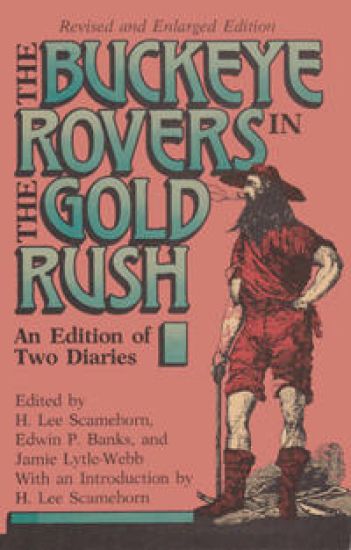
When "California Fever" raced through southeastern Ohio in the spring of 1849, a number of residents of Athens County organized a cooperative venture for traveling overland to the mines. Known as the "Buckeye Rovers," the company began its trip westward in early April. The Buckeye Rovers, along with thousands who traveled the overland route to California, endured numerous hardships and the seemingly constant threat of attacks from hostile Indians. On reaching their destination, the Ohioans discovered that rich deposits of gold were extremely rare, and that except for a few lucky fortune–seekers, mining required hard physical labor and yielded small rewards. They persisted nonetheless and most of the company returned to Athens in late 1851 or early 1852 with modest fortunes. The arduous experiences of the overland trek were recorded by two Buckeye Rover diarists. The more compete account was compiled by John Banks. He wrote effusively while on the trail and throughout his stay of more than two years in the gold regions. J. Elza Armstrong, by contrast, was brief, even laconic, and his journal ended upon reaching California. The contrast between the two brings into focus the divergent personalities who were drawn to California by the lure of gold. A nine–month segment of Bank's diary, from February to November, 1851, had been missing at the time the story of the Buckeye Rovers was first published in 1965. This revised and enlarged edition contains the complete diaries. They offer valuable record of the Buckeyes' adventures from the time they left home until the time they departed California for the return trip to Ohio.
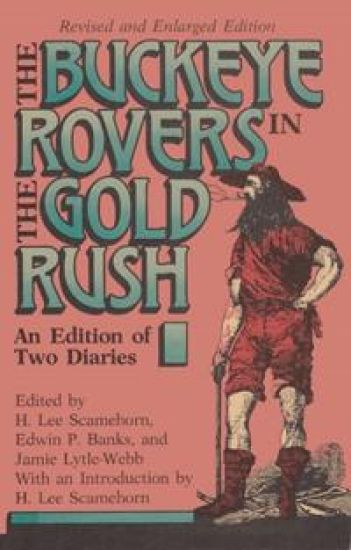
When "California Fever" raced through southeastern Ohio in the spring of 1849, a number of residents of Athens County organized a cooperative venture for traveling overland to the mines. Known as the "Buckeye Rovers," the company began its trip westward in early April. The Buckeye Rovers, along with thousands who traveled the overland route to California, endured numerous hardships and the seemingly constant threat of attacks from hostile Indians. On reaching their destination, the Ohioans discovered that rich deposits of gold were extremely rare, and that except for a few lucky fortune–seekers, mining required hard physical labor and yielded small rewards. They persisted nonetheless and most of the company returned to Athens in late 1851 or early 1852 with modest fortunes. The arduous experiences of the overland trek were recorded by two Buckeye Rover diarists. The more compete account was compiled by John Banks. He wrote effusively while on the trail and throughout his stay of more than two years in the gold regions. J. Elza Armstrong, by contrast, was brief, even laconic, and his journal ended upon reaching California. The contrast between the two brings into focus the divergent personalities who were drawn to California by the lure of gold. A nine–month segment of Bank's diary, from February to November, 1851, had been missing at the time the story of the Buckeye Rovers was first published in 1965. This revised and enlarged edition contains the complete diaries. They offer valuable record of the Buckeyes' adventures from the time they left home until the time they departed California for the return trip to Ohio.
This volume deals with a man whose life was intimately connected with a most significant formative period in American civilization. Son of the celebrated Dr. Benjamin Rush, Richard Rush was not such a dynamic personality, but in his earnest, gracious way he left almost as deep an imprint on many phases of national life. Educated as a lawyer, his first public: post was Attorney-General of Pennsylvania. This was followed in 1811 by appointment as Comptroller of the United States Treasury, and in 1814 as Attorney-General of the United States. He was Secretary of State in 1817, consummating the Rush-Bagot Convention demilitarizing the boundary between America and Canada. For eight years, 1817-1825, he was Minister to England, negotiating the Commercial Convention of 1818, conducting the initial conversations which led to the Monroe Doctrine, and working tirelessly for Anglo-American accord. He returned to the United States in 1825 to be Adams' Secretary of the Treasury and unsuccessful candidate for Vice-President in 1828. He was a leading advocate of internal improvements and prominent as an Anti-Mason, but split with his party over the Bank issue. In 1836 Jackson sent him to England to secure the estate of James Smithson, from which grew the Smithsonian Institution. His last office was that of Minister to France in 1847, completing a career of exceptional variety and service, which is described in this biography for the first time. In addition to his official activities, Rush was a prolific writer, chiefly of political pamphlets, but he also edited the first authentic collection of the federal statues and published the two volumes of "Memoranda" of his diplomatic missions. His life necessarily touched many of the great men of his day, and throughout this record of Richard Rush the background and personalities of an important historical period are clearly traced for the reader.
This is a volume of nice and relevant poems on everyday life, work, and other activities around the world, internationally, nationally in everyone s local area