Kirjojen hintavertailu. Mukana 11 530 159 kirjaa ja 12 kauppaa.

Kirjahaku

Etsi kirjoja tekijän nimen, kirjan nimen tai ISBN:n perusteella.

440 tulosta hakusanalla Rushton Julian

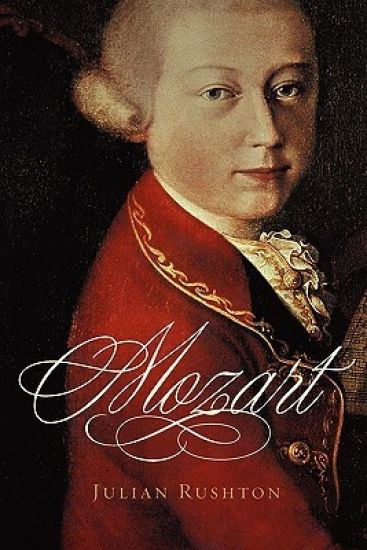
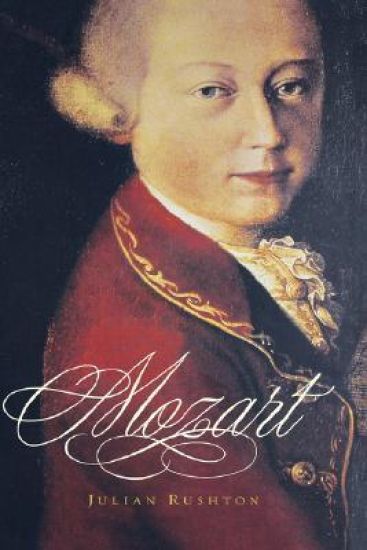
Mozart

Mozart

Rushton Julian

Oxford University Press Inc
2006
sidottu
Wolfgang Amadeus Mozart is one of the great icons of Western music. An amazing prodigy—he toured the capitals of Europe while still a child, astonishing royalty and professional musicians with his precocious skills—he wrote as an adult some of the finest music in the entire European tradition. Julian Rushton offers a concise and up-to-date biography of this musical genius, combining a well-researched life of the composer with an introduction to the works—symphonic, chamber, sacred, and theatrical—of one of the few musicians in history to have written undisputed masterpieces in every genre open to composers of his time. Rushton offers a vivid portrait of the composer, ranging from Mozart the Wunderkind—travelling with his family from Salzburg to Vienna, Paris, London, Rome, and Milan—to the mature author of such classic works as "The Marriage of Figaro", "Don Giovanni", and "The Magic Flute". During the past half-century, scholars have thoroughly explored Mozart's life and music, offering new interpretations of his compositions based on their historical context and providing a factual basis for confirming or, more often, debunking fanciful accounts of the man and his work. Rushton takes full advantage of these biographical and musical studies as well as the definitive New Mozart Edition to provide an accurate account of Mozart's life and, equally important, an insightful look at the music itself, complete with musical examples. An engaging biography for general readers that will also be an informative resource for scholars, this new addition to the prestigious Master Musicians series offers an authoritative portrait of one of the defining figures of European culture.
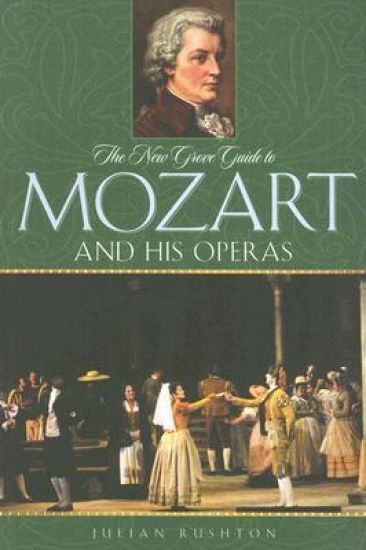
The New Grove Guide to Mozart and His Operas

The New Grove Guide to Mozart and His Operas

Rushton Julian

Oxford University Press Inc
2007
nidottu
Each entry in the New Grove Guides series of composers and their operas is based on articles in The New Grove Dictionary of Opera, that feature information on the lives of individual composers, their works, their librettists and interpreters, and the places where they performed. These unique books compile the meticulously researched articles into organized narratives, designed to make finding information as easy as possible without sacrificing readability. Each volume is completely up-to-date, and includes a suggested listening guide and an eight-page glossy insert containing relevant illustrations. Each volume is a must-own for lovers of opera and classical music. One of the best known and most admired figures in European music was Wolfgang Amadè Mozart. His short but colorful life is of enduring interest, and his works remain central to the repertories of classical music. This book gives a concise and scholarly account of Mozart's activities as a composer of operas. It includes a concise biography, orientated towards the operas; an essay on Mozart's operatic contribution and style, and the antecedents to his operas; a separate synopsis and historical account of each opera; and three essays which bind into narrative form the dictionary entries on librettists, interpreters, and venues. There is a new introduction, a glossary of relevant terms, a list of operatic roles, and a guide to listening.
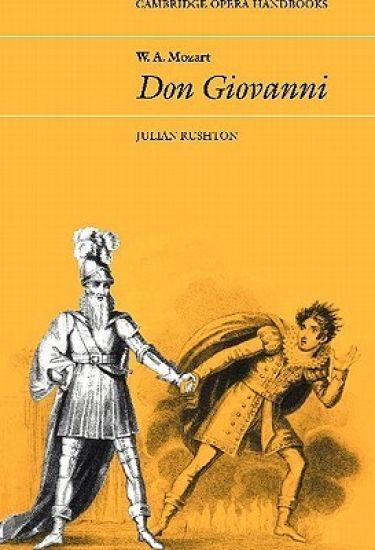
W. A. Mozart: Don Giovanni

W. A. Mozart: Don Giovanni

Rushton Julian

Cambridge University Press
1981
pokkari
This book is a study of Mozart’s Don Giovanni, his second opera to a libretto by da Ponte. Although it is one of the handful of best-known and most often performed operas of the last two hundred years, Don Giovanni is seldom given in an authentic form and arguments persist as to its nature. Julian Rushton takes the view that, notwithstanding the tragic nature of certain scenes, it must be regarded as an opera buffa. He gives a brief summary of its history and life in the theatre, but the chief historical essay (by Edward Forman) concerns the subject-matter before it reached da Ponte. The book includes a very detailed synopsis which forms the basis of an extended commentary on the librettist’s handling of a plot constructed of both original and inherited ideas. Bernard Williams contributes an essay on Don Giovanni as an idea in literature and philosophy since Mozart. The book concludes with an extensive bibliography, and a discography of complete recordings compiled by Malcolm Walker.
W. A. Mozart: Idomeneo

W. A. Mozart: Idomeneo

Rushton Julian

Cambridge University Press
1993
pokkari
Idomeneo, by common consent Mozart's greatest opera seria, is a rich synthesis of the dramatic potentialities of Italian opera seria, French tragédie lyrique, and recent German opera. It was composed for the finest orchestra in Germany and some excellent singers. Mozart's relish of the challenge and his problems with some performers and the bureaucracy are uniquely documented in his letters home and these form the basis of a vivid account of the genesis of the opera. A detailed synopsis relates the musical and dramatic action of the opera. Further chapters trace the historical development of its subject matter 'from myth to libretto' and chart the opera's performance history, including a description of Richard Strauss's 1931 reworking. Later chapters consider the opera's general structure and the musical forms, and analyse passages of particular interest.
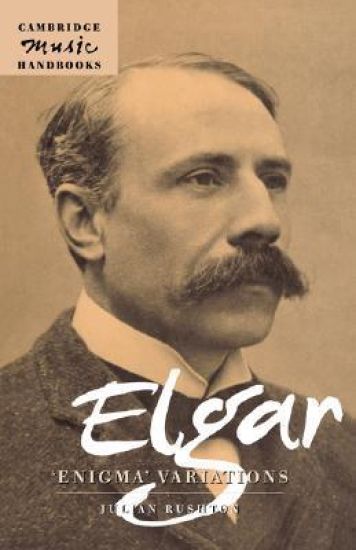
Elgar: Enigma Variations

Elgar: Enigma Variations

Rushton Julian

Cambridge University Press
1999
sidottu
Elgar’s Variations for Orchestra, commonly known as the ‘Enigma’ Variations, marked an epoch both in his career, and in the renaissance of English music at the turn of the century. First performed in 1899 under Hans Richter, the work became his passport to national fame and international success. From the first it intrigued listeners to know why it was called ‘enigma’, and who were the ‘friends pictured within’, to whom the work is dedicated. Appearing in the centenary year of the work’s composition, this book elucidates what is known, and what has been said about the work and the enigma, and directs future listeners to what matters most: the inspired qualities of the music.
Elgar: Enigma Variations

Elgar: Enigma Variations

Rushton Julian

Cambridge University Press
1999
pokkari
Elgar’s Variations for Orchestra, commonly known as the ‘Enigma’ Variations, marked an epoch both in his career, and in the renaissance of English music at the turn of the century. First performed in 1899 under Hans Richter, the work became his passport to national fame and international success. From the first it intrigued listeners to know why it was called ‘enigma’, and who were the ‘friends pictured within’, to whom the work is dedicated. Appearing in the centenary year of the work’s composition, this book elucidates what is known, and what has been said about the work and the enigma, and directs future listeners to what matters most: the inspired qualities of the music.
Mozart: An Extraordinary Life

Mozart: An Extraordinary Life

Rushton Julian

Associated Board of the Royal Schools of Music
2005
muu
Julian Rushton jumps right into the debate with this fascinating and readable history, dispensing with the myth, conjecture ,and popular iconography that frequently distorts our notions of what Mozart and his times were really like. What emerges is a more human and believable portrait, challenging our preconceptions while deepening our understanding of this extraordinary man and his music.
Mozart

Mozart

Julian Rushton

Oxford University Press Inc
2009
nidottu
Wolfgang Amadeus Mozart is one of the great icons of Western music. An amazing prodigy who toured the capitals of Europe as a child, astonishing royalty and professional musicians with his precocious skills, in his adulthood he wrote some of the finest music in the European tradition. Julian Rushton offers a concise and up-to-date biography of this musical genius, combining a well-researched life of the composer with an introduction to the works--symphonic, chamber, sacred, and theatrical--of one of the few who have composed undisputed masterpieces in every genre of his time. Rushton presents a vivid portrait, ranging from Mozart the Wunderkind--travelling with his family from Salzburg to Vienna, Paris, London, Rome, and Milan--to the mature composer of perennially fascinating operas such as "The Marriage of Figaro," "Don Giovanni," and "The Magic Flute." During the past half-century, scholars have thoroughly explored Mozart's life and music, offering new interpretations based on their historical context, and providing a factual basis for confirming or more often debunking, fanciful accounts of the man and his work. Rushton takes full advantage of these biographical and musical studies as well as the definitive New Mozart Edition to provide an accurate account of Mozart's life and, equally important, an insightful look at the music itself, complete with illustrative musical examples. An engaging biography for general readers that will also be an informative resource for scholars, this new addition to the prestigious Master Musicians series puts forward an authoritative interpretation of one of the defining figures of European culture. "Crisp, learned." --Alex Ross, The New Yorker "The finest short biography of Mozart that I know--incisive, insightful, and elegantly written. If I had to recommend one book that explained the man and his music, this would be it." --Cliff Eisen, Department of Music, King's College London "Always sensitive, judicious, and stimulating. It is too short--not too short for Mozart but for Rushton, who has certainly much more to say that would be of interest." --Charles Rosen, The New York Review of Books "A valuable addition to the ever-growing literature on Mozart." --Library Journal
The Music of Berlioz

The Music of Berlioz

Julian Rushton

Oxford University Press
2001
sidottu
The Music of Berlioz offers an overall assessment of Berlioz's musical achievement as we approach the bicentary of his birth in 2003. This is the first full-length musical study of the composer to take into account the rediscovered Messe solennelle, and discusses all aspects of his work, without undue emphasis on a few more popular pieces. The first section consists of a comprehensive biography of his musical works, tracing shifting patterns ofproductivity, approaches to genre, and the contrast between works which are aesthetically progressive or retrospective. The second section considers aspects of Berlioz's musical style, building upon earlier studies by the author and other recent scholarship; topics include Berlioz's practice of self-borrowing, his useof programmes and texts, characteristic rhetorical devices, and an emotional language. The third section takes four categories of works - song-forms, sacred music, symphonic works, and dramatic works - for more substantial analysis of selected passages and an overall critical assessment.
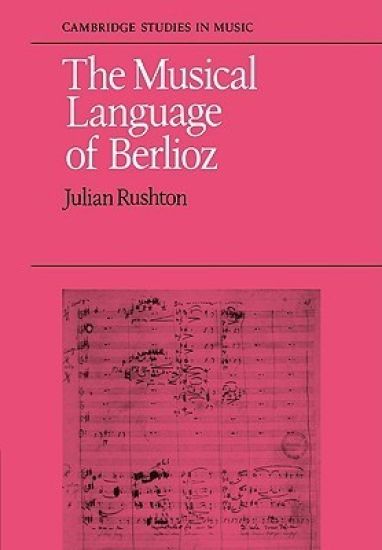
The Musical Language of Berlioz

The Musical Language of Berlioz

Julian Rushton

Cambridge University Press
2008
nidottu
This book is an analytical and critical study of Berlioz's unique musical style. It does not undertake to analyse all his works, but rather to separate characteristic elements and observe them in action. Berlioz's writings and those of his critics are called upon to help focus the discussion. Part I includes material on the sources of Berlioz's idiosyncrasy and a discussion of fundamental pitch elements. Part II pursues this discussion into textural, contrapuntal and orchestral features, and considers melody and rhythm. Part III deals with whole musical forms, vocal and instrumental. The book includes copious musical illustration, much of it analytical reduction, and the expressive purpose of the features analysed is fully considered. The conclusion is that Berlioz's musical language is inescapably peculiar, though not necessarily inept; features which seem inexplicable in the light of compositional theory nearly always contribute to the musical and expressive exactness of communication.
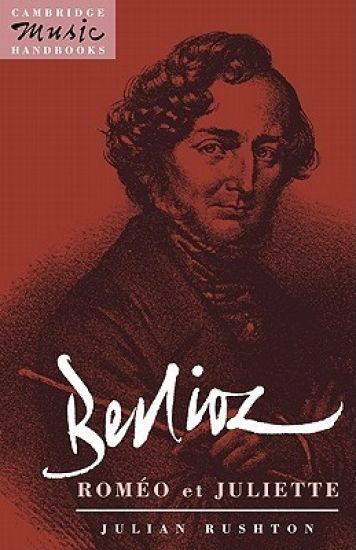
Berlioz: Romeo et Juliette

Berlioz: Romeo et Juliette

Julian Rushton

Cambridge University Press
1994
nidottu
Berlioz's 'dramatic symphony' Romeo et Juliette is regarded by many as his finest work; it is certainly among the most original. It is played less often than his earlier symphonies, because it requires solo voices and chorus; yet at its heart is some of the most inspired orchestral music of the nineteenth century. This book summarises the complex genesis of the work before examining the music closely and always with a view to understanding its dramatic implications. The early and later critical reception is quoted and discussed and Julian Rushton concludes by suggesting a way of hearing the work which recognises the value of its mixed genre. The complete libretto is provided in both English and French.
Berlioz: Symphonie Fantastique

Berlioz: Symphonie Fantastique

Julian Rushton

Cambridge University Press
2023
pokkari
Berlioz's Symphonie Fantastique is a key work in the understanding of romanticism, programme music, and the development of the orchestra, post-Beethoven. It is noted for having a title and a detailed programme, and for its connection with the composer's personal life and loves. This handbook situates the symphony within its time, and considers influences, literary as well as musical, that shaped its conception. Providing a close analysis of the symphony, its formal properties and melodic and textural elements (including harmony and counterpoint), it is a rich but accessible study which will appeal to music lovers, scholars, and students. It contains a translation of the programme, which sheds light on the form and character of each movement, and the unusual use of a melodic idée fixe representing a beloved woman. The unusual five-movement design permits a range of musical topics to be discussed and related to traditional symphonic elements: sonata form, a long Adagio, dance-type movements, and thematic development.
Berlioz: Symphonie Fantastique

Berlioz: Symphonie Fantastique

Julian Rushton

Cambridge University Press
2023
sidottu
Berlioz's Symphonie Fantastique is a key work in the understanding of romanticism, programme music, and the development of the orchestra, post-Beethoven. It is noted for having a title and a detailed programme, and for its connection with the composer's personal life and loves. This handbook situates the symphony within its time, and considers influences, literary as well as musical, that shaped its conception. Providing a close analysis of the symphony, its formal properties and melodic and textural elements (including harmony and counterpoint), it is a rich but accessible study which will appeal to music lovers, scholars, and students. It contains a translation of the programme, which sheds light on the form and character of each movement, and the unusual use of a melodic idée fixe representing a beloved woman. The unusual five-movement design permits a range of musical topics to be discussed and related to traditional symphonic elements: sonata form, a long Adagio, dance-type movements, and thematic development.
Europe, Empire, and Spectacle in Nineteenth-Century British Music

Europe, Empire, and Spectacle in Nineteenth-Century British Music

Rachel Cowgill; Julian Rushton

Ashgate Publishing Limited
2006
sidottu
This volume illuminates musical connections between Britain and the continent of Europe, and Britain and its Empire. The seldom-recognized vitality of musical theatre and other kinds of spectacle in Britain itself, and also the flourishing concert life of the period, indicates a means of defining tradition and identity within nineteenth-century British musical culture. The objective of the volume has been to add significantly to the growing literature on these topics. It benefits not only from new archival research, but also from fresh musicological approaches and interdisciplinary methods that recognize the integral role of music within a wider culture, including religious, political and social life. The essays are by scholars from the USA, Britain, and Europe, covering a wide range of experience. Topics range from the reception of Bach, Mozart, and Liszt in England, a musical response to Shakespeare, Italian opera in Dublin, exoticism, gender, black musical identities, British musicians in Canada, and uses of music in various theatrical genres and state ceremony, and in articulating the politics of the Union and Empire.
British Music, Musicians and Institutions, c. 1630-1800

British Music, Musicians and Institutions, c. 1630-1800

Peter Lynan; Julian Rushton

The Boydell Press
2021
sidottu
Building upon the developing picture of the importance of British music, musicians and institutions during the eighteenth century, this book investigates the themes of composition, performance (amateur and professional) and music-printing, within the wider context of social, religious and secular institutions. British music in the era from the death of Henry Purcell to the so-called 'Musical Renaissance' of the late nineteenth century was once considered barren. This view has been overturned in recent years through a better-informed historical perspective, able to recognise that all kinds of British musical institutions continued to flourish, and not only in London. The publication, performance and recording of music by seventeenth- and eighteenth-century British composers, supplemented by critical source-studies and scholarly editions, shows forms of music that developed in parallel with those of Britain's near neighbours. Indigenous musicians mingled with migrant musicians from elsewhere, yet there remained strands of British musical culture that had no continental equivalent. Music, vocal and instrumental, sacred and secular, flourished continuously throughout the Stuart and Hanoverian monarchies. Composers such as Eccles, Boyce, Greene, Croft, Arne and Hayes were not wholly overshadowed by European imports such as Handel and J. C. Bach. The present volume builds on this developing picture of the importance of British music, musicians and institutions during the period. Leading musicologists investigate themes such as composition, performance (amateur and professional), and music-printing, within the wider context of social, religious and secular institutions.
Dramma Giocoso

Dramma Giocoso

Sergio Durante; Stefan Rohringer; Julian Rushton; James Webster

Leuven University Press
2012
pokkari
The three Mozart/Da Ponte operas offer an inexhaustible wellspring for critical reflection, possessing a complexity and equivocation common to all great humane works. They have the potential to reflect and refract whatever locus of contemporaneity may be the starting point for enquiry. Thus, even postmodern and postmillennial concerns, far from seeming irrelevant to these operas, are instead given new perspectives by them, whilst the music and the dramatic situations have the multivalency to accept each refreshed pallet of interpretation without loss of their essential character. These operas seem perennially ‘new'. In exploring the evergreen qualities of Don Giovanni and Le Nozze di Figaro, this collection of studies does not shun approaches that have foundations in established theory, but refracts them through such problems as the tension between operatic tradition and psychological realism, the co-existence of multiple yet equal plots, and the antagonism between the tenets of tradition and the need for self-actualization. In exploring such themes, the authors not only illuminate new aspects of Mozart's operatic compositions, but also probe the nature of musical analysis itself. This publication is GPRC-labeled (Guaranteed Peer-Reviewed Content).
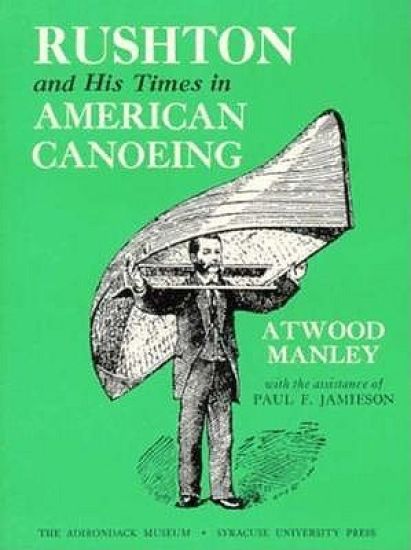
Rushton and His Times in American Canoeing

Rushton and His Times in American Canoeing

Atwood Manley

Syracuse University Press
1977
nidottu
This is the story of J. Henry Rushton, a native of northern New York State who became world famous as a builder of canoes. He and his craft were at the center of notable events in canoeing history in the nineteenth and early twentieth centuries.Rushton was born in 1843 in a small settlement on the edge of the Adirondack wilderness. In his thirties, seeking to cure himself of "consumption" in the mountain air, he built a boat for a trip into the woods. Tradition has it friends asked Rushton to build boats for them, too, and his career was started.Rushton was fortunate in his patrons. In 1880 he was approached by the outdoor writer, George Washington Sears, better known by his pen name 11Nessmuk.'' A frail man, Nessmuk asked Rushton to build him an exceptionally lightweight canoe. Nessmuk's solitary tours of Adirondack waterways in the 10 ¾-pound Sairy Gamp set a new trend in sports life. His letters in the journal Forest and Stream did much to popularize unguided travel through the wilderness and to spread Rushton's fame.Many illustrations, including two previously unpublished sketches by Frederic Remington, help tell the story here. Five appendixes include Rushton's catalog descriptions of his construction methods; a reprint of an article by Nessmuk, an account of the Rushton canoes extant today, drawings and specifications of seven of these extant canoes, and a lengthy discussion by Harry Rushton of his father's methods of craftsmanship.